Skip to content
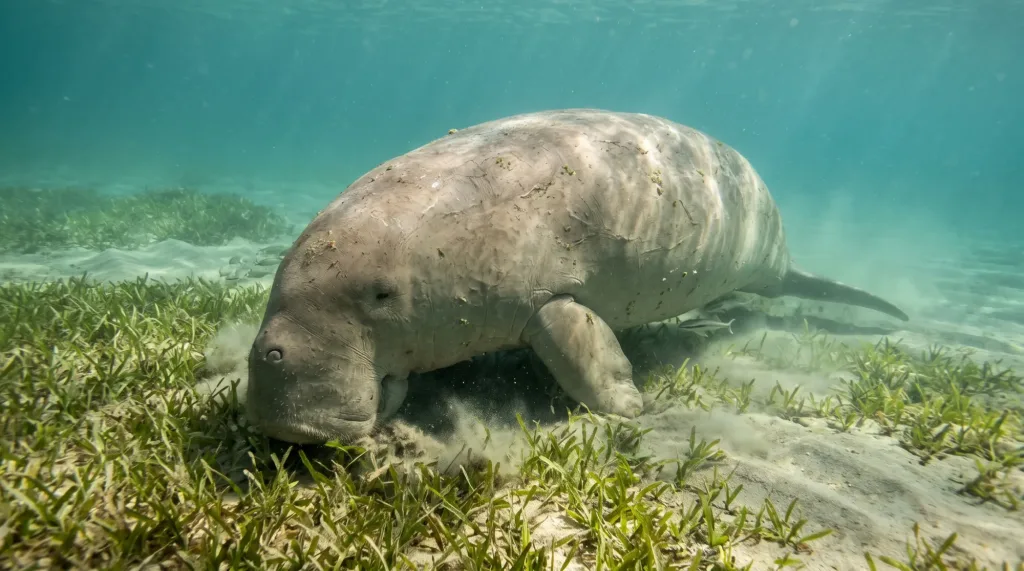
Dugong grazing on seagrass beneath sunbeams piercing the blue water, with small fish swimming in the background

Dugong: Facts, Photos & Why It’s So Strange

Dugong dugon

The original mermaid – with a vacuum-cleaner face

Sailors used to mistake them for mermaids. Up close, the dugong is less “enchanting sea maiden” and more “friendly underwater cow”. It spends its whole life grazing on seagrass meadows – and it’s more closely related to elephants than to dolphins.

Dugong vs. you

Your height ft in5 ft 7 in

Quick facts

Size
8–10 ft
Usually 8–10 ft (2.4–3 m); the biggest on record was about 13 ft (4 m)
Weight
510–880 lb
510–880 lb (230–400 kg), sometimes far more
Lifespan
~70 years
Up to about 70 years
Left in the wild
Unknown
Unknown – the biggest populations are in northern Australia

Conservation status

  1. Least Concern
  2. Near Threatened
  3. Vulnerable (this animal)
  4. Endangered
  5. Critically Endangered
  6. Extinct in the Wild
  7. Extinct

Vulnerable

Superpowers

  • Venomous : Is it venomous? No
  • Glows : Does it glow? No
  • Regenerates limbs : Can it regenerate limbs? No

Identity

Scientific name
Dugong dugon
Class
Mammal (sea cow)
First described
1776, by Philipp Statius Müller

Life & family

Diet
Seagrass – up to 88 lb (40 kg) of it a day
Gestation
13–15 months
Offspring
One calf every 3–7 years
Predators
Sharks, orcas and crocodiles

Where to find it

Habitat
Warm, shallow coastal waters with seagrass
Lives in
Indian Ocean and western Pacific, from East Africa to Australia
In the wild
Yes – in Shark Bay (Australia), the Philippines or the Red Sea
In zoos
Almost never – only a couple of aquariums in the world

Explore similar

Why is this animal unusual?

It’s the only plant-eating mammal that lives entirely in the sea. Manatees, its cousins, also use rivers. The dugong never leaves salt water.

Why does it look like that?

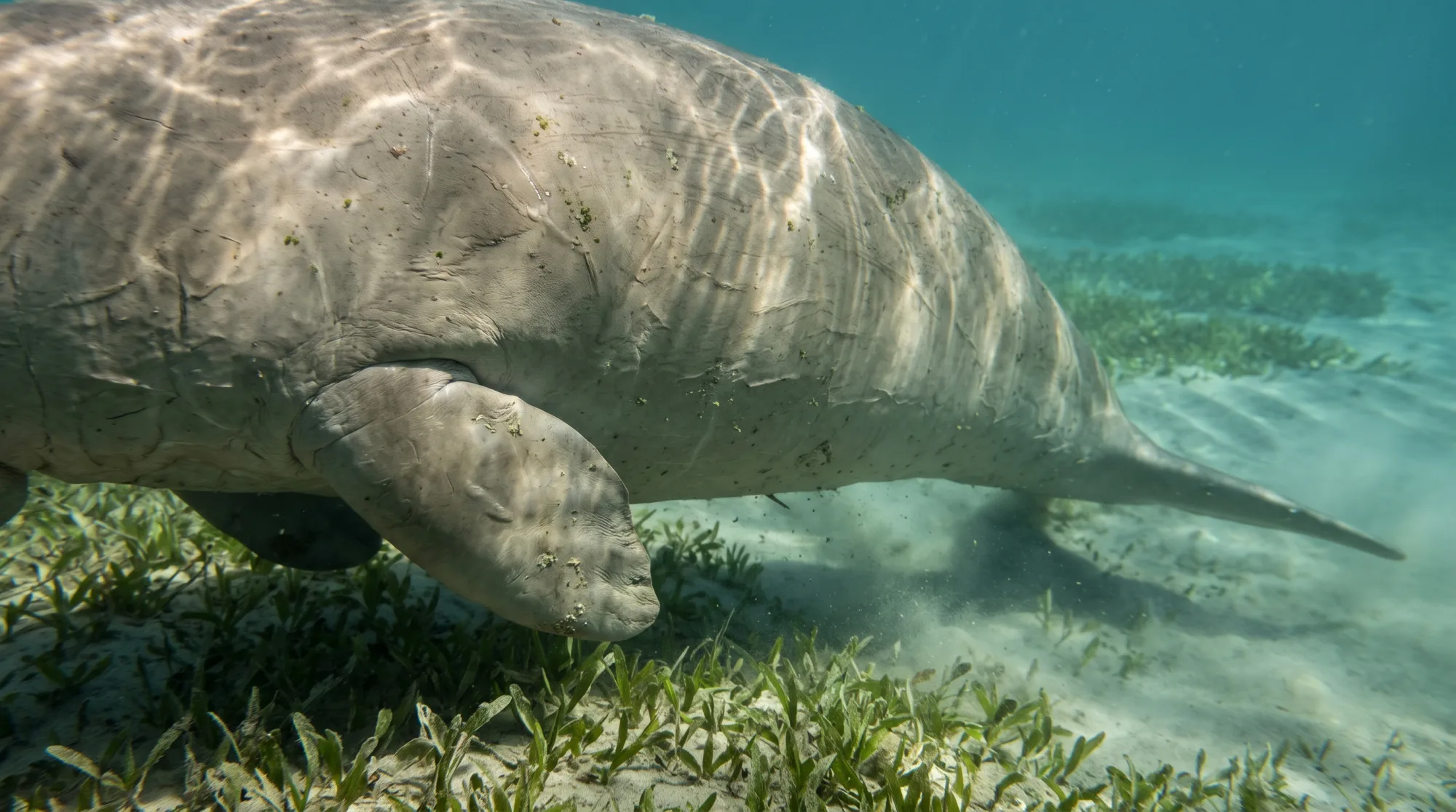
A whale-like tail with two points (a manatee’s is a round paddle), and a broad, downturned snout made for hoovering the seabed. Males grow small tusks.

Strangest biological feature

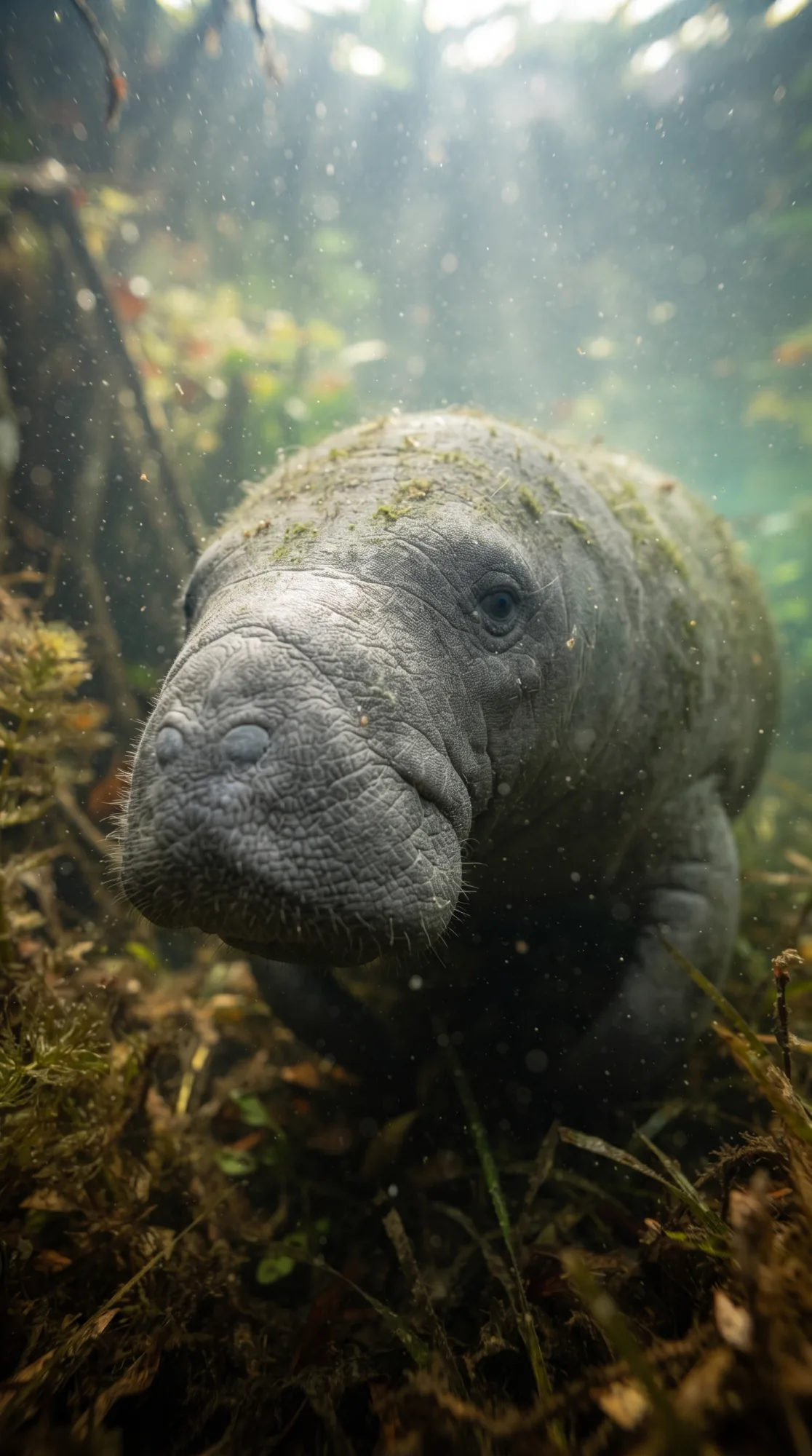
That bristly upper lip. It grabs seagrass, roots and all, leaving winding “feeding trails” across the sea floor.

Why is it strange?

Its closest relative, the giant Steller’s sea cow, was hunted to extinction within 27 years of being discovered.

Interesting behavioral facts

Dugongs are slow, shy and usually seen alone or in pairs. They must surface to breathe every few minutes and sometimes “stand” on their tails to do it.

Records held

In 2022 the dugong was declared functionally extinct in China.
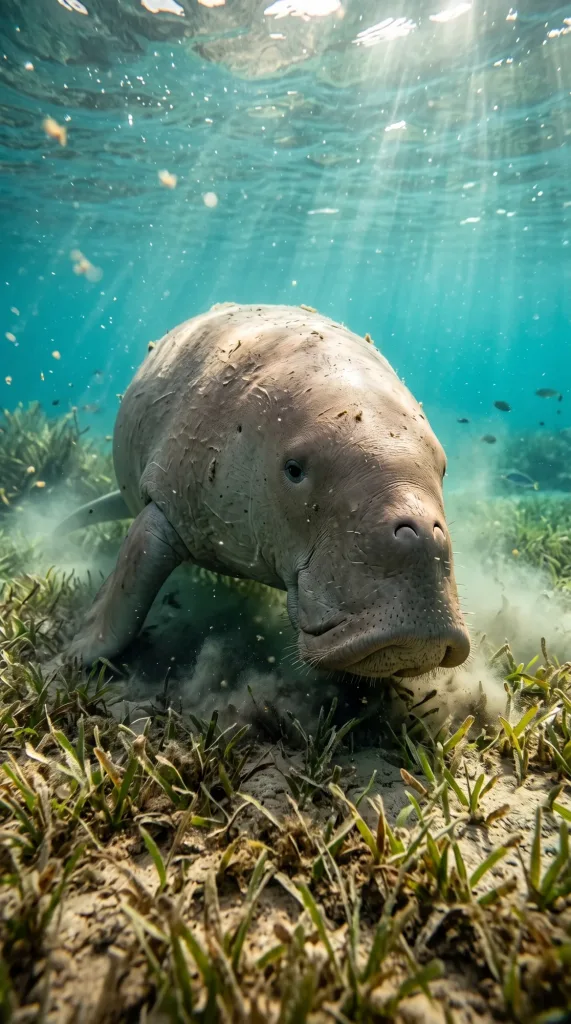
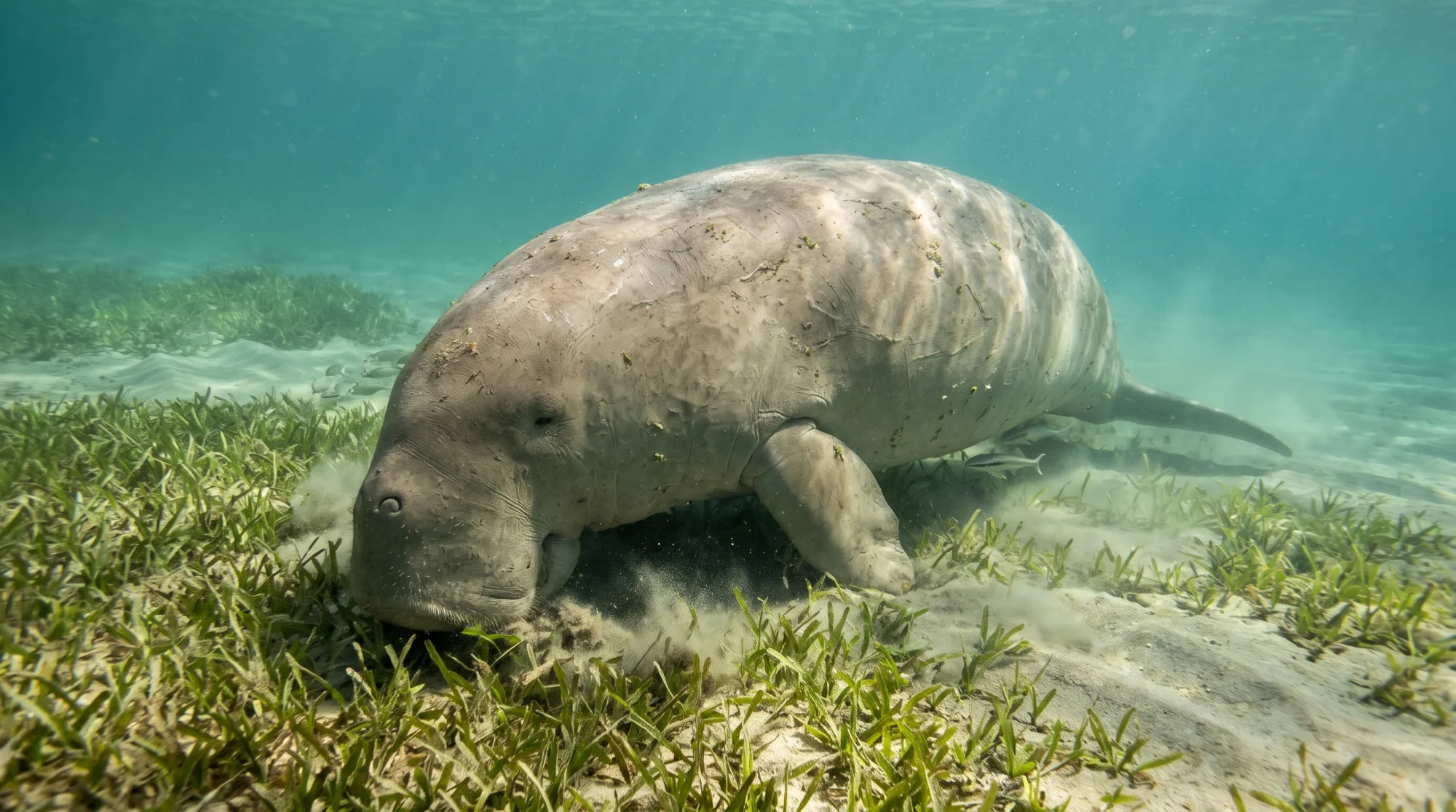
Dugong grazing on seagrass on a sandy seabed in clear turquoise water with sunlight rays streaming from the surface

Dugong: quick answers

What is the difference between a dugong and a manatee?

A dugong has a whale-like tail with two points and a downturned snout, and it lives only in the sea. A manatee has a round, paddle-shaped tail and can also live in rivers.

Are dugongs dangerous?

No. They’re slow, shy plant-eaters that usually avoid people.

How long do dugongs live?

Up to about 70 years. But they breed very slowly – one calf every 3–7 years – so their numbers recover slowly.

Where can you see dugongs in the wild?

In warm, shallow coastal waters of the Indian Ocean and western Pacific. The biggest populations live in northern Australia.

Know someone who needs to see this?

Send them the Dugong. They'll thank you. Probably.