Skip to content
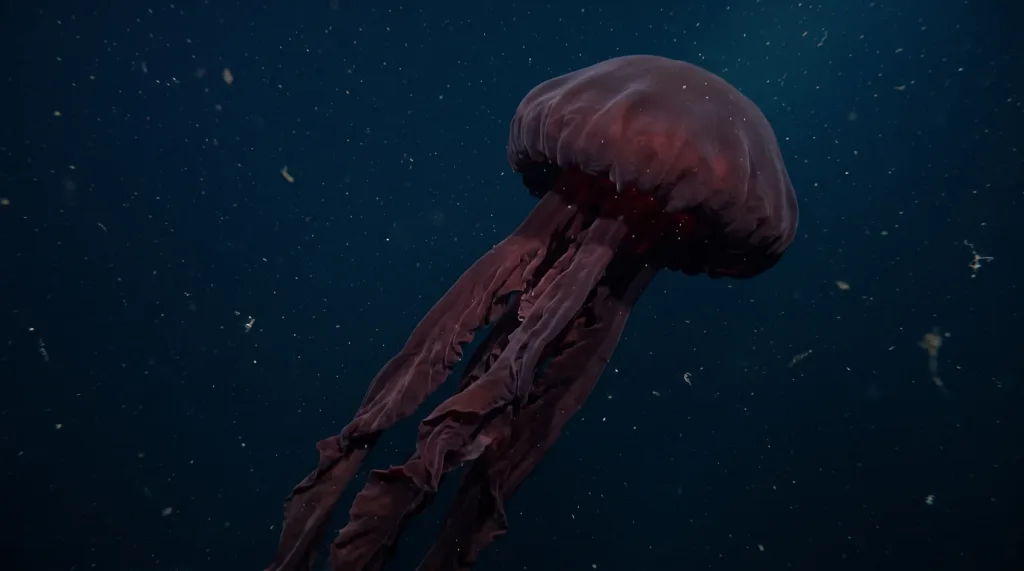
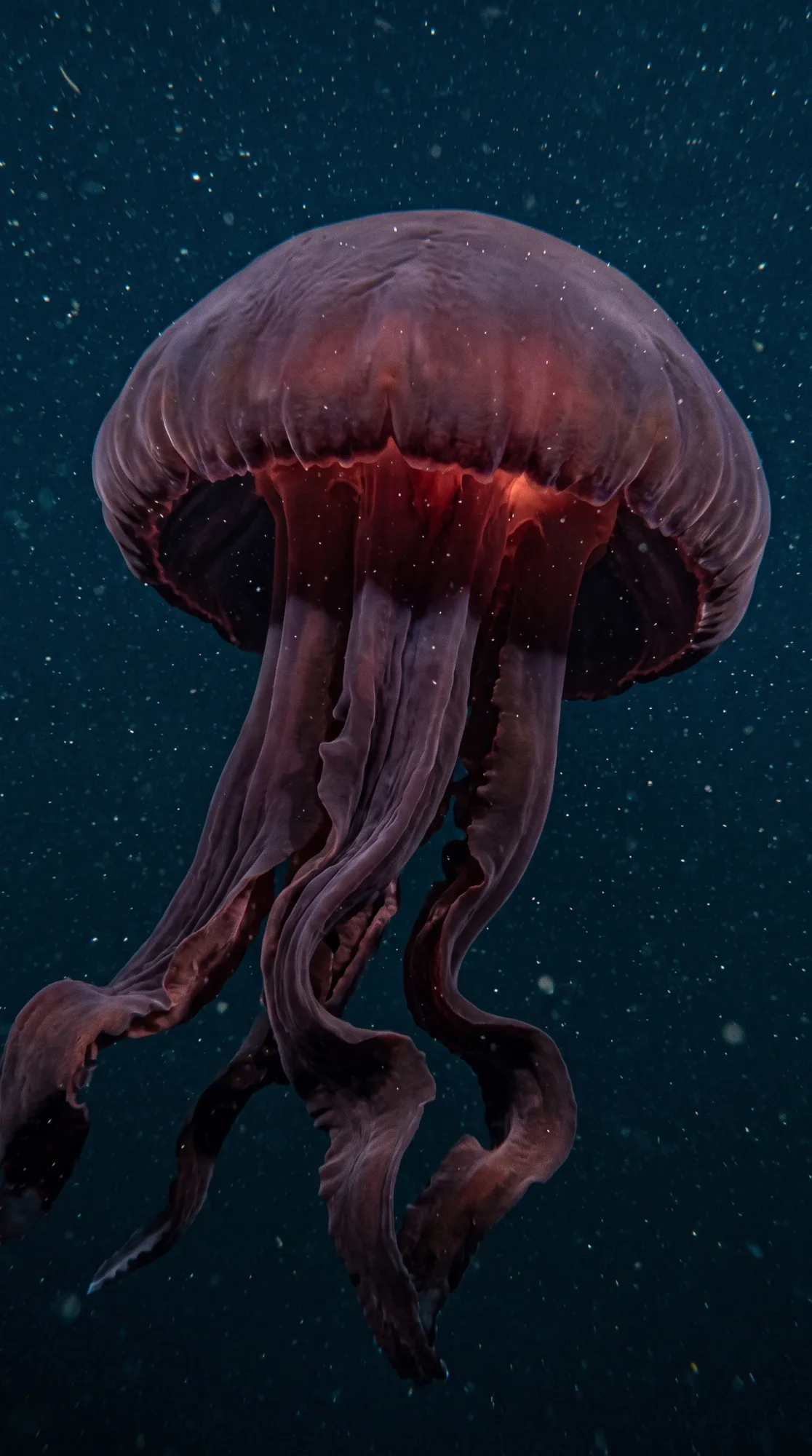
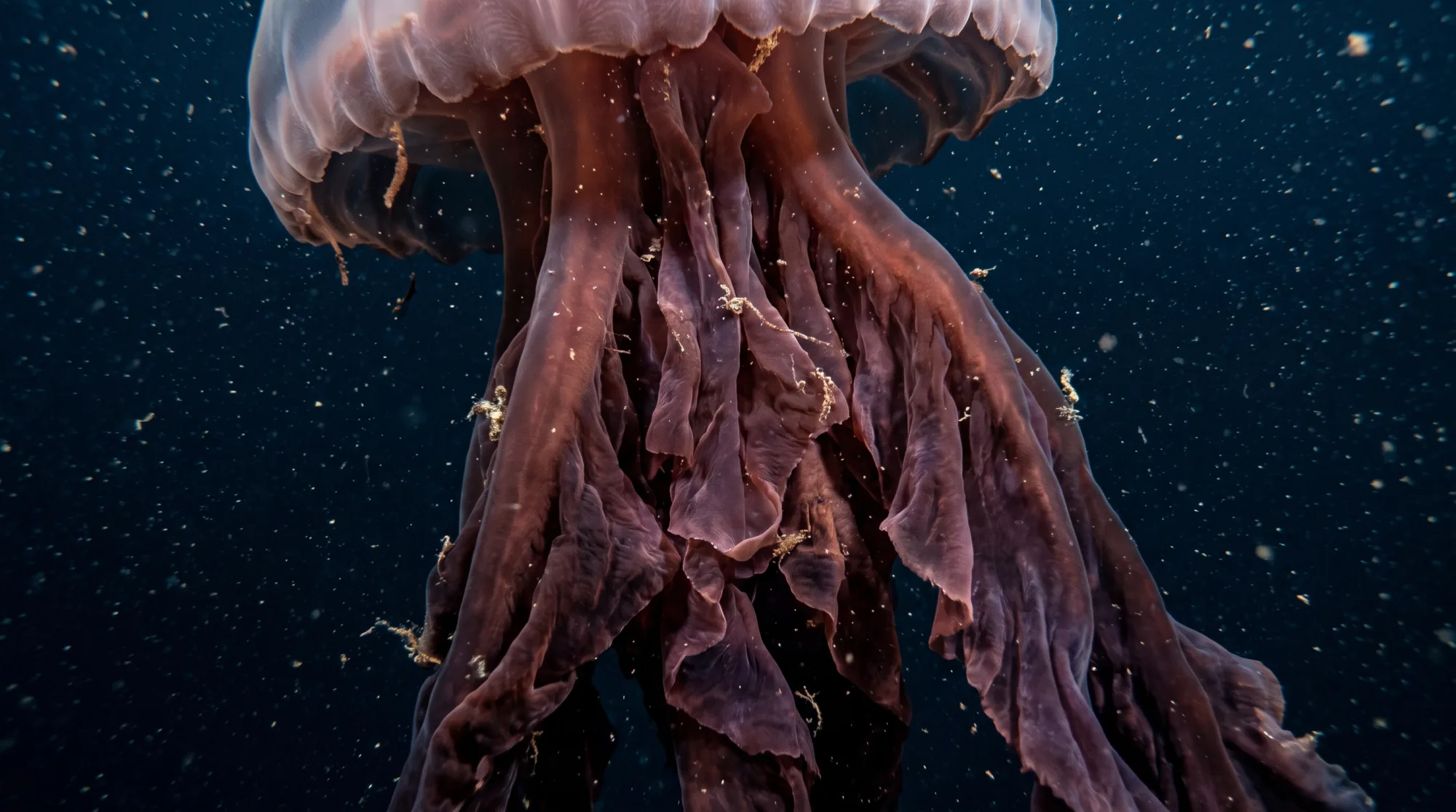
Giant phantom jelly with a dark red bell and trailing arms in the deep sea

Giant Phantom Jelly: Facts, Photos & Why It’s So Strange

Stygiomedusa gigantea

A ghost with ten-metre arms

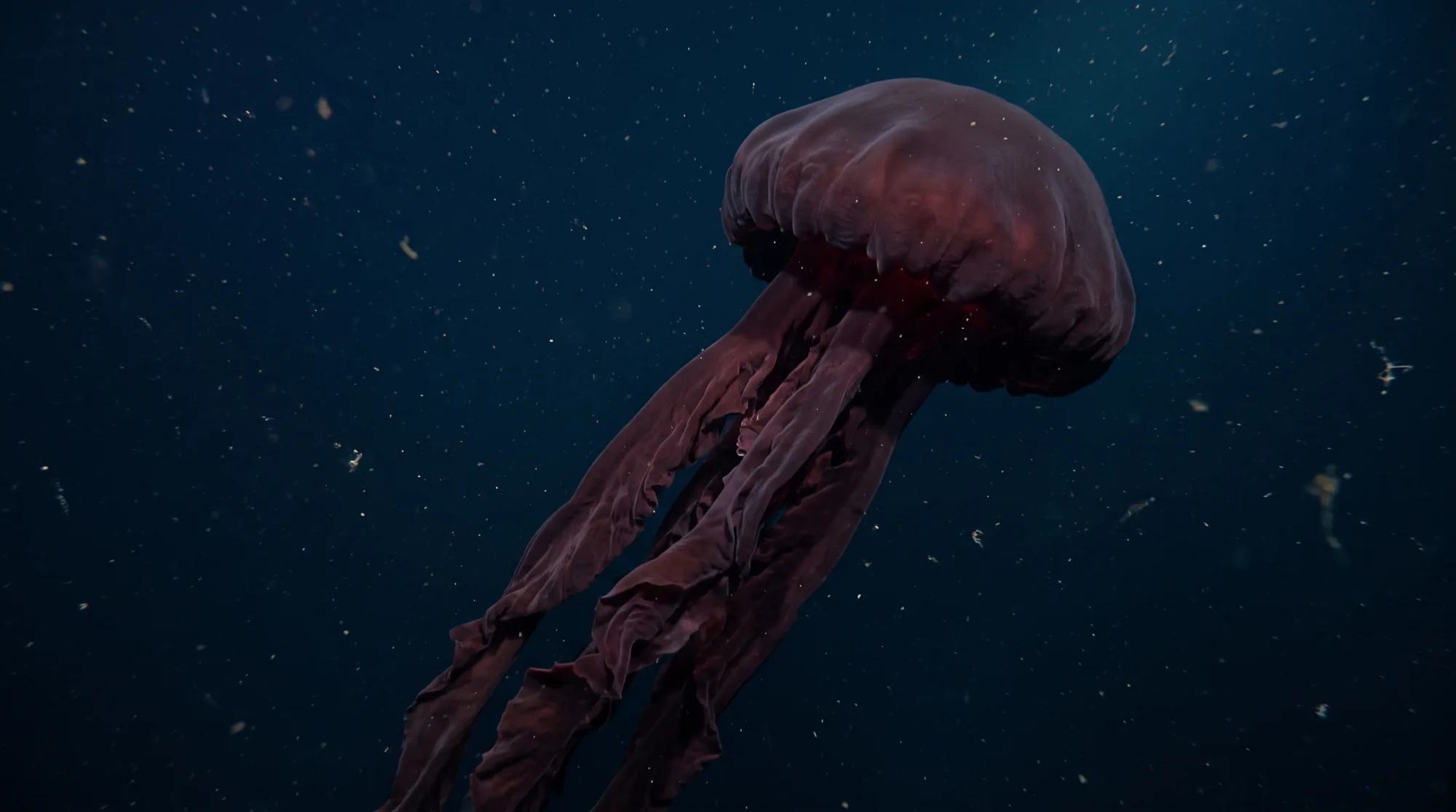
A dark, bell-shaped body more than a metre wide, trailing four ribbon-like arms as long as a bus. The giant phantom jelly (Stygiomedusa gigantea) drifts through the deep sea like a billowing curtain. In over a hundred years, humans have seen it barely more than a hundred times.

Giant Phantom Jelly vs. you

Your height ft in5 ft 7 in

Quick facts

Size
3+ ft 3 in
Bell over 3 ft 3 in (1 m) wide; arms up to about 33 ft (10 m) long
Left in the wild
Unknown

Conservation status

Not evaluated

Superpowers

  • Venomous : Is it venomous? No
  • Regenerates limbs : Can it regenerate limbs? No

Identity

Scientific name
Stygiomedusa gigantea
Class
Cnidarian (jellyfish)
First described
1910, by Edward Browne

Life & family

Diet
Probably plankton and small fish
Gestation
The young develop inside the mother’s body
Predators
Unknown

Where to find it

Habitat
Deep, dark open ocean, down to nearly 23,000 ft (7,000 m)
Lives in
Every ocean except the Arctic
In the wild
Almost never – though tourists in Antarctic submersibles have filmed it
In zoos
No

Explore similar

Why is this animal unusual?

Most jellyfish catch food with stinging tentacles. This one has none. Instead it has four broad, flat “mouth arms” that it seems to wrap around its prey.

Why does it look like that?

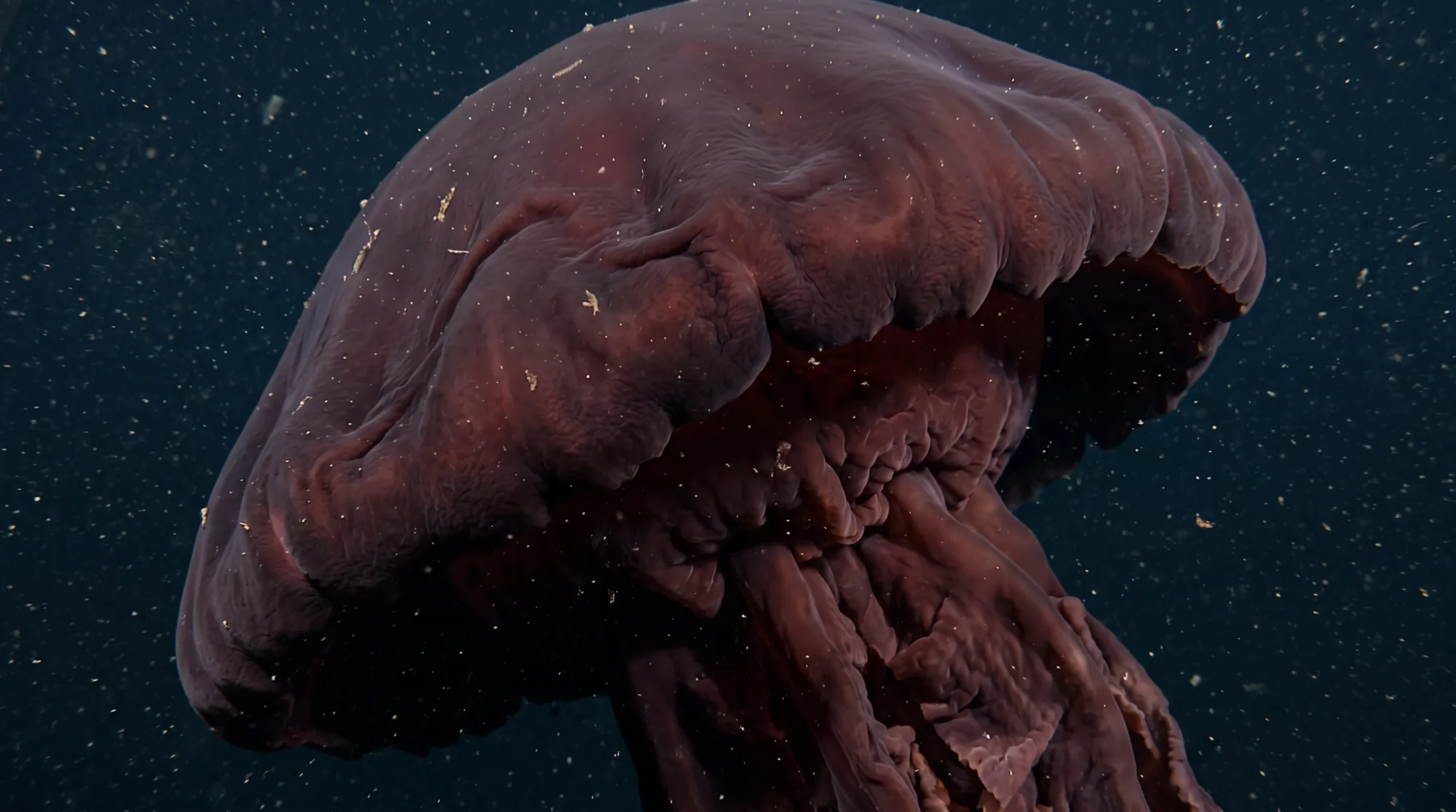
A deep reddish-brown umbrella with arms like sheets of fabric drifting behind it. In the deep sea, red looks black – so it’s almost invisible.

Strangest biological feature

Those arms. Each can be ten metres long.

Why is it strange?

It doesn’t release eggs into the water like most jellies. The babies grow inside the parent and swim out when they’re ready.

Interesting behavioral facts

A small white fish has been filmed living among its arms, apparently sheltering there and cleaning off parasites in return.

Records held

One of the largest invertebrate predators of the deep sea – and one of the least seen.

Giant phantom jelly with a deep red bell and long ribbon-like arms in the dark

Giant Phantom Jelly: quick answers

Is the giant phantom jelly dangerous?

No. It has no stinging tentacles, and it lives so deep that no swimmer will ever meet one.

How big is the giant phantom jelly?

Its bell can be over a metre wide, and its four arms can trail up to about 33 ft (10 m) behind it.

Where has it been seen?

In every ocean except the Arctic, mostly by deep-sea robots and submersibles. Tourist submarines in Antarctica have filmed it too.

Why is it seen so rarely?

It lives in the deep open ocean, mostly far below where sunlight reaches – a place people have barely explored.

Know someone who needs to see this?

Send them the Giant Phantom Jelly. They'll thank you. Probably.