Skip to content
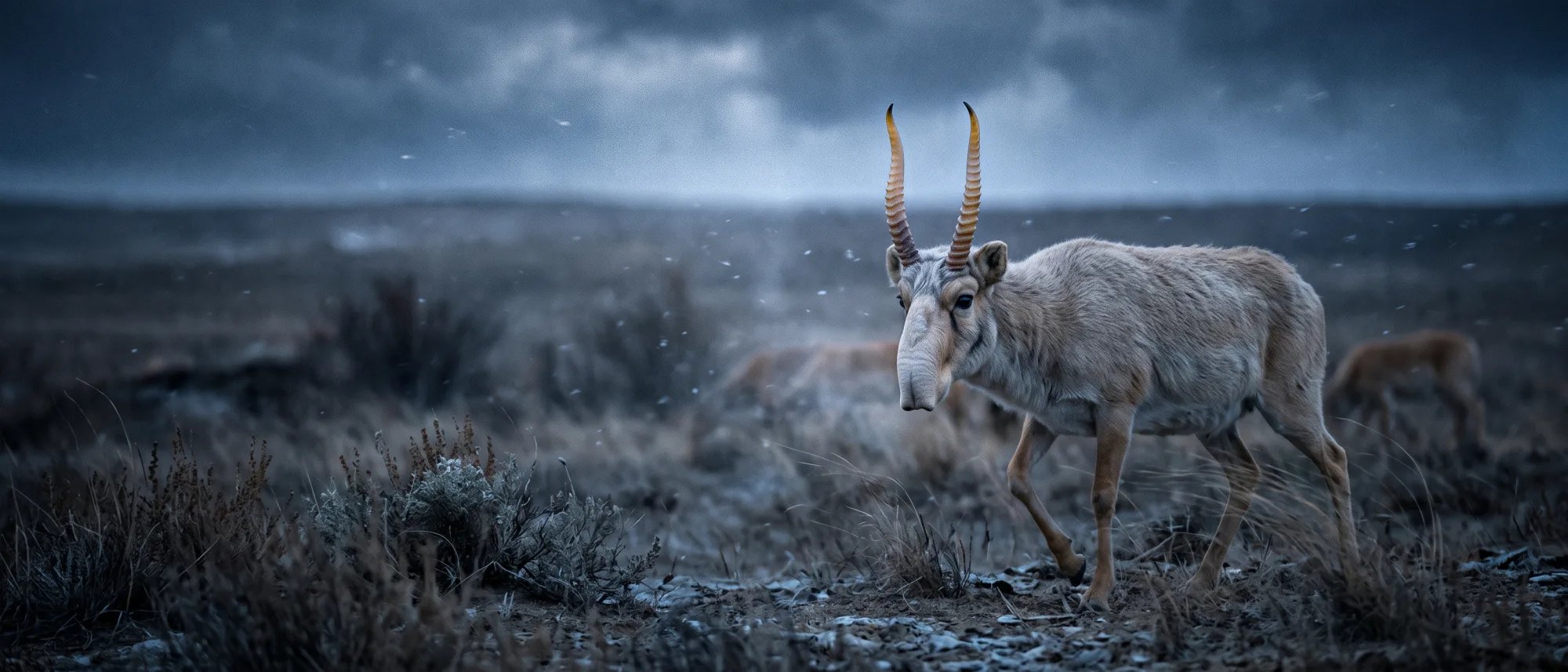
Saiga antelope with ridged horns standing on a frosty steppe under a stormy sky

Saiga Antelope: The Antelope With the Strangest Nose

Saiga tatarica

The antelope with a built-in air filter

That nose looks like it belongs on a cartoon alien. The saiga antelope has been roaming the steppes of Central Asia since the days of the woolly mammoth, and its strange floppy snout is the reason it’s still here. It’s also the star of one of the greatest comebacks in wildlife history.

Saiga Antelope vs. you

Your height ft in5 ft 7 in

Quick facts

Size
2–2.6 ft
2–2.6 ft (60–80 cm) at the shoulder
Weight
57–150 lb
57–150 lb (26–69 kg)
Lifespan
6–10 years
Left in the wild
~4 million
About 4 million in Kazakhstan (2025 count) – up from about 40,000 in 2005

Conservation status

  1. Least Concern
  2. Near Threatened (this animal)
  3. Vulnerable
  4. Endangered
  5. Critically Endangered
  6. Extinct in the Wild
  7. Extinct

Near Threatened

Superpowers

  • Venomous : Is it venomous? No
  • Glows : Does it glow? No
  • Regenerates limbs : Can it regenerate limbs? No

Identity

Scientific name
Saiga tatarica
Class
Mammal (antelope)
First described
1766, by Carl Linnaeus

Life & family

Diet
Grasses, herbs and shrubs – including plants that poison other animals
Gestation
About 5 months
Offspring
Usually twins
Predators
Wolves; eagles and foxes take the calves

Where to find it

Habitat
Dry, open steppe and semi-desert
Lives in
Mostly Kazakhstan, plus Russia, Uzbekistan and Mongolia
In the wild
Possible but remote – the steppes of Kazakhstan or southern Russia
In zoos
Almost never – they do badly in captivity

Explore similar

Why is this animal unusual?

The nose is a two-season gadget. In summer it filters out the dust kicked up by thousands of running hooves. In winter it warms freezing air before it reaches the lungs.

Why does it look like that?

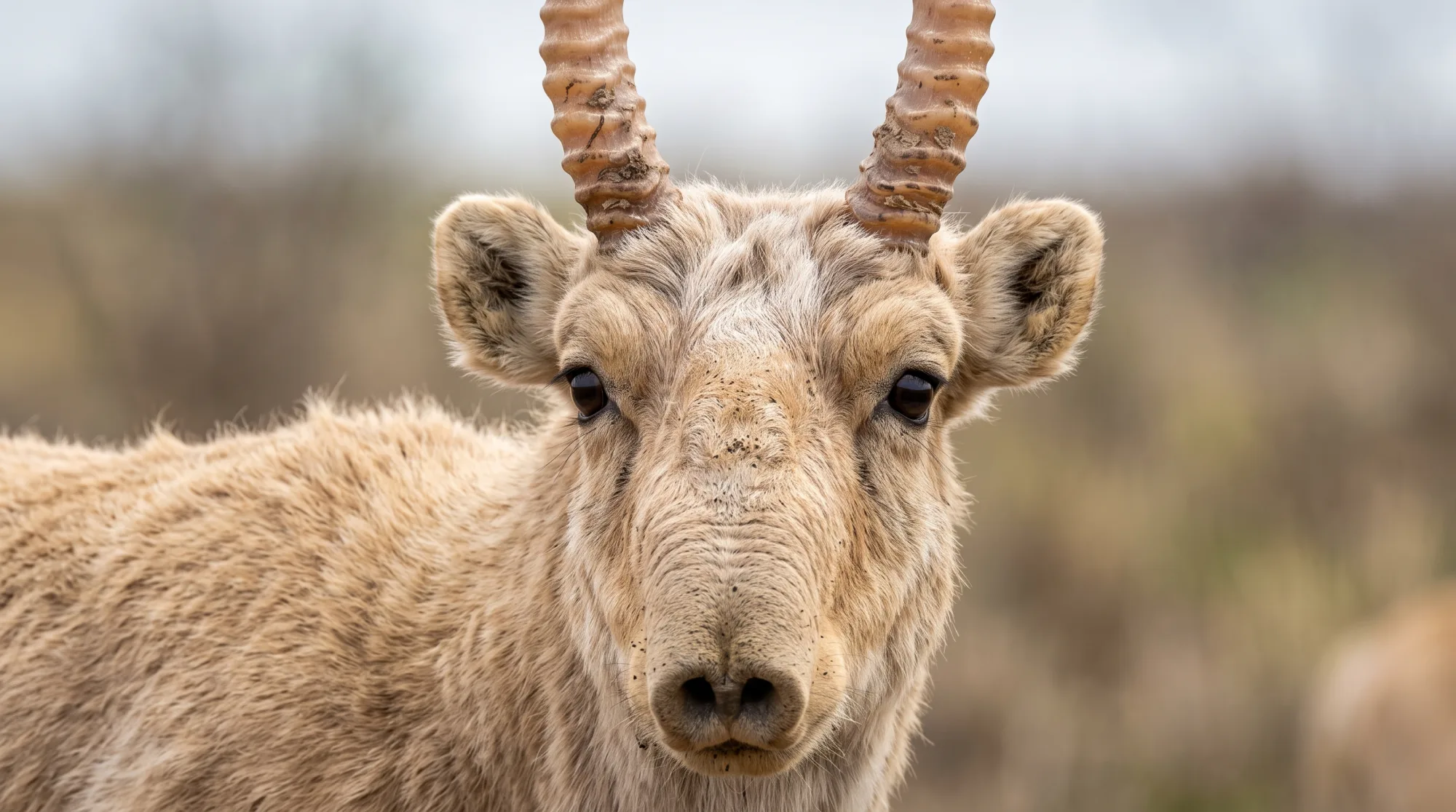
Only the males have horns – pale, ringed and slightly see-through, like wax. Unfortunately those horns are prized in traditional medicine, which is why poachers nearly wiped the species out.

Strangest biological feature

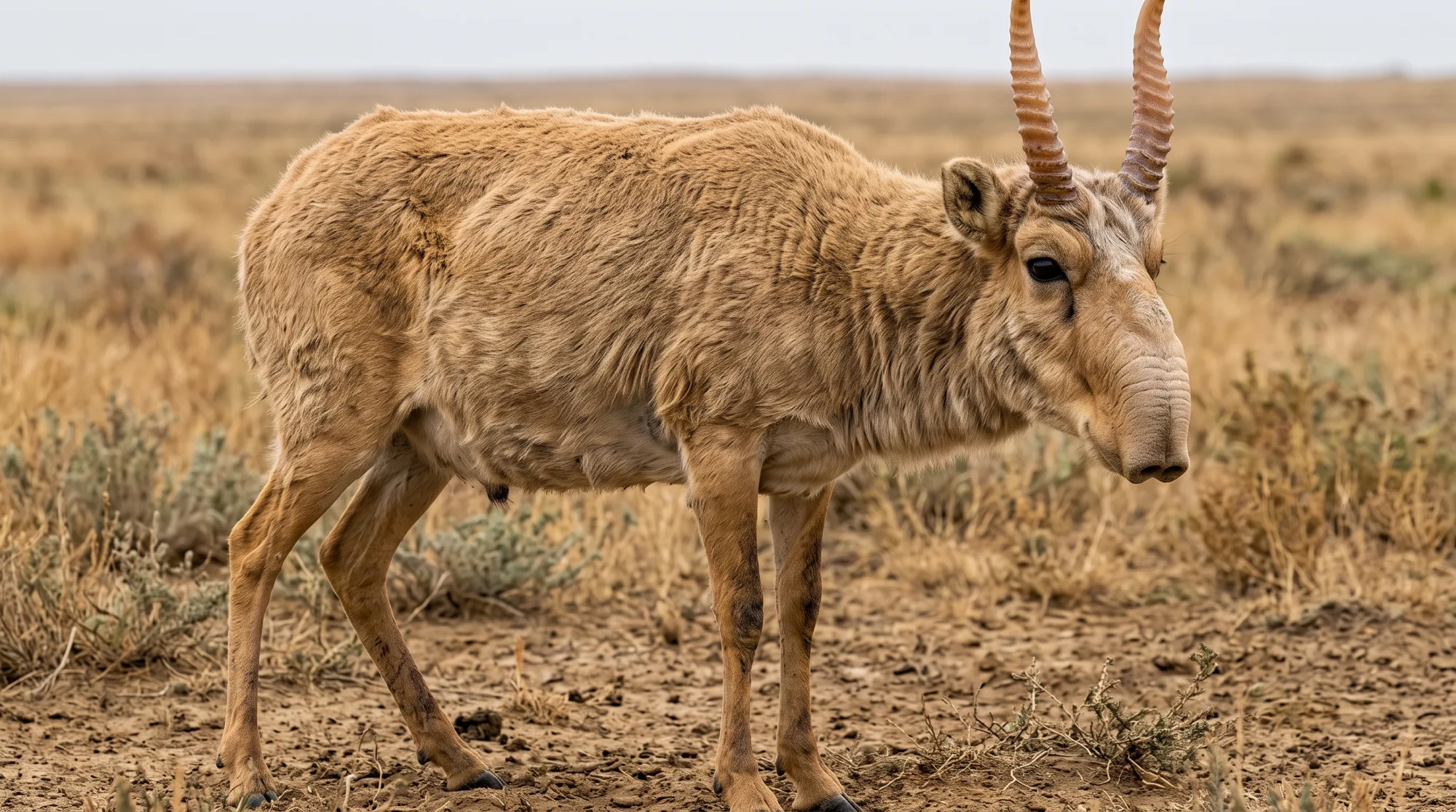
That big, bendy, downward-pointing nose. During the mating season males also use it to make loud roaring calls.

Why is it strange?

The saiga is an Ice Age leftover. It once lived all the way from Britain to Alaska, grazing alongside mammoths and woolly rhinos.

Interesting behavioral facts

Saigas migrate in huge herds over distances of up to 620 mi (1,000 km) and can run at around 80 km/h. Females gather by the tens of thousands and give birth within about a week of each other.

Records held

In 2015, more than 200,000 saigas – over half of all the saigas on Earth – died within three weeks from a sudden bacterial infection. Less than a decade later the population had bounced back into the millions.
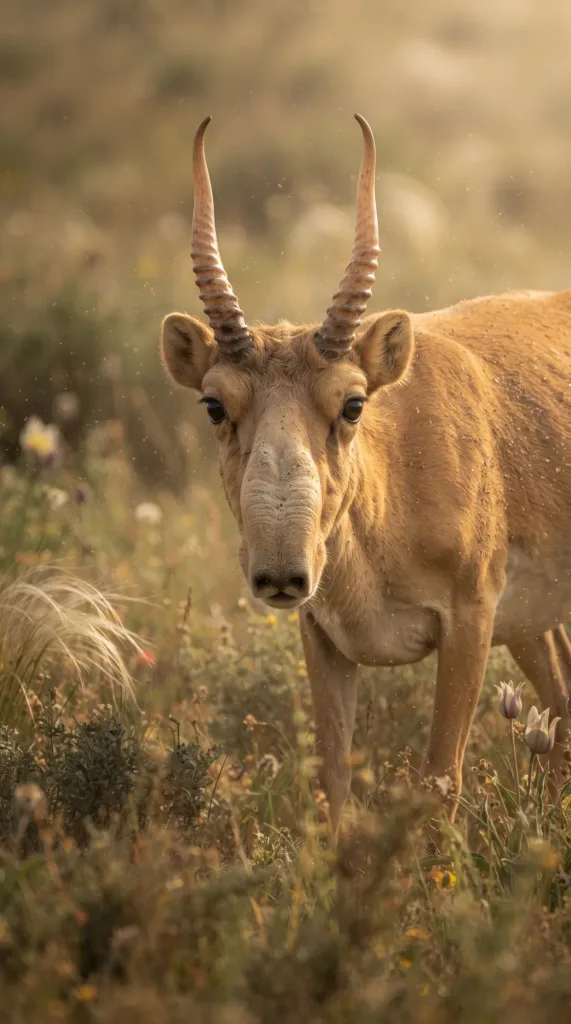
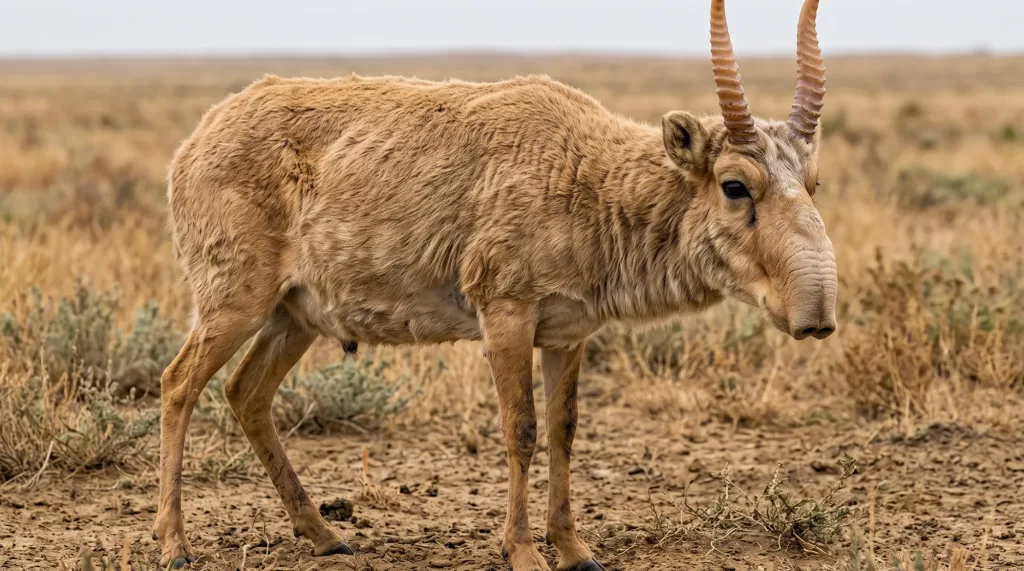
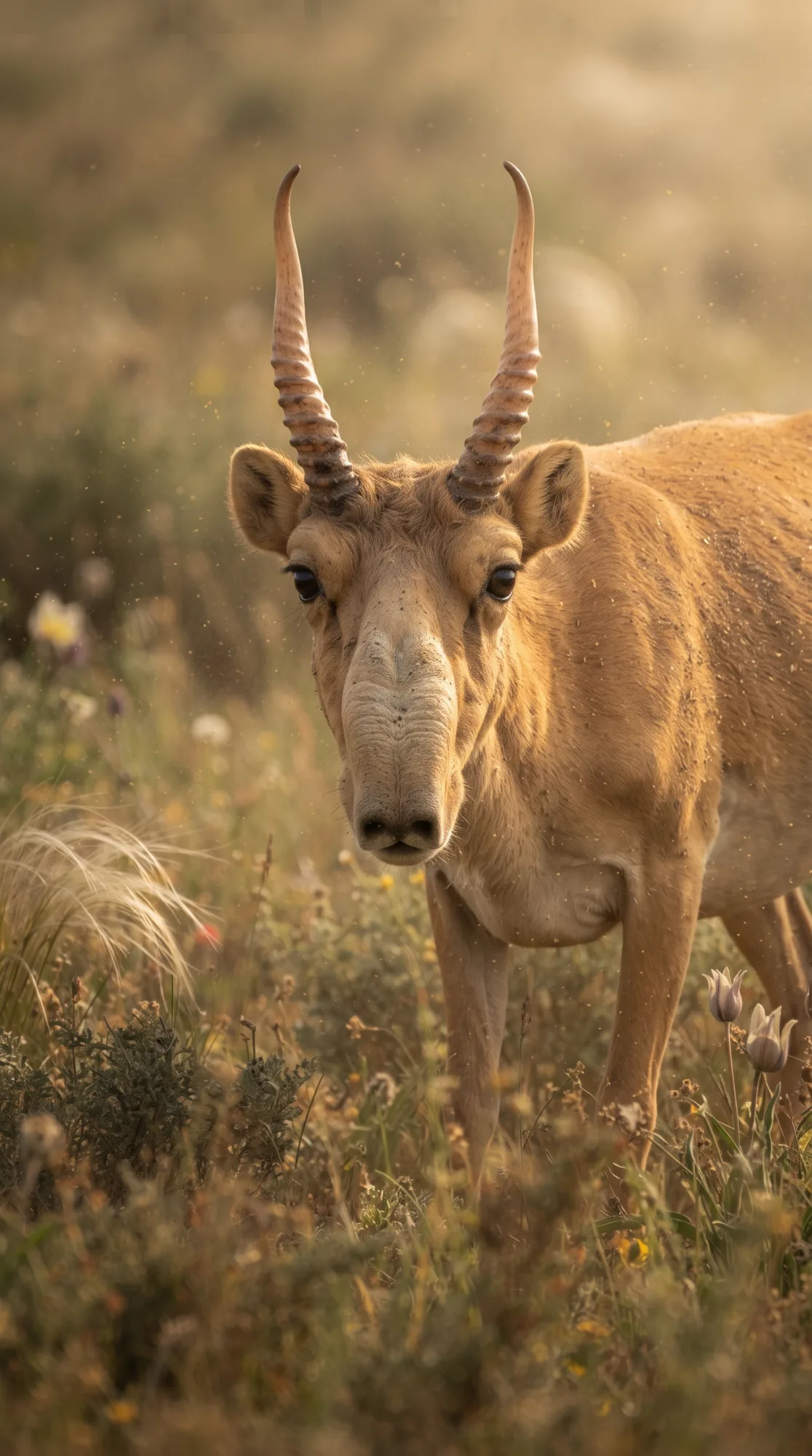
Saiga antelope with ridged horns and a large drooping nose in golden grass

Saiga Antelope: quick answers

Why does the saiga have such a big nose?

The floppy nose filters dust in the dry summer and warms freezing air in winter. Males also use it to make loud calls in the mating season.

Is the saiga still endangered?

Less than it was. Thanks to strict protection, numbers in Kazakhstan have soared, and in 2023 the IUCN moved the saiga from Critically Endangered to Near Threatened.

Why were saigas hunted?

Mainly for the males’ horns, which are used in traditional Chinese medicine. Poaching caused the population to crash in the 1990s and early 2000s.

Where can you see saigas?

Mainly on the steppes of Kazakhstan, with smaller groups in Russia, Uzbekistan and Mongolia. They’re almost never kept in zoos.

Know someone who needs to see this?

Send them the Saiga Antelope. They'll thank you. Probably.