Why is this animal unusual?
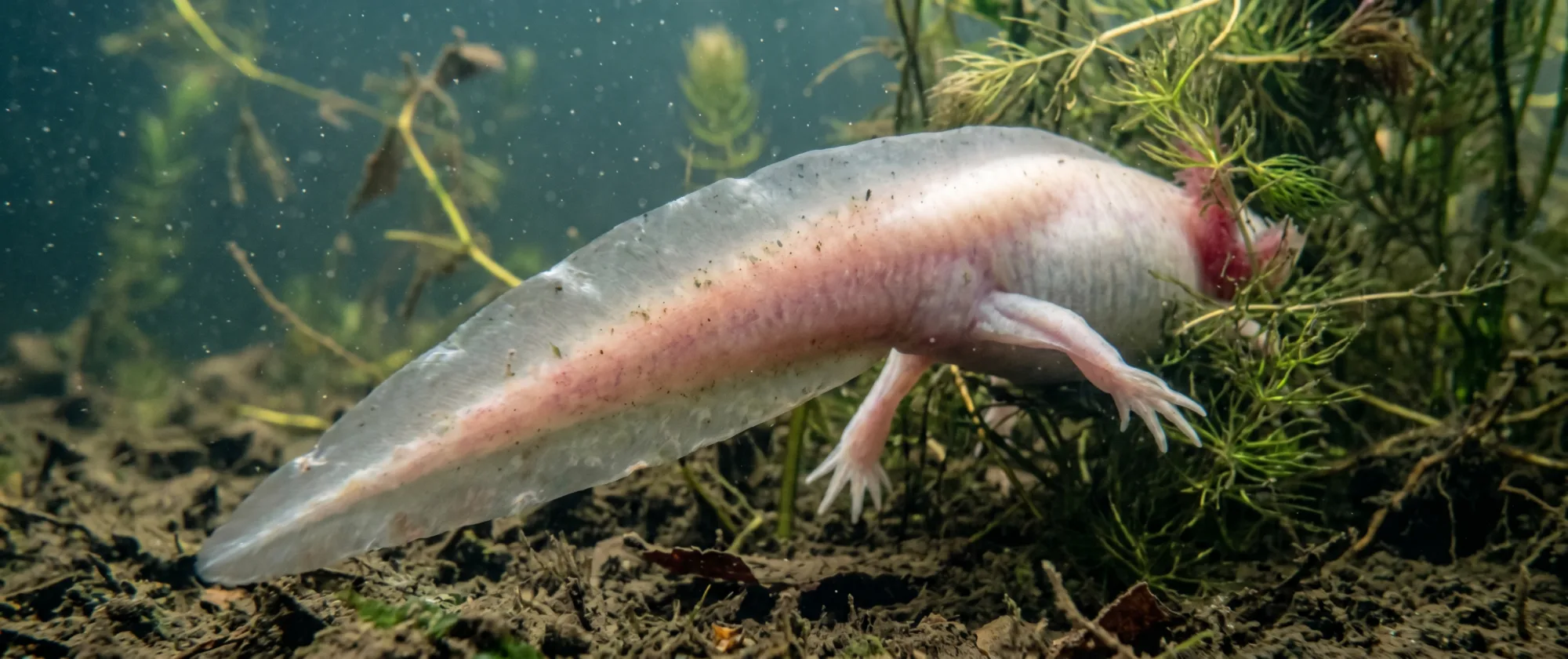
Most salamanders start life in water, then lose their gills and walk onto land. The axolotl skips that part. It stays a water-breathing “baby” its whole life and still manages to have babies of its own. Scientists call it neoteny. We call it never moving out.
Why does it look like that?
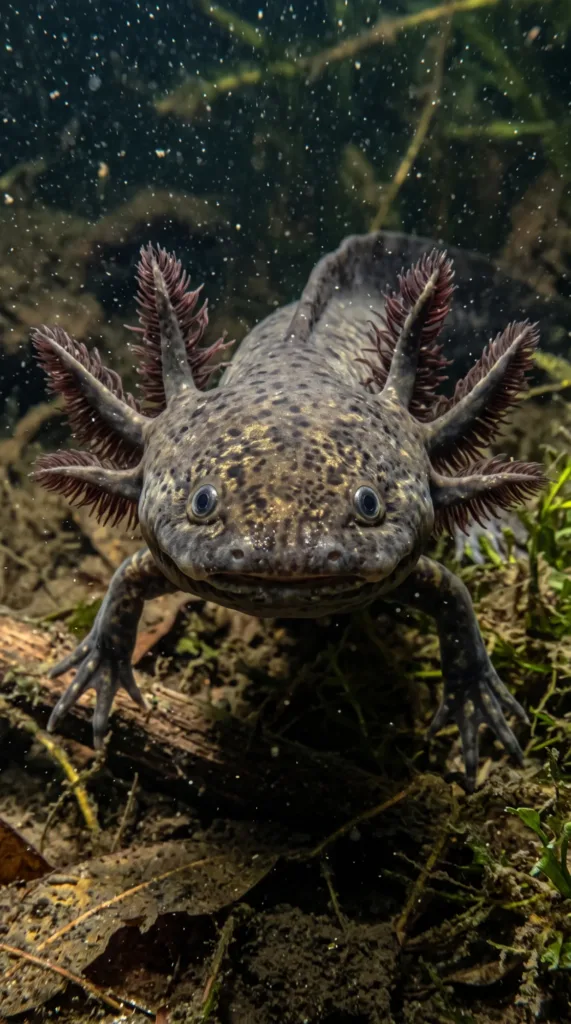
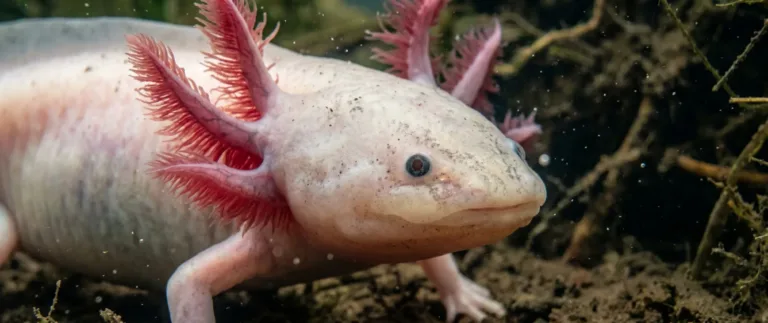
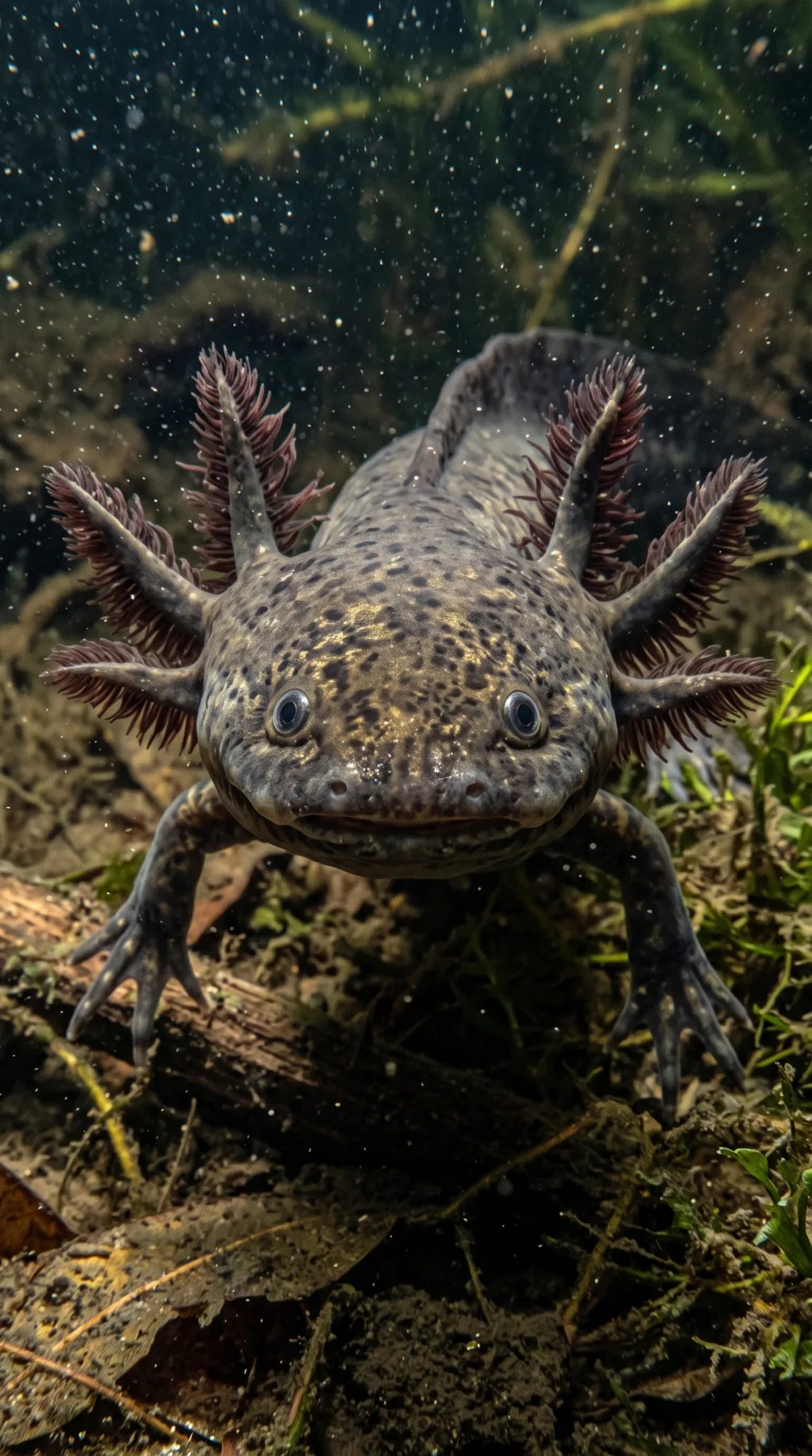
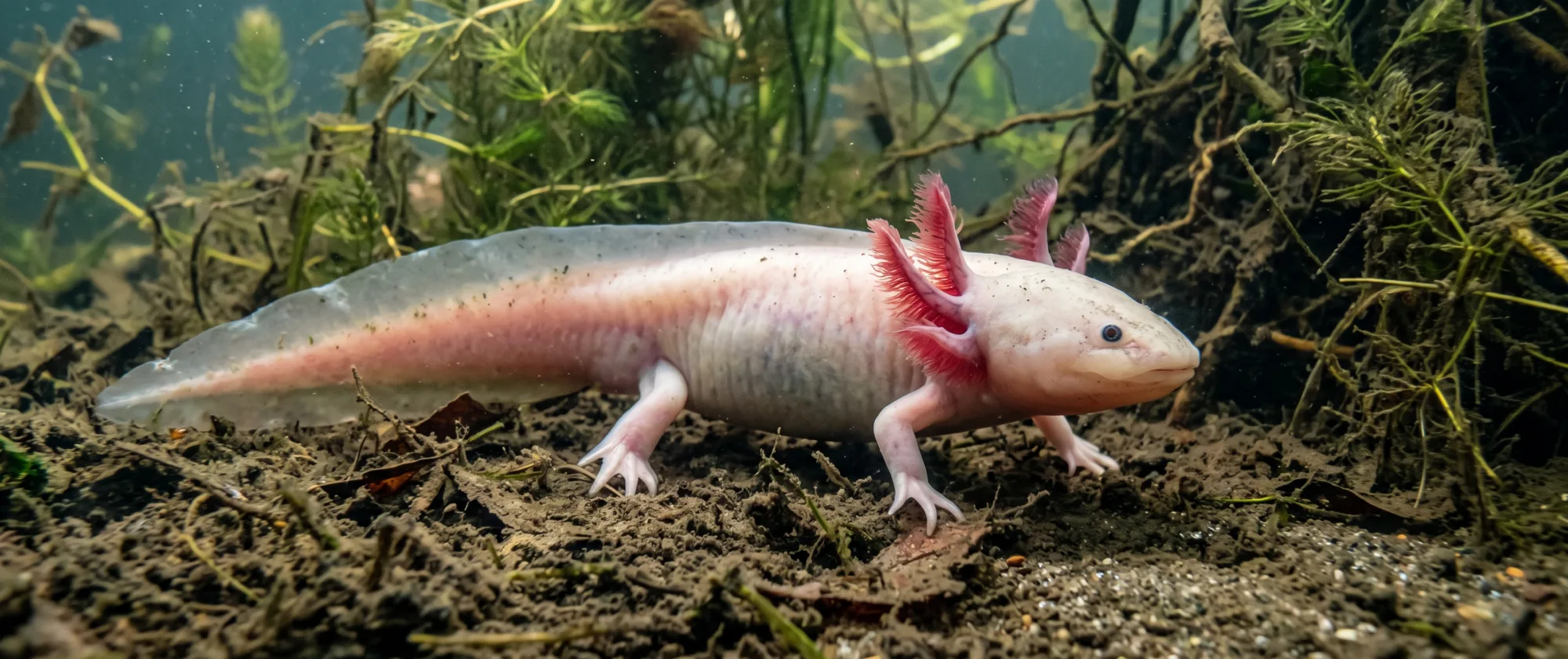
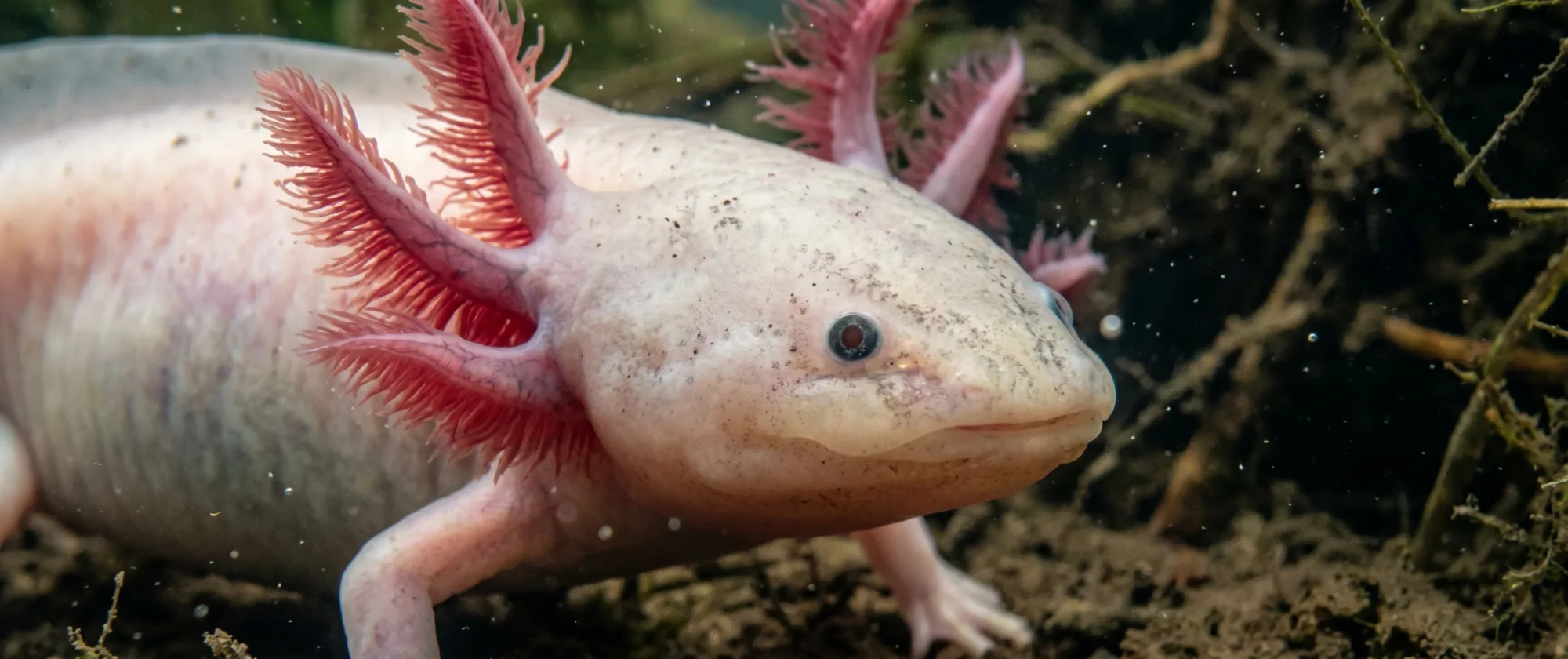
Those pink feathery things on its head are external gills – it breathes through them. The permanent smile is just the shape of its wide mouth. And the famous pink colour? That’s a pet-trade thing. Wild axolotls are a muddy dark brown with gold speckles.
Strangest biological feature
Regeneration. An axolotl can regrow an entire leg – bones, muscles, nerves and all – in a matter of weeks, without a scar. It can also rebuild its tail, its spinal cord and pieces of its heart and brain. Researchers study it hoping to learn how humans could one day heal the same way.
Why is it strange?
There are millions of axolotls in labs, aquariums and video games, yet the wild ones are nearly gone. Their only home is a network of canals in Mexico City, squeezed by pollution and hungry fish that don’t belong there.
Interesting behavioral facts
Axolotls hunt by suction: they snap their mouths open and vacuum up anything that fits. They are mostly active at night and happy to live alone. Young ones sometimes nibble each other’s legs – which, luckily, grow back.
Records held
The axolotl has one of the largest genomes ever sequenced: about 32 billion DNA letters, ten times more than a human. It’s named after Xolotl, the Aztec god of fire and lightning, who according to legend turned into one to escape being sacrificed.