Deep dive 3 min read
Axolotl Colors Explained: Pink, Blue, Albino, Gold and Copper
Pink, gold, copper, almost black and "blue". Axolotls come in a whole paint box of colours, but the wild ones look nothing like the pets.
Search for “axolotl” and you’ll drown in a rainbow: pink ones, gold ones, black ones, glittery ones and supposedly blue ones. It looks like a toy range, not a species. So which colours are real, which are rare, and what does a wild axolotl actually look like? Let’s sort the palette.
Wild type: the original look
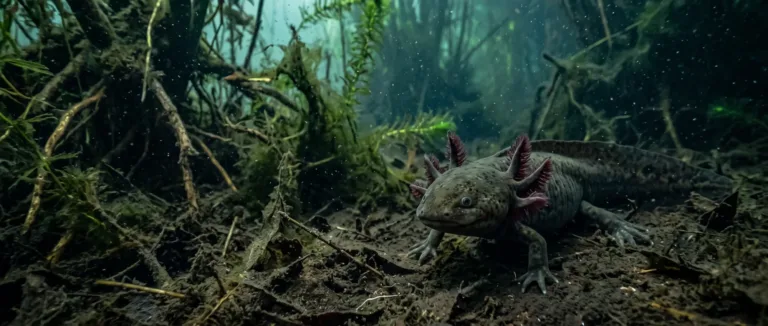
The real, wild axolotl from the lakes of Mexico City is dark. Olive, brown or greyish, often speckled with gold, and very good at disappearing against a muddy lake bed. This colour is called wild type. It isn’t flashy, but it’s the only colour you’d find in nature, and the one that kept axolotls alive for thousands of years.
Pink axolotl (leucistic)
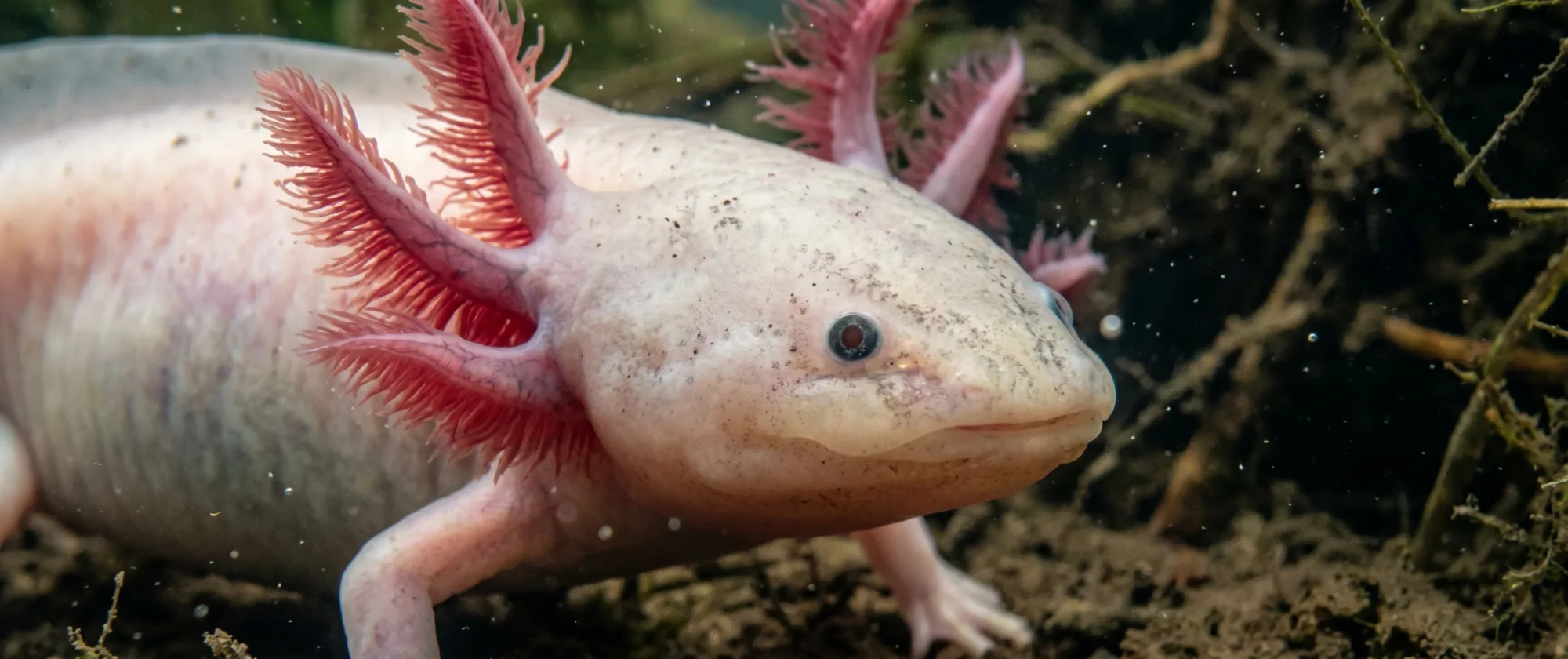
The famous pink axolotl is usually a leucistic one. Its body is white to pale pink, the frilly gills are bright pink or red, and the eyes are dark. The pink isn’t pigment: it’s blood showing through thin, almost colourless skin. This is the classic “smiling cartoon” axolotl, and the most popular pet colour by far.
Albino and golden albino
An albino axolotl looks a lot like a leucistic one, with one easy giveaway: the eyes. Albinos have pale, pinkish or clear eyes instead of dark ones, because they lack dark pigment completely.
A golden albino keeps the yellow pigment, so the whole animal glows buttery gold, often with shiny patches that sparkle under light. It’s one of the most eye-catching colours, and in photos it can look almost unreal.
Copper axolotl
The copper axolotl is a softer, warmer variant: light brown to coppery, often with darker freckles, and reddish eyes. It’s a different kind of albinism, where the dark pigment is reduced and replaced by brownish tones. Copper axolotls are less common than pink ones, so they’re a favourite among collectors.
Strange but trueSome lab axolotls carry a jellyfish gene and glow bright green under UV light. Scientists use them to follow which cells rebuild a lost leg.
Is there a blue axolotl?
Not really. The “blue axolotl” is usually a melanoid: an axolotl with lots of dark pigment and none of the shiny cells that make a wild type glitter. Under some lights, its almost-black skin takes on a steely, bluish sheen. Photos of bright, electric blue axolotls online are edited, dyed or computer generated.
A melanoid can look blue in the right light. A bright blue axolotl only exists in Photoshop.
Rare axolotl colours
The real rarities are genetic accidents. Mosaic and chimera axolotls have patches or even halves of different colours, for example one dark side and one pale side. They appear by chance during early development and can’t be bred on purpose, which makes them the unicorns of the axolotl world.
Millions of pets, almost none in the wild
Here’s the sad twist. There are millions of axolotls in tanks and labs around the world, in every colour imaginable. But in the wild, the plain dark axolotl is Critically Endangered, surviving only in the canals of Xochimilco in Mexico City. So the next time you see a pink one, remember: the real star is the brown one you’ve probably never seen.
Tell a friend