Deep dive 3 min read
How Do Axolotls Regrow Their Limbs (and Even Their Brains)?
Lose a leg, grow a new one. Lose part of your brain, grow that too. The axolotl is the champion of regeneration, and scientists are desperate to learn its secret.
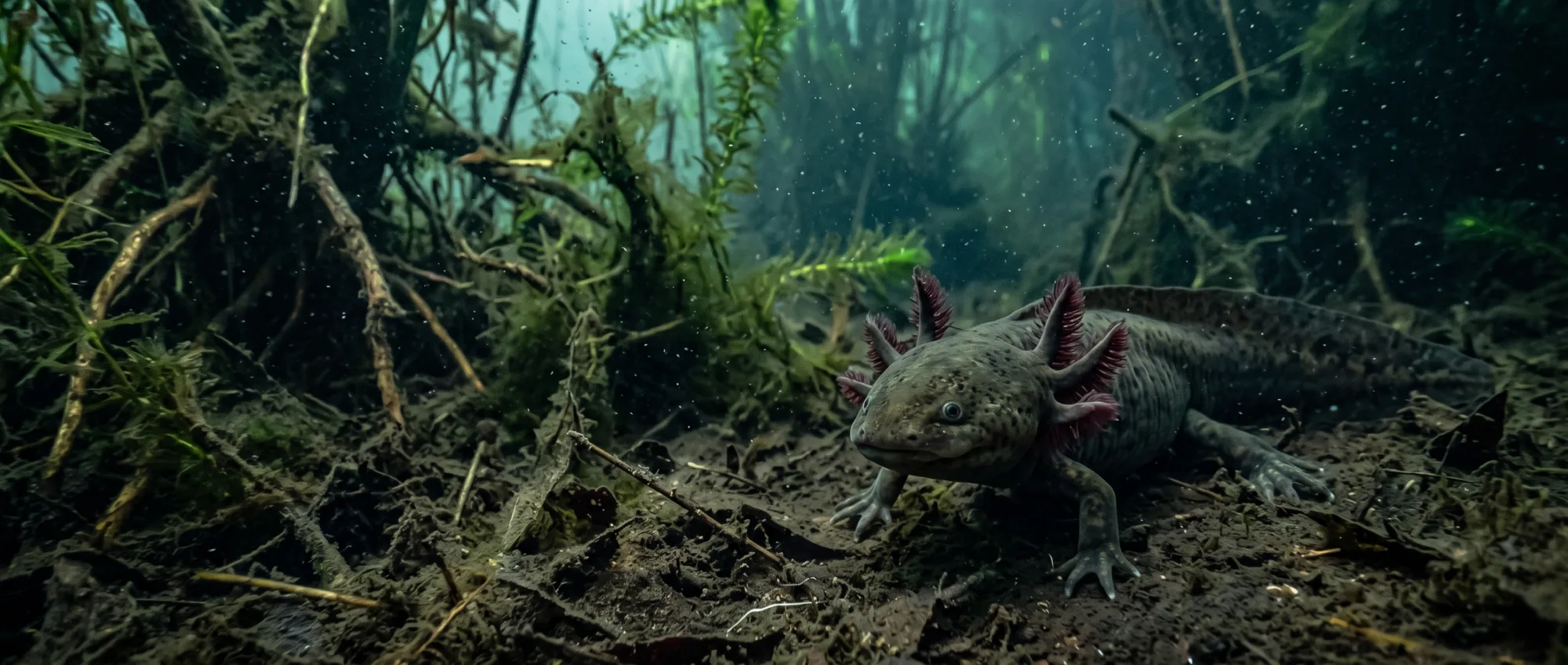
If you cut off a human finger, you get a scar. If you cut off an axolotl‘s leg, you get a brand-new leg, complete with bones, muscles, nerves and little toes, in a matter of weeks. No scar, no limp, no drama. This Mexican salamander is the undisputed champion of regeneration, and it can do far more than regrow limbs.
What can an axolotl regrow?
Almost anything. Axolotls can rebuild their legs, tail and the spinal cord inside it. They can repair damaged parts of their heart, their eyes and their jaw. They can even replace lost parts of their brain. And they don’t do it once: an axolotl can regrow the same leg again and again.
A human heals with a scar. An axolotl heals with a brand-new body part.
Step 1: seal the wound
Within hours of losing a limb, skin cells crawl over the stump and close it off. In humans, this is where scar tissue would form and the story would end. In axolotls, this thin layer of skin becomes a control centre, sending out signals that tell the cells underneath: “We’re building.”
Step 2: build a blastema
Under the new skin, a little bump appears. It’s called a blastema, and it’s the magic ingredient. Cells from the stump, such as muscle and connective tissue, gather there and partly “rewind” into a more flexible, younger state. Think of it as a pile of building blocks waiting for instructions.
Step 3: remember the blueprint
Here’s the clever bit. The cells in the blastema remember where they came from. If the leg was cut at the elbow, they rebuild a forearm and a hand, not a whole new shoulder. Step by step, the bump grows, stretches and shapes itself into bones, joints and fingers. Within weeks to a few months, depending on the axolotl’s age and size, the new limb is fully working.
Strange but trueWhen scientists removed certain immune cells called macrophages, axolotls stopped regenerating and formed scars instead. The immune system turns out to be part of the secret.
Why can’t we do it?
We share many of the same genes, so why are humans stuck with scars? One reason is that our bodies prioritise speed. Closing a wound fast with scar tissue protects us from infection, but it also blocks regrowth. Axolotls take the slower route and rebuild properly.
Axolotls also have a gigantic genome, about ten times bigger than ours. When scientists finally decoded it in 2018, they gained a huge toolbox for finding the genes that switch regeneration on. The dream is to one day help humans heal spinal cord injuries, damaged hearts or lost limbs.
The Peter Pan factor
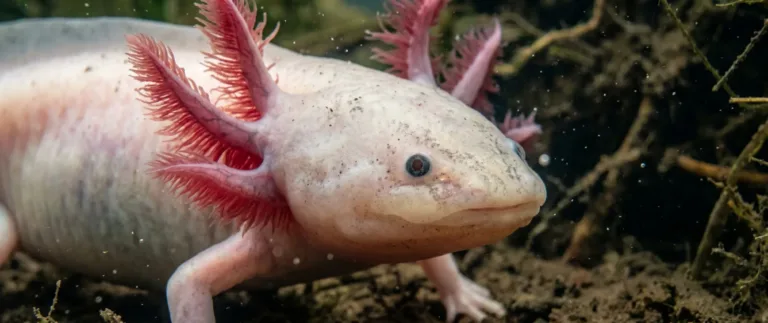
Axolotls are famous for never really growing up. They keep their feathery gills and live in water their whole lives, like a giant tadpole. This “forever young” lifestyle seems to help. Axolotls that are forced to transform into adult, land-living salamanders lose much of their regenerating power. Staying a kid, it seems, has its perks.
Tell a friend