Skip to content
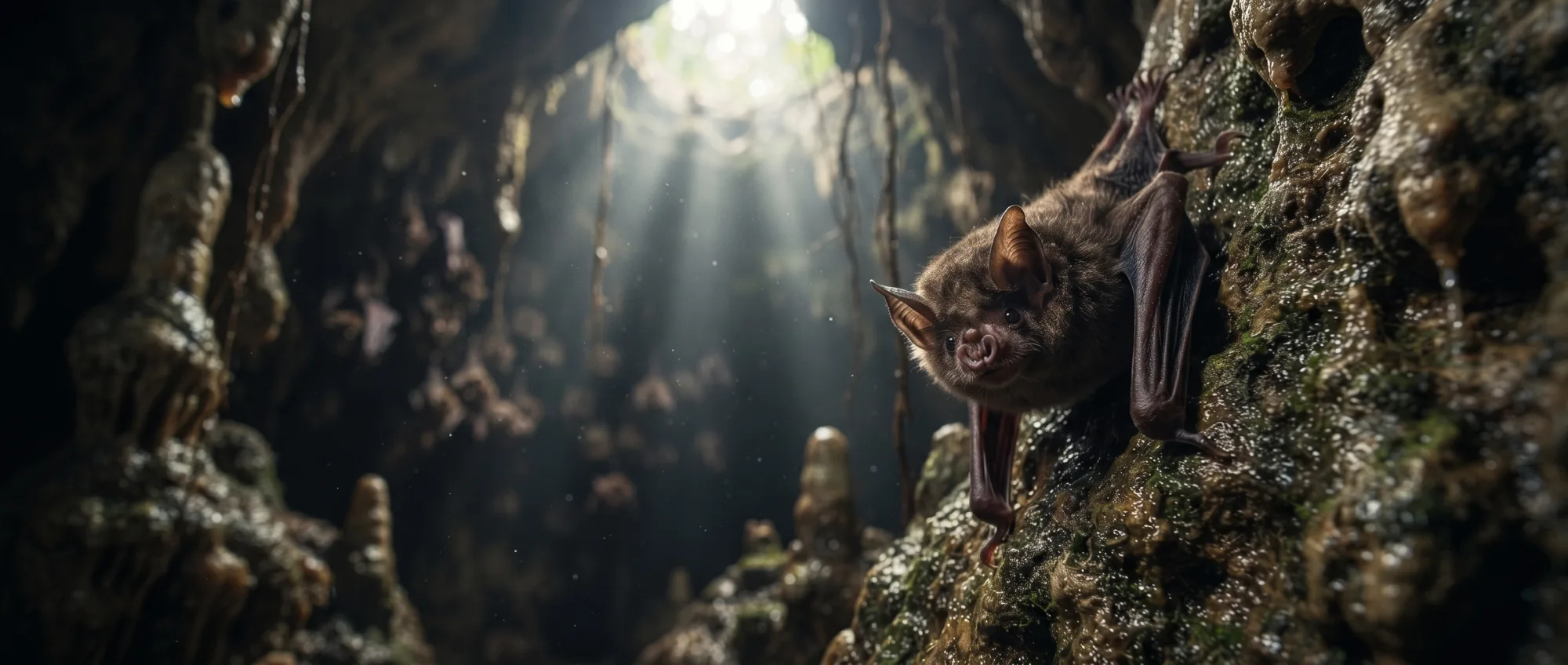
Vampire bat hanging in a cave lit by a beam of light

Vampire Bat: Facts, Photos & Why It’s So Strange

Desmodus rotundus

Yes, it drinks blood. It’s also a great friend.

Vampire bats are the only mammals that live on nothing but blood. The common vampire bat creeps up on sleeping animals, makes a tiny cut and laps up a spoonful. But the really surprising thing about vampire bats isn’t the blood. It’s how kind they are to each other.

Vampire Bat vs. you

Your height ft in5 ft 7 in

Quick facts

Size
2.8–3.5 in
Body 2.8–3.5 in (7–9 cm), with a wingspan of about 14–16 in (35–40 cm)
Weight
0.9–1.4 oz
0.9–1.4 oz (25–40 g)
Lifespan
~9 years
About 9 years in the wild; up to 20 or more in zoos
Left in the wild
Unknown
Unknown – common

Conservation status

  1. Least Concern (this animal)
  2. Near Threatened
  3. Vulnerable
  4. Endangered
  5. Critically Endangered
  6. Extinct in the Wild
  7. Extinct

Least Concern

Superpowers

  • Venomous : Is it venomous? No
  • Glows : Does it glow? No
  • Regenerates limbs : Can it regenerate limbs? No

Identity

Scientific name
Desmodus rotundus
Class
Mammal (bat)
First described
1810, by Étienne Geoffroy Saint-Hilaire

Life & family

Diet
Blood – mostly from cattle, horses and other large animals
Gestation
About 7 months
Offspring
One pup
Predators
Owls, hawks and snakes

Where to find it

Habitat
Caves, hollow trees and old buildings near livestock
Lives in
From Mexico to Argentina and Chile
In the wild
Possible – in caves in Central and South America
In zoos
Yes – some zoos keep colonies

Explore similar

Why is this animal unusual?

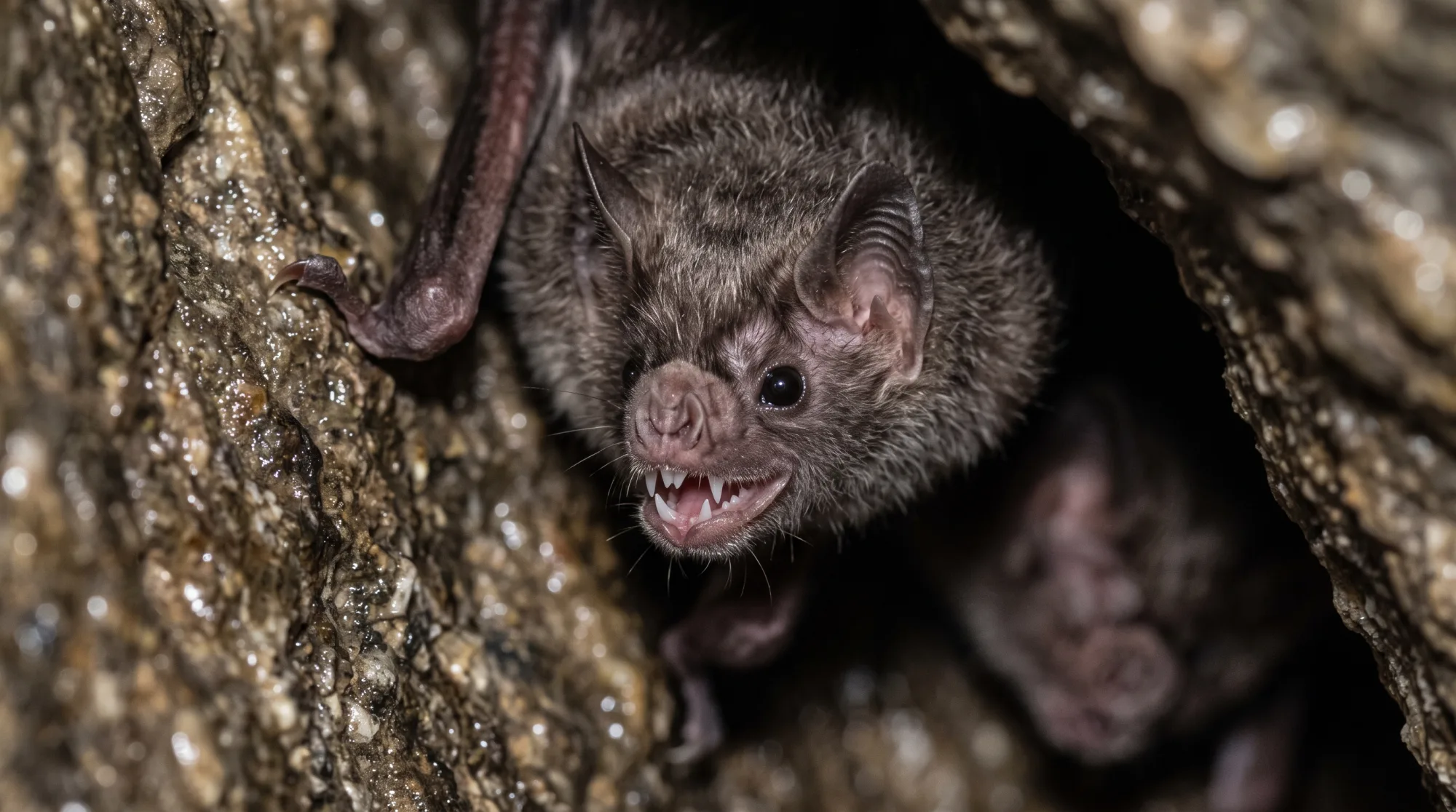
It doesn’t suck. It makes a small, painless cut with razor-sharp front teeth and licks up the blood that flows. Its saliva stops the blood from clotting – the substance responsible is called draculin.

Why does it look like that?

A flat, wrinkled nose with heat sensors that can find warm blood vessels just under the skin of its victim.

Strangest biological feature

It can walk, run and jump. Unlike almost any other bat, it’s agile on the ground, and takes off with a push-up powered by its thumbs.

Why is it strange?

A vampire bat that misses two or three meals in a row will starve. So bats that have fed share with hungry roost-mates by bringing blood back up for them – and they remember who helped them before.

Interesting behavioral facts

A feeding bat drinks about half its body weight, so it starts peeing within minutes to become light enough to fly home.

Records held

Its saliva inspired an experimental clot-busting drug, desmoteplase, that was tested on stroke patients – though it never made it to approval.
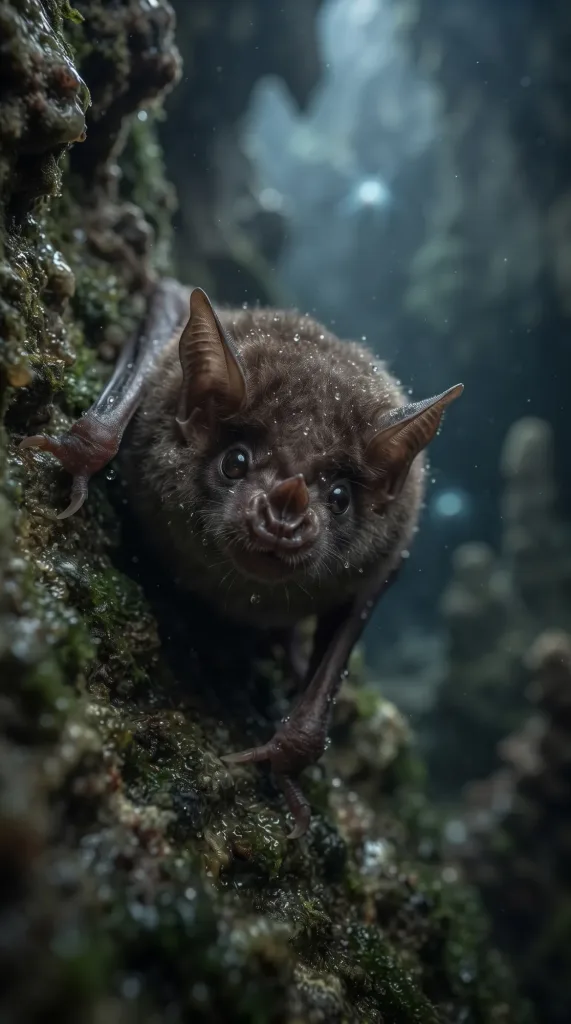
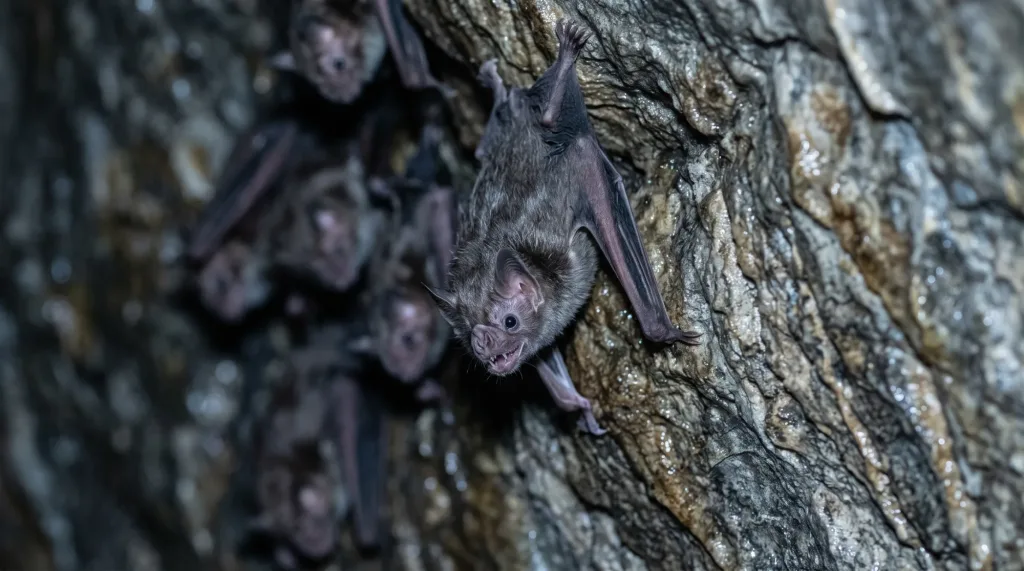
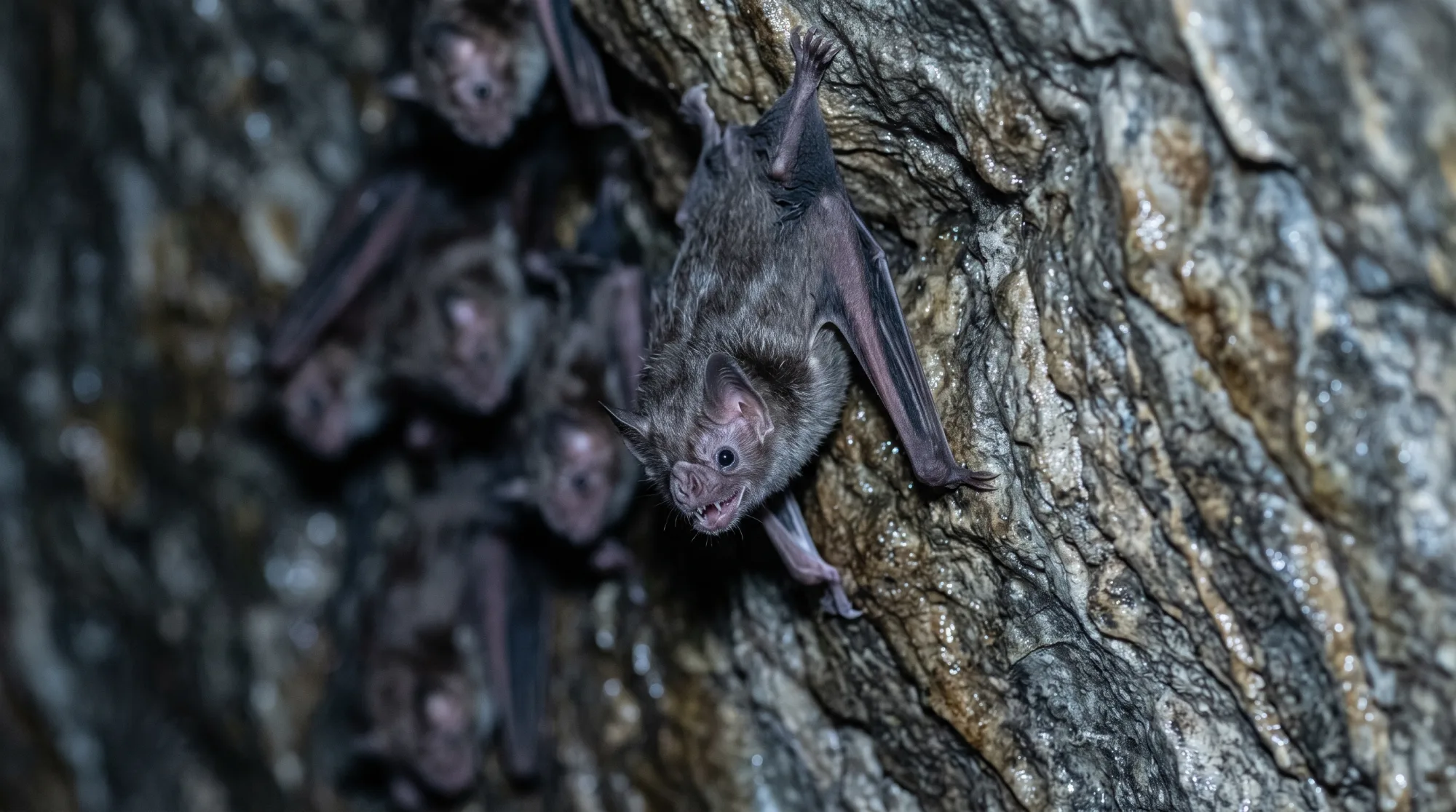
Dark vampire bat with sharp teeth clinging to a mossy rock in a cave

Vampire Bat: quick answers

Do vampire bats bite humans?

Rarely. They prefer cattle, horses and other large animals, but they occasionally bite sleeping people. The real danger is rabies, which vampire bats can carry.

How many kinds of vampire bat are there?

Three: the common vampire bat, the hairy-legged vampire bat and the white-winged vampire bat. All live in the Americas, and the last two feed mostly on birds.

Do vampire bats live in Transylvania?

No. All three species live in Central and South America and Mexico. They were named after European vampire legends, not the other way round.

How much blood does a vampire bat drink?

About half its body weight in one meal – roughly a tablespoon or two. It starts peeing within minutes so it’s light enough to fly home.

Where do vampire bats live?

From Mexico through Central America to Argentina, Chile and Uruguay. They roost in caves, hollow trees, old mines, wells and empty buildings.

Are there vampire bats in the USA?

Not today. Fossils show vampire bats once lived in parts of the US, and the common vampire bat now lives in north-eastern Mexico, not far from the Texas border.

Know someone who needs to see this?

Send them the Vampire Bat. They'll thank you. Probably.