Deep dive 3 min read
Vampire Bat Teeth: How Vampire Bats Drink Blood
Vampire bats don't suck blood – they lick it. Here's how their razor teeth, heat-sensing noses and special saliva turn a tiny bite into a meal.
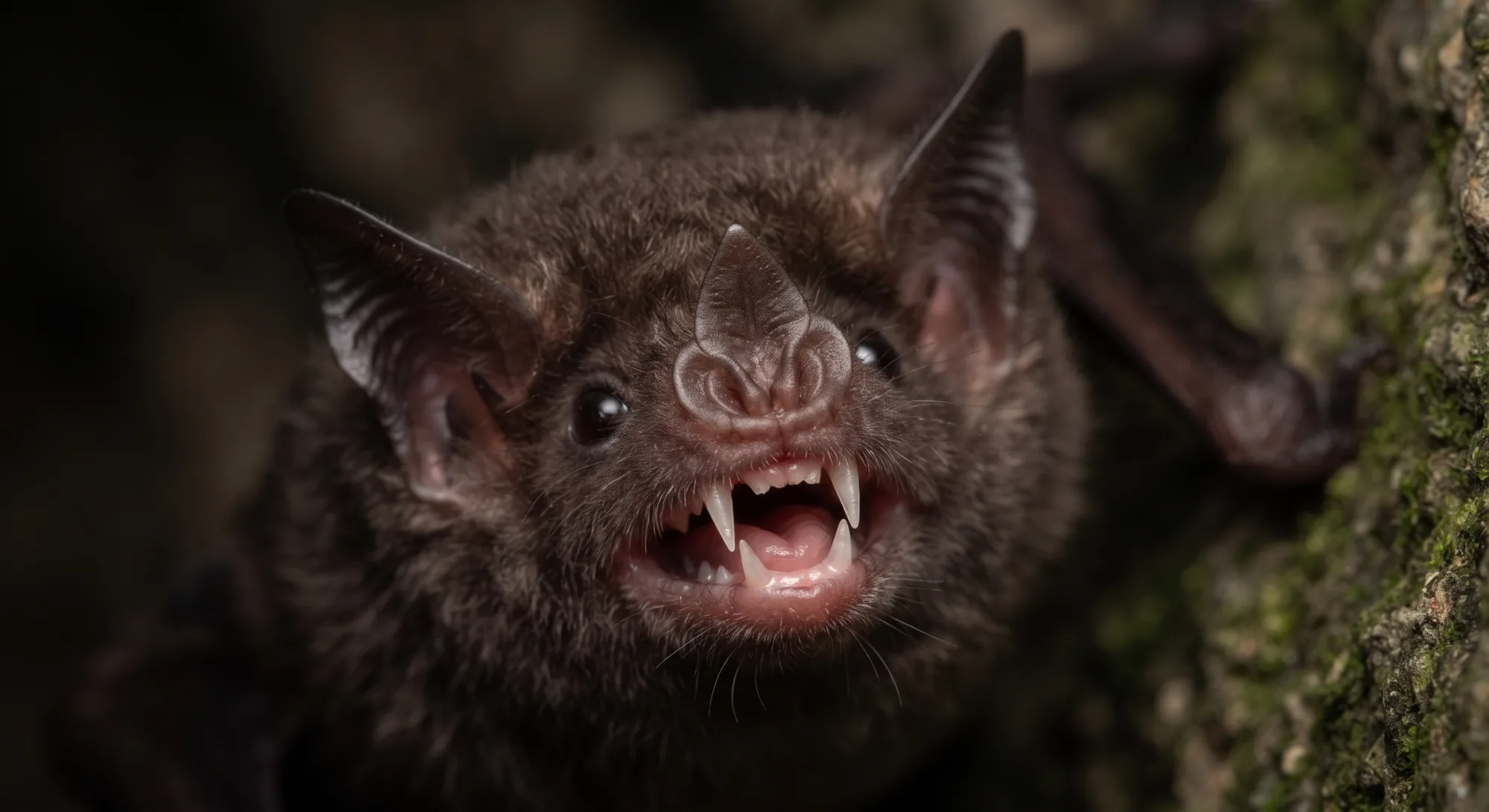
Forget Dracula’s neat pair of fangs. Real vampire bats don’t bite deep and they don’t suck. They make a tiny, razor-precise cut and lap up the blood like a cat drinking milk. Here’s how a bat the weight of a few coins pulls it off, night after night.
Do vampire bats really drink blood?
Yes. The three species of vampire bat are the only mammals that live on blood alone. The common vampire bat feeds mostly on cattle, horses and pigs. The hairy-legged and white-winged vampire bats prefer birds. All three live in Mexico, Central America and South America.
Vampire bat teeth: small, few and very sharp
A vampire bat has fewer teeth than most bats, because it never needs to chew. What it does have is two upper front teeth (incisors) that are as sharp as a scalpel and kept that way because they’re constantly worn to an edge. Its canine teeth are sharp too, but the incisors do the real work.
- Front incisors: slice a small, shallow cut, often just a few millimetres deep.
- Canines: help shave away fur or feathers from the spot.
- Cheek teeth: tiny and almost useless, because liquid food needs no grinding.
How a vampire bat drinks blood, step by step
1. Find a sleeping animal. The bat flies out on the darkest nights and finds a resting cow or horse by smell and sound.
2. Land and walk. Vampire bats are unusually good on the ground. They walk, hop and even run on their folded wings and back legs to sneak up on their host.
3. Feel for heat. Special heat sensors on its nose let the bat “see” where warm blood vessels lie close to the skin.
4. Cut. A quick bite with the incisors. Most sleeping animals don’t even wake up.
5. Keep it flowing. The bat’s saliva contains chemicals that stop blood from clotting, so the wound keeps bleeding while it feeds.
6. Lick, don’t suck. Grooves on its tongue carry the blood into its mouth. A meal lasts around 20 to 30 minutes.
Strange but trueA vampire bat drinks so much that it might be too heavy to take off. So it starts peeing within minutes of starting its meal, getting rid of the water and keeping the nutrients.
Is a vampire bat bite dangerous?
The bite itself is small. The danger is disease: vampire bats can carry rabies, which is a serious problem for cattle farmers in Latin America and occasionally for people. Anyone bitten by a bat should see a doctor right away.
Blood-sharing friends
A vampire bat can starve after about two to three nights without a meal. So bats that fed well regurgitate some blood for hungry roost-mates, and they’re more likely to help bats that helped them before. It’s one of the best-known examples of animal friendship, from an animal with a terrible reputation.
Scientists even studied vampire bat saliva for medicine. An anticoagulant based on it, called desmoteplase, was tested on stroke patients, though it was never approved for use.
Sources
Tell a friend