Skip to content
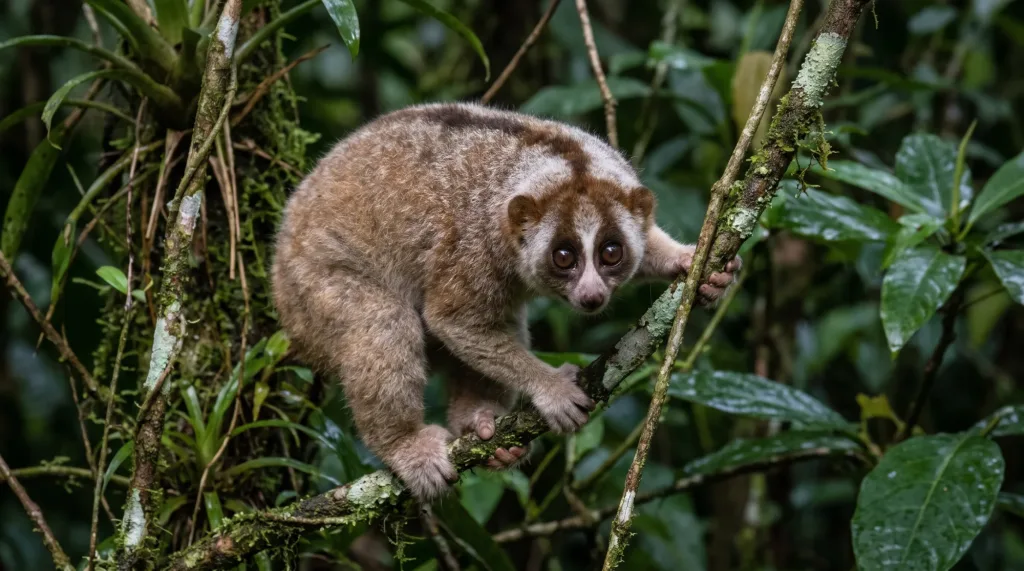
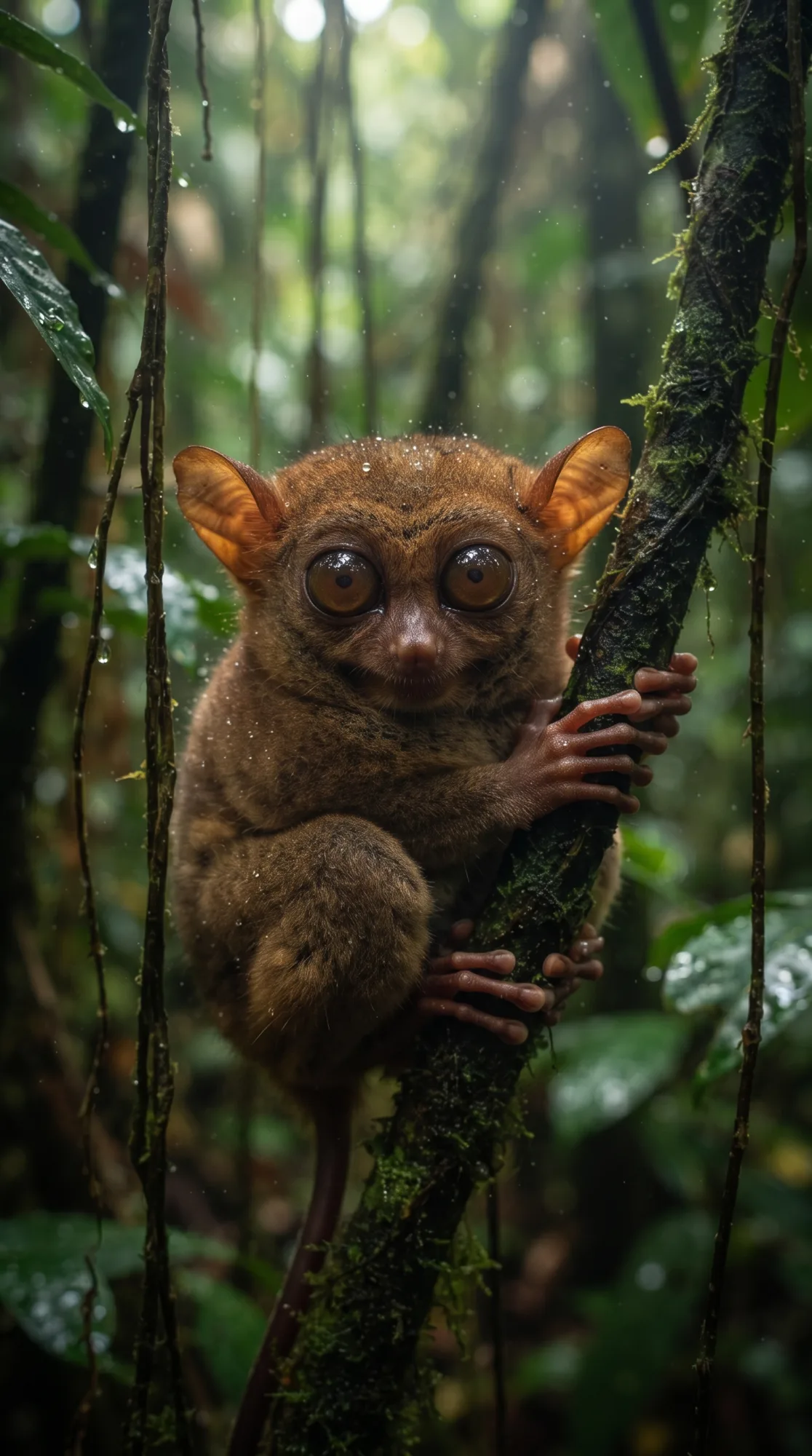
Slow loris with big round eyes clinging to a mossy branch in a misty rainforest with sunbeams

Slow Loris: Facts, Photos & Why It’s So Strange

Nycticebus (about 9 species)

Adorable. Venomous. Do not tickle.

Huge round eyes, a teddy-bear face and movements as slow as a clockwork toy. The slow loris may be the cutest primate on the planet. It’s also the only venomous one. And those viral videos of it being “tickled”? That’s a terrified animal trying to defend itself.

Slow Loris vs. you

Your height ft in5 ft 7 in

Quick facts

Size
7–15 in
7–15 in (18–38 cm), depending on the species
Weight
9 oz–4.4 lb
From 9 oz (250 g) to about 4.4 lb (2 kg)
Lifespan
~20 years
About 20 years
Left in the wild
Unknown
Unknown – all species are declining

Conservation status

  1. Least Concern
  2. Near Threatened
  3. Vulnerable
  4. Endangered (this animal)
  5. Critically Endangered
  6. Extinct in the Wild
  7. Extinct

Endangered

Superpowers

  • Venomous : Is it venomous? Yes – it’s the only venomous primate
  • Glows : Does it glow? No
  • Regenerates limbs : Can it regenerate limbs? No

Identity

Scientific name
Nycticebus (about 9 species)
Class
Mammal (primate)

Life & family

Diet
Tree gum, nectar, fruit and insects
Gestation
About 6 months
Offspring
Usually one baby
Predators
Snakes, eagles and orangutans

Where to find it

Habitat
Tropical forest and bamboo groves
Lives in
South and Southeast Asia
In the wild
Hard – they’re nocturnal and slow, so easy to miss
In zoos
Yes – in night houses at some zoos

Explore similar

Why is this animal unusual?

It has a gland on the inside of each elbow. When threatened, it licks the gland, mixes the oil with its saliva and delivers a bite that can cause serious, slow-healing wounds – and in people, sometimes a dangerous allergic reaction.

Why does it look like that?

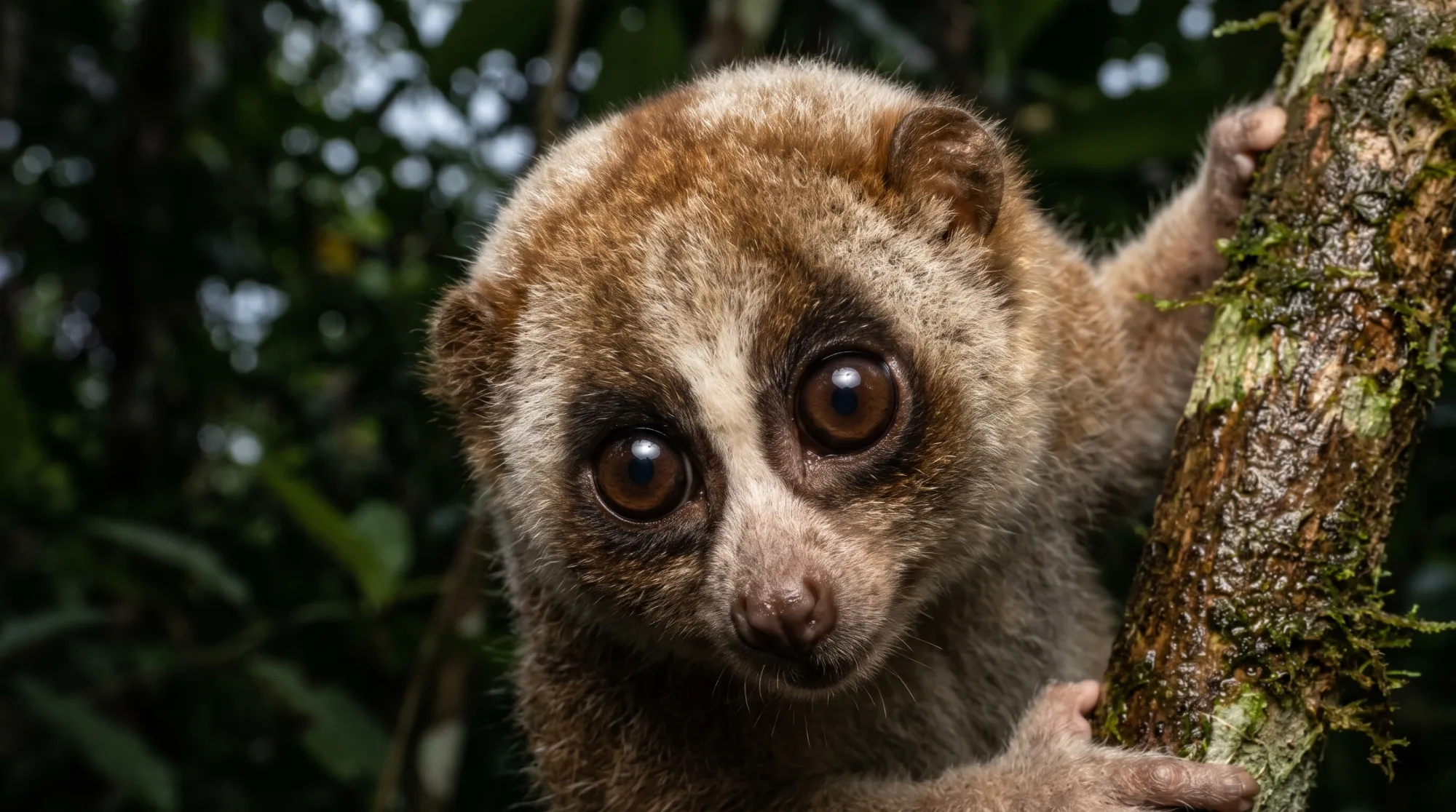
Enormous eyes for seeing at night, a wet nose, and a round head it can turn almost all the way around.

Strangest biological feature

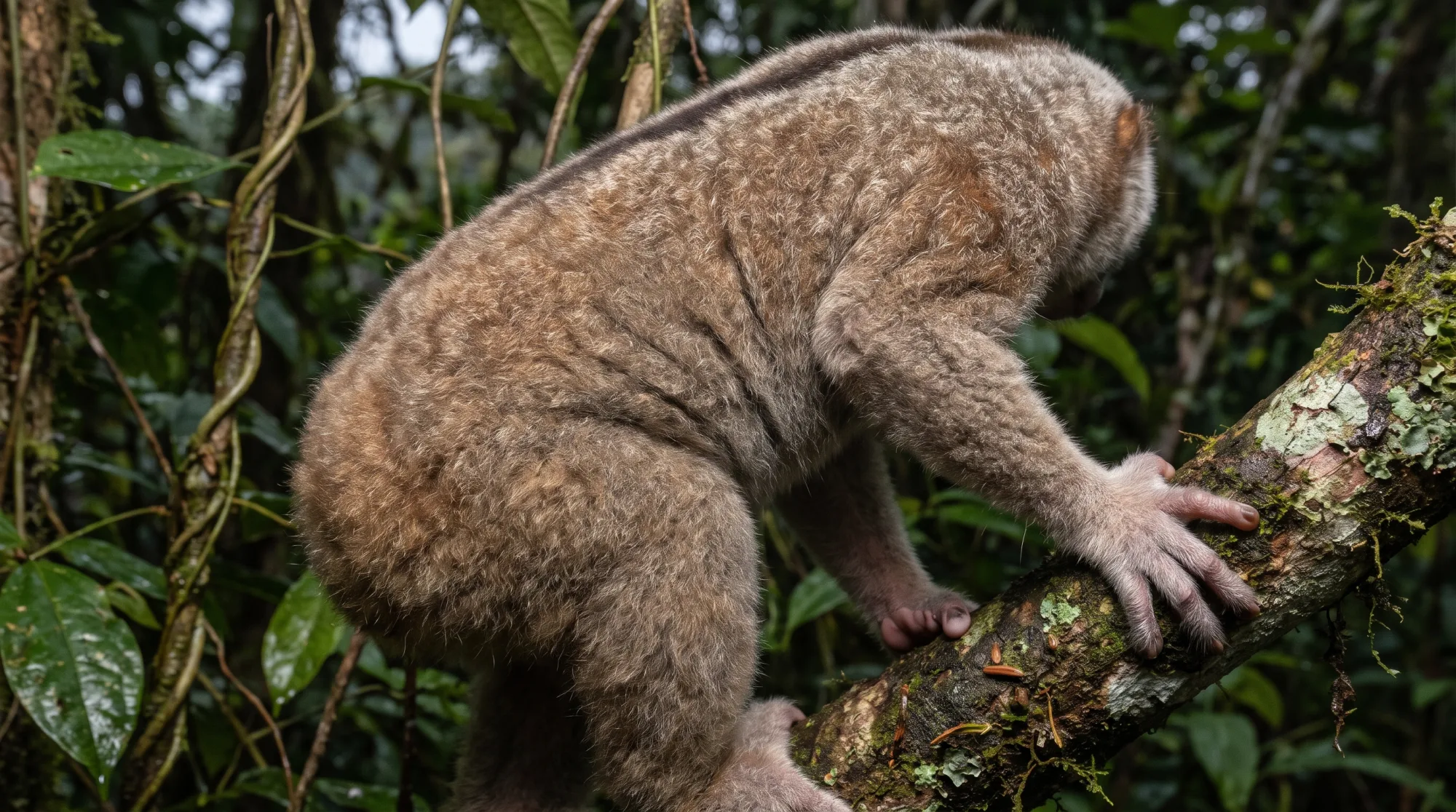
An iron grip. Special blood vessels in its hands and feet let it hold on to a branch for hours without its muscles tiring.

Why is it strange?

Raising its arms above its head isn’t “asking for tickles”. It’s the loris reaching for the venom glands on its elbows.

Interesting behavioral facts

Mothers lick their babies with venom before leaving them parked on a branch, to protect them from predators.

Records held

The only primate in the world with a venomous bite.

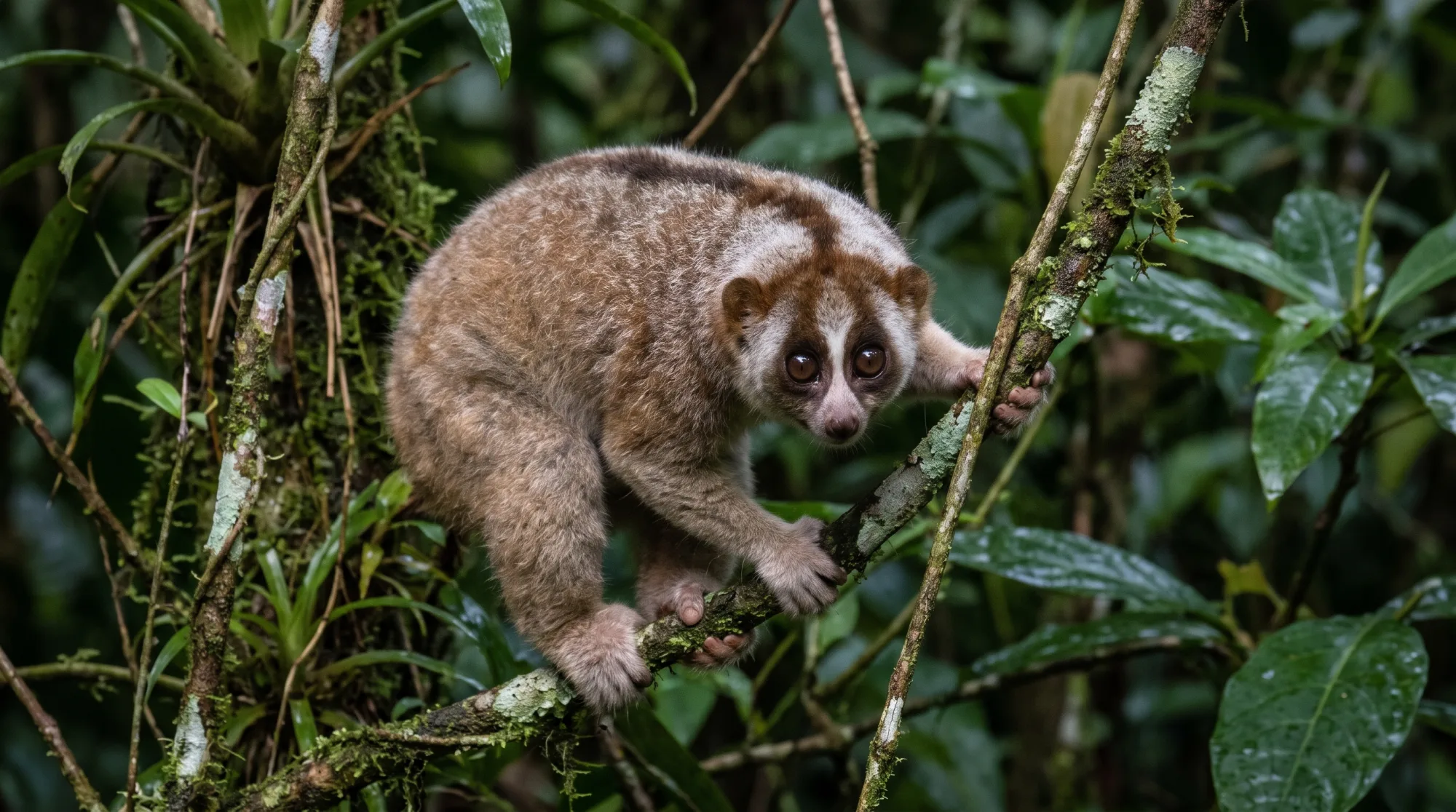
Slow loris with large orange eyes clinging to a mossy branch in a dense green rainforest

Slow Loris: quick answers

Is a slow loris bite dangerous?

Yes. The venomous bite can cause painful, slow-healing wounds, and in people it can sometimes trigger a dangerous allergic reaction.

Can you keep a slow loris as a pet?

No. All slow lorises are protected, and the pet trade is one of the main reasons they are disappearing. Pet lorises often have their teeth pulled out.

Why is the slow loris endangered?

Because of forest loss and the illegal pet and traditional medicine trade.

Where do slow lorises live?

In tropical forests and bamboo groves of South and Southeast Asia.

Know someone who needs to see this?

Send them the Slow Loris. They'll thank you. Probably.