Skip to content
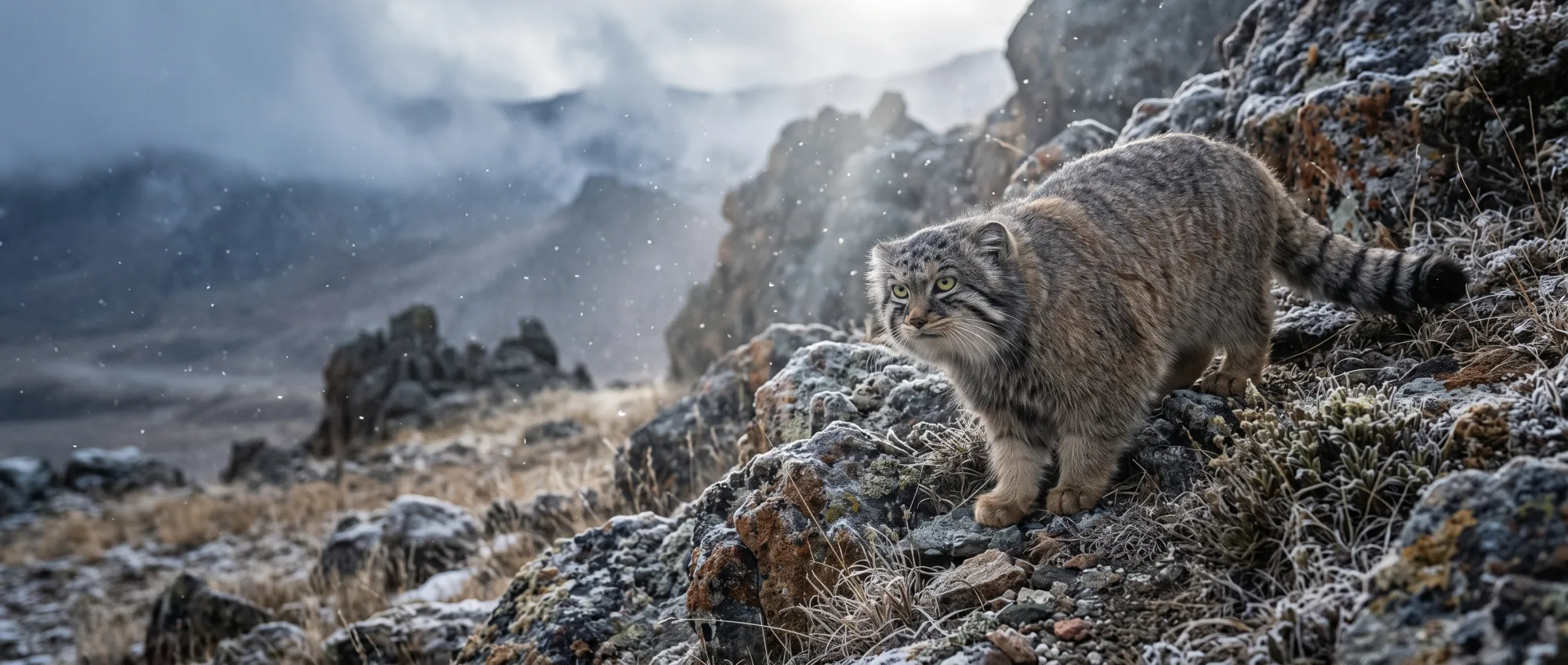
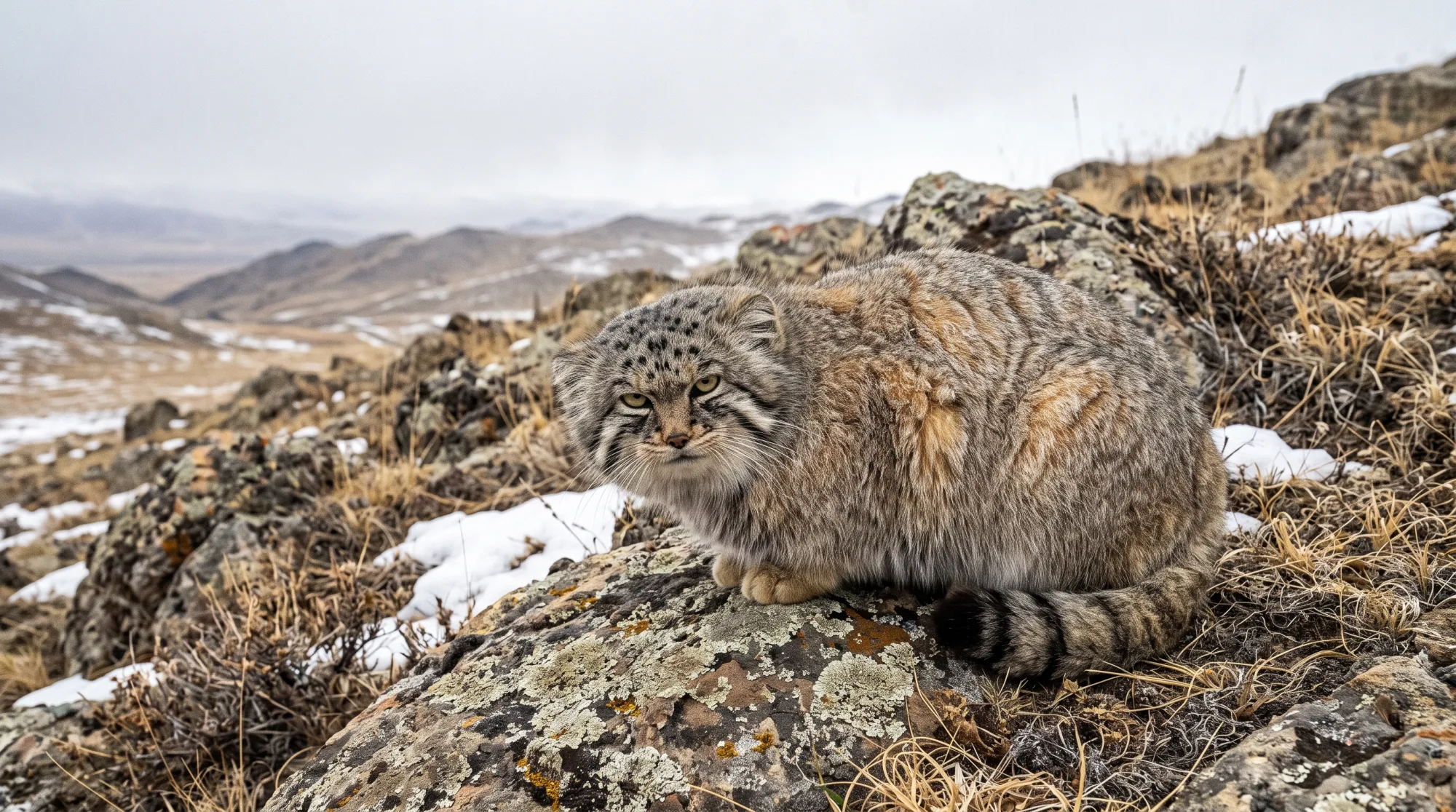
Fluffy Pallas's cat walking over frosty rocks in the mountains

Pallas’s Cat: Facts, Photos & Why It’s So Strange

Otocolobus manul

The grumpiest face in the animal kingdom

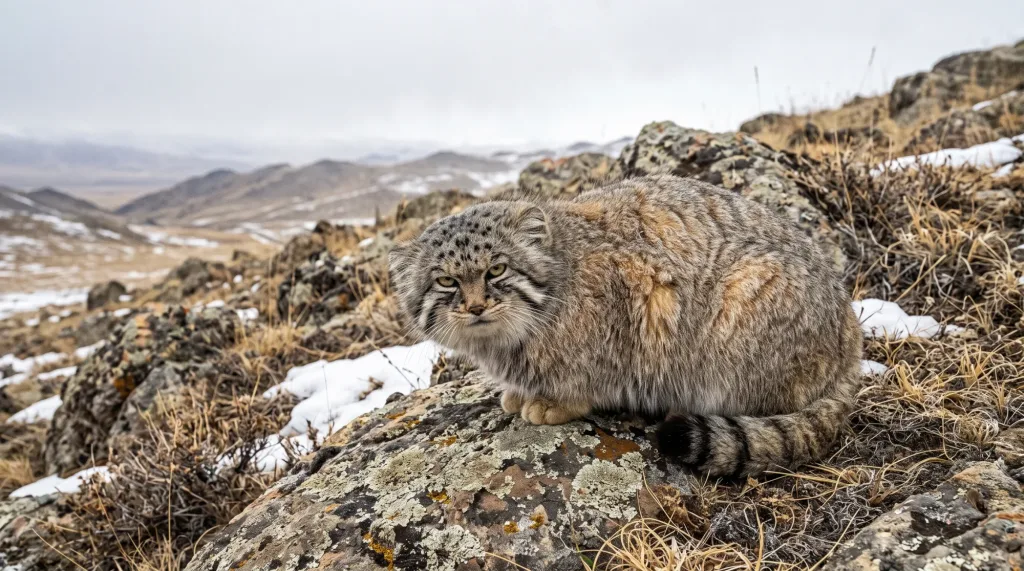
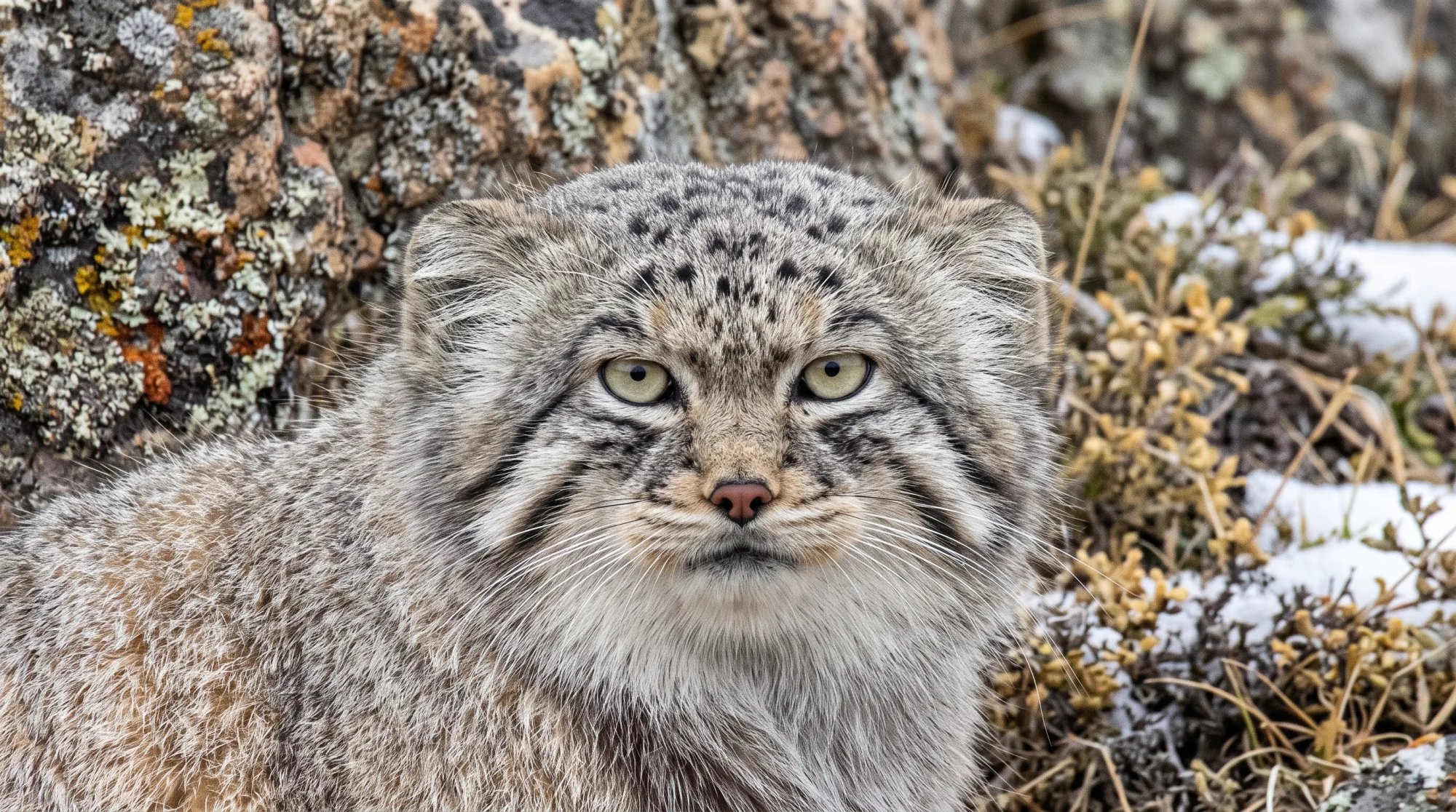
A round ball of fluff with a flat face and an expression of pure, permanent disapproval. Pallas’s cat – also called the manul – lives on the freezing steppes of Central Asia and looks at the world as if it had been personally insulted by it.

Pallas’s Cat vs. you

Your height ft in5 ft 7 in

Quick facts

Size
18–26 in
18–26 in (46–65 cm), plus a bushy tail
Weight
5.5–9.9 lb
5.5–9.9 lb (2.5–4.5 kg)
Lifespan
~11–12 years
About 11–12 years in zoos
Left in the wild
~58,000
About 58,000 adults

Conservation status

  1. Least Concern (this animal)
  2. Near Threatened
  3. Vulnerable
  4. Endangered
  5. Critically Endangered
  6. Extinct in the Wild
  7. Extinct

Least Concern

Superpowers

  • Venomous : Is it venomous? No
  • Glows : Does it glow? No
  • Regenerates limbs : Can it regenerate limbs? No

Identity

Scientific name
Otocolobus manul
Class
Mammal (cat)
First described
1776, by Peter Simon Pallas

Life & family

Diet
Pikas, voles and other small rodents
Gestation
About 10 weeks
Offspring
2–6 kittens
Predators
Eagles, foxes and wolves

Where to find it

Habitat
Cold, rocky grassland and semi-desert
Lives in
Central Asia – Mongolia, China, Kazakhstan, Russia and Iran
In the wild
Hard – it’s shy and superbly camouflaged
In zoos
Yes – a number of zoos keep them

Explore similar

Why is this animal unusual?

It’s no bigger than a house cat. It just looks twice the size because it has the thickest, densest fur of any cat in the world.

Why does it look like that?

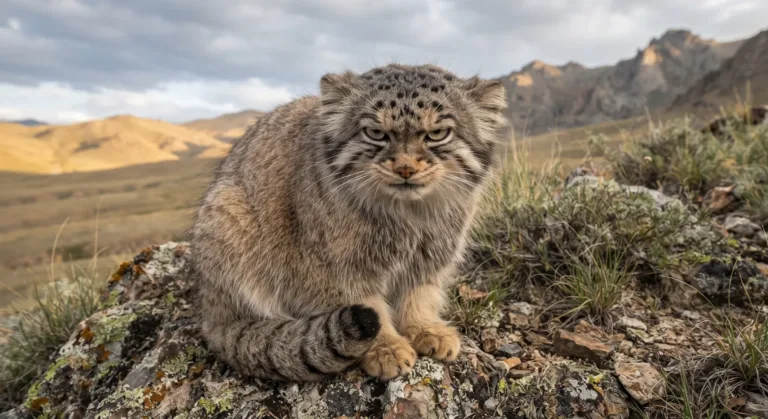
The ears sit low on the sides of its head, so it can peek over a rock without being seen. And its pupils are round, like a lion’s, instead of the vertical slits of other small cats.

Strangest biological feature

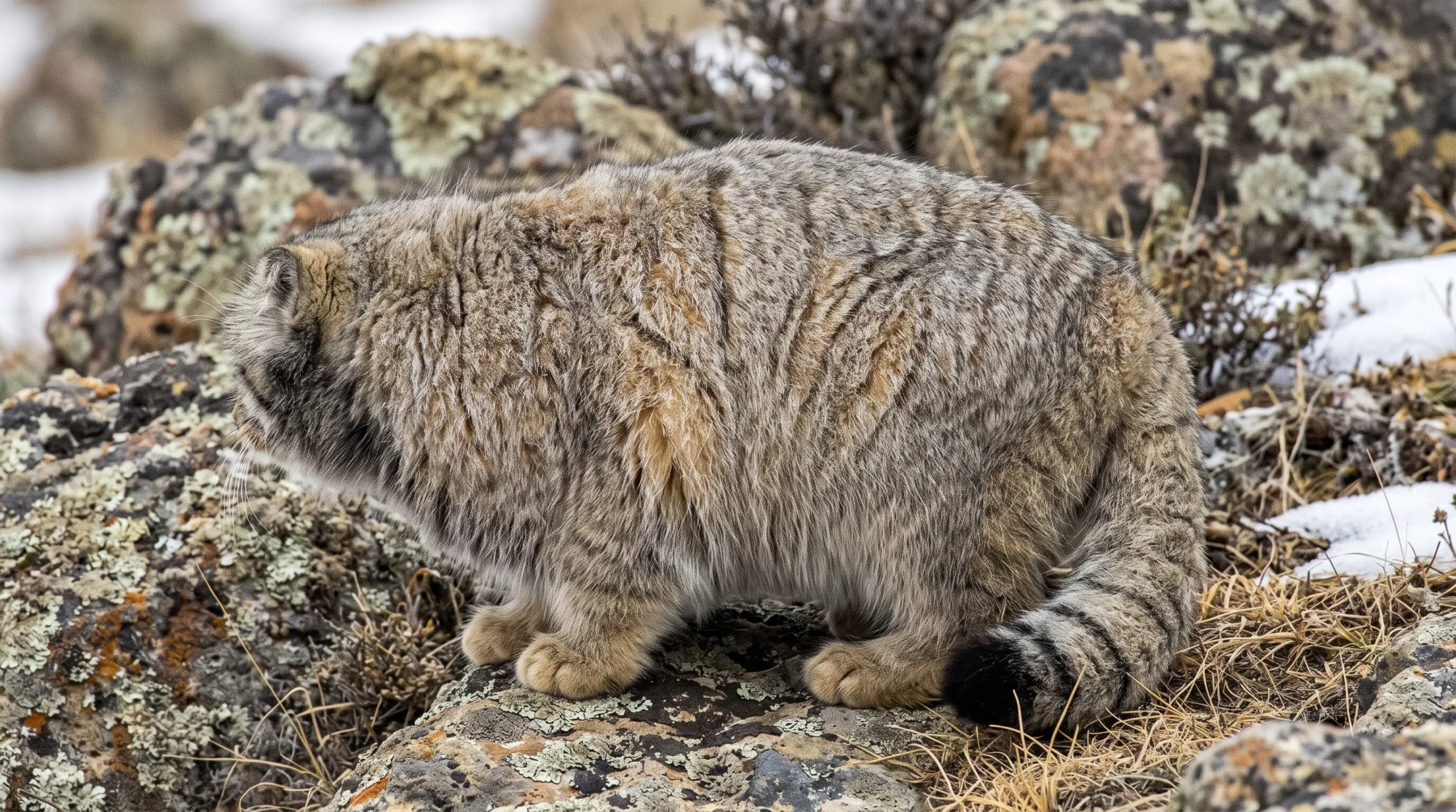
That fur coat. It’s almost twice as long on the belly and tail as on the back, for lying on frozen ground.

Why is it strange?

Its long, bushy tail doubles as a blanket – it wraps it around its body and paws to stay warm on frozen ground.

Interesting behavioral facts

It’s a slow runner, so it hunts by ambush: creeping, freezing and waiting outside rodent burrows.

Records held

The densest fur of any cat.
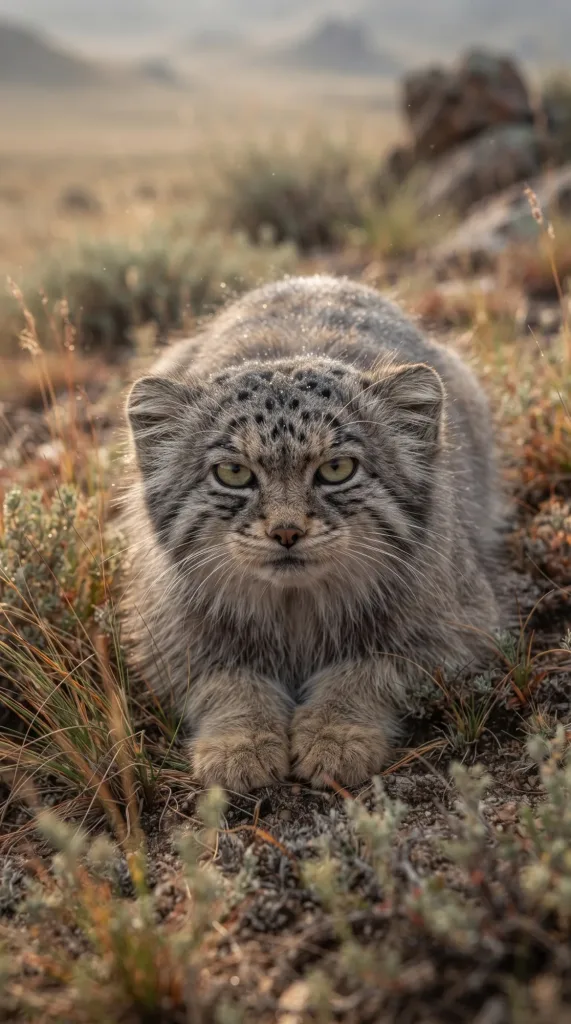
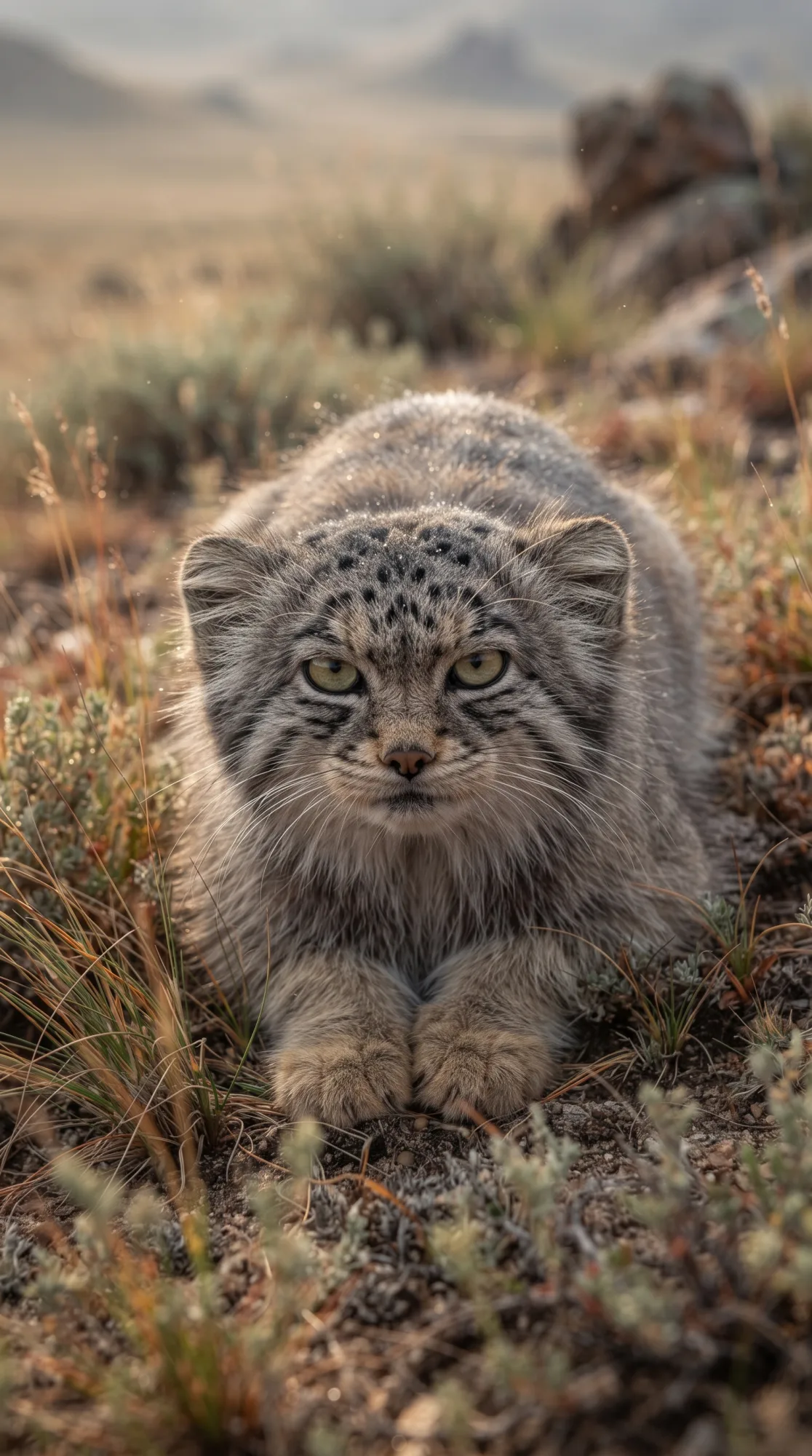
Fluffy grey Pallas's cat with a flat face and stern yellow eyes in dry grass

Pallas’s Cat: quick answers

Can you keep Pallas’s cat as a pet?

No. It’s a wild cat that doesn’t tame, and it’s protected by international trade laws. Even zoos find it hard to keep – kittens are very prone to infections.

Is Pallas’s cat dangerous?

Not to people – it’s about the size of a house cat and very shy. To pikas and voles, it’s a serious threat.

Why does Pallas’s cat look so grumpy?

It’s just the shape of its face: flat, with low ears and round pupils. It isn’t actually angry – it just looks permanently unimpressed.

Where does Pallas’s cat live?

On cold, rocky steppes and mountains of Central Asia, from Iran to Mongolia and western China, often high up.

Know someone who needs to see this?

Send them the Pallas’s Cat. They'll thank you. Probably.