Deep dive 3 min read
Manul Cat: Why Pallas’s Cat Is the Grumpiest Cat in the World
The manul, or Pallas's cat, has the fluffiest fur and the grumpiest face of any cat. Here's why it looks so annoyed – and why it's built for the cold.
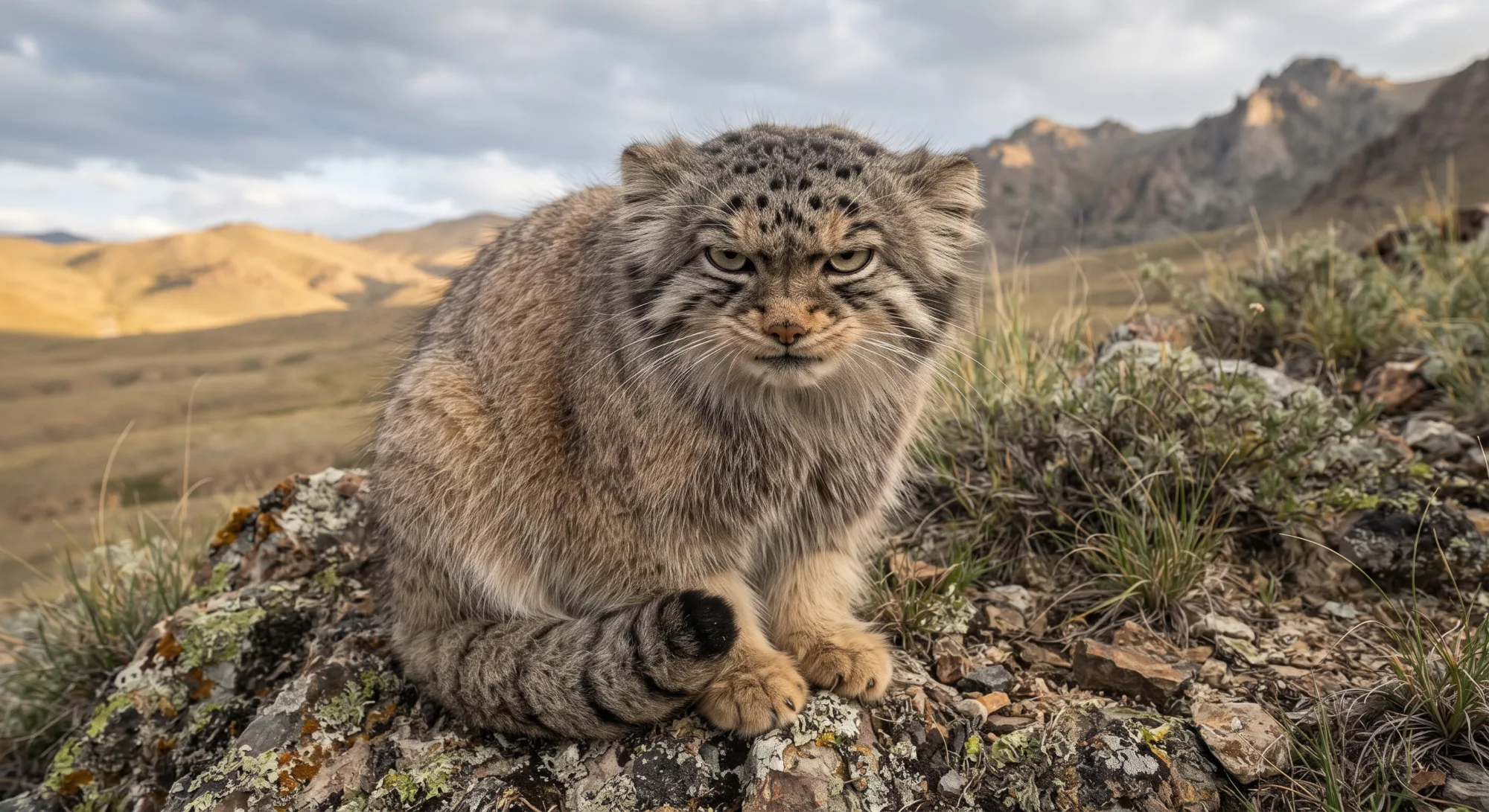
If cats could file complaints, the manul would file them all. Also called Pallas’s cat, this small wild cat from the cold steppes of Central Asia has become an internet star thanks to one thing: a face of permanent, deep disapproval. But there’s a good reason it looks that way.
Manul or Pallas’s cat?
Same animal. “Manul” is its old name from Central Asia. “Pallas’s cat” honours Peter Simon Pallas, a German naturalist who described it in 1776. Its scientific name is Otocolobus manul.
Why does the manul look so grumpy?
- A flat face: its short muzzle and wide cheeks make the face look squashed and stern.
- Low, wide-set ears: they sit on the sides of the head, not on top, so the cat looks like it’s frowning.
- Round pupils: most small cats have slit pupils. The manul’s round ones give it a strangely human stare.
- Huge fluff: thick fur around the face turns the head into a round, unimpressed ball.
None of this is about mood. It’s all built for hunting in open, freezing country.
It isn’t angry. It just has a face that sounds like it’s about to speak to your manager.
Built for the cold
The manul has the thickest, longest fur of any wild cat, especially on its belly and tail, which protects it while lying on frozen ground or snow. It lives on steppes and rocky mountainsides, often high up. In 2019, scientists even found signs of manuls on the slopes of Mount Everest, more than 16,000 ft (5,000 m) above sea level.
Its low ears help too. They let the cat peek over a rock to spy on prey without showing a pointy outline against the sky.
Strange but trueManuls are terrible runners. Instead of chasing prey, they hunt by stalking and ambushing, mostly pikas and voles, and they rely on hiding when danger comes.
How big is a manul?
About the size of a house cat, but it looks much bigger because of the fur. Its body is around 18 to 26 in (46 to 65 cm) long, plus a thick 8 to 12 in (20 to 30 cm) tail, and it weighs about 5.5 to 10 lb (2.5 to 4.5 kg).
Can you keep a manul as a pet?
No. It’s a wild cat that doesn’t tame and is protected by international trade rules. Even zoos struggle: manul kittens are very vulnerable to infections their immune systems never meet on the dry steppes, and many die young. That’s one reason they’re rare in zoos.
Is the manul endangered?
It’s currently listed as Least Concern, but it’s hard to count and faces threats from hunting for fur, poisoning of the pikas it eats and dogs. See more fluffy oddballs in our Cute but Strange collection.
Sources
Tell a friend