Skip to content
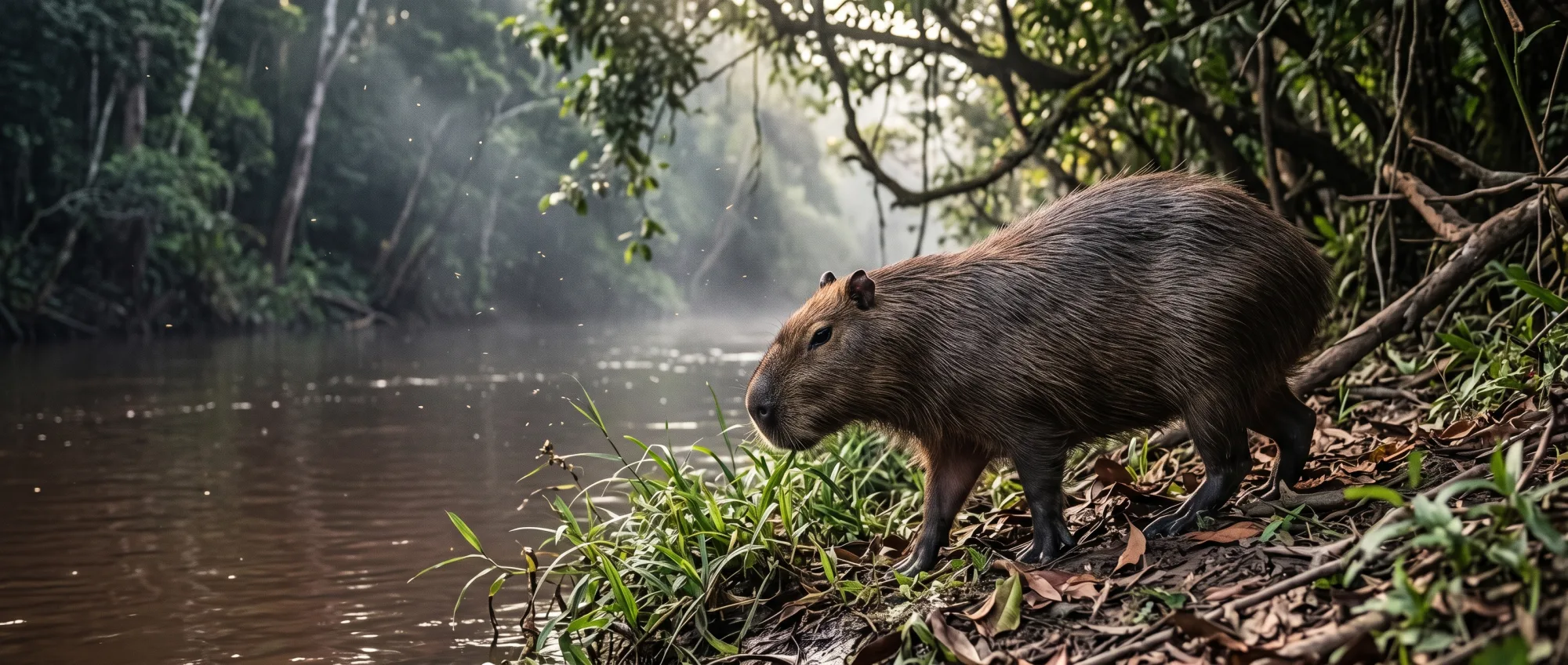
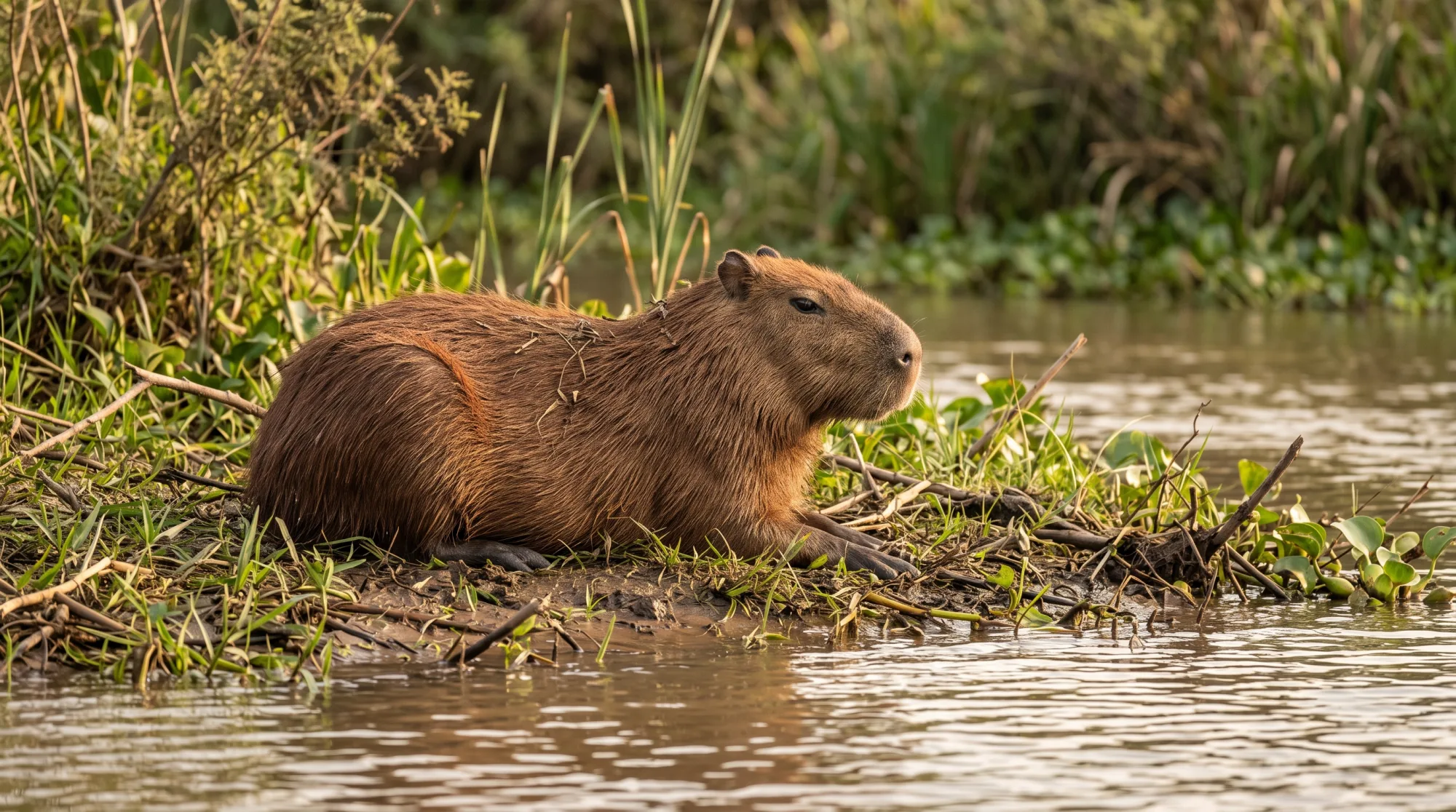
Capybara standing on a grassy riverbank at the edge of a misty forest

Capybara: Facts, Photos & Why It’s So Strange

Hydrochoerus hydrochaeris

The world’s biggest rodent – and its chillest

A guinea pig the size of a big dog, sitting calmly in a river with a bird on its head. The capybara gets along with practically everything – monkeys, ducks, even crocodiles seem to tolerate it. The internet decided it’s the friendliest animal alive. The internet may be right.

Capybara vs. you

Your height ft in5 ft 7 in

Quick facts

Size
3.3–4.3 ft
3.3–4.3 ft (1–1.3 m) long and about 24 in (60 cm) tall
Weight
77–150 lb
77–150 lb (35–66 kg); the record is 200 lb (91 kg)
Lifespan
8–10 years
Left in the wild
Plenty
Plenty – it’s common

Conservation status

  1. Least Concern (this animal)
  2. Near Threatened
  3. Vulnerable
  4. Endangered
  5. Critically Endangered
  6. Extinct in the Wild
  7. Extinct

Least Concern

Superpowers

  • Venomous : Is it venomous? No
  • Glows : Does it glow? No
  • Regenerates limbs : Can it regenerate limbs? No

Identity

Scientific name
Hydrochoerus hydrochaeris
Class
Mammal (rodent)
First described
1766, by Carl Linnaeus

Life & family

Diet
Grass and water plants
Gestation
About 5 months
Offspring
Usually 4–5 pups
Predators
Jaguars, anacondas, caimans and big eagles

Where to find it

Habitat
Riverbanks, marshes, lakes and flooded grassland
Lives in
Most of South America east of the Andes
In the wild
Yes – easily, in the Pantanal of Brazil or the plains of Venezuela and Colombia
In zoos
Yes – very common

Explore similar

Why is this animal unusual?

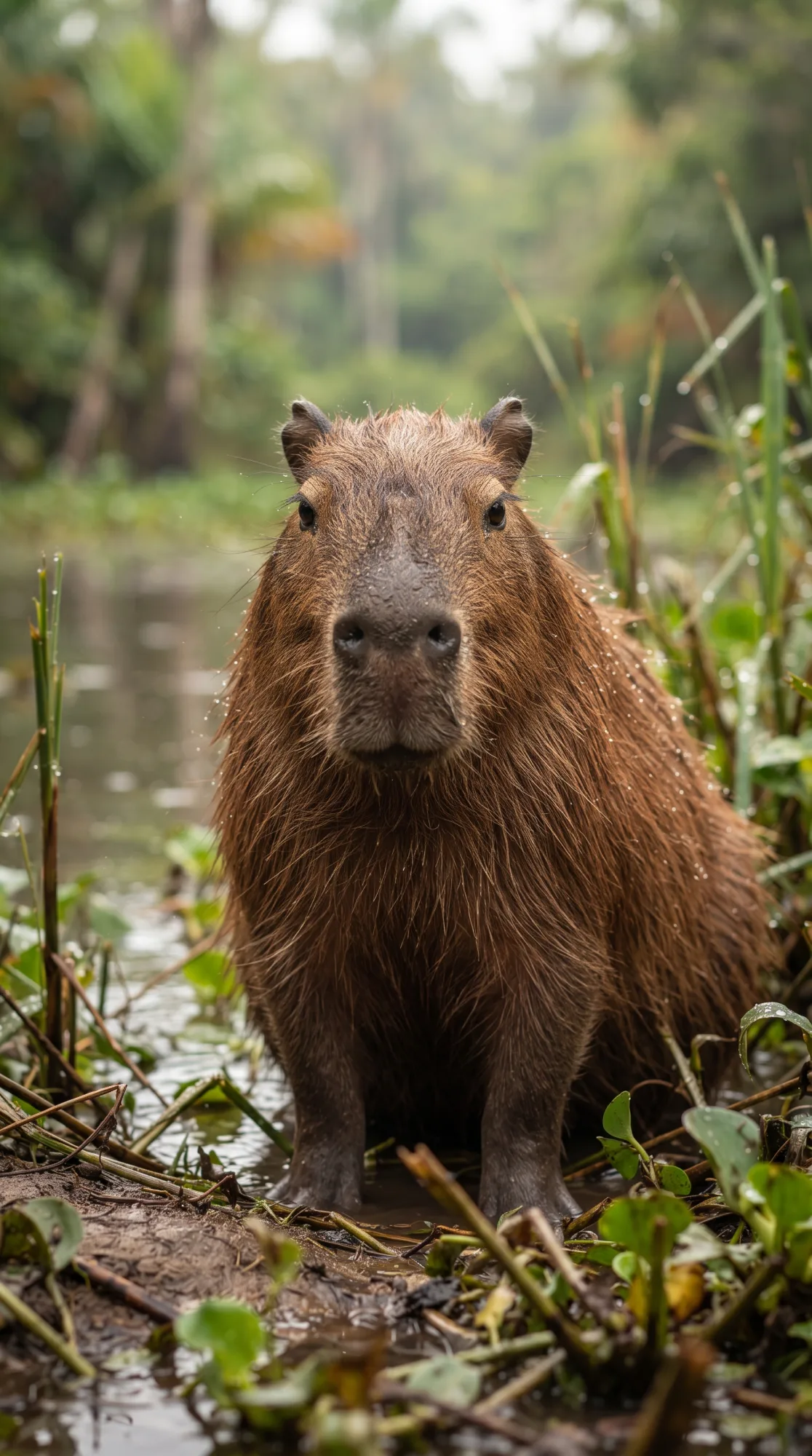
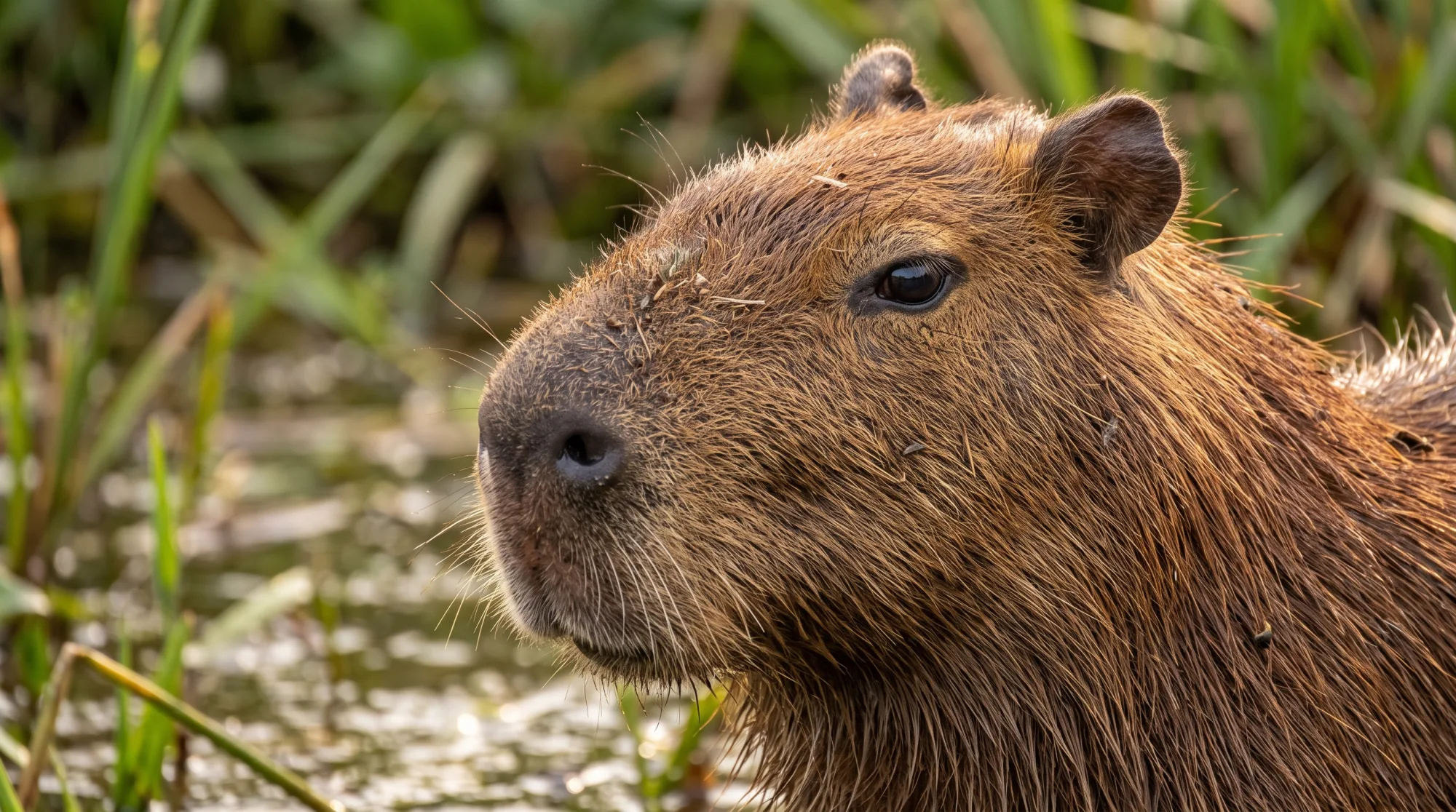
It’s built for water. Its eyes, ears and nostrils sit on top of its head, so it can hide almost fully submerged, and it can hold its breath for around five minutes.

Why does it look like that?

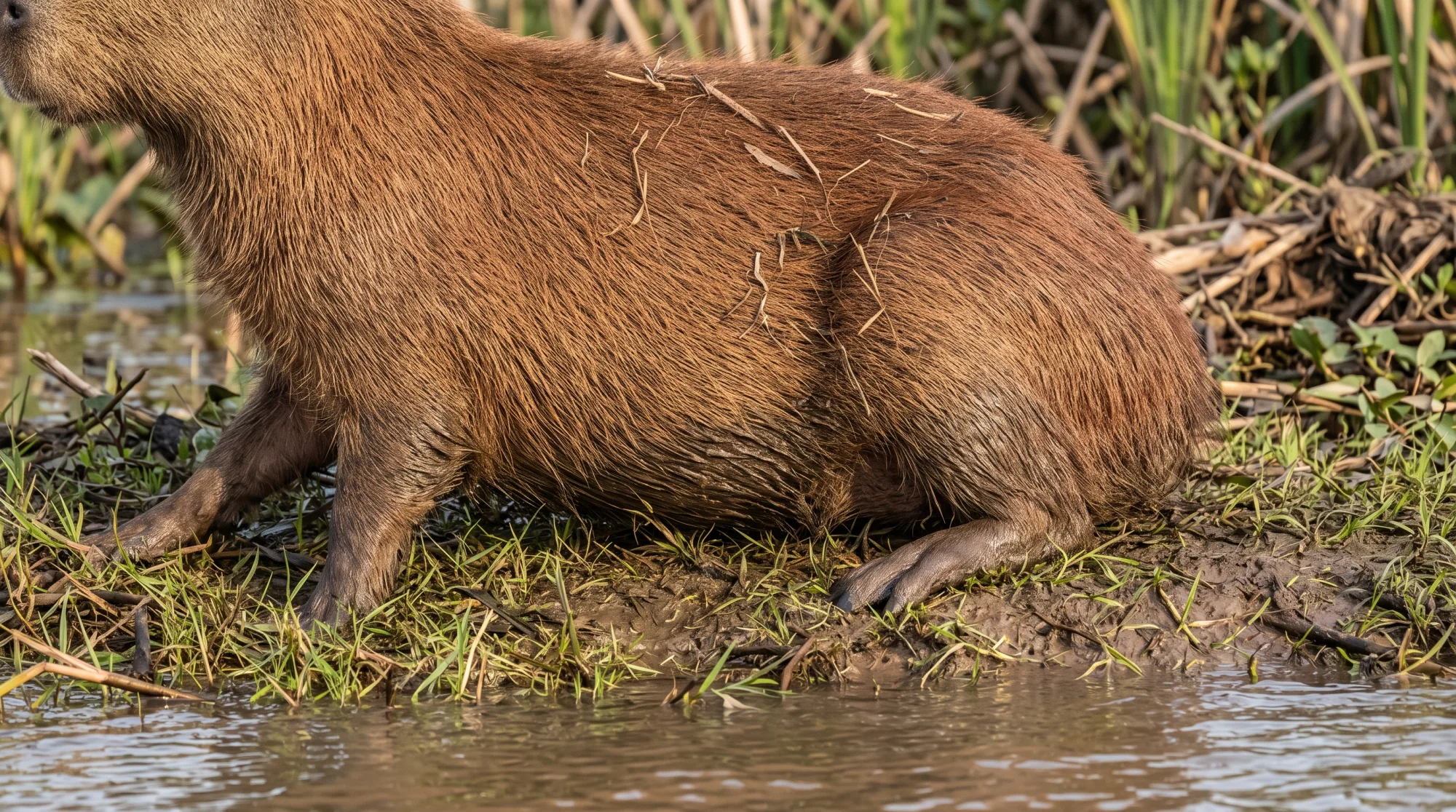
A barrel body, a blunt square nose, partly webbed feet and no tail to speak of. Its teeth never stop growing – it wears them down by chewing grass all day.

Strangest biological feature

A stomach that needs two tries. Grass is so hard to digest that capybaras eat their own morning droppings to get the nutrients on the second pass.

Why is it strange?

According to a popular story, Catholic church authorities centuries ago agreed to treat the capybara as a fish, so that people in Venezuela could eat it during Lent. Whatever the truth, capybara is still a traditional Lent dish there.

Interesting behavioral facts

Capybaras live in groups of 10 to 20 and communicate with barks, whistles and purrs. Other animals regularly use them as furniture.

Records held

The largest living rodent on Earth.
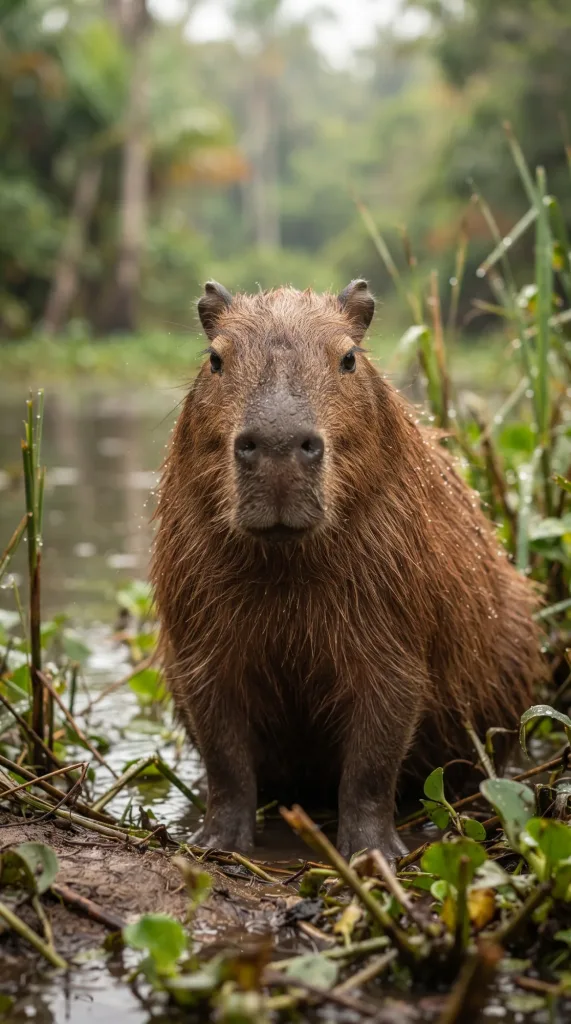
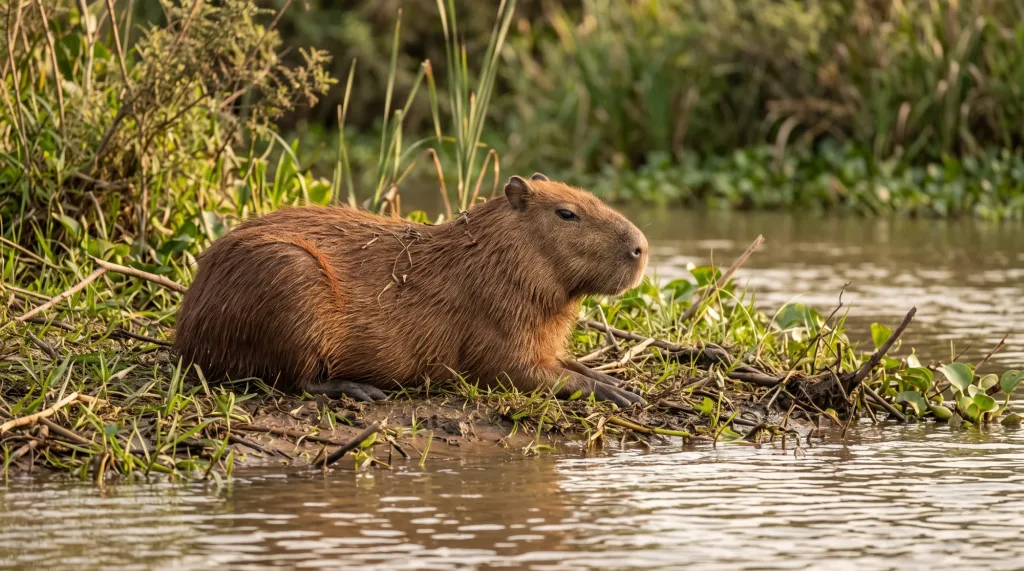
Capybara with brown fur sitting calmly on a muddy riverbank

Capybara: quick answers

Are capybaras dangerous to humans?

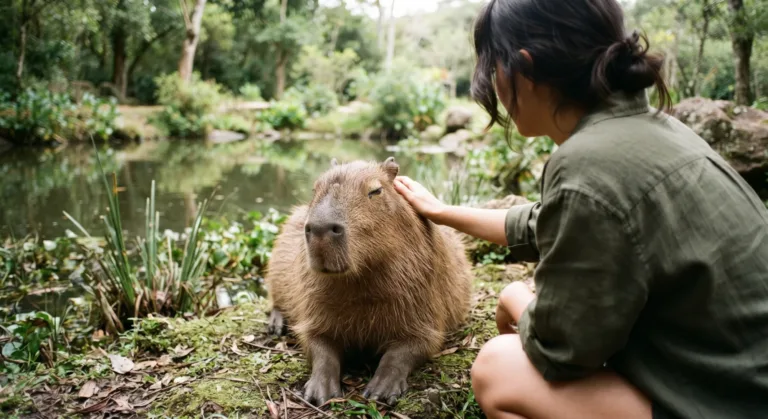
Not usually. They’re calm and used to people in many places. But they’re wild animals with big teeth, and they can bite if cornered or handled.

Can you keep a capybara as a pet?

In some places, yes, but it’s hard. Capybaras are social animals that need company, lots of grass and water to swim in. Many countries and US states require a permit or don’t allow them at all.

Do crocodiles really leave capybaras alone?

Not always. Caimans and anacondas do eat capybaras. But adults often rest calmly near caimans, probably because the reptiles aren’t hunting at that moment.

Why do other animals sit on capybaras?

Capybaras are so relaxed that birds, monkeys and other animals use them as a perch. Some birds also pick insects and ticks off their skin.

Where do capybaras live?

In South America east of the Andes, from Colombia and Venezuela down to northern Argentina. They always stay close to water: rivers, lakes, swamps and flooded grasslands.

What does a capybara eat?

Mostly grasses and water plants, plus some fruit and bark. Like rabbits, they also eat some of their own droppings to get more nutrients out of tough grass.

Why are capybaras so calm?

They live in relaxed family groups and spend hours resting in water, which keeps them cool and safe. Because they eat only plants and rarely react, other animals treat them as harmless and even use them as a seat.

Know someone who needs to see this?

Send them the Capybara. They'll thank you. Probably.