Deep dive 3 min read
Why Are Capybaras So Chill? (And Why Crocodiles Leave Them Alone)
Birds sit on them, monkeys ride them and caimans nap next to them. Here's why capybaras are so calm – and whether crocodiles really leave them alone.
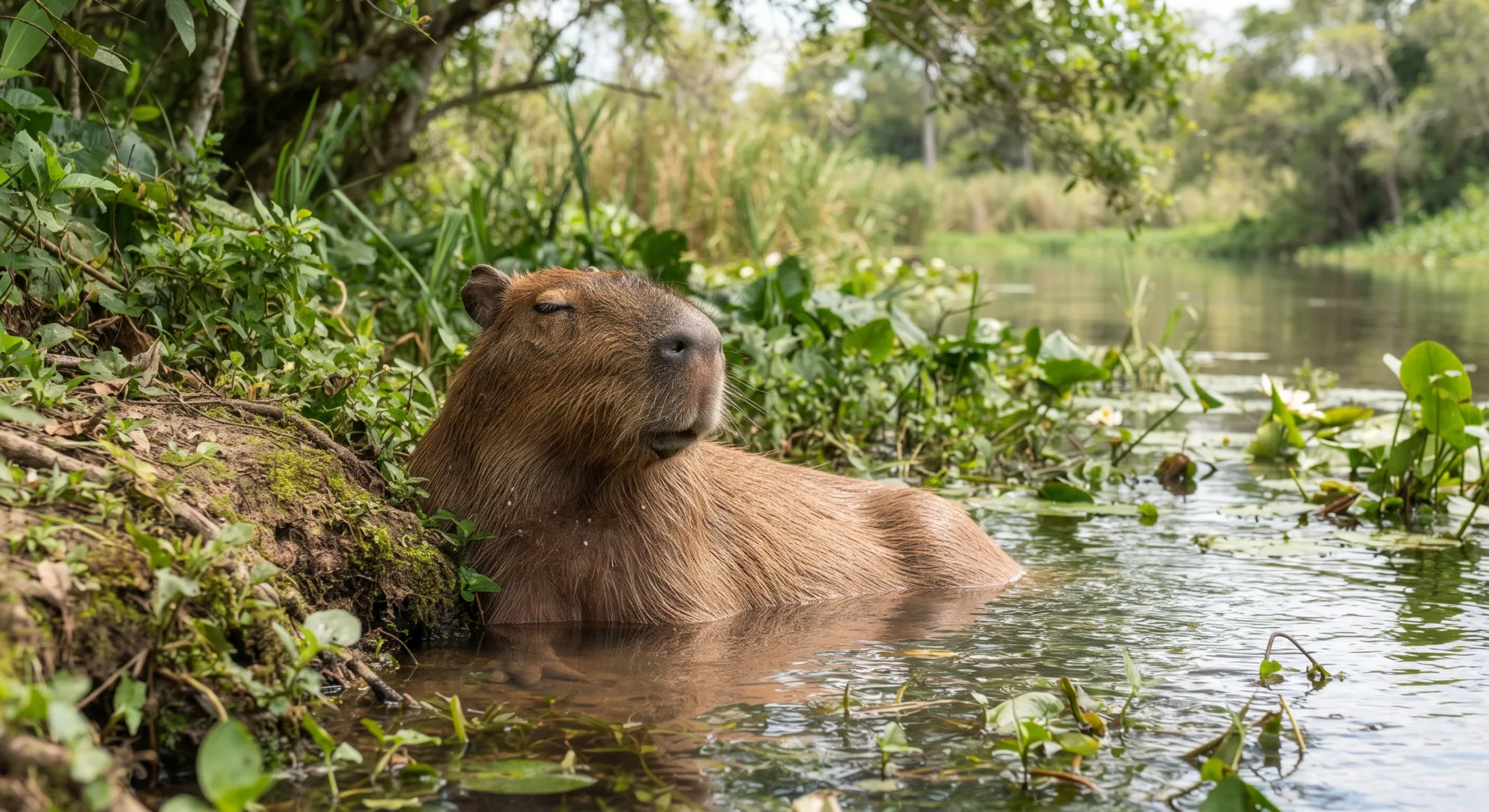
Photos of capybaras look like a children’s book: a monkey on its back, ducks on its head, a caiman sunbathing next to it. The internet calls the capybara “friends with every animal”. Is it really that relaxed? Mostly, yes. Here’s why.
Why are capybaras so calm?
- They eat only plants. A capybara is no threat to other animals, so other animals have no reason to fear it.
- They live in groups. Families of around 10 to 20, sometimes many more, share the job of watching for danger. When one capybara barks an alarm, the whole group runs for water.
- Water is their safe place. They can stay underwater for several minutes, so resting by the river is their version of sitting next to the exit.
- They save energy. Eating grass all day doesn’t give a big energy boost, so lying still, napping and soaking makes sense.
Why do other animals sit on capybaras?
Because a capybara is basically a big, warm, hairy rock that doesn’t mind. Birds such as cattle tyrants and jacanas perch on them and pick off insects and ticks, which the capybara seems to enjoy. Monkeys and even other rodents climb on for a ride. The capybara gets cleaned and the passengers get a seat, so everyone wins.
A capybara is a sofa that eats grass. Everybody wants to sit on it.
Do crocodiles really leave capybaras alone?
Not always. In South America, the “crocodiles” are usually caimans, and caimans do eat capybaras, especially young ones. Jaguars and anacondas hunt them too.
So why do capybaras rest so calmly next to caimans? A few reasons:
- Caimans spend a lot of the day basking and aren’t hunting.
- Many caimans are small and eat mostly fish, so an adult capybara of around 100 lb (45 kg) or more is too big to tackle.
- Capybaras watch closely and react fast if a caiman starts to stalk.
So it isn’t friendship. It’s more like a truce between neighbours who know exactly what the other can do.
Strange but trueIn Japan, several zoos run hot baths for their capybaras in winter. The tradition started at Izu Shaboten Zoo in 1982, after keepers saw capybaras enjoying a warm puddle, and visitors now come just to watch them soak.
Are capybaras ever aggressive?
Yes, sometimes. Males fight each other for rank in the group, and any capybara can bite if it’s cornered or handled. Their front teeth are big and grow all their lives. Calm doesn’t mean cuddly.
The biggest rodent in the world
Part of the reason the capybara can afford to be relaxed is its size. It’s the largest rodent alive, about 4 ft (1.2 m) long and up to about 145 lb (65 kg). Few animals besides big predators would try their luck.
Thinking about getting one? Read Can You Own a Capybara? first.
Sources
Tell a friend