Skip to content
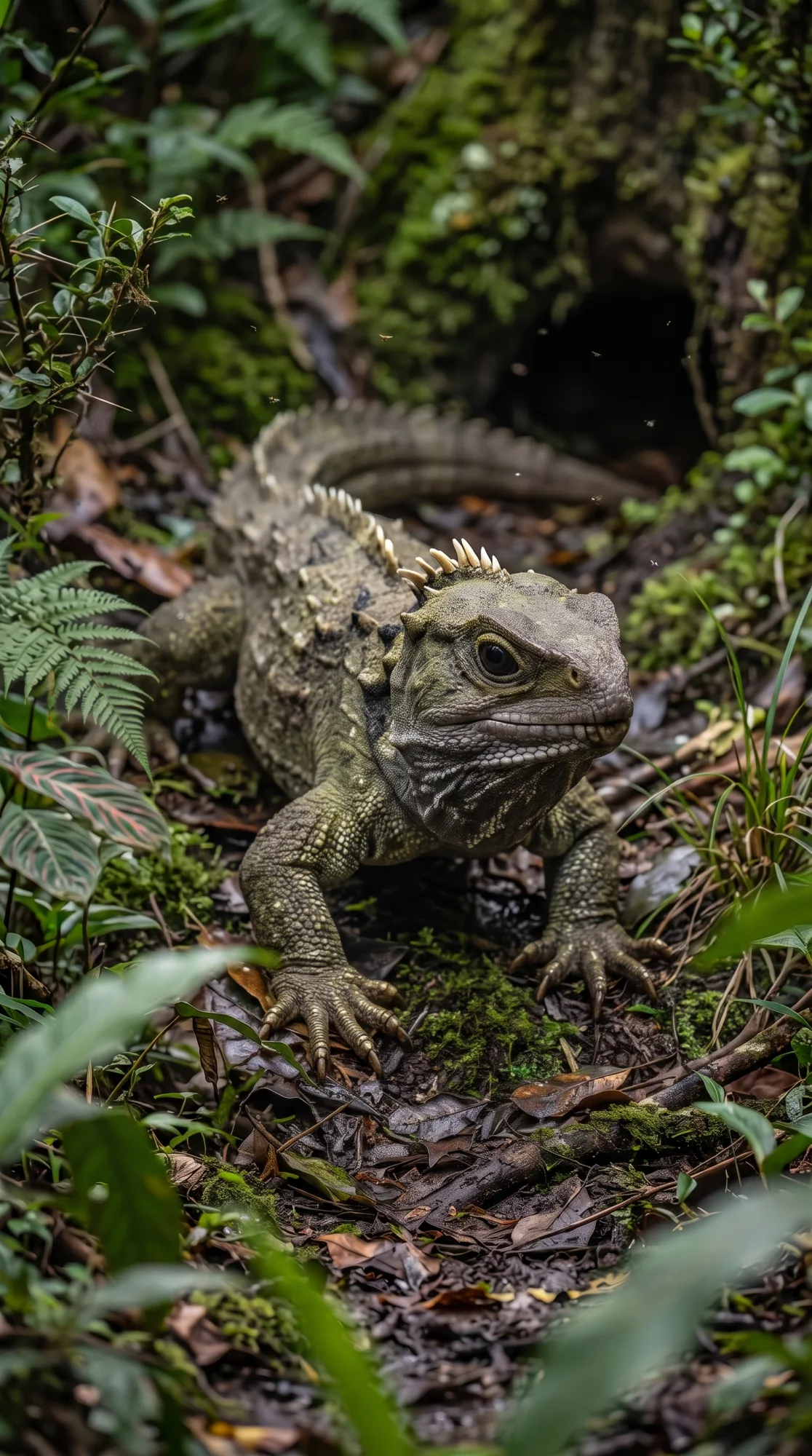
Tuatara with spiny crest and scaly skin resting on mossy forest floor among ferns in misty native bush

Tuatara: Facts, Photos & Why It’s So Strange

Sphenodon punctatus

Not a lizard. A survivor from the dinosaur age.

It looks like a medium-sized lizard. It isn’t one. The tuatara is the last living member of a group of reptiles that walked with the dinosaurs 200 million years ago. Everything else in its family is long gone. This one is still here, in New Zealand, living very, very slowly.

Tuatara vs. you

Your height ft in5 ft 7 in

Quick facts

Size
~31 in
Up to about 31 in (80 cm)
Weight
~2.9 lb
Up to about 2.9 lb (1.3 kg)
Lifespan
100+ years
Over 100 years
Left in the wild
Tens of thousands, mostly on small islands

Conservation status

  1. Least Concern (this animal)
  2. Near Threatened
  3. Vulnerable
  4. Endangered
  5. Critically Endangered
  6. Extinct in the Wild
  7. Extinct

Least Concern

Superpowers

  • Venomous : Is it venomous? No
  • Glows : Does it glow? No
  • Regenerates limbs : Can it regenerate limbs? Yes – a lost tail grows back

Identity

Scientific name
Sphenodon punctatus
Class
Reptile
First described
1842, by John Edward Gray

Life & family

Diet
Beetles, wētā, worms, lizards – and seabird eggs and chicks
Gestation
None – the eggs take 11–16 months to hatch
Offspring
6–10 eggs, only every few years
Predators
Rats

Where to find it

Habitat
Coastal forest and scrub, in burrows
Lives in
New Zealand – offshore islands and fenced sanctuaries
In the wild
Possible – in sanctuaries such as Zealandia in Wellington
In zoos
Yes – mostly in New Zealand

Explore similar

Why is this animal unusual?

It’s the only survivor of an entire order of reptiles. Its closest relatives died out around the same time as the dinosaurs.

Why does it look like that?

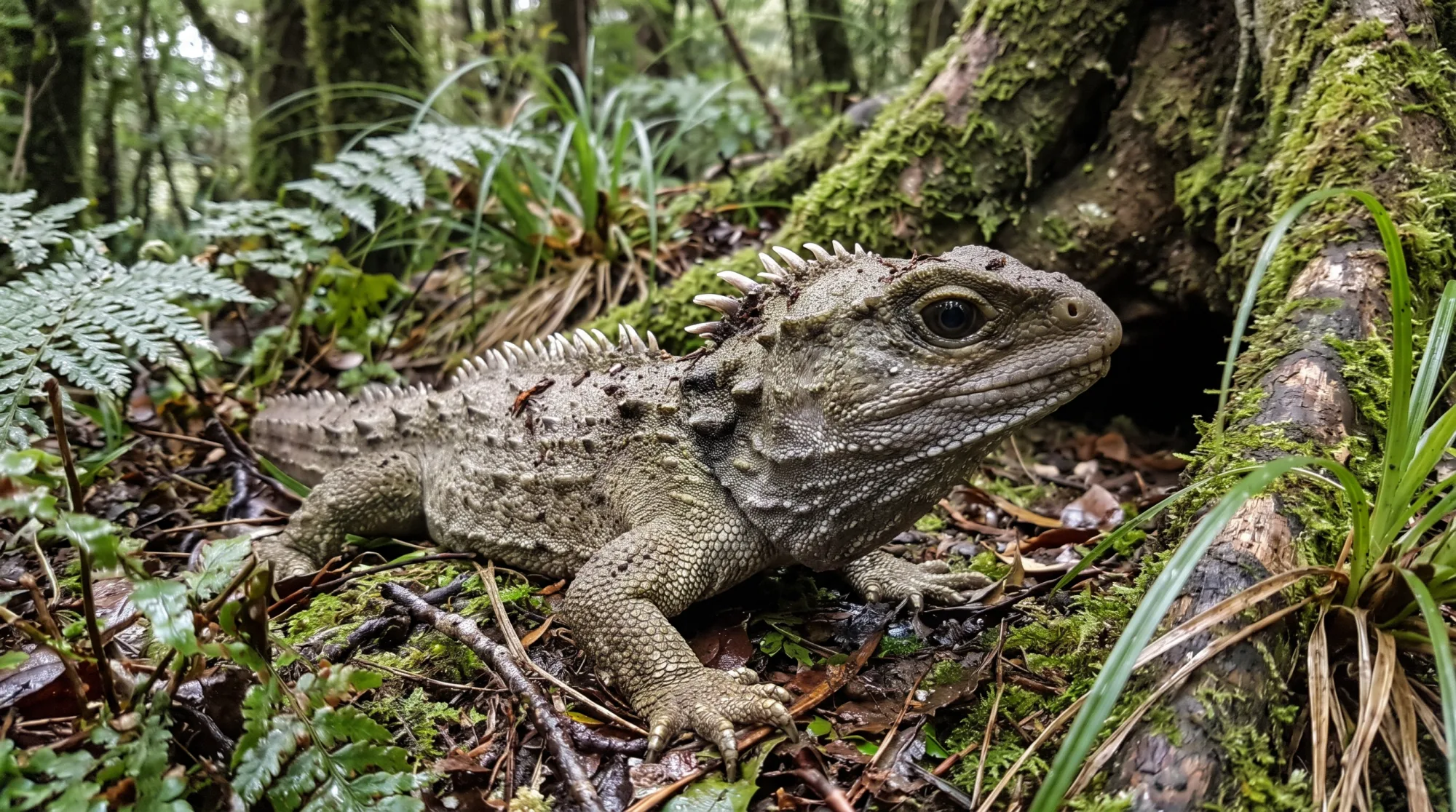
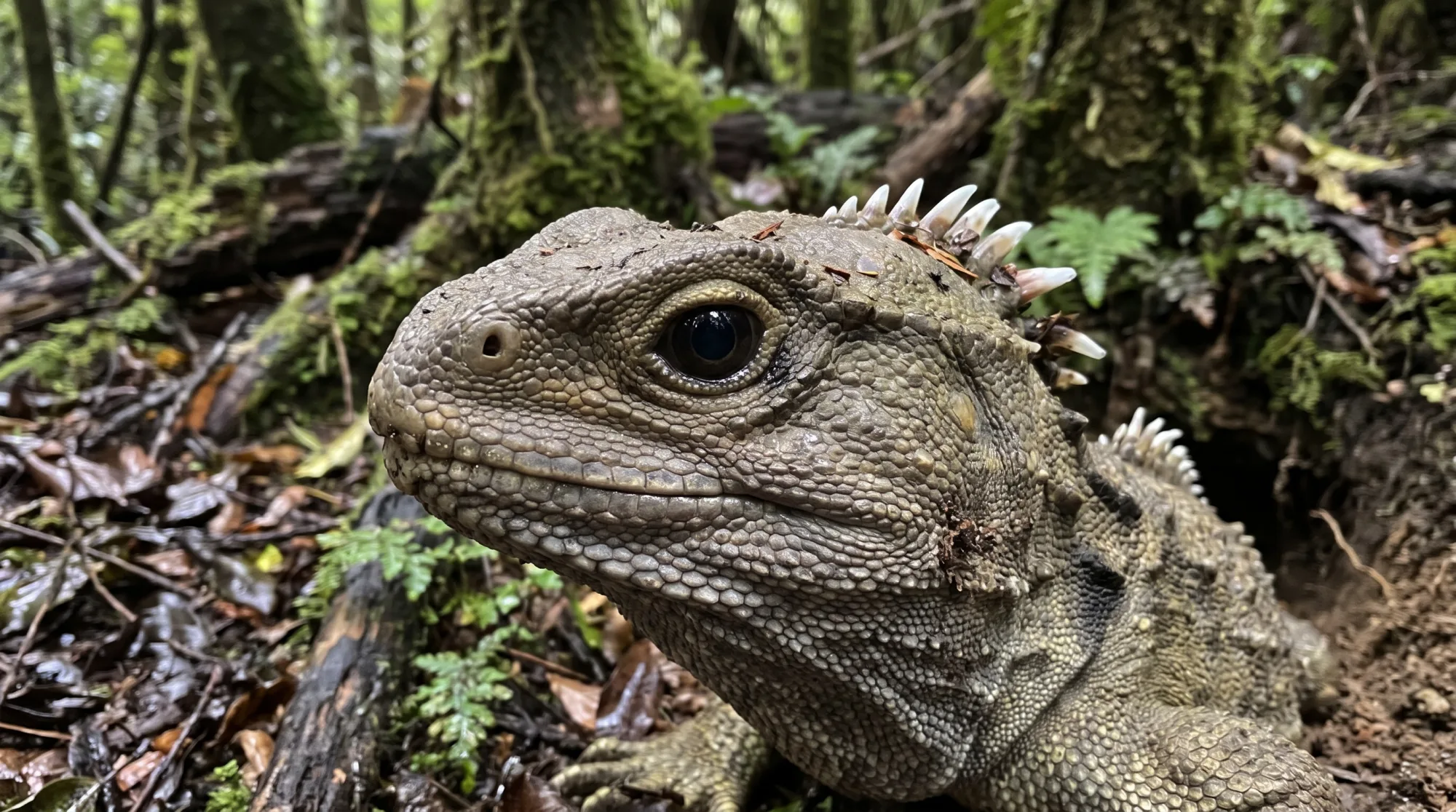
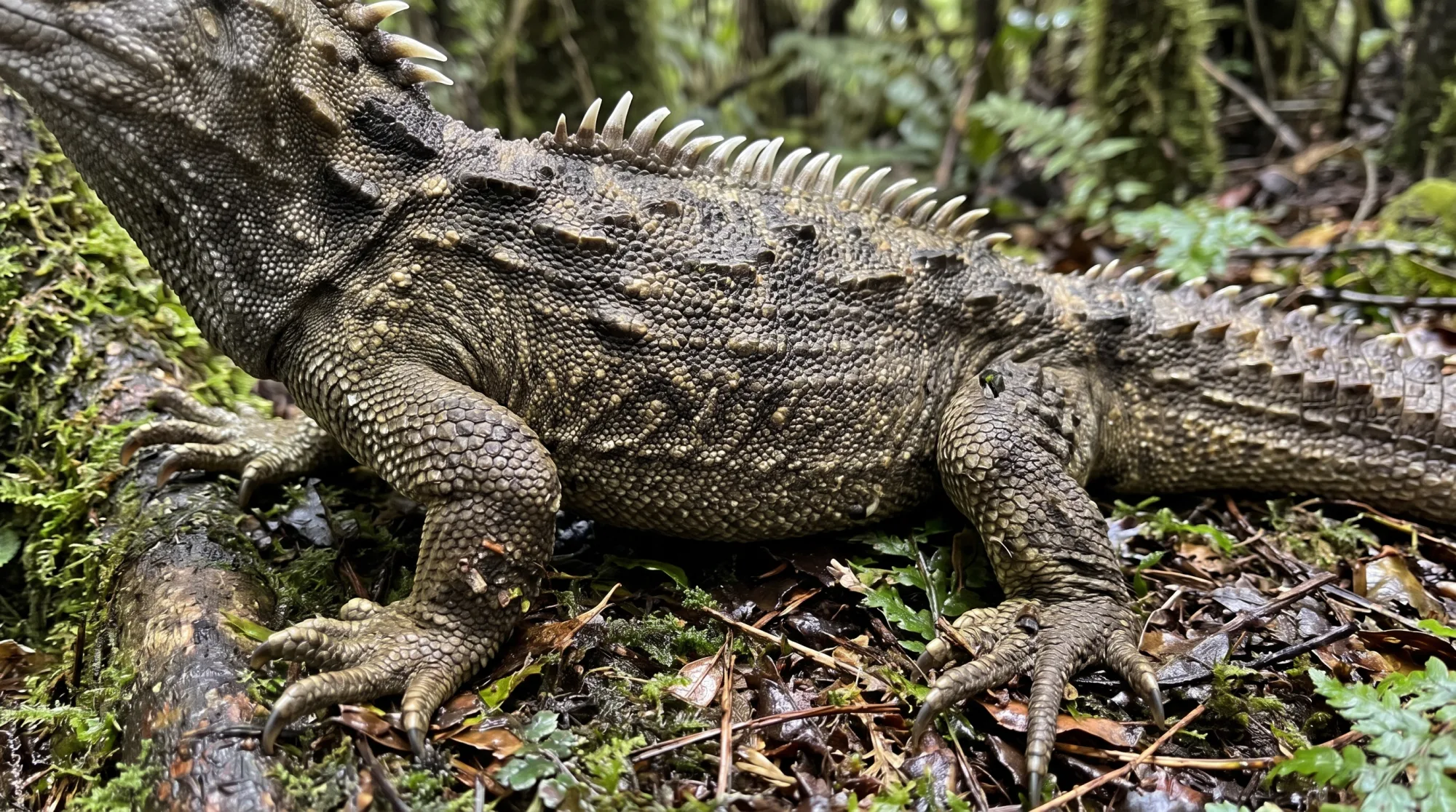
A spiny crest down its back – “tuatara” means “peaks on the back” in Māori – and teeth that are really just saw-edged bits of jawbone.

Strangest biological feature

A third eye. On top of its head is a light-sensitive spot with its own lens and retina. You can see it in young tuatara before scales grow over it.

Why is it strange?

It loves the cold. Most reptiles need heat to function; the tuatara stays active in temperatures that would put a lizard to sleep.

Interesting behavioral facts

It often moves into the burrows of seabirds – and repays the favour by occasionally eating their chicks.

Records held

A tuatara named Henry became a father for the first time at the age of 111. Its eggs take longer to hatch than those of any other reptile.
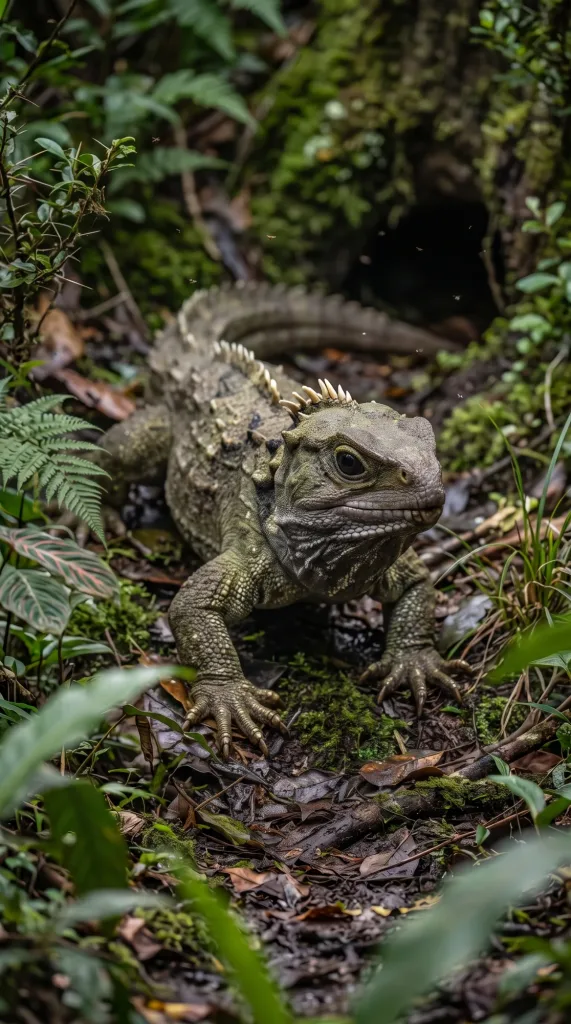
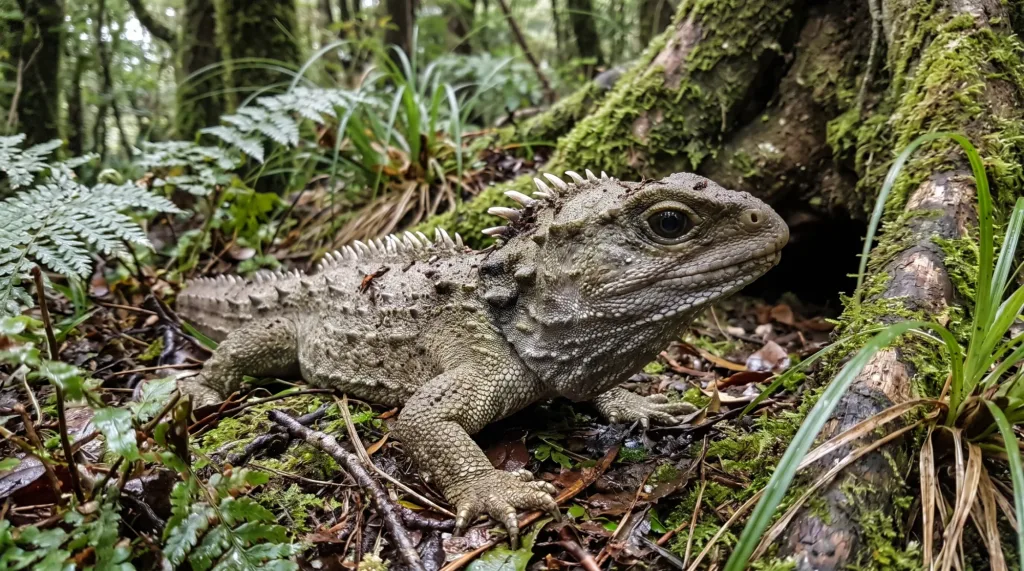
Tuatara with spiny crest and scaly skin walking over leaf litter and moss on the forest floor

Tuatara: quick answers

Is a tuatara a dinosaur?

No, but it’s the last living member of a group of reptiles that lived alongside the dinosaurs about 200 million years ago.

How long do tuatara live?

Over 100 years. A tuatara named Henry became a father for the first time at 111.

Does a tuatara really have a third eye?

Yes. It has a light-sensitive spot on top of its head with a lens and retina. Scales grow over it as the animal gets older.

Where can you see a tuatara?

In New Zealand, on predator-free islands, in fenced sanctuaries like Zealandia in Wellington, and in some zoos.

Know someone who needs to see this?

Send them the Tuatara. They'll thank you. Probably.