Deep dive 3 min read
Are Pangolins Going Extinct?
All eight pangolin species are threatened, and three are Critically Endangered. Here's how close pangolins are to extinction – and what is finally being done.

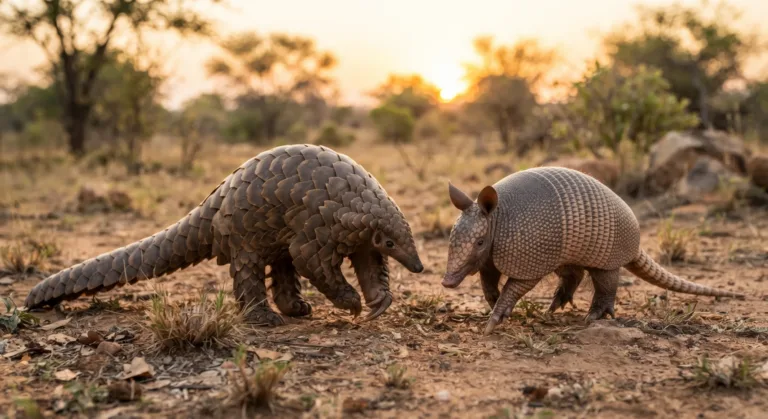
A pangolin has survived for millions of years with one simple trick: when danger comes, roll into an armoured ball. It works against lions. It doesn’t work against people, who can simply pick the ball up. That’s why pangolins have become the most trafficked wild mammal in the world. So are they going extinct?
Are pangolins endangered?
Yes. All eight species are on the IUCN Red List as threatened:
- Critically Endangered: Chinese pangolin, Sunda pangolin and Philippine pangolin.
- Endangered: Indian pangolin, giant pangolin and white-bellied pangolin.
- Vulnerable: black-bellied pangolin and Temminck’s ground pangolin.
Critically Endangered is the last step before “Extinct in the Wild”. No pangolin species has disappeared yet, but the three Asian species at the top of the list are in serious trouble.
Why are pangolins disappearing?
Almost entirely because of hunting and illegal trade. Pangolin meat is eaten as a luxury food in parts of Asia and Africa, and the scales are used in traditional medicine, even though they’re made of keratin, the same stuff as your fingernails. The IUCN estimated that more than a million pangolins were taken from the wild in a single decade.
As Asian pangolins became rarer, traders turned to Africa. Customs officers have seized single shipments carrying many tonnes of scales, each tonne representing hundreds or thousands of animals.
Their best defence is rolling into a ball. Against a hunter, that just makes them easier to carry.
Why are pangolins so easy to lose?
- Slow breeding: a female usually has just one baby a year.
- Easy to catch: they’re slow, and rolling up means a hunter can just pick them up.
- Hard to keep: they eat only ants and termites and often die in captivity, so zoos can’t act as a safety net.
- Lost habitat: forests in Asia and Africa keep shrinking.
Strange but truePangolin scales are made of keratin, just like human hair and nails. Eating them has about the same medical effect as chewing your fingernails.
What is being done to save pangolins?
There is real progress. Since 2017, international commercial trade in all eight species has been banned under CITES, the global wildlife trade treaty. In 2020, China gave pangolins its highest level of protection and removed pangolin scales from the official list of ingredients for traditional medicine. Rescue centres in Vietnam, Africa and elsewhere now care for pangolins taken from smugglers and release them back into the wild.
Every year on the third Saturday of February, World Pangolin Day reminds people that this animal exists at all. Many people still have never heard of it, and it’s hard to protect something nobody knows about.
So, will pangolins go extinct?
Not necessarily. The bans are new, and pangolins breed slowly, so it will take years to see whether numbers recover. But if poaching continues at its old level, the Critically Endangered species could vanish from large parts of their range. The good news is that, for the first time, the world is paying attention.
Meet more animals on the edge in our rarest animals in the world list.
Sources
Tell a friend