Versus 3 min read
Pangolin vs. Armadillo: What’s the Difference?
Both are armoured, both eat ants and both can roll into a ball. But pangolins and armadillos aren't related at all. Here's how to tell them apart.
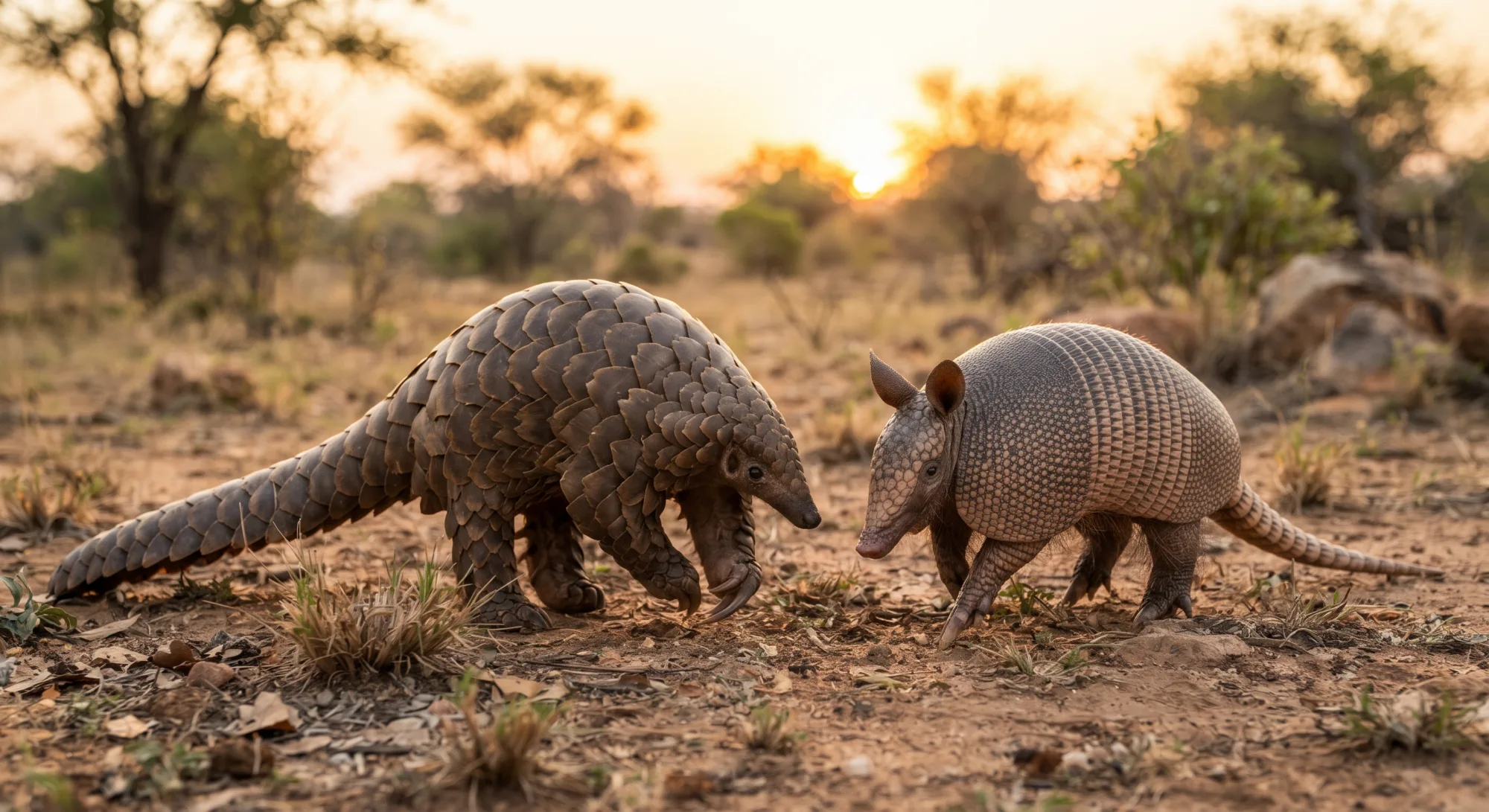
An armoured mammal that eats ants and rolls into a ball when scared. That describes the pangolin. It also describes the armadillo. But these two live on opposite sides of the world, and they’re not even closely related. Their armour is a famous case of evolution solving the same problem twice.
Head to head
| Pangolin | Armadillo | |
|---|---|---|
| Lives | Africa and Asia | The Americas, from the US to Argentina |
| Species | 8 | About 20 |
| Armour | Overlapping scales made of keratin, like fingernails | Bony plates in the skin, covered by a thin layer of keratin |
| Teeth | None at all | Simple, peg-like teeth |
| Closest relatives | Carnivores, such as cats and dogs | Sloths and anteaters |
| Rolls into a ball? | Yes, all species | Only the two three-banded armadillos fully |
| Status | All 8 threatened | Most species not threatened |
Scales vs. plates
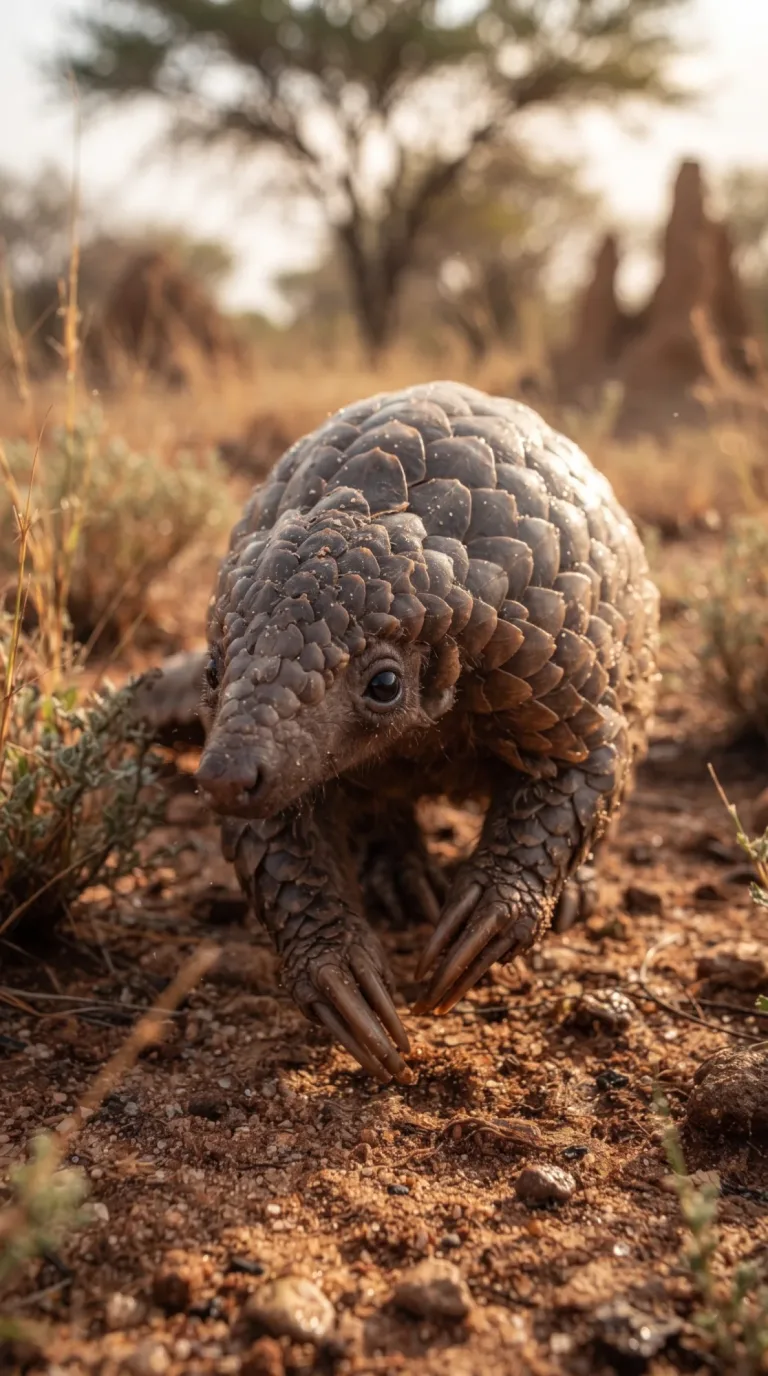
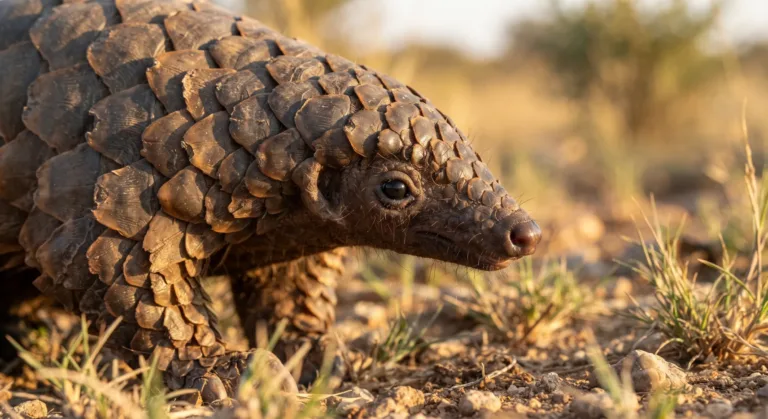
A pangolin’s armour looks like a pine cone or an artichoke: hundreds of loose, overlapping scales that can lift and close, with sharp edges. They’re made of keratin, the same material as your hair and nails. An armadillo’s shell is mostly bone, grown inside its skin as plates and flexible bands. That’s why the armadillo shell is stiffer, and why it’s literally in the name: “armadillo” is Spanish for “little armoured one”.
Who rolls into a ball?
Every pangolin can curl into a tight, scaly ball with its tail wrapped over its face. Most armadillos can’t. They run, dig or press flat against the ground. Only the three-banded armadillos of South America roll into a complete ball.
Same idea, different blueprint. Evolution built armour twice, on two different continents.
Tongues and teeth
Both eat ants and termites, but the pangolin takes it to an extreme. It has no teeth at all, and its tongue can be longer than its head and body, anchored deep in its chest. Swallowed sand and small stones help grind food in its stomach. Armadillos have small, simple teeth and eat a wider mix of insects, grubs, worms and even fruit.
Strange but trueThe nine-banded armadillo almost always gives birth to identical quadruplets, all grown from a single fertilised egg.
Biggest and smallest
- Biggest: the giant pangolin of Africa and the giant armadillo of South America are similar in size, both up to about 5 ft (1.5 m) including the tail.
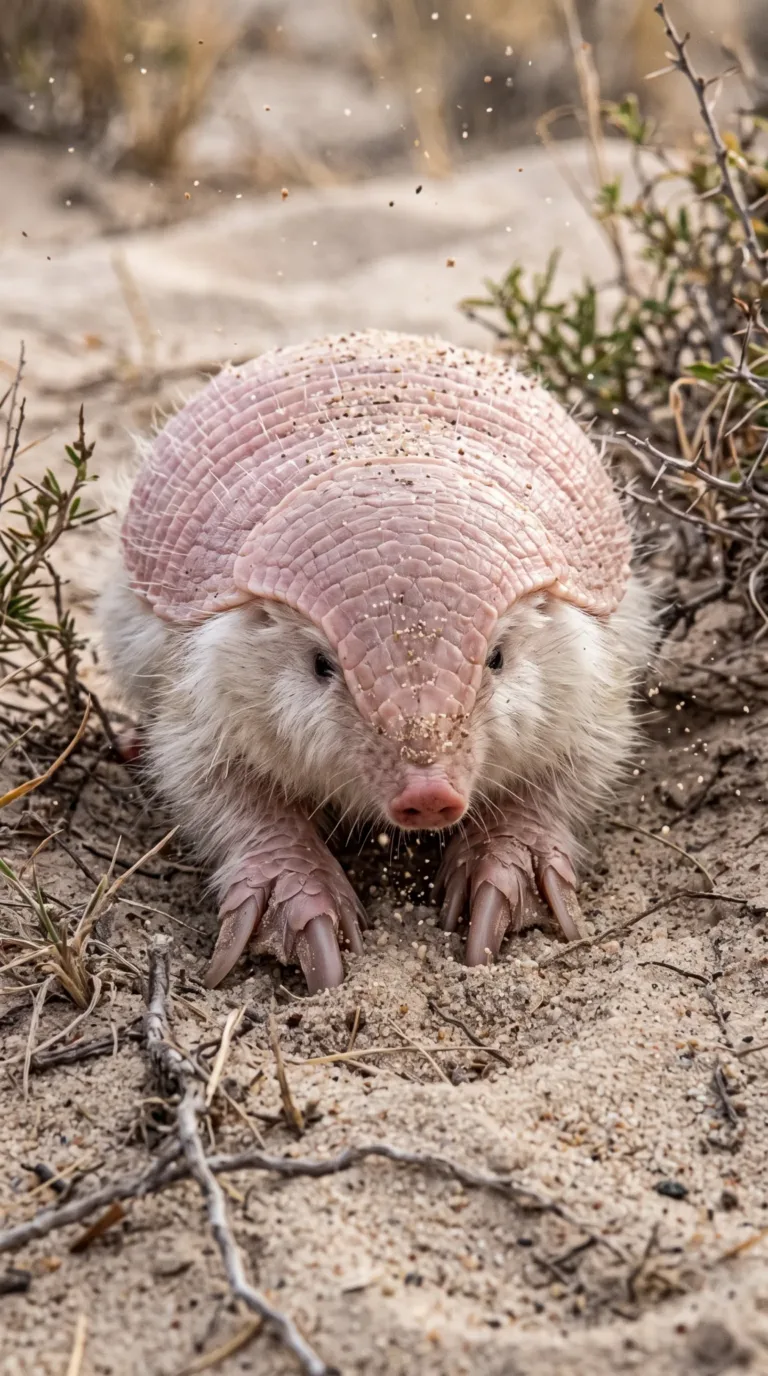
- Smallest: the pink fairy armadillo of Argentina, only about 4.5 in (11.5 cm) long. Pangolins don’t get that small.
Why do they matter?
Armadillos are doing well overall, and the nine-banded armadillo has even spread north across the US. Pangolins are in trouble: they’re the most trafficked wild mammal in the world. Read more in Are Pangolins Going Extinct?
Sources
Tell a friend