Deep dive 3 min read
Where Do Giant Isopods Live? Habitat, Depth & Range
Cold, dark, muddy and hundreds of metres down. Here's where giant isopods really live – which oceans, how deep, how cold – and how they survive in one of the emptiest places on Earth.
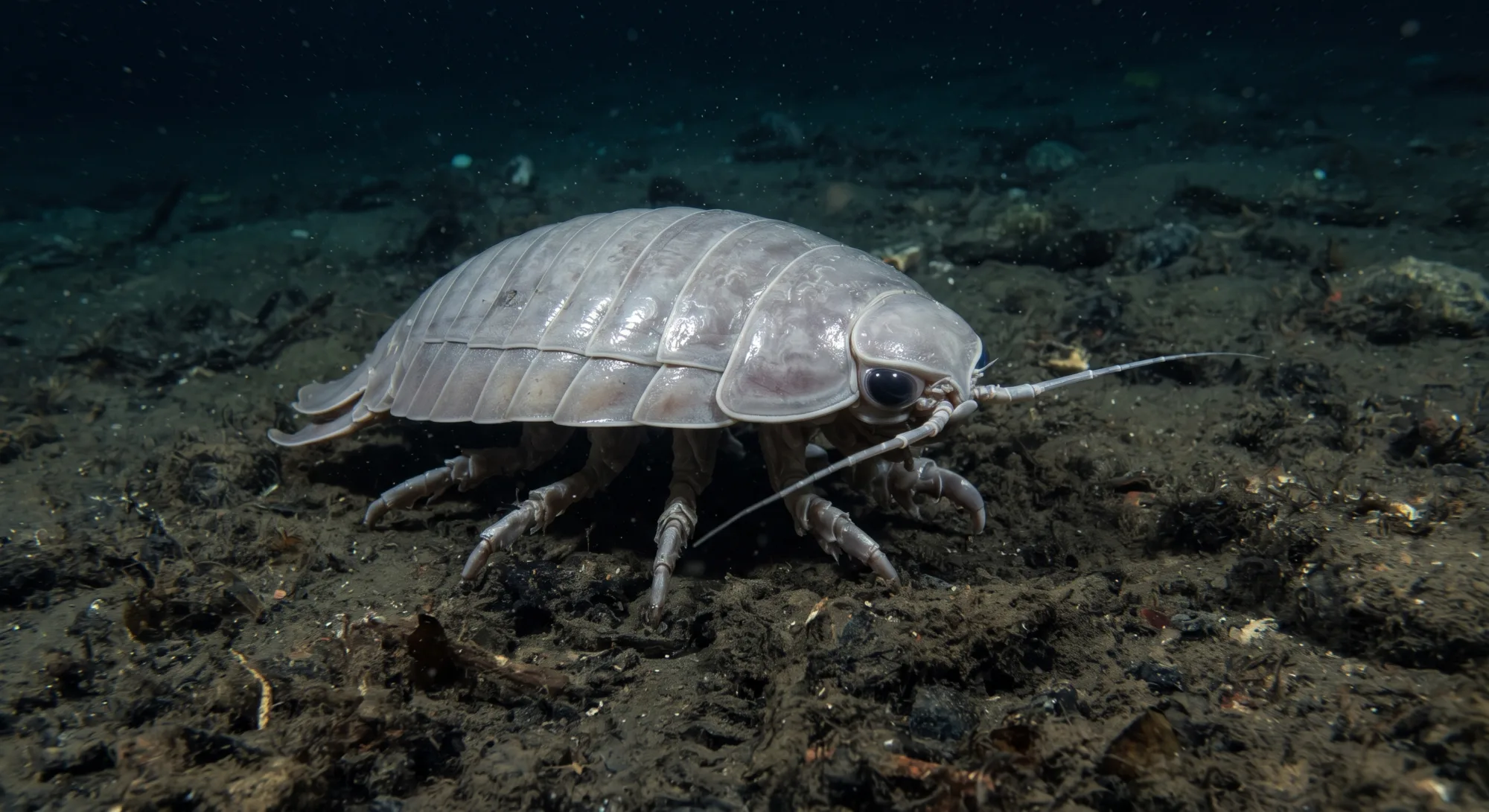
You won’t find a giant isopod under a rock at the beach. These supersized cousins of the garden woodlouse live in one of the least explored places on the planet: the cold, dark floor of the deep sea. Here’s exactly where.
Where do giant isopods live?
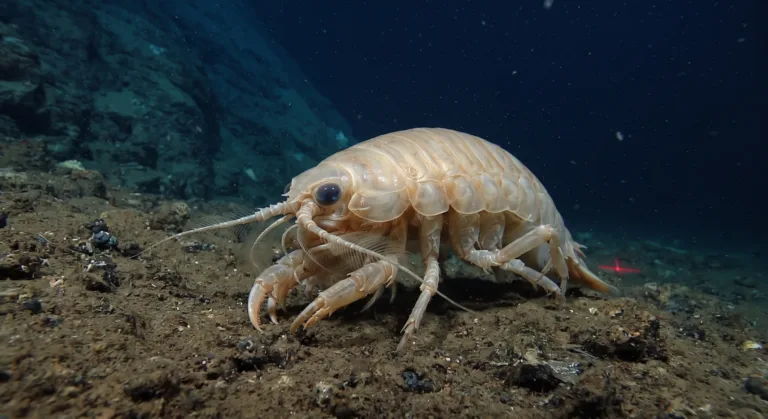
Giant isopods live on the deep seafloor, usually on soft, muddy bottoms where dead animals and other food scraps settle. They’re bottom-dwellers: they walk, dig and scavenge on the seabed rather than swimming in open water.
Which oceans are they found in?
It depends on the species – there are more than 20 of them.
- Western Atlantic: giant isopods are found from the coast of Georgia in the United States all the way down to Brazil, including the Gulf of Mexico and the Caribbean. The best-known species here, Bathynomus giganteus, is the only one recorded off the US coast.
- Indian and western Pacific Oceans: most of the other species live here, in waters around places such as Japan, Taiwan, Vietnam, Indonesia and Australia.
Oddly, giant isopods have never been found in the eastern Atlantic (off Europe and Africa) or the eastern Pacific (off the Americas’ west coast), and no single species lives in both the Atlantic and the Pacific.
How deep do giant isopods live?
Most giant isopods live between about 560 and 7,000 ft (170 and 2,140 metres) down. The classic Bathynomus giganteus is a bit more choosy: more than 80% of them have been found between about 365 and 2,400 ft (730 metres). The deepest record belongs to a relative, Bathynomus kensleyi, found at 8,200 ft (2,500 metres).
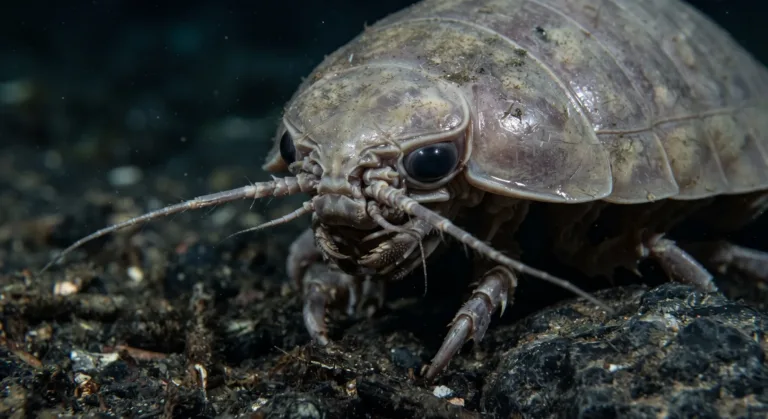
For comparison, sunlight fades out completely at around 3,300 ft (1,000 metres), and even at 660 ft (200 metres) it’s already dim twilight. Most giant isopods spend their lives in near or total darkness – which is why they have huge eyes made of thousands of tiny lenses that catch every last bit of light.
How cold is their home?
Cold. In a survey in the Bahamas, giant isopods were common in water between about 3 and 13 °C, and most abundant at the colder end. They’ve been recorded in water as warm as 20 °C, but they clearly prefer it chilly. The cold is one of the reasons they grow so big – an effect called deep-sea gigantism.
Dark, cold, quiet and almost no food. Basically the opposite of a holiday resort.
How do they survive down there?
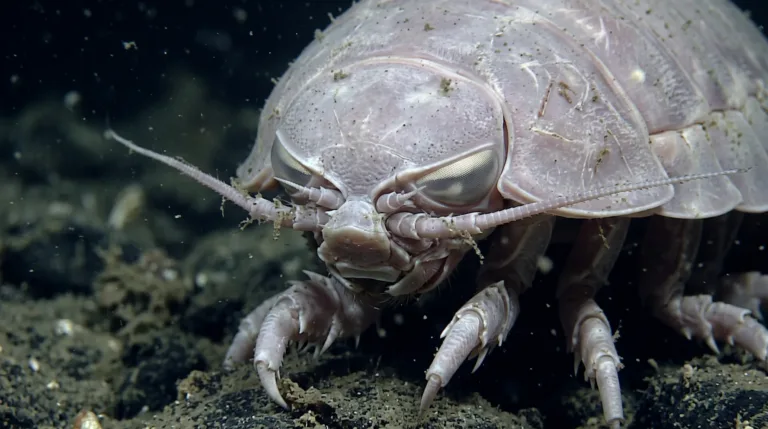
Food is the big problem. There are no plants in the deep sea, so almost everything that lives there depends on scraps sinking from above. Giant isopods are the clean-up crew: they eat dead whales, fish and squid that drift down, plus slow-moving animals they can catch.
When food arrives, they don’t waste it. In 2019, scientists placed dead alligators on the seafloor of the Gulf of Mexico, about 6,600 ft (2,000 metres) down, and filmed giant isopods tearing into one within a day. After a feast like that, an isopod can go a very long time without eating – one at a Japanese aquarium famously refused food for more than five years.
Strange but trueGiant isopods sometimes raid fishing nets too, munching on the fish caught inside before they even reach the surface.
Can you see a giant isopod?
Not in the wild, unless you have a submarine. But several aquariums keep them, especially in Japan, where they’re something of a celebrity. If you want to know how big they get before you go, read Giant Isopod Size – and if you’re wondering whether people eat them, yes: Can You Eat a Giant Isopod?
Sources
- Giant isopod – Wikipedia (distribution, depth and temperature data with original studies)
- SeaLifeBase – Bathynomus giganteus
Tell a friend