Deep dive 3 min read
Giant Isopod Size: How Big Do Deep-Sea Isopods Get?
Picture a woodlouse the size of a cat, crawling across the ocean floor. Giant isopods are real, and they're even bigger and weirder than you think.
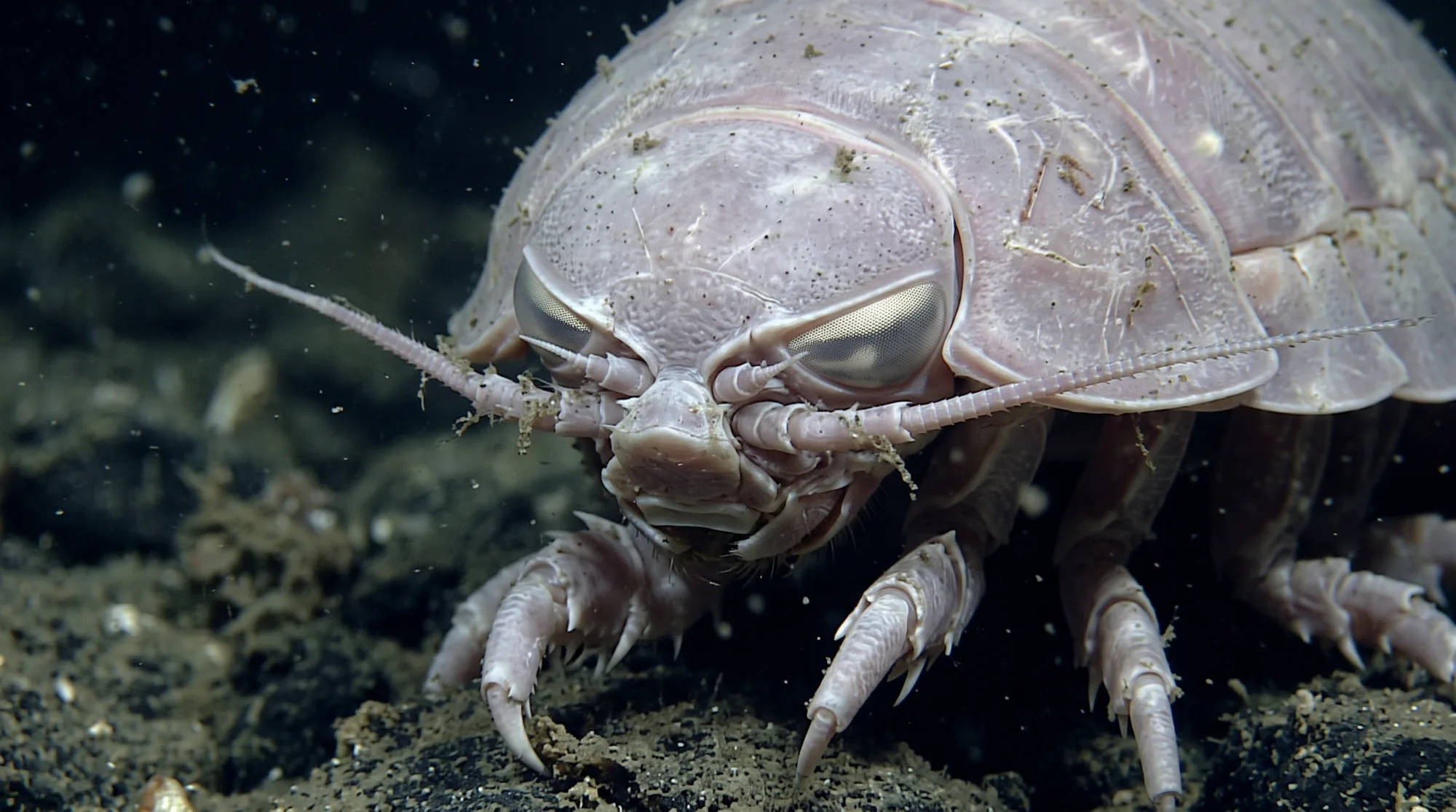
You’ve probably met a woodlouse, also called a pill bug or roly-poly, under a flowerpot in the garden. Now imagine one the size of a small dog, crawling across the dark ocean floor. That’s the giant isopod, and yes, it’s real.
How big do giant isopods get?
The best-known species, Bathynomus giganteus, usually grows to about 19 to 37 cm long. The biggest ones can reach around 50 cm and weigh up to about 1.7 kg. That’s like a woodlouse the size of a house cat. For comparison, the pill bugs in your garden are about 1 cm long.
Is it really a giant pill bug?
Pretty much. Giant isopods and garden woodlice both belong to the same group of crustaceans, the isopods. They share the same basic design: a flat, armoured body made of overlapping plates, seven pairs of legs and a pair of antennae. The giant one is basically the deep-sea, supersized edition. It can even curl up partly when threatened, although not into a perfect ball.
Same family as the bug under your flowerpot. Fifty times bigger.
Why do they grow so big?
Giant isopods live in cold water, usually between about 170 and 2,100 metres deep. Many deep-sea creatures grow unusually large, an effect called deep-sea gigantism. Scientists think the cold slows their metabolism and helps them live longer, while bigger bodies are better at storing food and travelling long distances between meals.
Champions of not eating
Food is rare in the deep sea. Giant isopods are scavengers: they wait for dead whales, fish and squid to sink from above, then gorge themselves. After a big meal, they can go a very long time without another one.
Strange but trueA giant isopod at an aquarium in Japan refused to eat for more than five years. Keepers checked on it every day, and it was still alive and moving almost until the end.
The Darth Vader isopod
New giant isopods are still being discovered. In 2024, scientists described a species from the South China Sea and named it Bathynomus vaderi, because its head looks like Darth Vader’s helmet. In parts of Vietnam, these giant isopods are even sold as seafood. People say they taste like a cross between crab and lobster.
Are they dangerous?
Not to humans. They may look like something from a horror film, but giant isopods are slow, peaceful scavengers that clean up the ocean floor. Scary but harmless, just like many of the creatures in our Scary but Harmless and Giants collections.
Tell a friend