List 6 min read
The 20 Weirdest Deep-Sea Creatures (With Photos)
Glowing lures, see-through heads, slingshot jaws and walking sea cucumbers. Dive into the dark and meet the 20 weirdest creatures of the deep sea.
The deep sea is the biggest habitat on Earth, and we’ve explored less of it than the surface of the Moon. Down there it’s pitch black, freezing cold and the pressure could crush a car. And yet it’s packed with life, the kind that looks like it was designed by a sci-fi artist on a strong coffee. Here are the 20 weirdest deep-sea creatures we know so far.
Anglerfish
A glowing fishing rod on its forehead, a mouth full of needle teeth and the strangest love life in the ocean. The anglerfish dangles a lamp powered by bacteria to lure prey into its huge jaws. In some species, the tiny males fuse permanently onto the much bigger females.
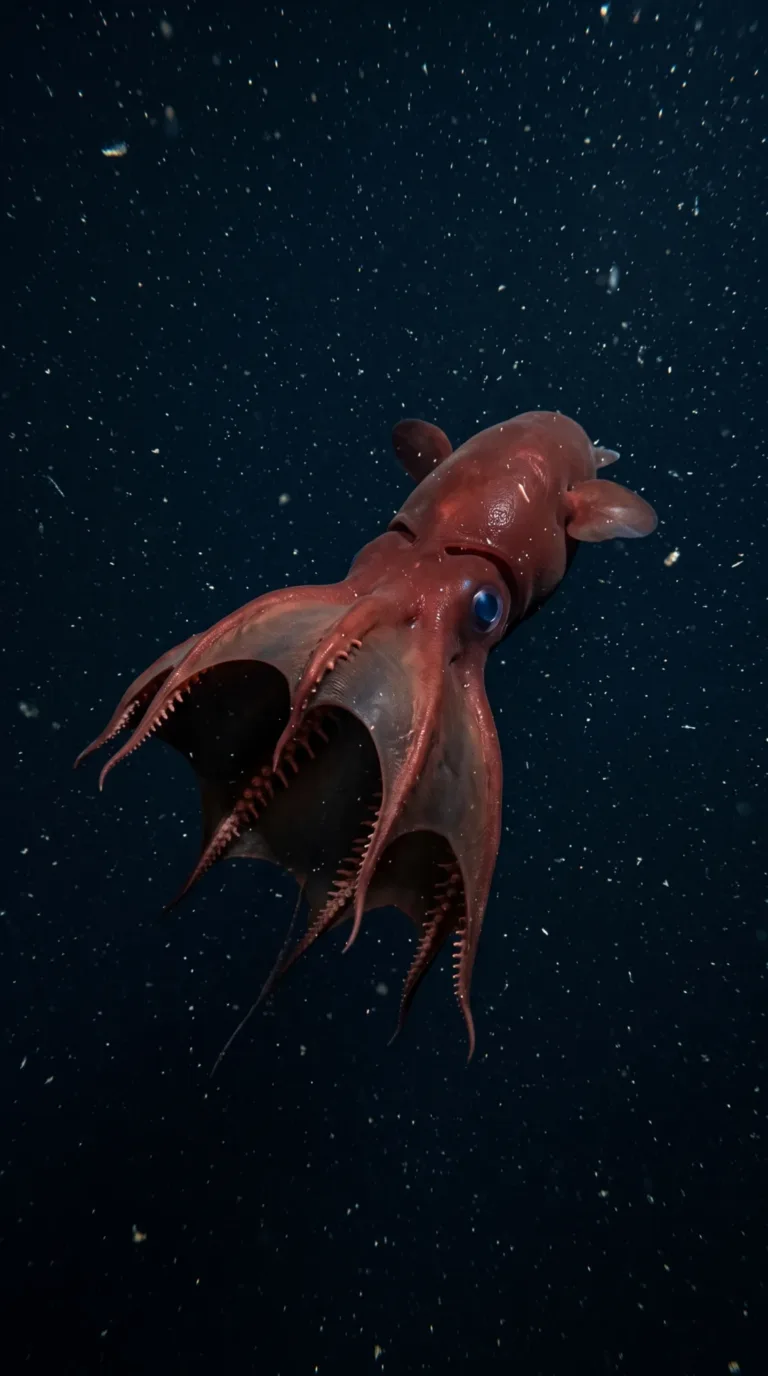
Vampire squid
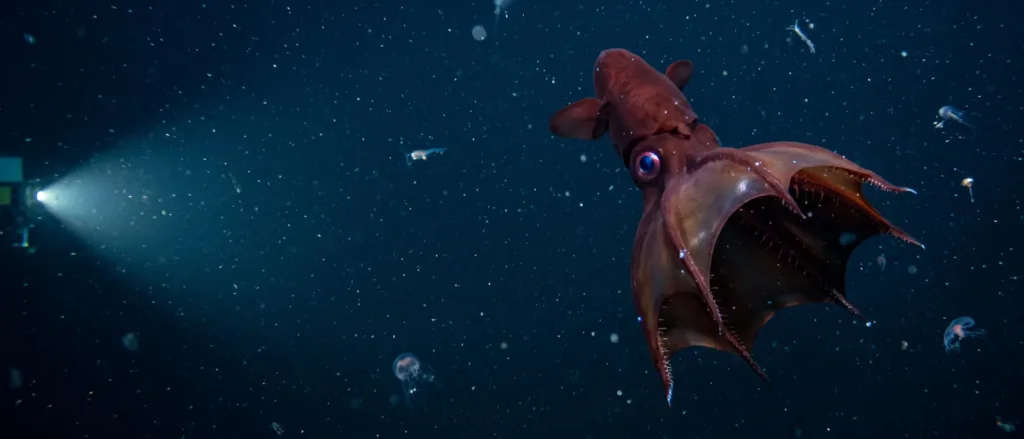
Its scientific name means “vampire squid from hell”, but the vampire squid is a gentle drifter that eats marine snow, the flakes of dead stuff falling from above. When threatened, it pulls its webbed cloak over its head and turns itself inside out. It’s neither a true squid nor an octopus, but the last survivor of its own ancient group.
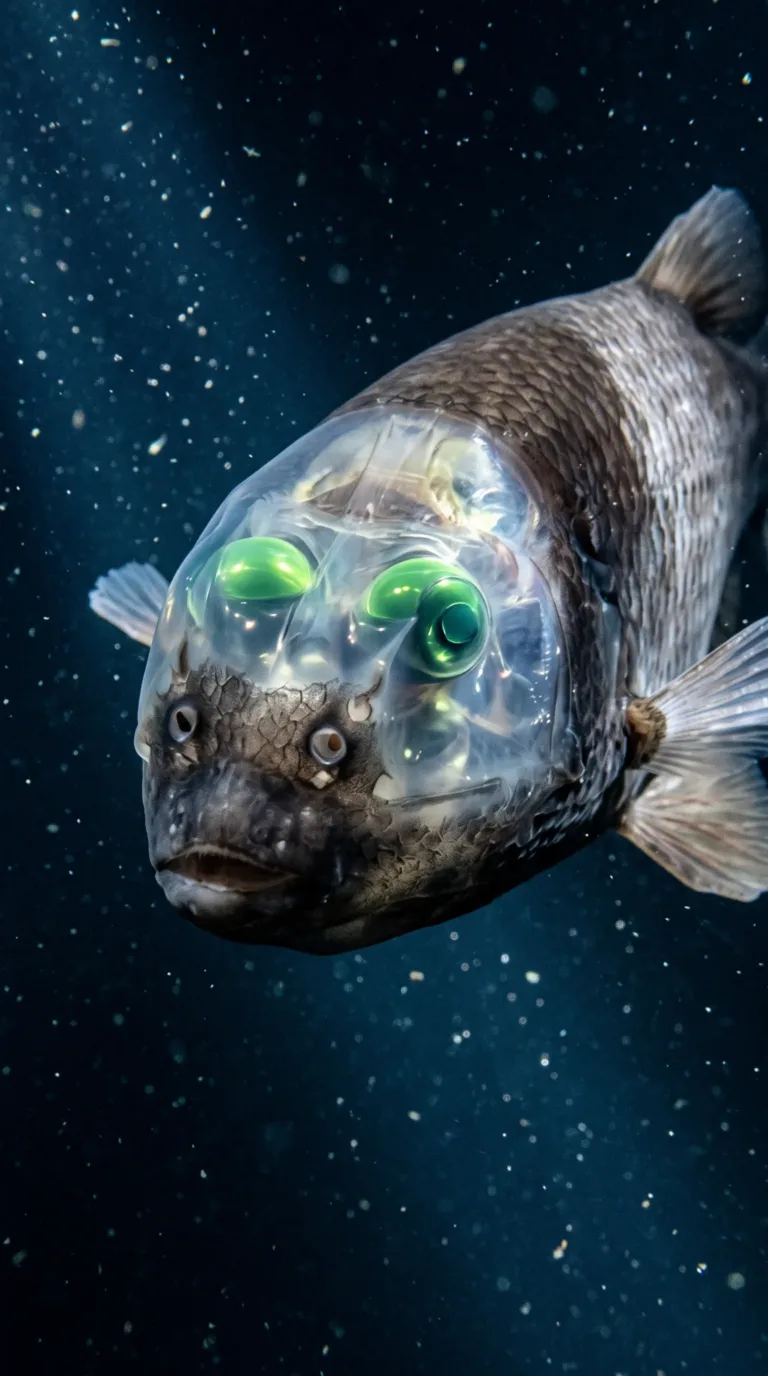
Barreleye fish
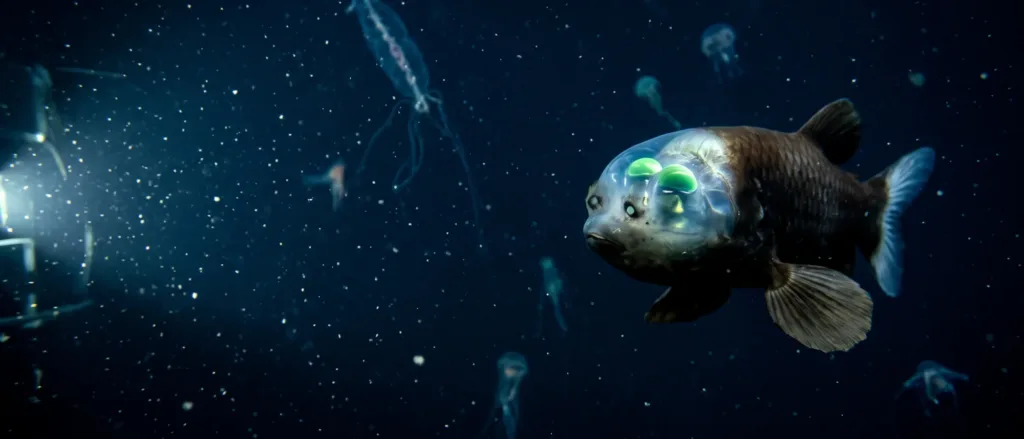
The barreleye has a see-through head like a cockpit, with two glowing green eyes inside. The dark spots on its face that look like eyes are actually its nostrils. Its tubular eyes can rotate to look up or straight ahead.
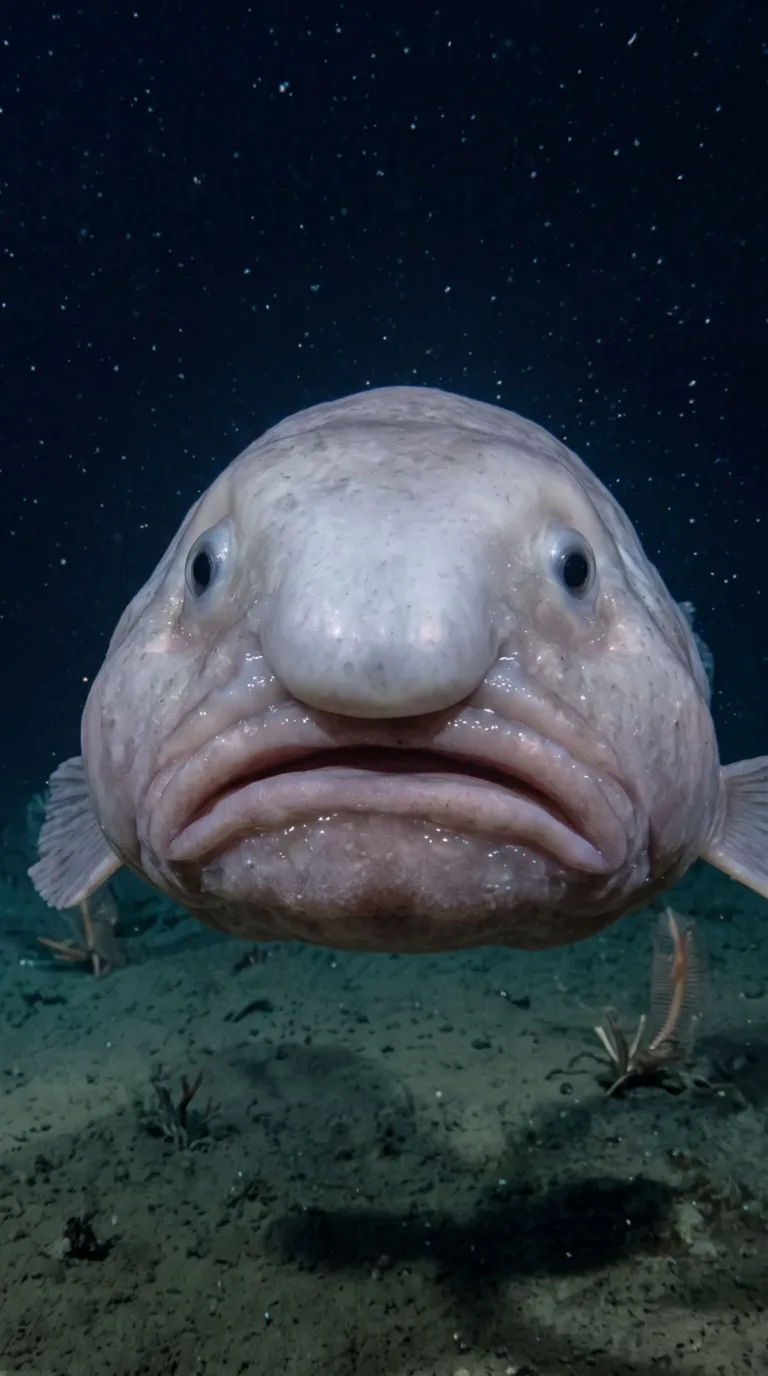
Blobfish
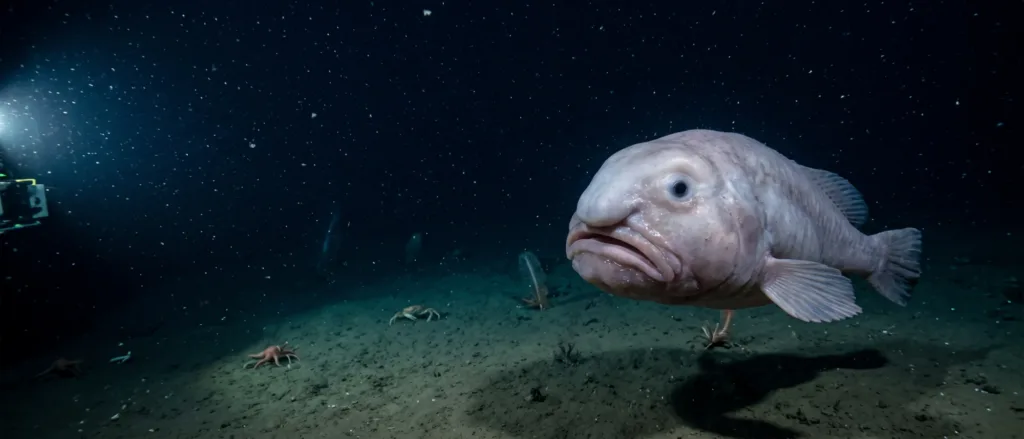
The internet’s saddest face is a lie. The blobfish only turns into a droopy pink blob when it’s dragged up from the deep. At home, 600 metres or more below the surface, it looks like a perfectly ordinary, slightly grumpy fish.
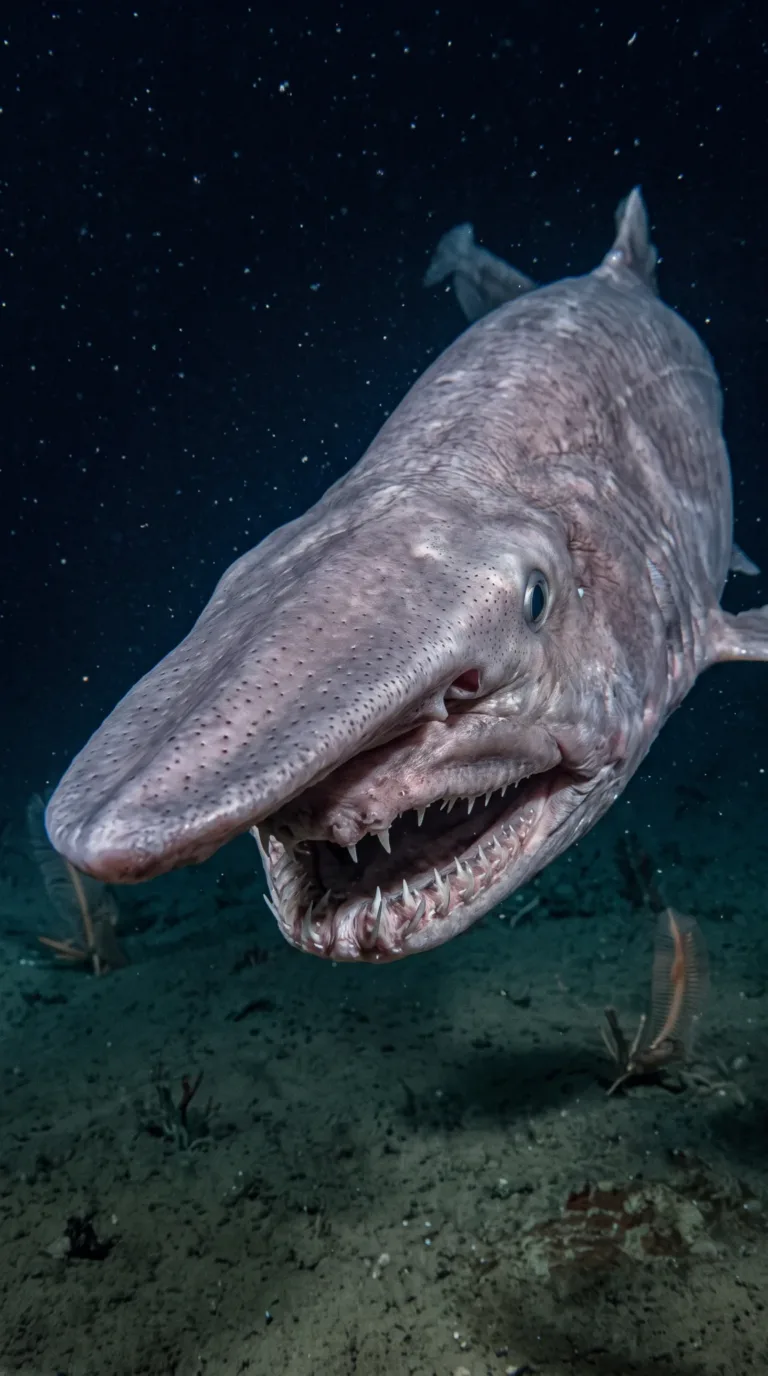
Goblin shark
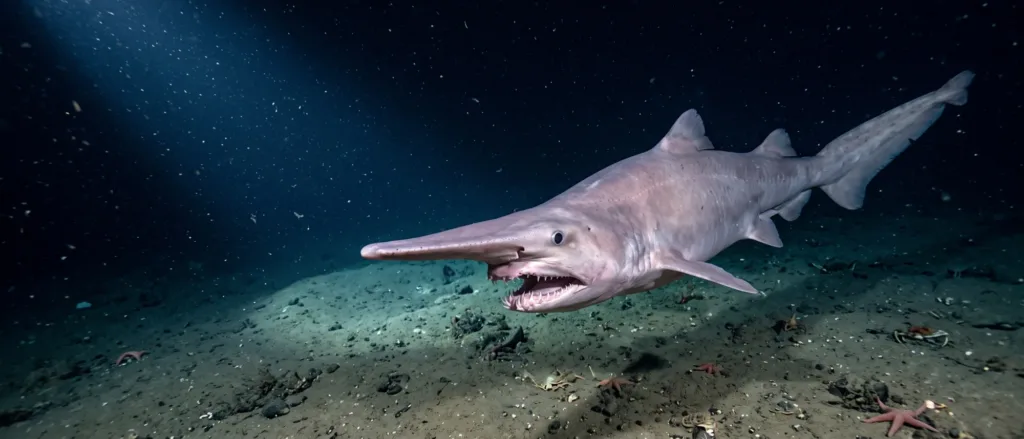
Pink skin, a blade-like snout and jaws that shoot out of its face like a slingshot. The goblin shark belongs to a family that has been around for some 125 million years, and it bites like nothing else in the sea.
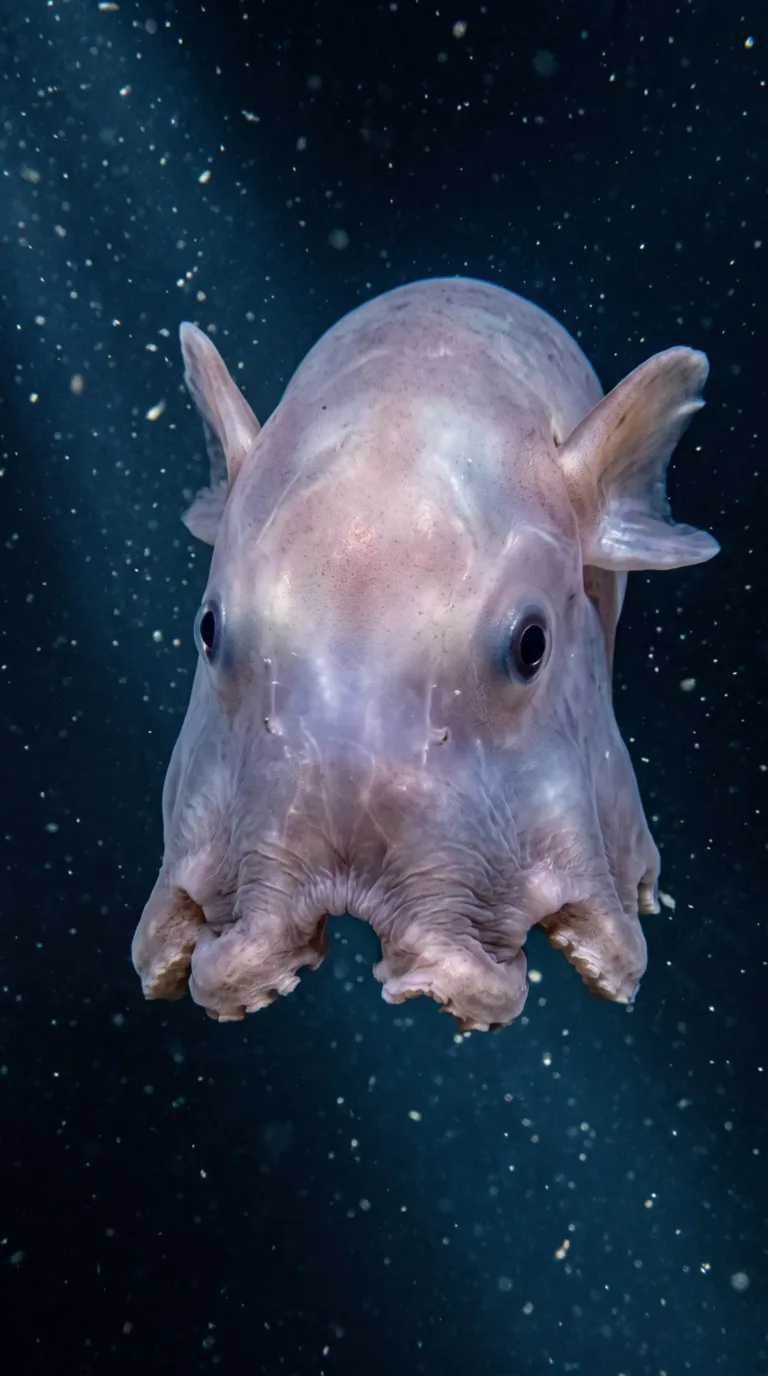
Dumbo octopus
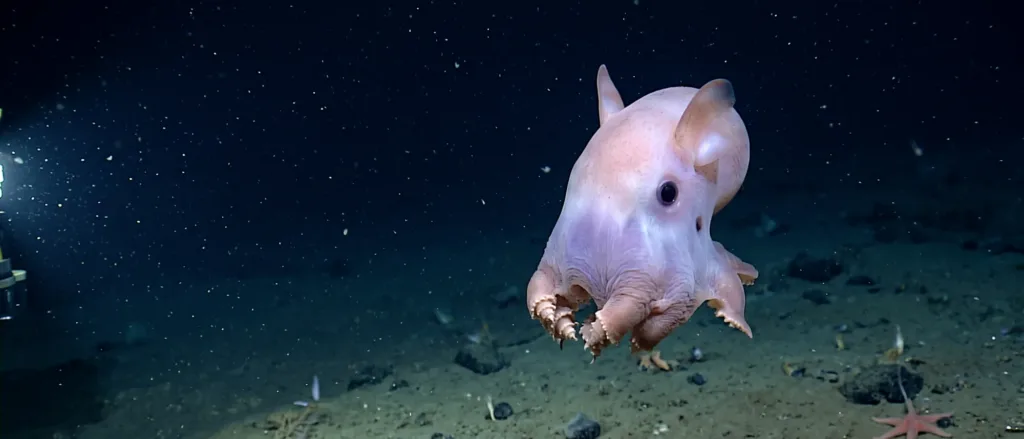
Named after the flying elephant, the Dumbo octopus flaps two ear-like fins to “fly” through the water. Some live around 7,000 metres down, deeper than any other known octopus. It swallows its prey whole.
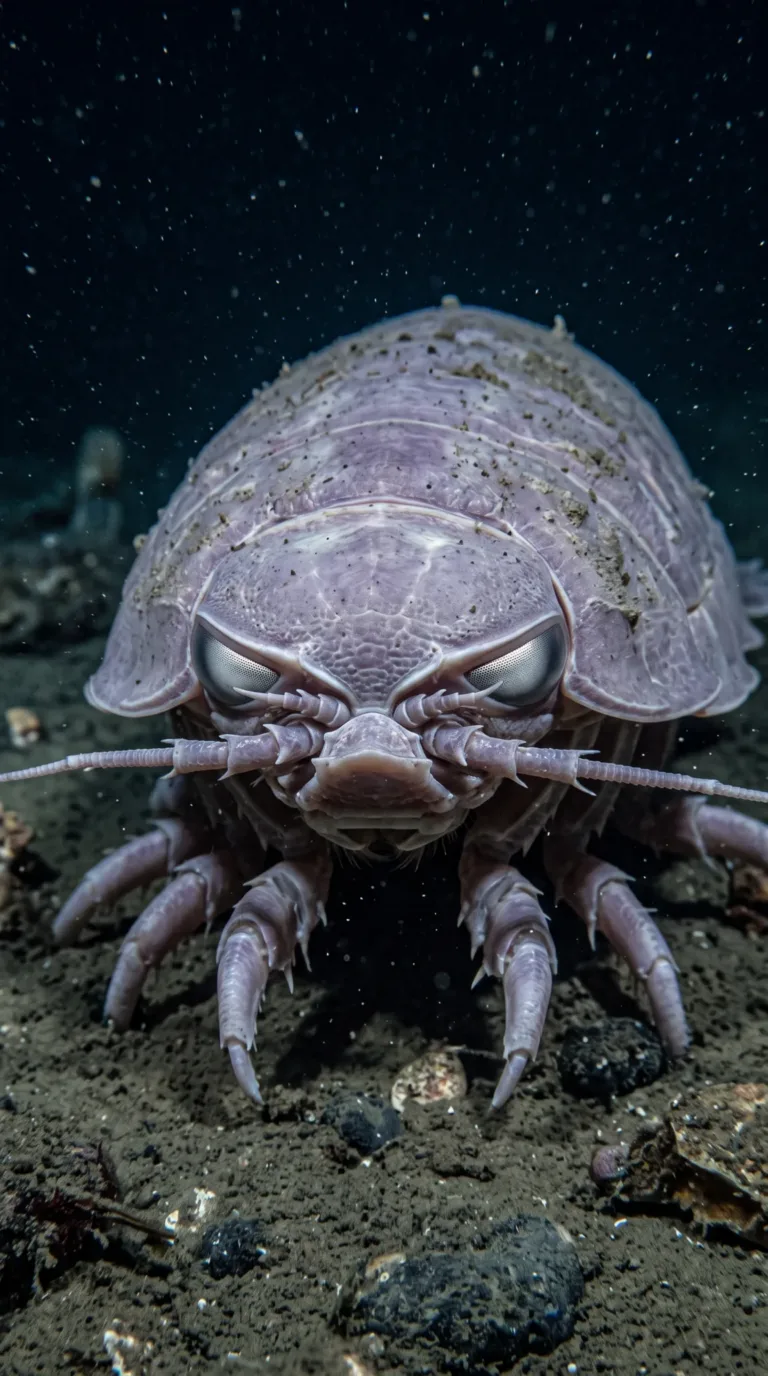
Giant isopod
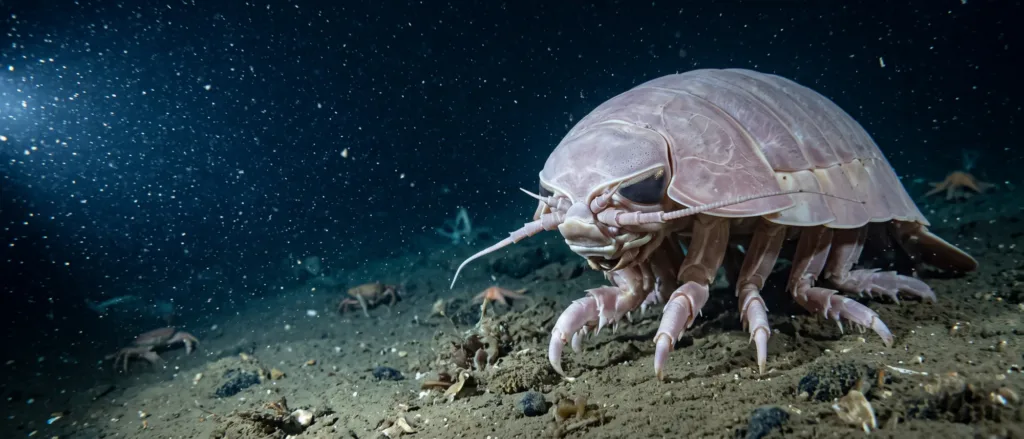
Imagine a woodlouse the size of a cat. The giant isopod crawls along the sea floor in heavy armour, scavenging dead whales and fish. One in a Japanese aquarium didn’t eat for more than five years.
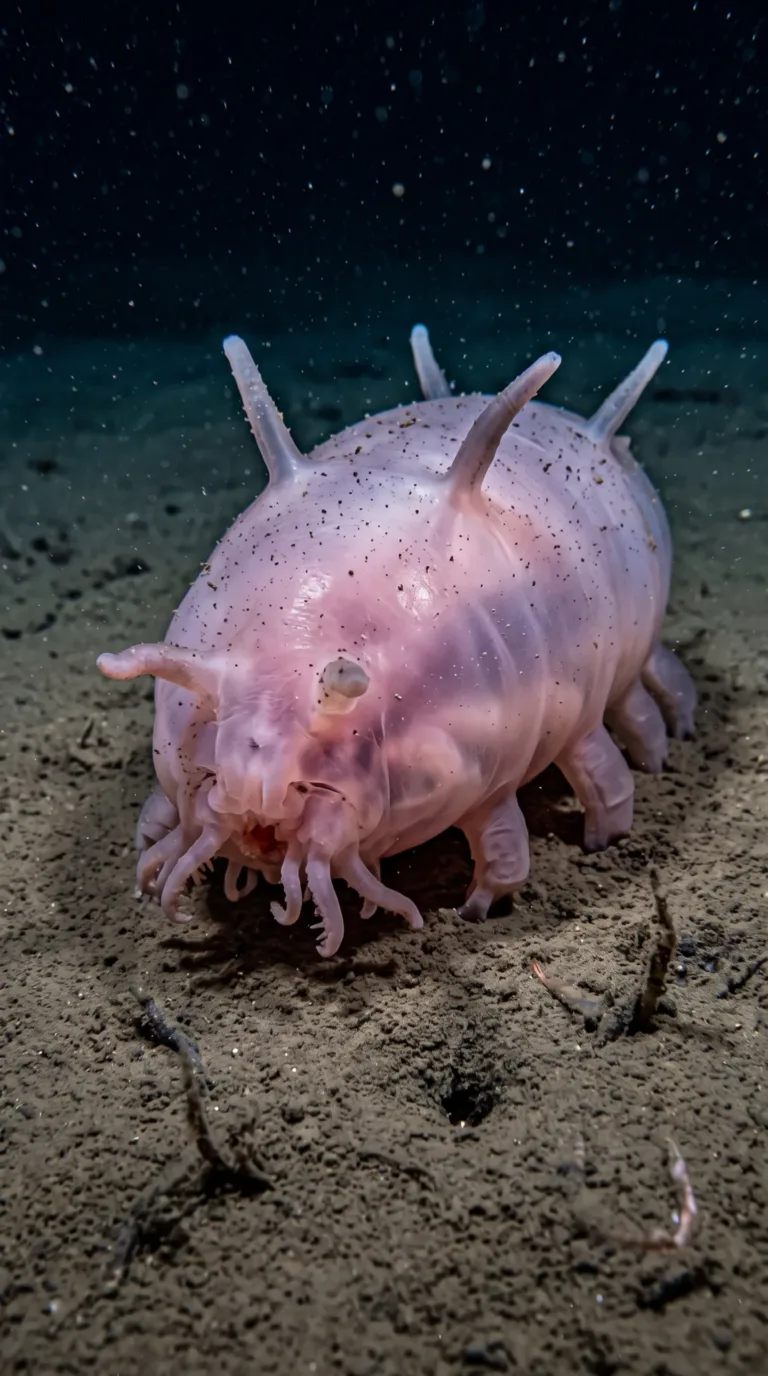
Sea pig
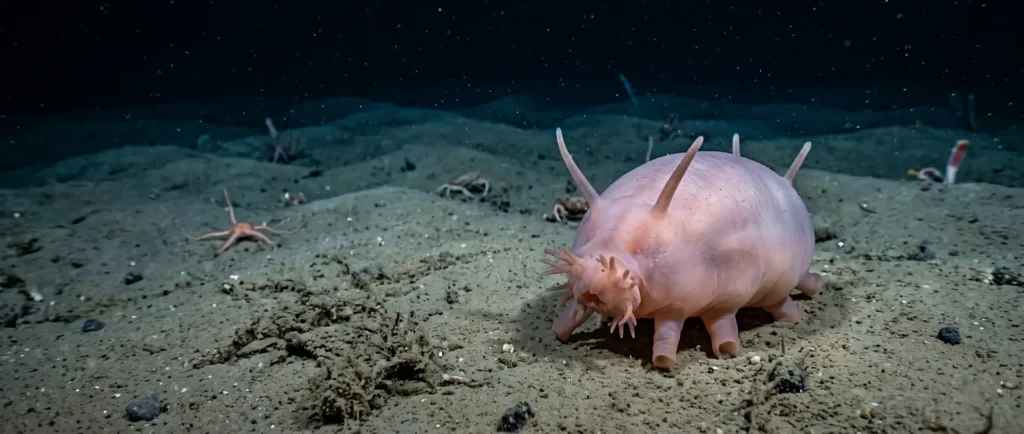
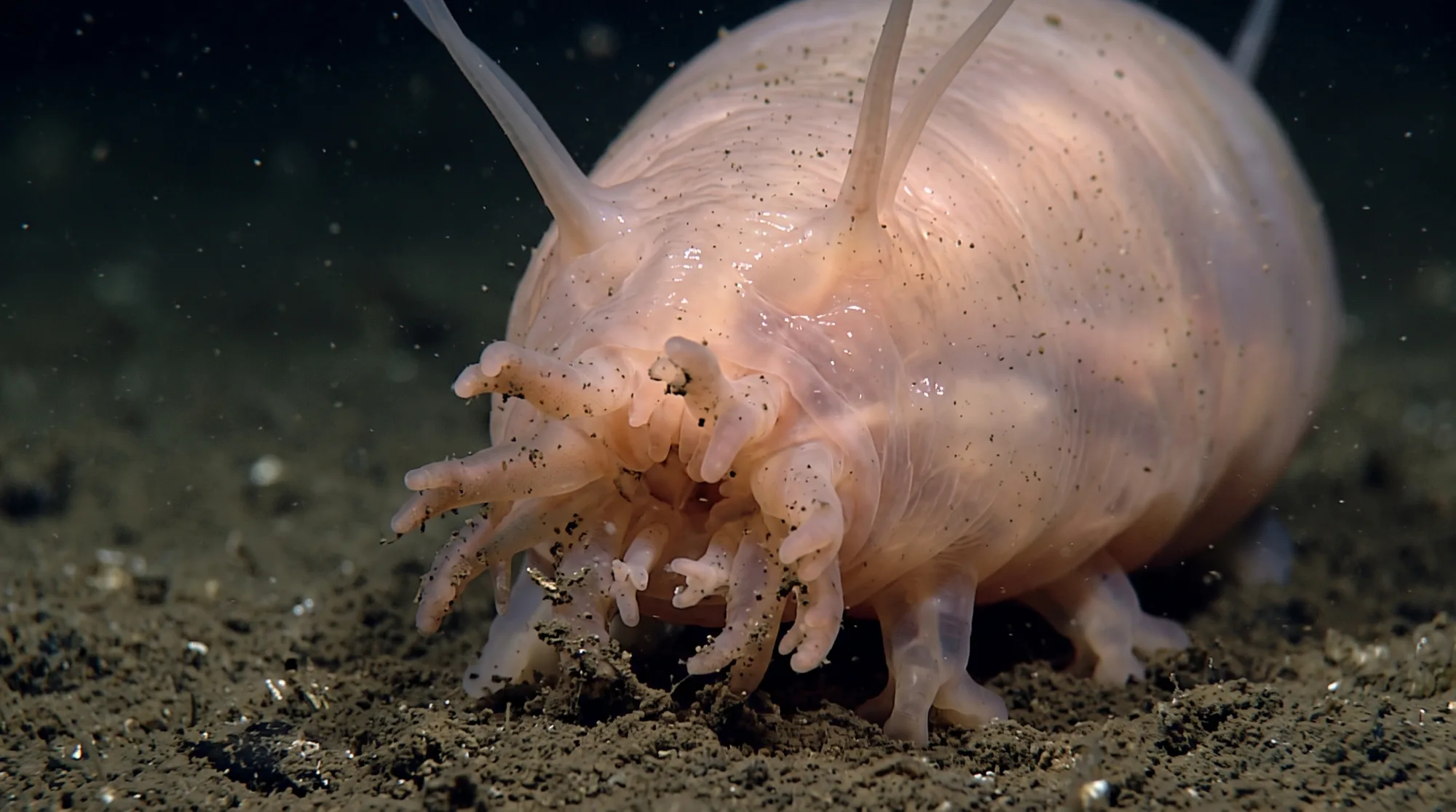
A chubby pink body, little legs and a pair of “ears”. The sea pig is actually a sea cucumber that walks across the ocean floor on water-filled tube feet, often in herds of hundreds, hoovering up mud for food.
Strange but trueTiny crabs sometimes ride underneath sea pigs, probably using them as a mobile shelter from predators.
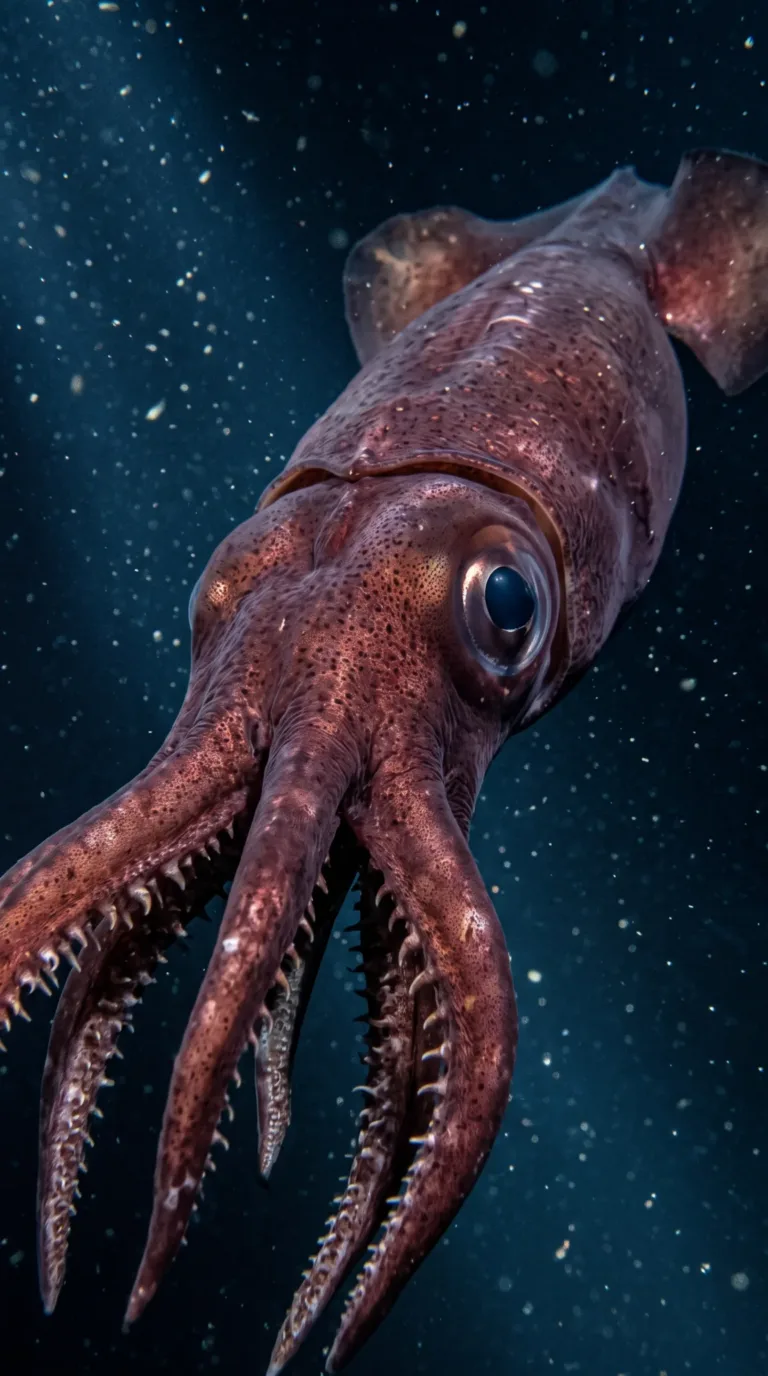
Colossal squid
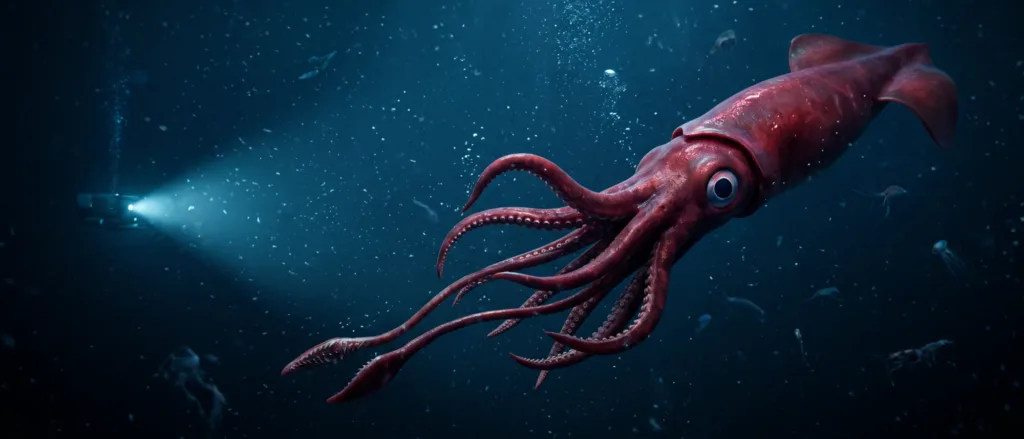
The heaviest invertebrate on Earth. The colossal squid can weigh around half a tonne, carries swivelling hooks on its arms and has eyes as big as dinner plates, probably the largest in the animal kingdom.
Frilled shark
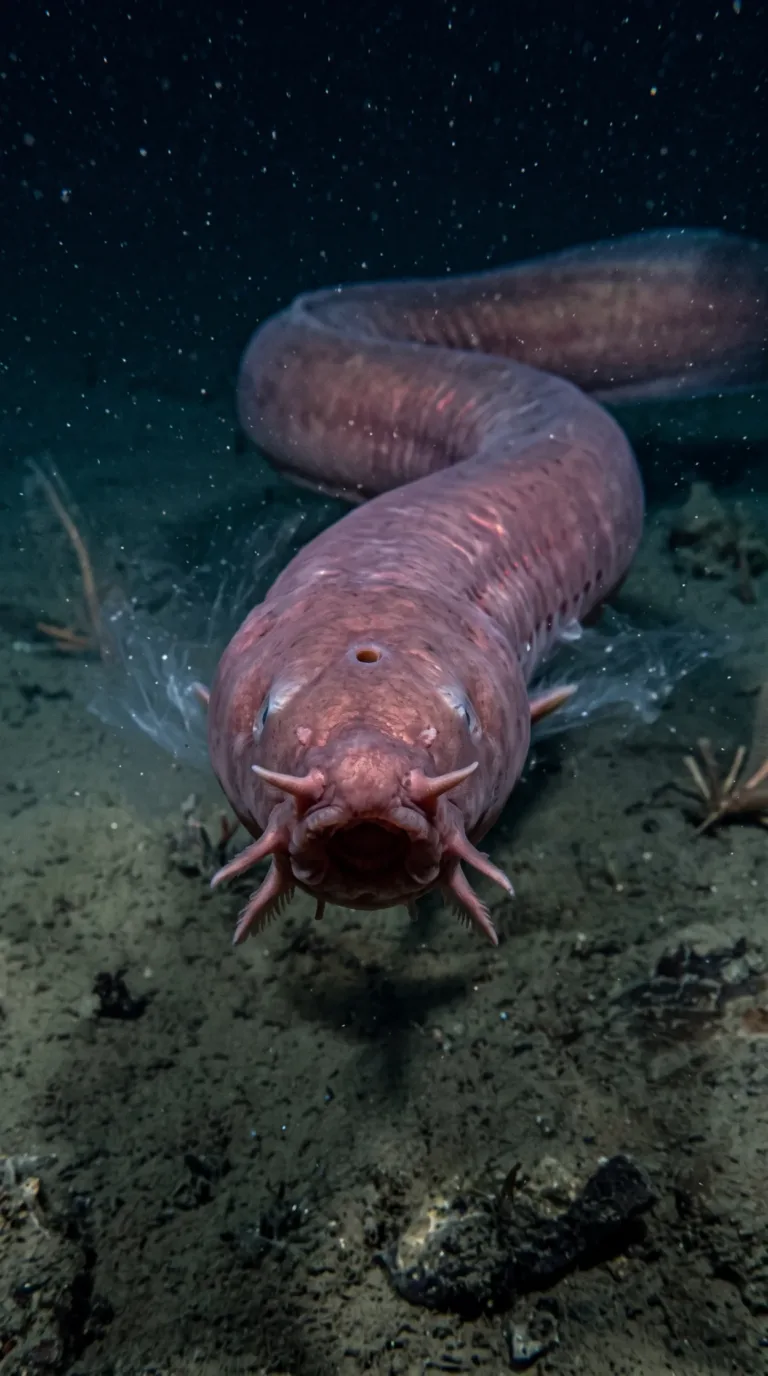
Half shark, half sea serpent. The frilled shark has an eel-like body, frilly gill slits and around 300 tiny, three-pointed teeth in rows. Its pregnancy may last over three years, possibly the longest of any animal with a backbone.
Fangtooth fish
For its size, the fangtooth has the biggest teeth of any fish in the ocean. They’re so long that it can’t fully close its mouth without help: its two biggest bottom fangs slide into special pockets on either side of its brain.
Pacific viperfish
With fangs so long they stick out past its face, the Pacific viperfish looks like a nightmare. It has glowing spots along its body and swims up towards the surface at night to hunt, then sinks back into the dark by day.
Barbled dragonfish
Pitch-black skin, a glowing whisker hanging from its chin and a mouth full of fangs. The barbled dragonfish uses its luminous barbel as a lure. Some dragonfish have skin so black it absorbs almost all light, making them nearly invisible.
Hagfish
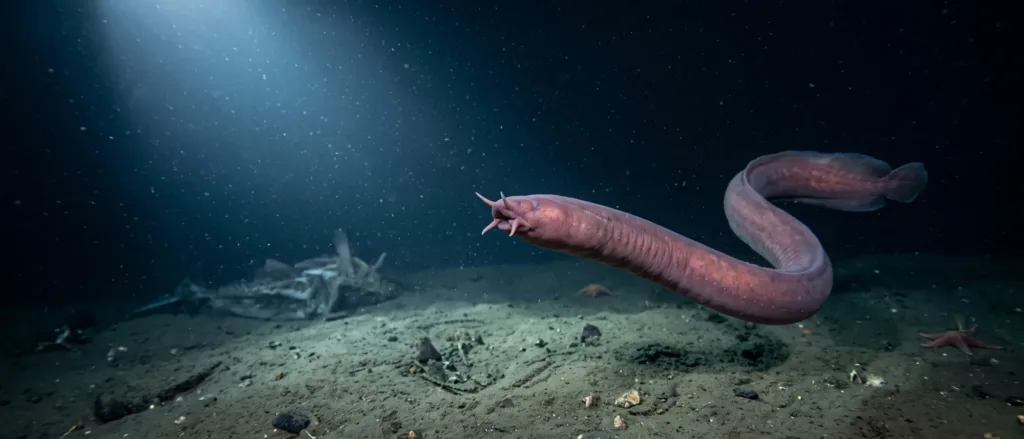
No jaws, a skull but no proper backbone, and the ability to fill a bucket with slime in seconds. The hagfish escapes predators by choking them with goo, and cleans itself by tying its body into a knot.
Yeti crab
Discovered in 2005 near hot vents in the Pacific, the yeti crab has arms covered in long, blond “fur”. It grows bacteria on those hairs and may wave them over the vents to feed them, then eats its own little bacteria farm.
Giant siphonophore
It looks like one long animal, but the giant siphonophore is a colony of thousands of tiny clones working together. Some species can stretch over 40 metres, rivalling the blue whale as one of the longest animals on Earth.
Giant phantom jelly
A bell about a metre wide and four ribbon-like arms that can trail up to 10 metres behind it. The giant phantom jelly is so rarely seen that scientists have only spotted it around a hundred times in over a century.
Megamouth shark
Nobody knew it existed until 1976, when one got tangled in a US Navy ship’s anchor off Hawaii. The megamouth shark is a gentle filter feeder with an enormous, rubbery mouth, and only a few hundred have ever been seen.
Giant oarfish
The longest bony fish in the world can reach around 8 metres. The silvery, ribbon-like giant oarfish with its red crest is probably behind many old sea serpent legends. In Japan, folklore says it rises to the surface before earthquakes.
Coelacanth
Scientists thought it died out with the dinosaurs, until one turned up in a South African fishing net in 1938. The coelacanth lives in deep underwater caves, moves its fleshy fins like legs and may live for around 100 years.
We’ve explored less of the deep sea than the surface of the Moon. Who knows what’s still hiding down there?
Why is the deep sea so weird?
Because life down there plays by different rules. With no sunlight, animals make their own light. With little food, they grow huge mouths and stretchy stomachs, or learn to go years without eating. Cold water and crushing pressure lead to soft, jelly-like bodies and sometimes giant sizes. The result is the strangest zoo on the planet, and scientists discover new species there almost every year. Explore them all in our Deep Sea collection.
Tell a friend