Versus 3 min read
Olm vs. Axolotl: Two Salamanders That Never Grow Up
The olm and the axolotl both keep their baby gills for life. But one is a blind cave-dweller from Europe and the other a smiling lake salamander from Mexico.

Both stay in the water their whole lives. Both keep the feathery gills that most salamanders lose as they grow up. Both look a bit like aliens. But the olm and the axolotl live on different continents, in completely different worlds, and they aren’t close relatives.
What does “never grow up” mean?
Most salamanders start life as water-living larvae with gills, then change into land-living adults. The olm and the axolotl skip that change. They become adults and breed while keeping their larval features. Scientists call this neoteny.
Head to head
| Olm | Axolotl | |
|---|---|---|
| Lives in | Flooded caves in the Balkans (Slovenia to Herzegovina) | Canals and lakes of Xochimilco, Mexico City |
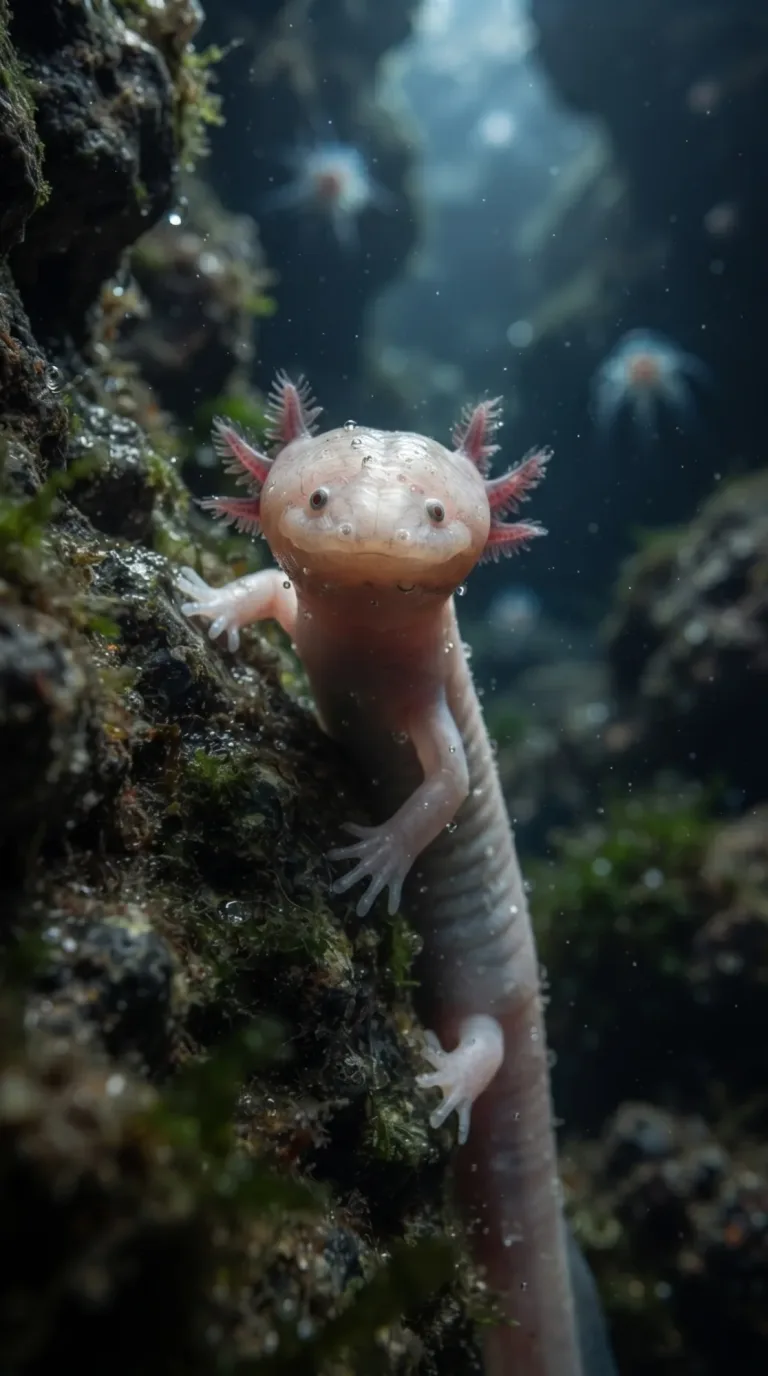
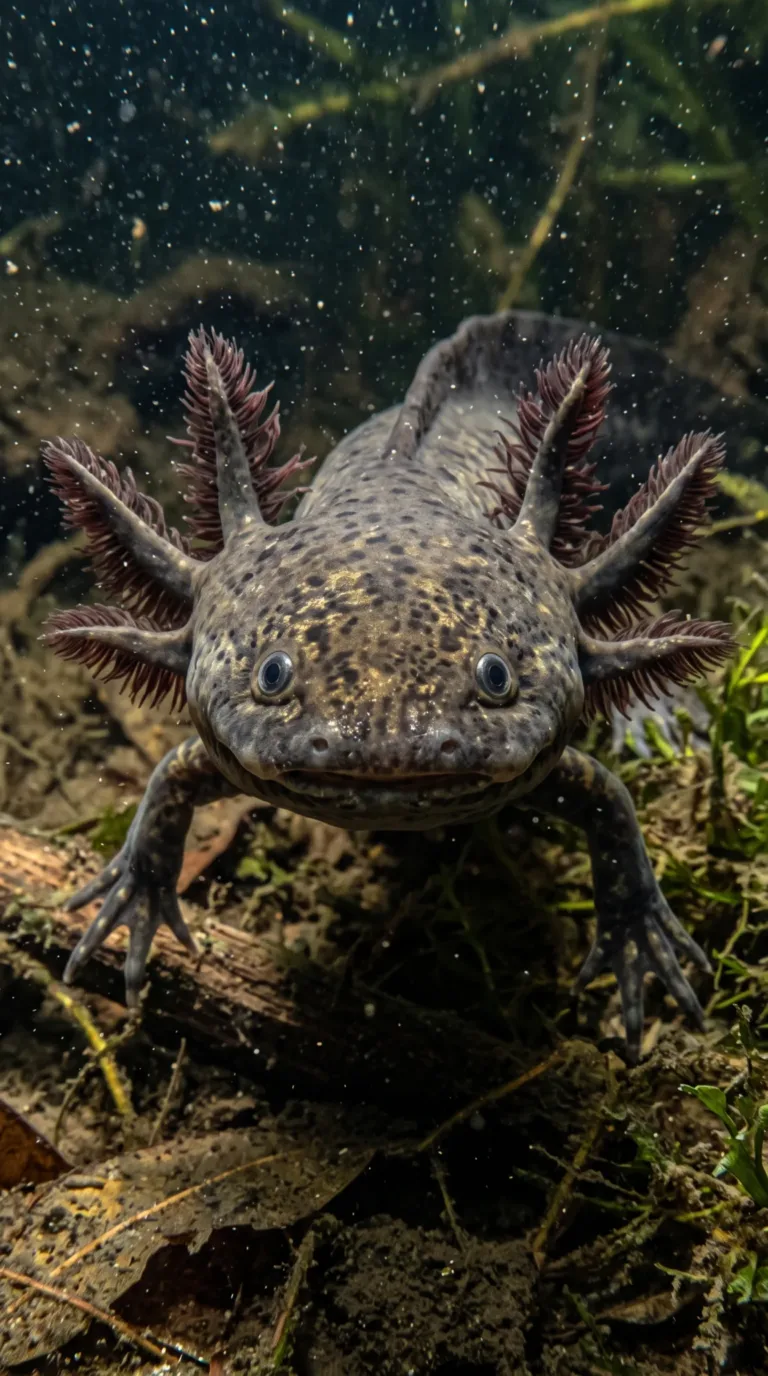
| Looks | Long, thin, eel-like, pale pink-white | Stocky, wide head, permanent “smile” |
| Eyes | Tiny and hidden under the skin | Small but working |
| Length | About 8–12 in (20–30 cm) | Usually about 9 in (23 cm), up to about 12 in (30 cm) |
| Lifespan | Estimated 100 years or more | About 10–15 years |
| Status | Vulnerable | Critically Endangered in the wild |
Life in the dark vs. life in the canals
The olm lives in total darkness. It doesn’t need eyes, so they’ve shrunk away, and it finds food by smell, by sensing vibrations and electric fields, and maybe even by sensing Earth’s magnetic field. It can survive years without eating, because food in caves is scarce.
The axolotl lives in shallow, plant-filled water and hunts worms, insect larvae and small fish with a quick suck of its mouth. In the wild it’s dark green-brown. The pink, white and golden axolotls you see in photos are pet varieties.
One is a blind hermit that lives to 100. The other is a smiling celebrity with a regrowable heart.
Superpowers
- Axolotl: regrows lost legs, its tail, parts of its heart and even parts of its brain.
- Olm: extreme long life and extreme patience. One olm in a study barely moved from the same spot for seven years.
Strange but trueOlms have three toes on their front feet but only two on their back feet. Axolotls have four in front and five behind, like most salamanders.
Can either of them “grow up”?
An axolotl can be forced to turn into a land-living adult with hormones, though it shortens its life and isn’t recommended. Olms seem unable to make that change at all.
Which is rarer?
The axolotl is everywhere in the pet trade but almost gone from the wild because of pollution and lost habitat in Mexico City. The olm is protected and rarely seen, but its caves are more stable. Learn more in How Do Axolotls Regrow Their Limbs?
Sources
Tell a friend