Deep dive 3 min read
How Big Is a Tardigrade? (And How to Find One Yourself)
How big is a tardigrade? Tiny – but not invisible. Here's exactly how big water bears get, whether you can see one with the naked eye, and how to find your own in a clump of moss.

The tardigrade is the toughest animal on Earth – it has survived freezing, boiling and even open space. So how big is this little superhero? Smaller than you’d think, but bigger than you’d expect.
How big is a tardigrade?
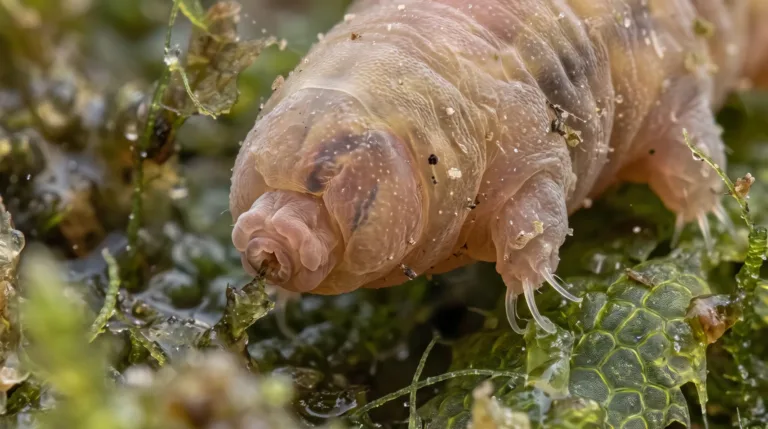
Most adult tardigrades are about 0.3 to 0.5 mm long. The smallest species are around 0.05 mm, and the biggest reach about 1.2 mm. For comparison:
- A grain of table salt is roughly 0.3–0.5 mm across – about the size of a typical tardigrade.
- The full stop at the end of this sentence on a printed page is around 0.5 mm.
- A human hair is about 0.07 mm thick – the very smallest tardigrades are about that size.
Can you see a tardigrade with the naked eye?
Only just. The biggest tardigrades are at the edge of what the human eye can see: with strong light and a dark background, they can look like tiny moving specks. To actually recognise one – the chubby body, the eight stubby legs – you need magnification. A simple hand lens helps, but a cheap microscope is much better. See what they look like up close in Real Tardigrade Photos.
Smaller than a grain of salt, tougher than a tank. Size really isn’t everything.
How to find a tardigrade yourself
Tardigrades live almost everywhere, and the easiest place to find them is in moss or lichen – maybe on a wall or a roof right next to your house. Here’s how:
- Collect some moss. A small clump of moss or lichen, dry or wet, from a wall, tree or roof.
- Soak it. Put it in a shallow dish and cover it with rainwater or distilled water (tap water left to stand for a few days also works). Leave it for a few hours, or overnight.
- Squeeze it out. Squeeze or shake the moss over a clean dish, so the water drips into it.
- Look closely. Check the water under a microscope at low magnification – around 15–30× is enough to spot them. Look for slow, barrel-shaped animals clambering about like tiny bears.
Be patient: sometimes you need a few tries. If the moss was dry, the tardigrades may need some time in the water to “wake up” from their dried-out state.
How many kinds of tardigrades are there?
More than 1,300 species have been described so far, living everywhere from mountain tops and rainforests to deep-sea mud and Antarctic ice. Some eat plant juices, others hunt tiny worms – and some even hunt other tardigrades.
Strange but trueTardigrades are so small and so tough that a dried-out one can survive conditions that would kill almost anything else – even ten days in open space. Read Can Tardigrades Survive in Space?
Sources
Tell a friend