Deep dive 3 min read
Can Tardigrades Survive in Space?
In 2007, scientists sent tardigrades into open space with no protection. Many came back alive. Here's how the toughest animal on Earth pulls it off, and where its limits are.
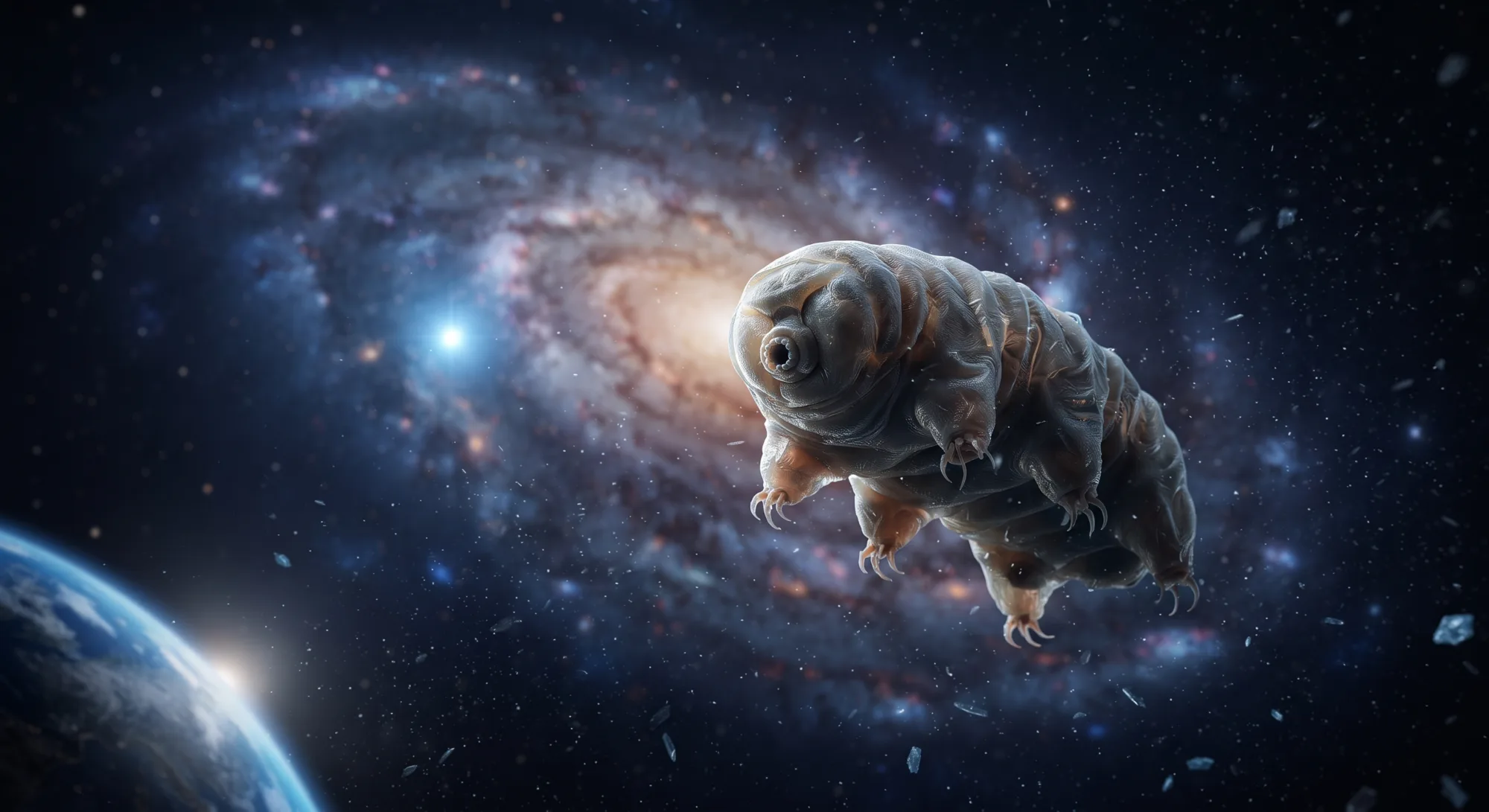
Freezing cold, no air, deadly radiation: open space kills almost everything instantly. Almost. In 2007, scientists strapped a group of tardigrades to the outside of a satellite and launched them into orbit. When they came back, many of them were alive. So, can tardigrades survive in space? Yes, with a few important “buts”.
The experiment
The experiment was called TARDIS, which is a pretty good name for a space trip. Dried-out tardigrades rode on a European space mission called FOTON-M3 and spent 10 days exposed to the vacuum of space. Some were also exposed to the full blast of the Sun’s ultraviolet radiation.
The results amazed scientists. The vacuum alone barely bothered them: most survived and some even laid eggs that hatched. Raw sunlight was much tougher, and only a few of the fully exposed tardigrades made it. But that was still more than anyone expected from any animal.
They were the first animals known to survive the open vacuum of space.
The secret: becoming a “tun”
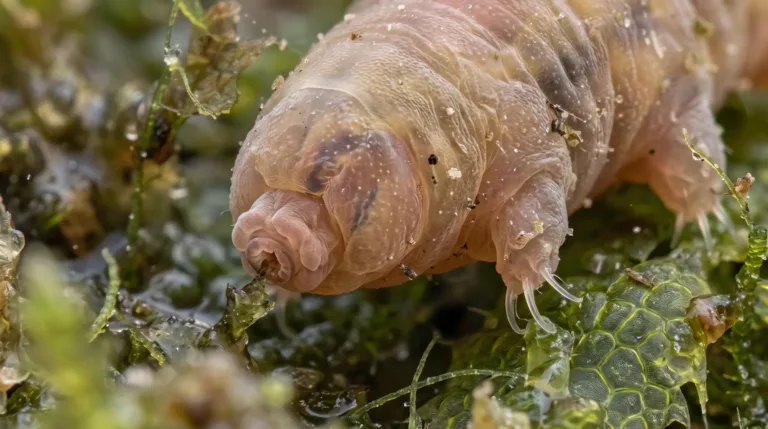
Tardigrades don’t survive space by being superheroes while awake. They survive by switching themselves off. When their environment dries out, they pull in their legs, curl into a tiny dry ball called a tun and lose almost all of their water.
In this state, their metabolism drops to almost zero. They’re not dead, just paused. Special proteins replace the water and protect their cells like a kind of glass. Add a drop of water, even years later, and they can wake up and carry on.
What else can they survive?
As a tun, tardigrades have survived some truly ridiculous tests in labs: temperatures close to absolute zero, heat over 100 °C for a short time, pressure many times greater than at the bottom of the deepest ocean and doses of radiation hundreds of times higher than what would kill a human.
Strange but trueOne tardigrade species makes a protein called Dsup that shields its DNA from damage. When scientists added it to human cells in the lab, those cells handled X-rays much better.
Are there tardigrades on the Moon?
Possibly. In 2019, an Israeli spacecraft called Beresheet crashed on the Moon, and it was carrying dried tardigrades. But don’t imagine a colony of moon bears just yet. A later study fired tardigrades out of a gun to test crash impacts, and found they couldn’t survive hits as fast as that crash. Even if some did, without water they can’t wake up, eat or reproduce.
The limits
Here’s the catch: tardigrades can survive space, but they can’t live there. They have to be dried out first, and while they’re in that state they don’t move, eat or grow. Awake, active tardigrades are actually quite fragile. They’re not indestructible, they’re just masters of waiting for better times. Meet more animals that cheat death in our Extreme Survivors collection.
Tell a friend