
Why is this animal unusual?
When life gets rough, a tardigrade doesn’t fight – it shuts down. It pulls in its legs, loses almost all of its water and curls into a dried-out speck called a tun. Its body practically stops. Add a drop of water years later and it simply walks off.
Why does it look like that?
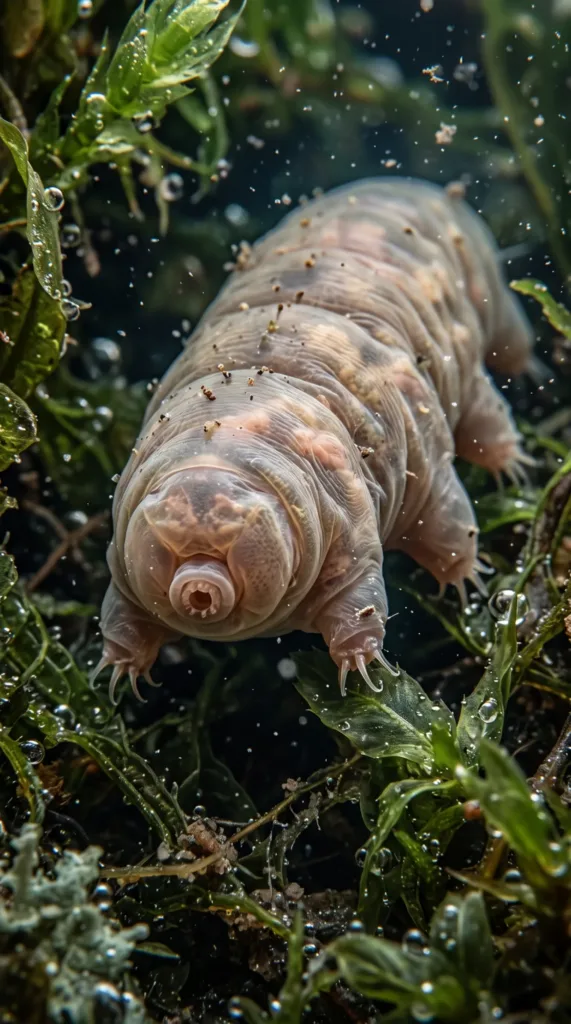
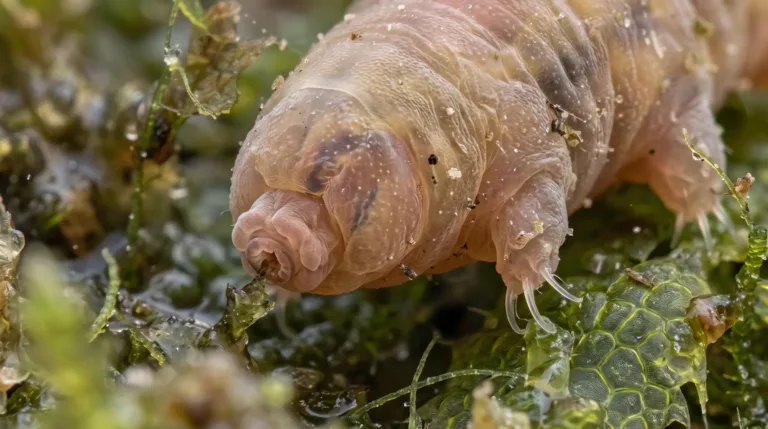
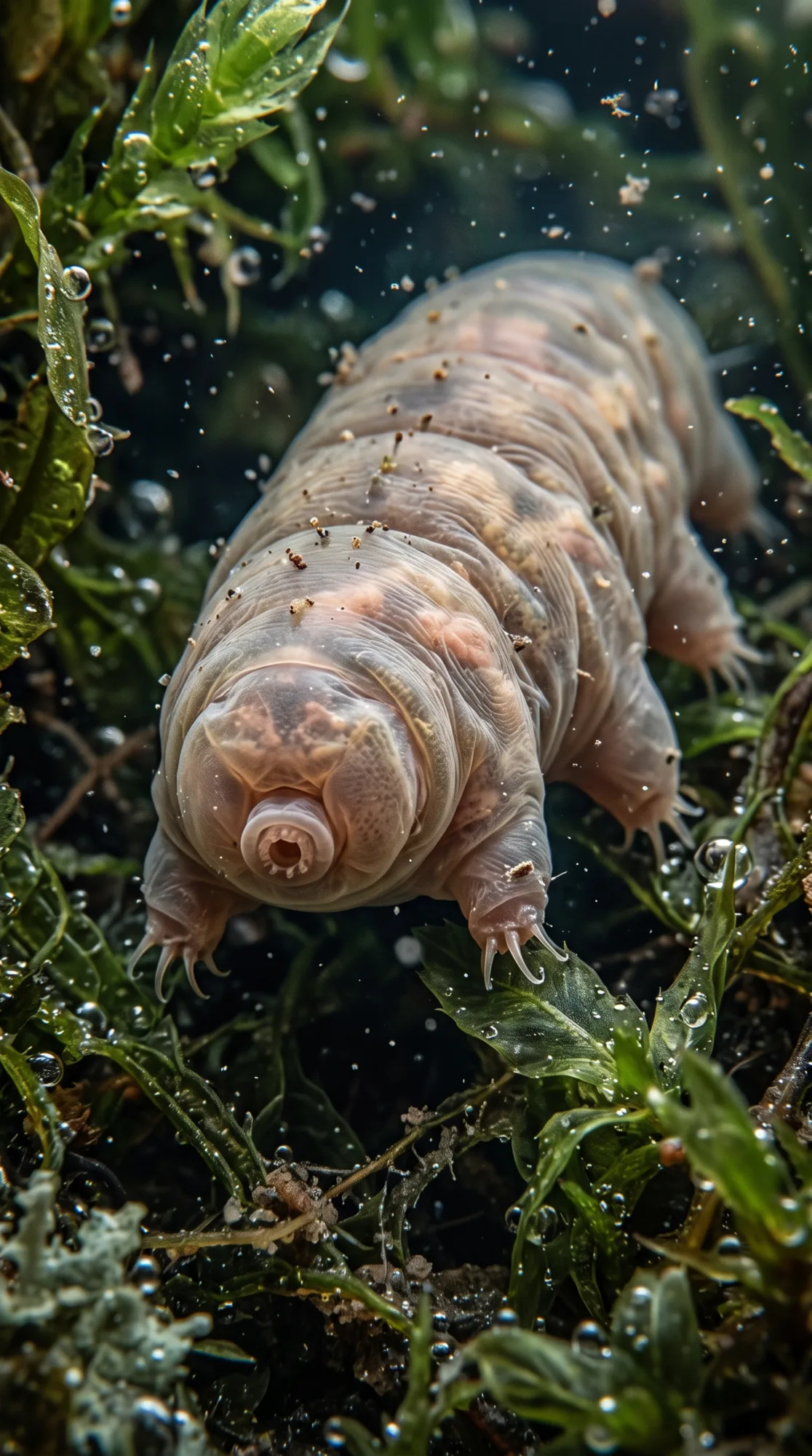
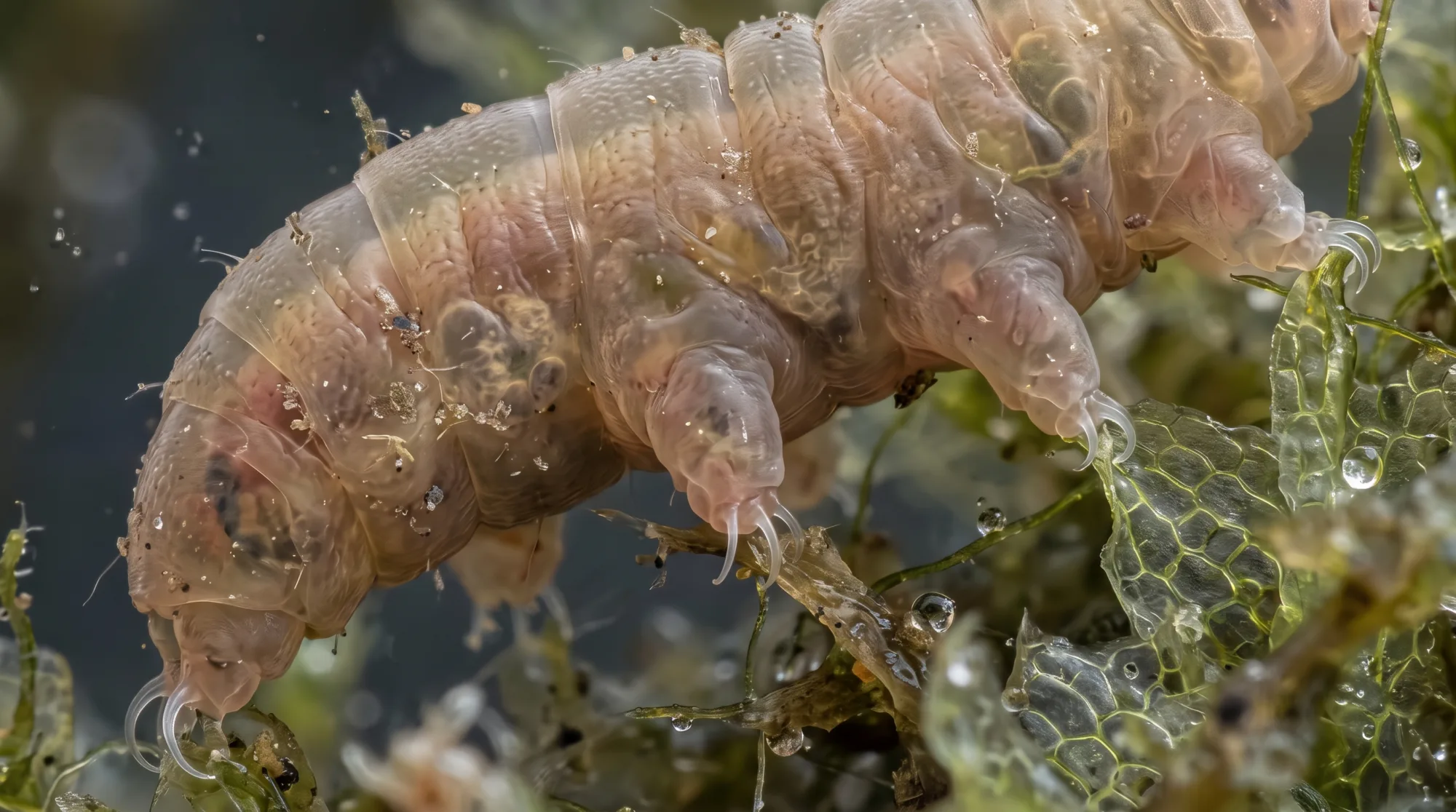
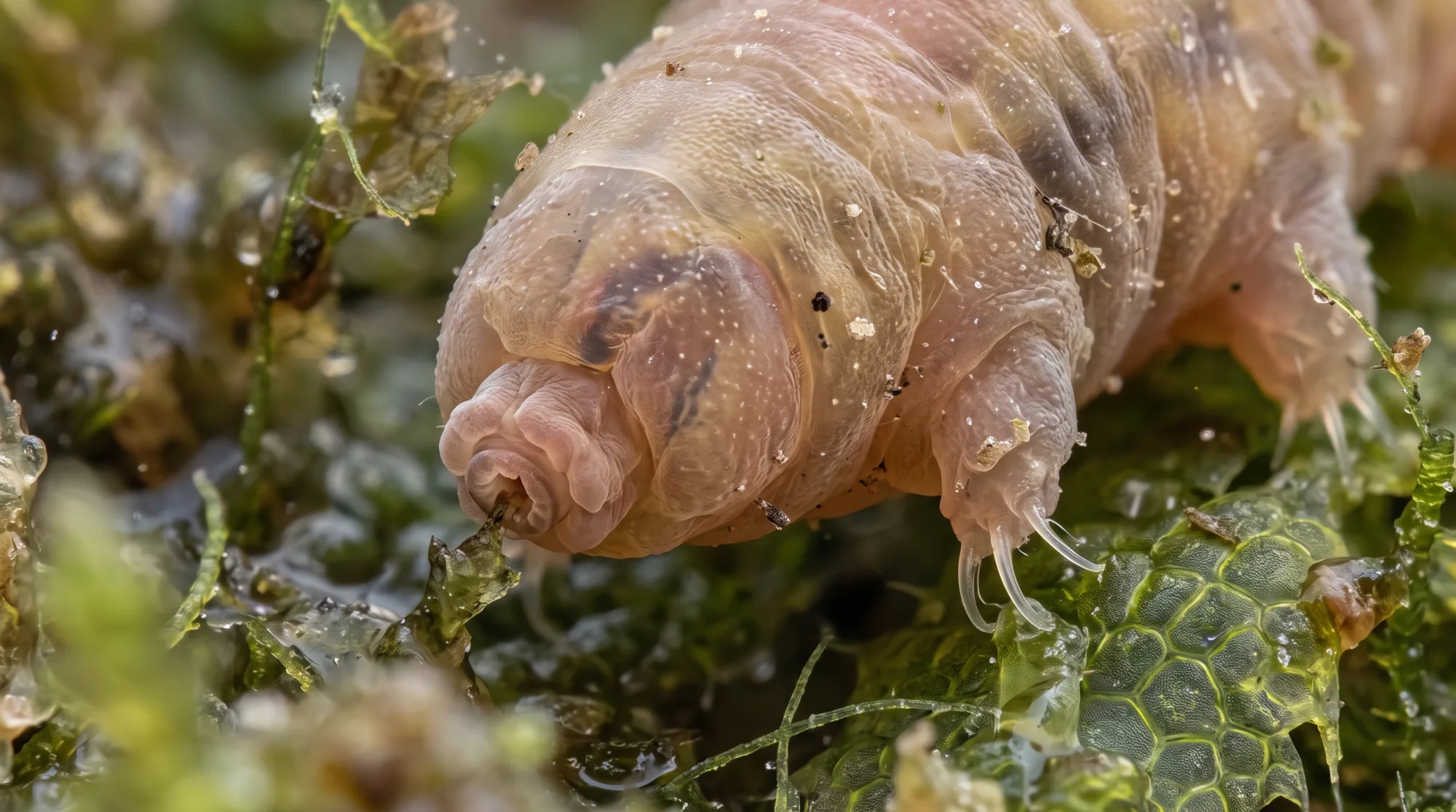
A plump, see-through body, eight legs tipped with tiny claws and a round mouth like a vacuum-cleaner nozzle. Early scientists watched it lumber around under the microscope and named it “little water bear”. The name stuck.
Strangest biological feature
A built-in damage shield. Tardigrades make special proteins that turn the inside of their cells into a kind of glass when they dry out, and another protein that wraps around their DNA to protect it from radiation. Nothing else on Earth has quite the same toolkit.
Why is it strange?
In 2007, scientists strapped tardigrades to the outside of a satellite and exposed them to open space for ten days. No air. Brutal cold. Raw radiation. Many came back alive – and then laid healthy eggs.
Interesting behavioral facts
Most tardigrades spend their days waddling through the thin film of water on moss, piercing plant cells and sucking out the insides. Despite the tough-guy reputation, an active tardigrade is easy to kill – its superpowers only switch on in the dried-out state.
Records held
It survives temperatures from near absolute zero (−272 °C) up to about 150 °C, and radiation hundreds of times stronger than the dose that would kill a human. In 2016, Japanese researchers revived tardigrades that had been frozen for more than 30 years.