Deep dive 3 min read
Marine Iguana: The Only Lizard That Swims in the Sea
The Galápagos marine iguana is the only lizard on Earth that feeds in the ocean. How it swims, why it sneezes salt and how it can shrink its own body.
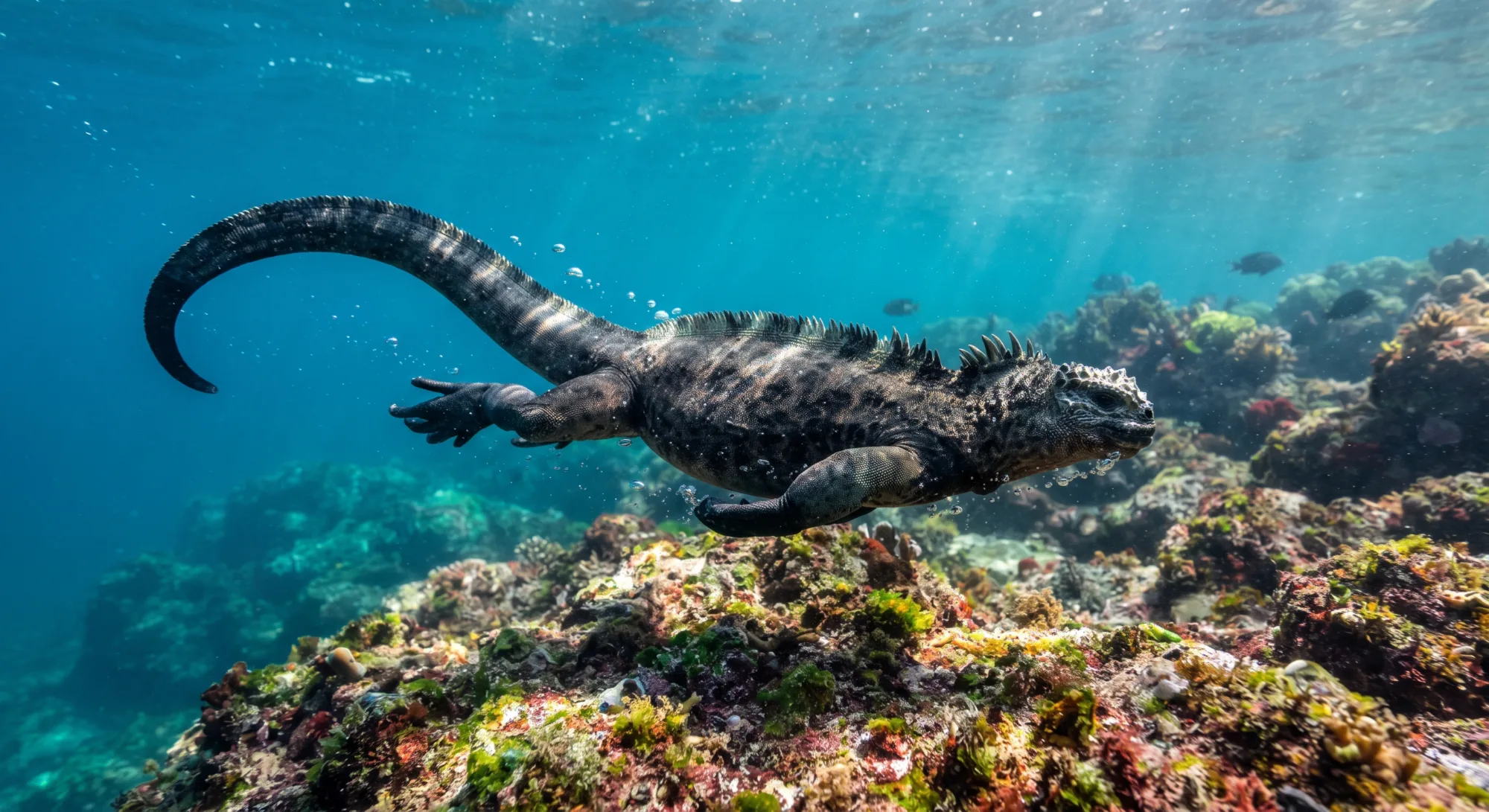
Lots of lizards can swim if they have to. Only one goes into the ocean on purpose, every day, to eat. The marine iguana of the Galápagos Islands is the world’s only sea-going lizard, and it has some very strange tricks for living where no other lizard can.
How does a marine iguana swim?
Like a crocodile. It tucks its legs against its body and swings its flattened tail from side to side. Long, sharp claws let it hold onto rocks against the waves while it grazes.
Smaller iguanas feed on algae on rocks between the tides. The big males swim out and dive to the seabed, sometimes more than 30 ft (10 m) down. They slow their heartbeat to save oxygen and can stay underwater for half an hour or more.
What does a marine iguana eat?
Almost nothing but red and green seaweed (algae). Its short, blunt snout lets it scrape algae off rocks, a bit like a lawnmower.
Why do marine iguanas sneeze?
Eating seaweed means swallowing a lot of salt water. Marine iguanas have special glands that filter extra salt from their blood. They get rid of it by sneezing it out of their nostrils. That’s why their heads are often crusted white with dried salt.
Strange but trueWhen food runs short during El Niño years, marine iguanas can shrink. Their bodies get shorter, by up to about 20%, and they grow back when times are good again.
Why are they black?
The Galápagos sea is cold. After a dive, a marine iguana’s body temperature drops, and it can’t move well until it warms up. Dark skin soaks up sunshine fast, so the iguanas pile up on black lava rocks to bask. In the breeding season, males on some islands turn bright red and green.
Charles Darwin called them “imps of darkness”. He clearly didn’t see the red ones.
The famous snake chase
Millions of people know marine iguanas from a scene in the BBC’s Planet Earth II, in which baby iguanas run for their lives through a crowd of racer snakes on Fernandina Island. It’s real behaviour: hatchlings must cross the beach from their nests to the rocks, and the snakes wait for them.
How big is a marine iguana?
It depends on the island. On some, adults are only about 1 ft (30 cm) long. On others, the biggest males can grow to more than 3 ft (1 m) including the tail and weigh over 20 lb (9 kg). Islands with more food have bigger iguanas.
Where can you see marine iguanas?
Only in the Galápagos Islands, where they’re easy to spot on rocky shores. They aren’t kept in zoos. The species is listed as Vulnerable, mostly because of introduced predators such as cats and rats, and because El Niño years can starve many of them.
See more animals from these islands in our Galápagos collection.
Sources
Tell a friend