Skip to content
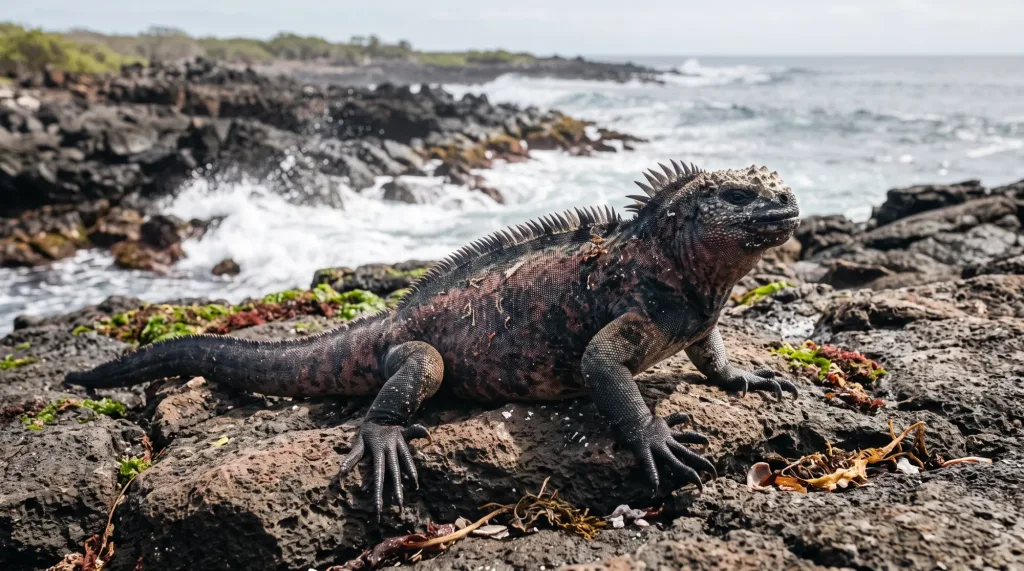
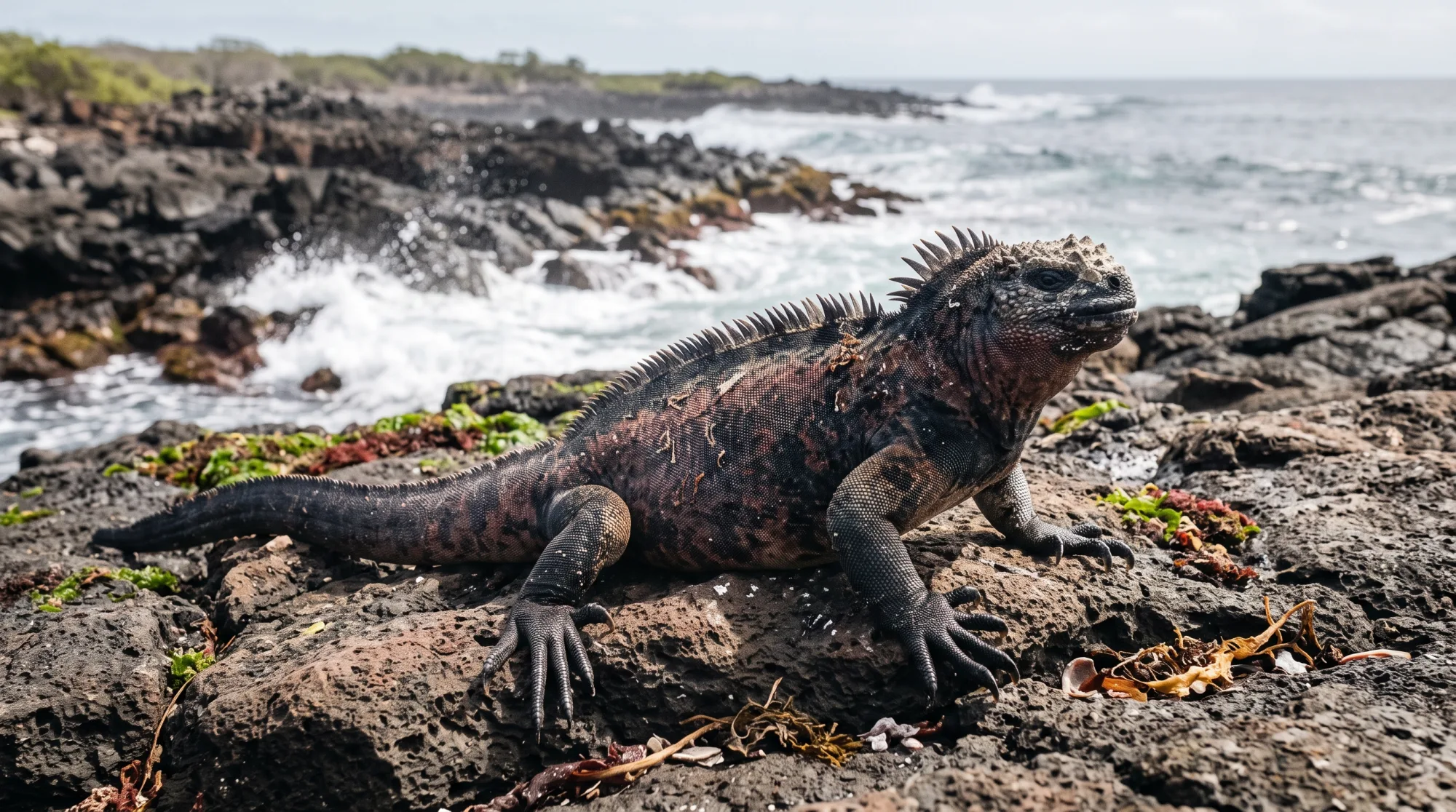
Marine iguana crawling over seaweed-covered rocks in the surf

Marine Iguana: Facts, Photos & Why It’s So Strange

Amblyrhynchus cristatus

The world’s only lizard that goes to sea

Charles Darwin called them “imps of darkness”. Black, spiky and crusted with salt, marine iguanas lie in heaps on the rocks of the Galápagos – then dive into the cold ocean to graze on seaweed. No other lizard on Earth does that.

Marine Iguana vs. you

Your height ft in5 ft 7 in

Quick facts

Size
~4 ft
Up to 4 ft (1.3 m) long on some islands, much smaller on others
Weight
1.1–26 lb
1.1–26 lb (0.5–12 kg), depending on the island
Lifespan
~12 years
About 12 years on average, sometimes far longer
Left in the wild
~200,000
Probably around 200,000

Conservation status

  1. Least Concern
  2. Near Threatened
  3. Vulnerable (this animal)
  4. Endangered
  5. Critically Endangered
  6. Extinct in the Wild
  7. Extinct

Vulnerable

Superpowers

  • Venomous : Is it venomous? No
  • Glows : Does it glow? No
  • Regenerates limbs : Can it regenerate limbs? No

Identity

Scientific name
Amblyrhynchus cristatus
Class
Reptile (lizard)
First described
1825, by Thomas Bell

Life & family

Diet
Algae and seaweed
Gestation
None – the eggs hatch after about 3 months
Offspring
1–6 eggs
Predators
Hawks and snakes; cats and dogs brought by people

Where to find it

Habitat
Rocky shores and the shallow sea next to them
Lives in
The Galápagos Islands – and nowhere else
In the wild
Yes – on almost any Galápagos shoreline
In zoos
No

Explore similar

Why is this animal unusual?

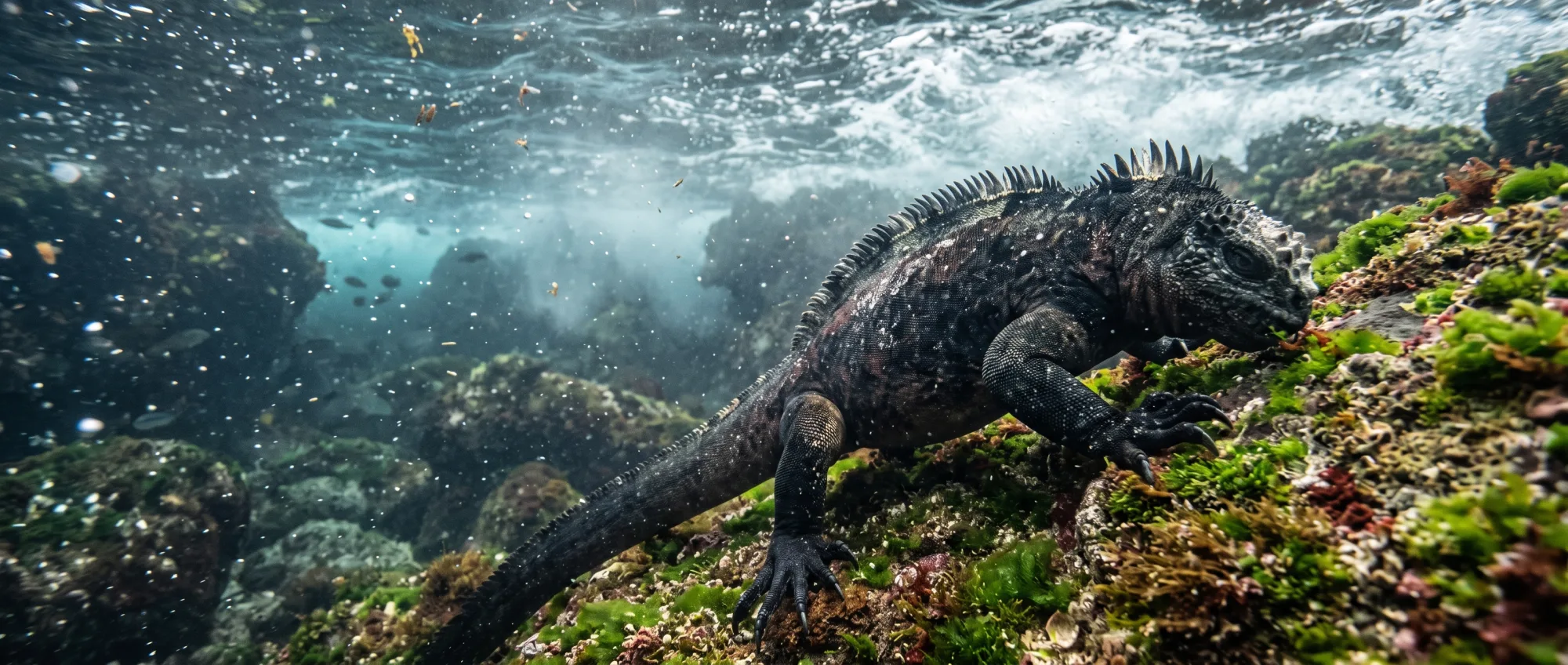
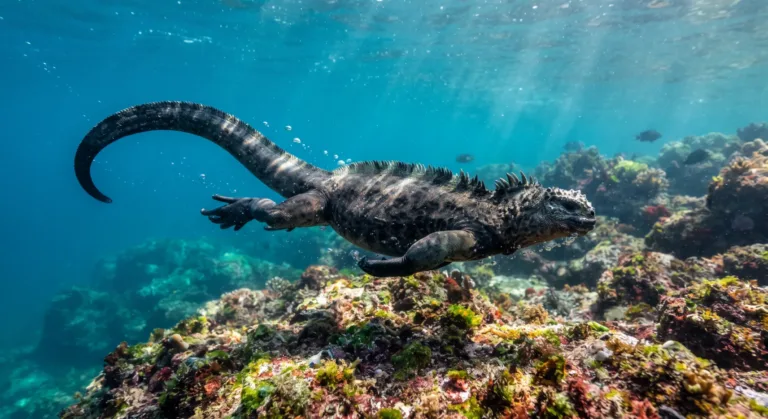
It can dive more than 66 ft (20 metres) deep and stay under for half an hour, slowing its heartbeat to save oxygen while it scrapes algae off the rocks.

Why does it look like that?

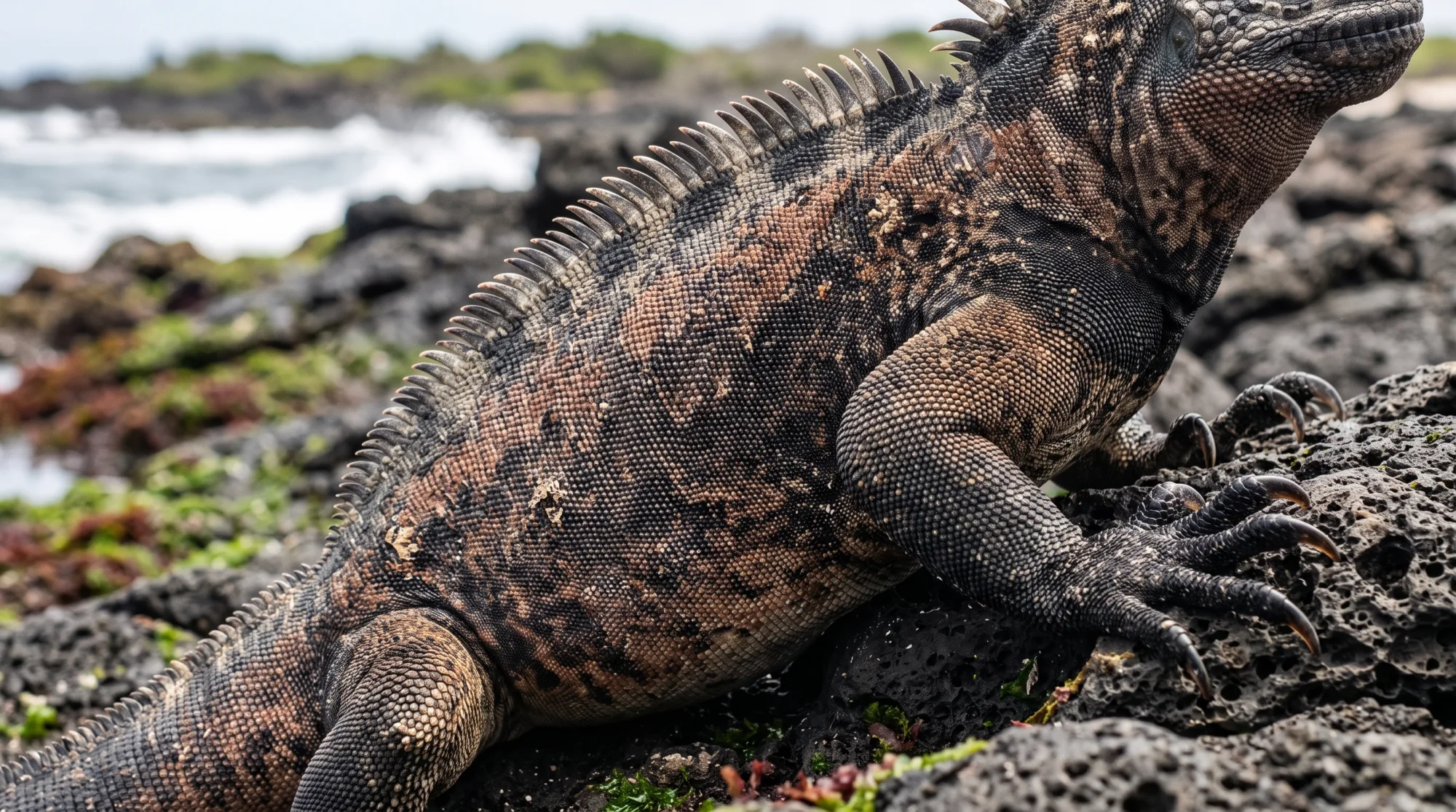
A blunt snout for grazing close to the rock, long claws for holding on in the surf, a flattened tail for swimming and dark skin that soaks up heat after a cold dive.

Strangest biological feature

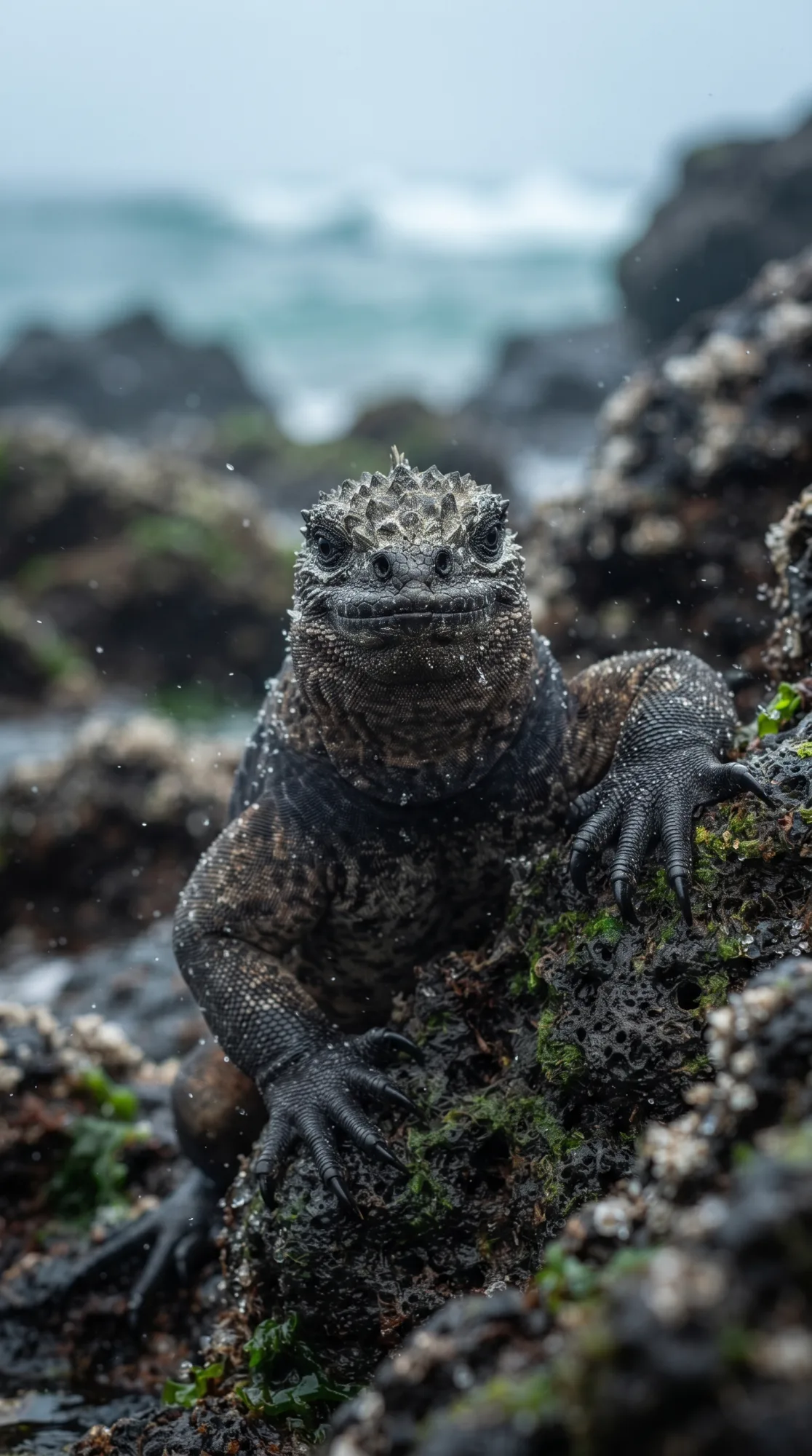
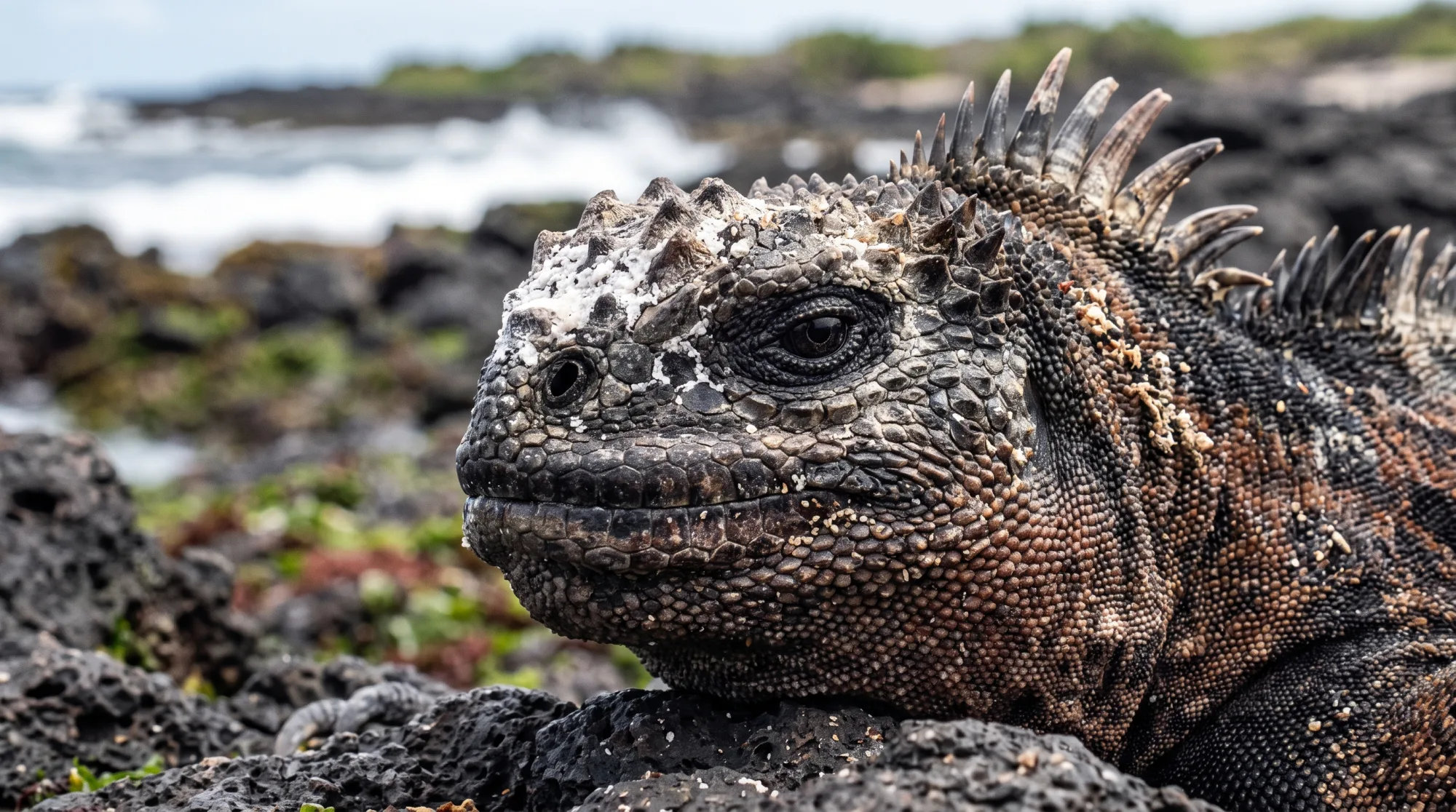
Salt sneezing. It swallows a lot of seawater with its food, so special glands collect the salt and the iguana sneezes it out. The spray dries into a white crust on its head.

Why is it strange?

When food runs out during El Niño years, marine iguanas shrink. Not just thinner – actually shorter, by up to 20%. When the algae return, they grow again.

Interesting behavioral facts

After a dive it’s so cold it can barely move, so it sprawls on hot lava rock, often piled on top of its neighbours.

Records held

The only lizard in the world that feeds in the sea.
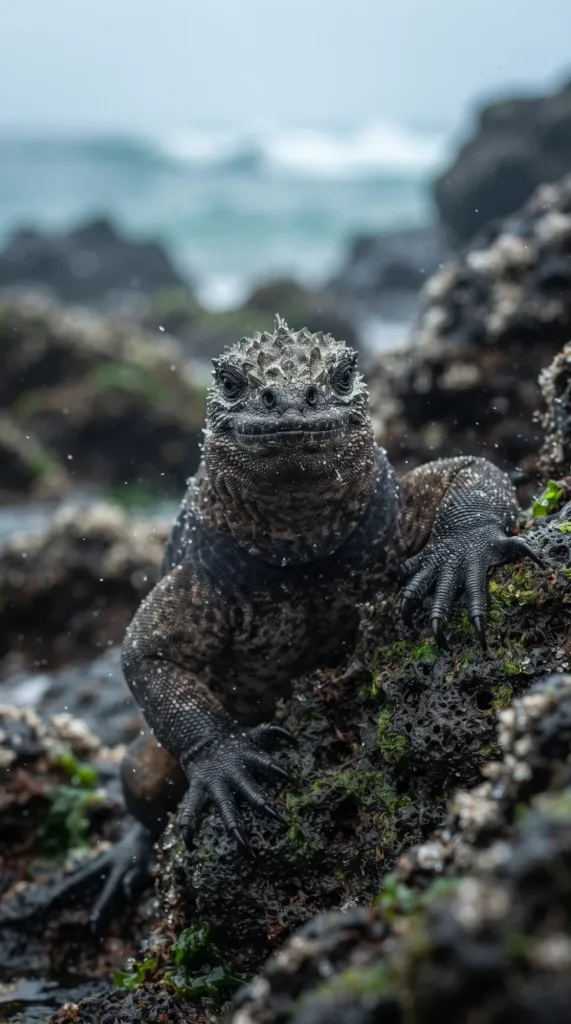
Dark marine iguana with a spiky back on black volcanic rocks by the sea

Marine Iguana: quick answers

Are marine iguanas dangerous?

No. They eat only algae and seaweed and are famously relaxed around people. In the Galápagos, visitors must keep their distance anyway.

Why are marine iguanas black?

Dark skin soaks up heat from the sun quickly, which matters after a dive into cold water. In the breeding season, males on some islands turn red and green.

How long can a marine iguana stay underwater?

Most dives are short, but they can stay under for half an hour or more, slowing their heartbeat to save oxygen.

Where can you see marine iguanas?

Only in the Galápagos Islands, where they’re easy to spot on rocky shores. They aren’t kept in zoos.

Know someone who needs to see this?

Send them the Marine Iguana. They'll thank you. Probably.