Skip to content
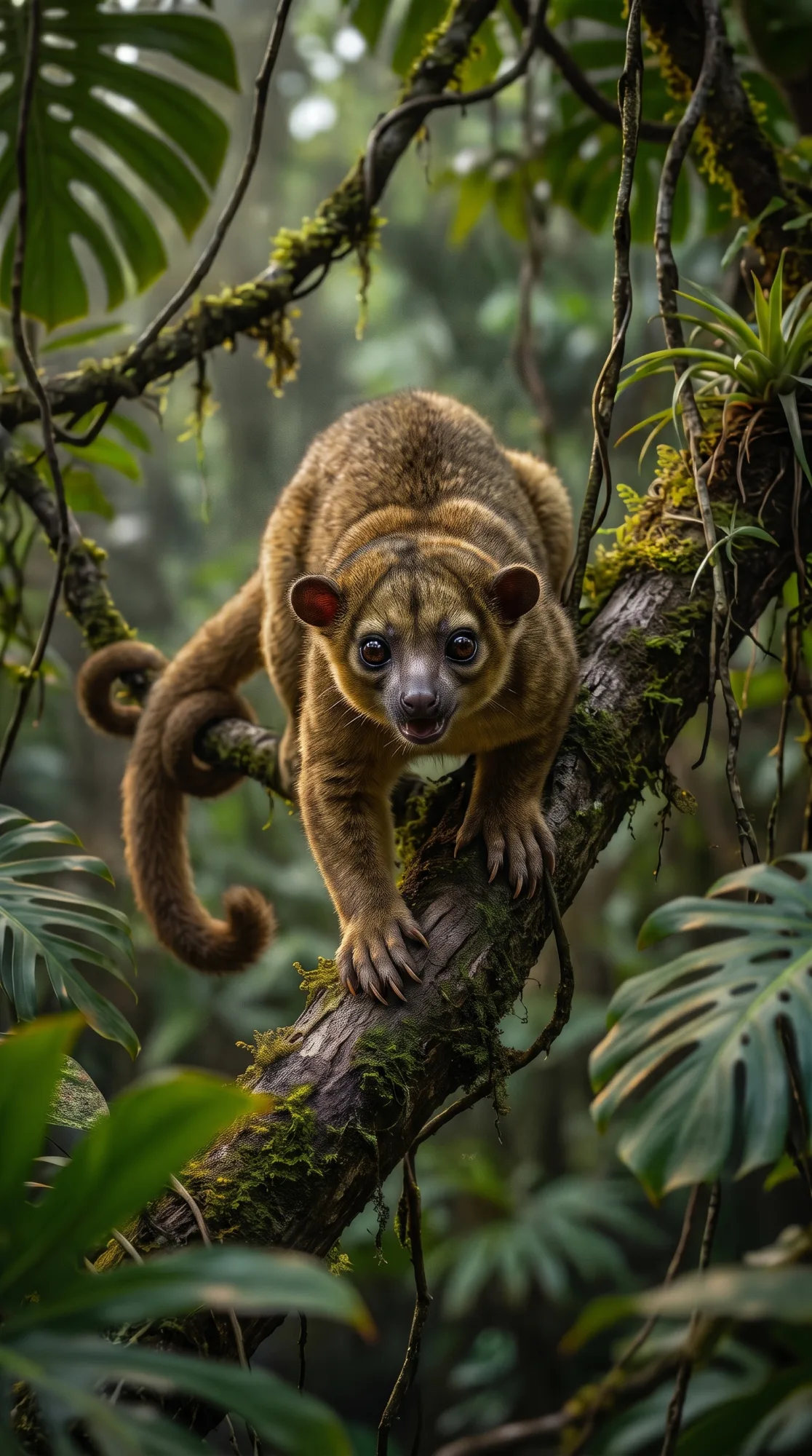
Kinkajou with large dark eyes and round ears perched on a mossy branch in a misty rainforest with sunbeams

Kinkajou: Facts, Photos & Why It’s So Strange

Potos flavus

The honey bear with a tail like a hand

Big brown eyes, soft golden fur and a tail it can hang from. Everyone’s first guess is “monkey”. Wrong – the kinkajou is a relative of the raccoon. It spends its nights raiding flowers and beehives with a ridiculously long tongue.

Kinkajou vs. you

Your height ft in5 ft 7 in

Quick facts

Size
16–24 in
Body 16–24 in (40–60 cm), plus a tail just as long
Weight
3–10 lb
3–10 lb (1.4–4.6 kg)
Lifespan
20+ years
20 years or more; the record in a zoo is around 40
Left in the wild
Unknown
Unknown – fairly common

Conservation status

  1. Least Concern (this animal)
  2. Near Threatened
  3. Vulnerable
  4. Endangered
  5. Critically Endangered
  6. Extinct in the Wild
  7. Extinct

Least Concern

Superpowers

  • Venomous : Is it venomous? No
  • Glows : Does it glow? No
  • Regenerates limbs : Can it regenerate limbs? No

Identity

Scientific name
Potos flavus
Class
Mammal (raccoon family)
First described
1774, by Johann von Schreber

Life & family

Diet
Mostly fruit, plus nectar, honey and insects
Gestation
About 4 months
Offspring
One baby
Predators
Jaguars, ocelots and harpy eagles

Where to find it

Habitat
Tropical forest, high in the canopy
Lives in
From southern Mexico to Brazil
In the wild
Possible – on night walks in Costa Rica or Panama
In zoos
Yes – some zoos keep them

Explore similar

Why is this animal unusual?

It belongs to the order of meat-eaters, but about 90% of its diet is fruit. Evolution gave it a carnivore’s teeth and a fruit bat’s lifestyle.

Why does it look like that?

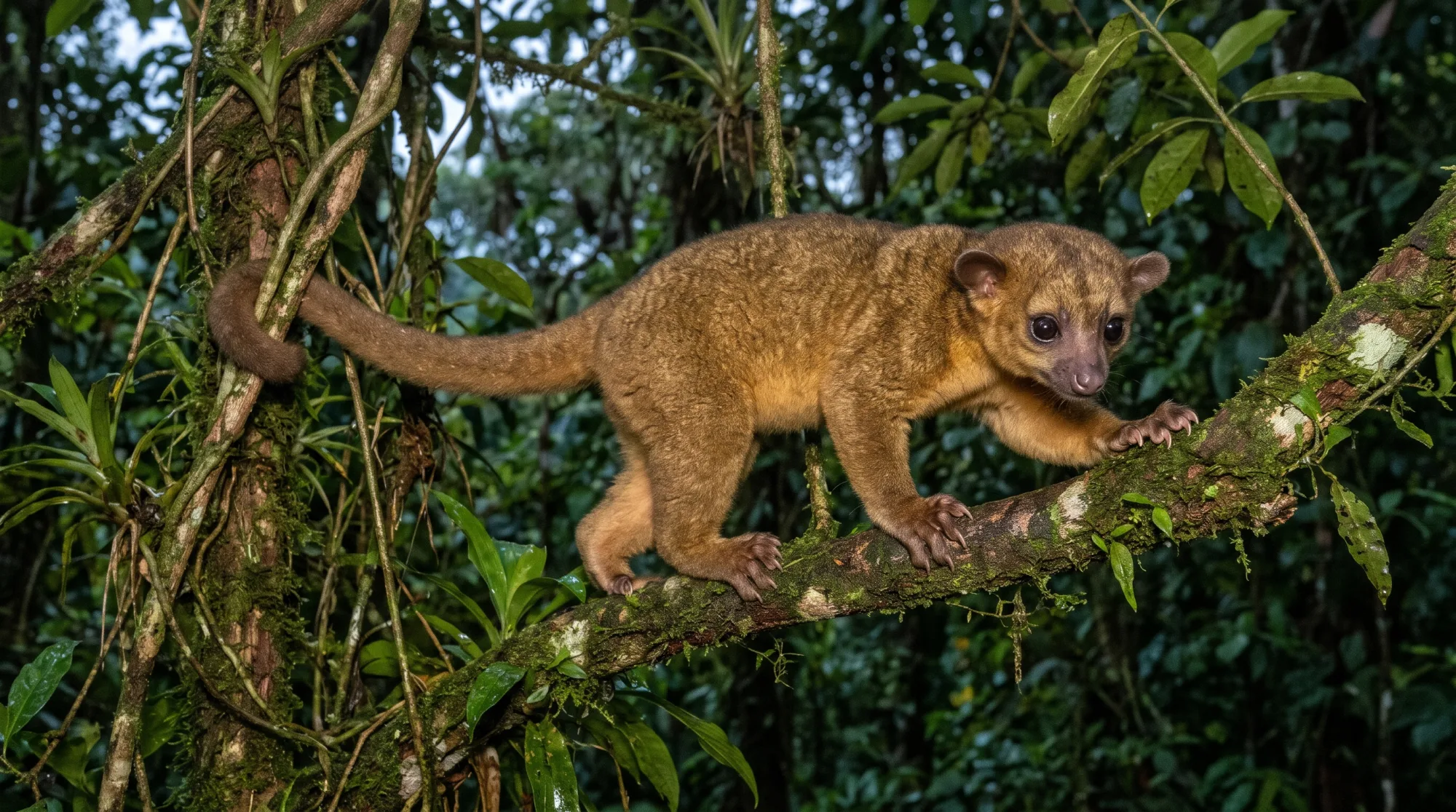
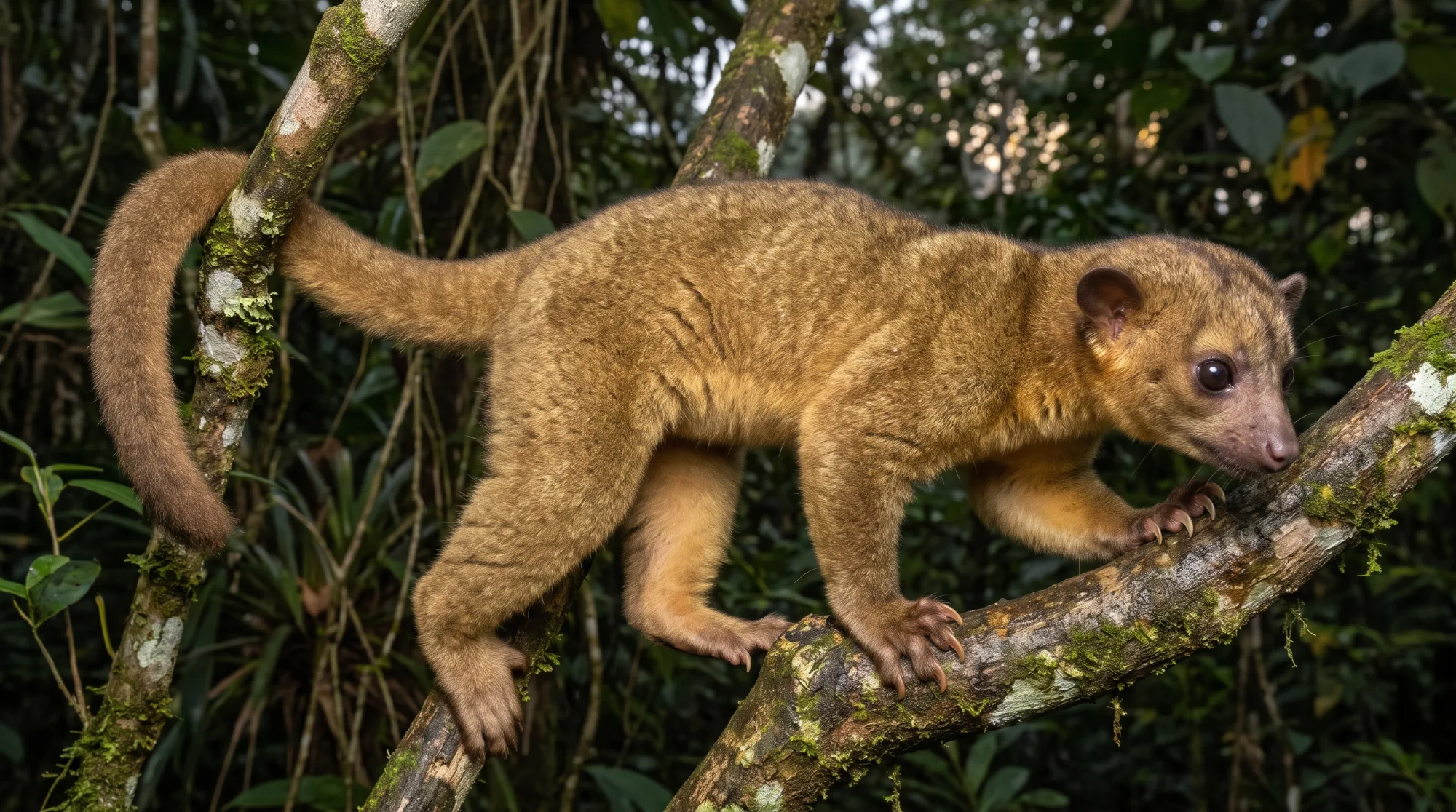
A round head, small ears, and a thick tail that grips branches. It’s one of only two carnivores in the world with a tail like that.

Strangest biological feature

A tongue about 5 in (12 cm) long. It’s for licking nectar from flowers and honey out of bee nests – which is why it’s called the honey bear.

Why is it strange?

When it drinks nectar, pollen sticks to its face and gets carried to the next flower. So this fluffy mammal does the job of a bee.

Interesting behavioral facts

It’s nocturnal, sleeps in tree hollows by day, and can turn its back feet around to run just as easily backwards along a branch as forwards.
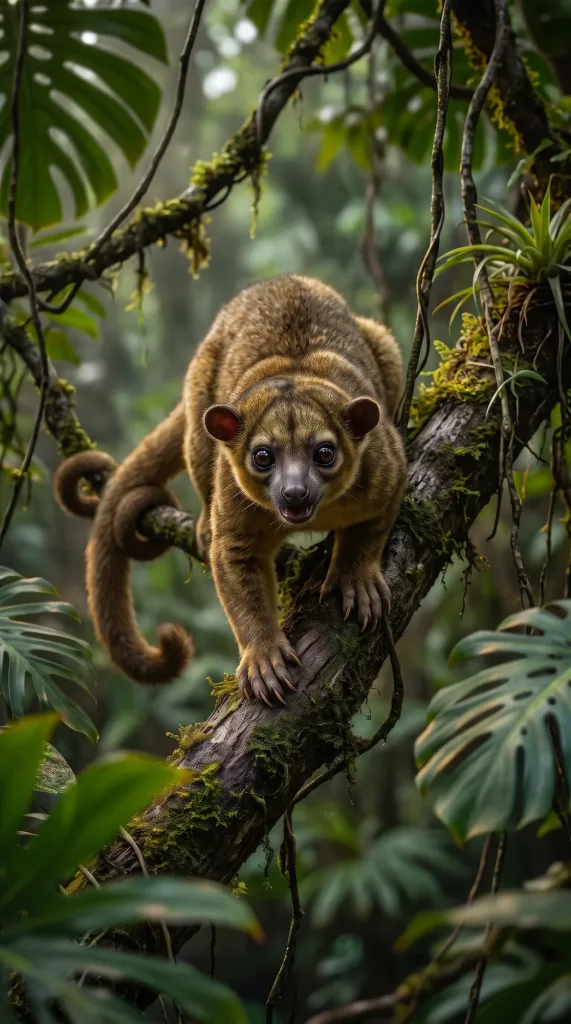
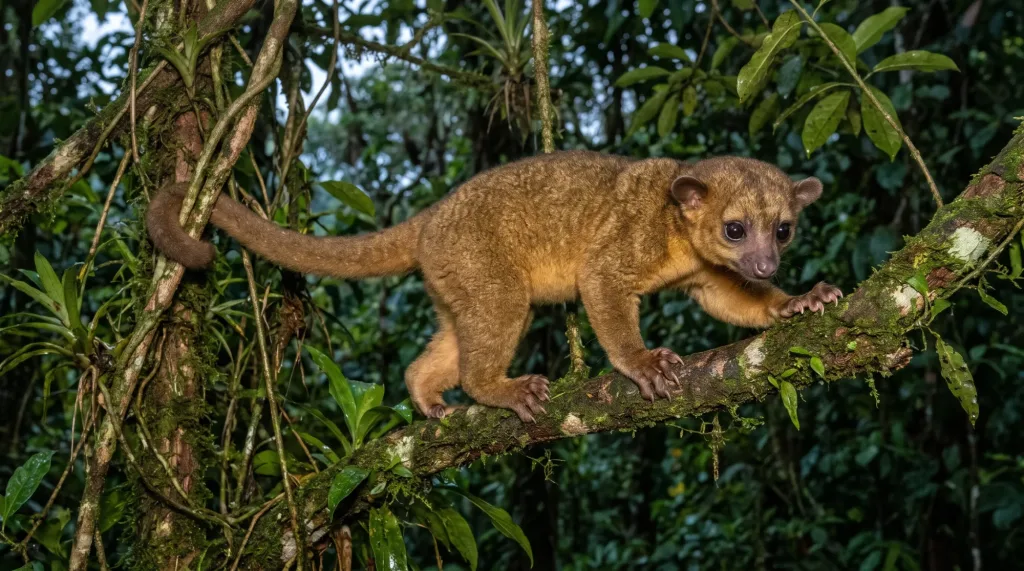
Kinkajou with large dark eyes and round ears climbing along a mossy branch in a lush green rainforest

Kinkajou: quick answers

Is a kinkajou a monkey?

No. It looks a bit like one, but it’s a relative of the raccoon.

Can you keep a kinkajou as a pet?

Some people do, but it’s hard. Kinkajous are nocturnal, need lots of space and can bite badly when stressed. Many places require a permit.

How long do kinkajous live?

Usually 20 years or more. The record in a zoo is around 40 years.

Where do kinkajous live?

In tropical forests from southern Mexico to Brazil, high in the canopy.

Know someone who needs to see this?

Send them the Kinkajou. They'll thank you. Probably.