Skip to content
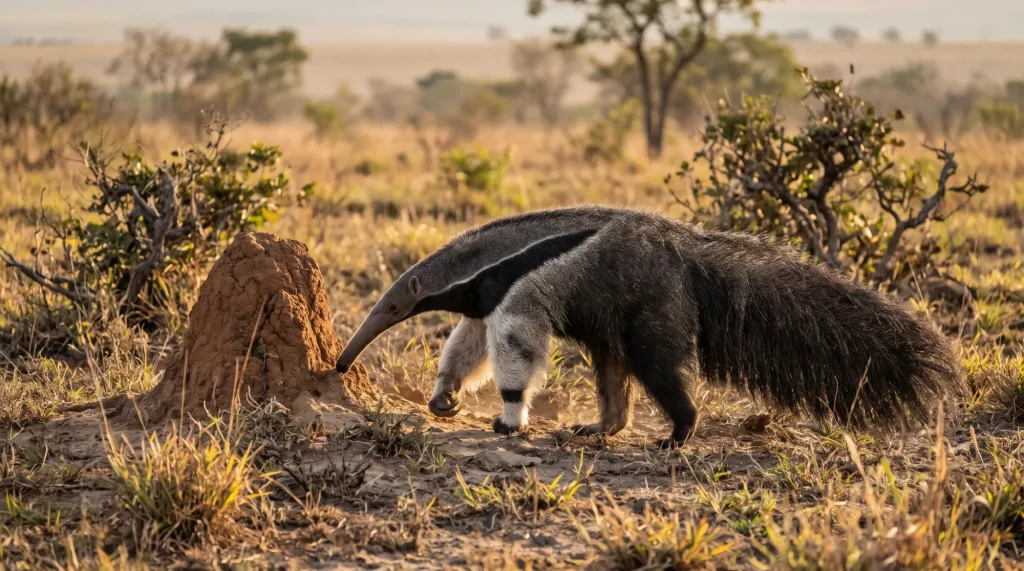
Giant anteater walking through misty grassland with long snout, bushy tail and striped front legs, trees in background

Giant Anteater: Facts, Photos & Why It’s So Strange

Myrmecophaga tridactyla

A 7-foot vacuum cleaner with a 2-foot tongue

A head like a tube, a tail like a feather duster and a tongue that’s longer than your forearm. The giant anteater has no teeth at all – it doesn’t need them. It simply inhales up to 30,000 ants and termites a day.

Giant Anteater vs. you

Your height ft in5 ft 7 in

Quick facts

Size
~7 ft
Up to 7 ft (2.2 m) from nose to tail tip
Weight
60–110 lb
60–110 lb (27–50 kg)
Lifespan
~14 years
About 14 years in the wild, over 25 in zoos
Left in the wild
Unknown
Unknown – gone from much of its former range

Conservation status

  1. Least Concern
  2. Near Threatened
  3. Vulnerable (this animal)
  4. Endangered
  5. Critically Endangered
  6. Extinct in the Wild
  7. Extinct

Vulnerable

Superpowers

  • Venomous : Is it venomous? No
  • Glows : Does it glow? No
  • Regenerates limbs : Can it regenerate limbs? No

Identity

Scientific name
Myrmecophaga tridactyla
Class
Mammal (anteater)
First described
1758, by Carl Linnaeus

Life & family

Diet
Ants and termites
Gestation
About 6 months
Offspring
One pup
Predators
Jaguars and pumas

Where to find it

Habitat
Grassland, savanna and open forest
Lives in
Central and South America
In the wild
Yes – the Pantanal and Cerrado of Brazil are the best places
In zoos
Yes – many zoos keep them

Explore similar

Why is this animal unusual?

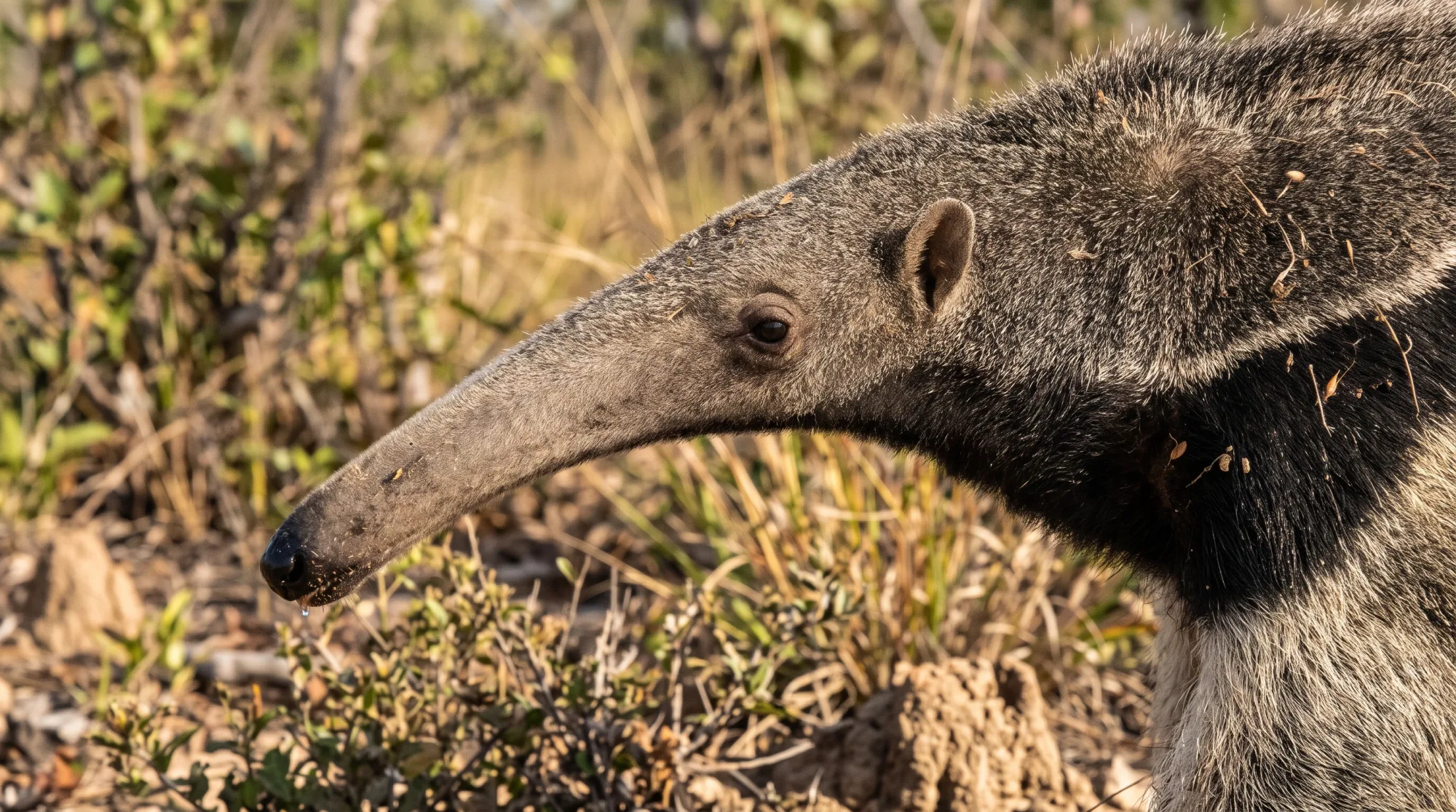
Its tongue is about 2 ft (60 cm) long, covered in tiny hooks and sticky spit, and flicks in and out up to 150 times a minute.

Why does it look like that?

The narrow snout is all nose and no jaw. The huge bushy tail doubles as a blanket: at night the anteater curls up and covers itself with it.

Strangest biological feature

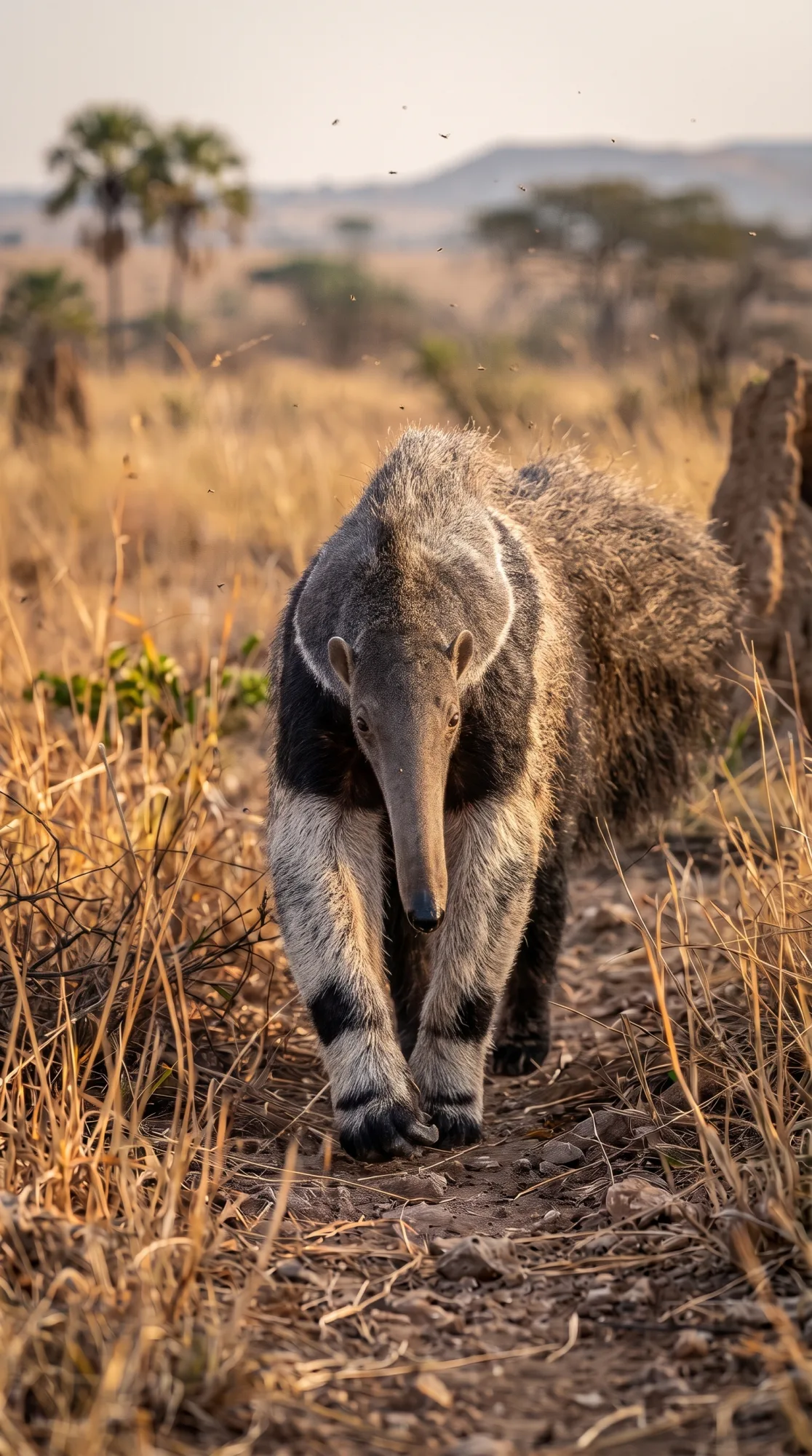
Front claws about 4 in (10 cm) long. They’re for ripping open termite mounds, and the anteater walks on its knuckles to keep them sharp.

Why is it strange?

It only spends about a minute at each ant nest before moving on. That way the colony survives – and the anteater avoids getting badly stung.

Interesting behavioral facts

A mother carries her baby on her back for months. The pup’s stripe lines up with hers, so from a distance it’s almost invisible.

Records held

Cornered, it rears up and slashes with those claws. It has been known to fight off jaguars.
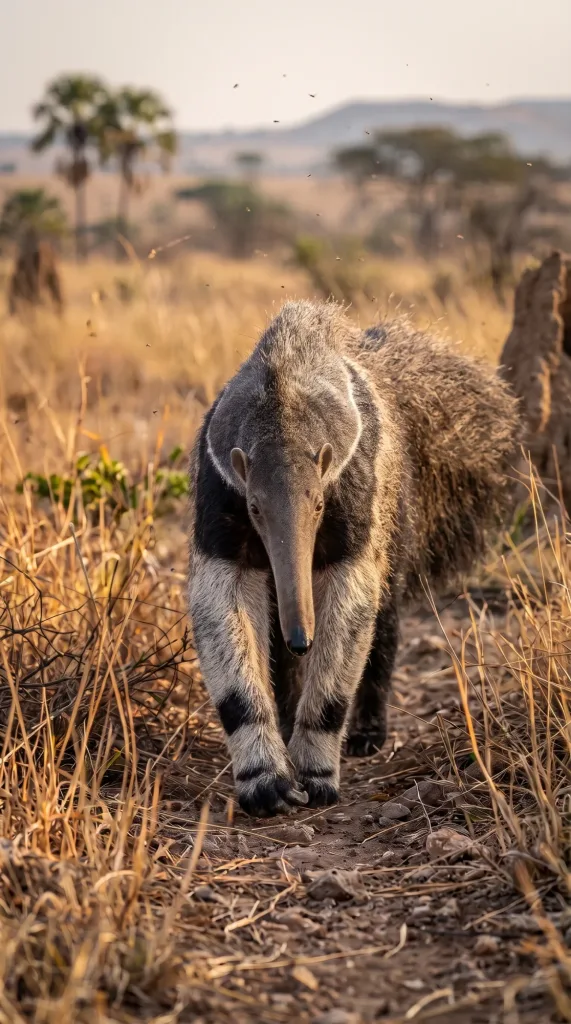
Giant anteater walking along a dirt path through dry golden grass, with its long snout and bushy tail visible

Giant Anteater: quick answers

Is the giant anteater dangerous?

It’s usually peaceful, but when cornered it rears up and slashes with its 4 in (10 cm) claws. It has been known to fight off jaguars and has injured people.

How many ants does a giant anteater eat?

Up to about 30,000 ants and termites a day.

Where do giant anteaters live?

In grassland, savanna and open forest in Central and South America.

Why is the giant anteater vulnerable?

It has disappeared from much of its former range because of habitat loss, fires, road accidents and hunting.

Know someone who needs to see this?

Send them the Giant Anteater. They'll thank you. Probably.