Skip to content
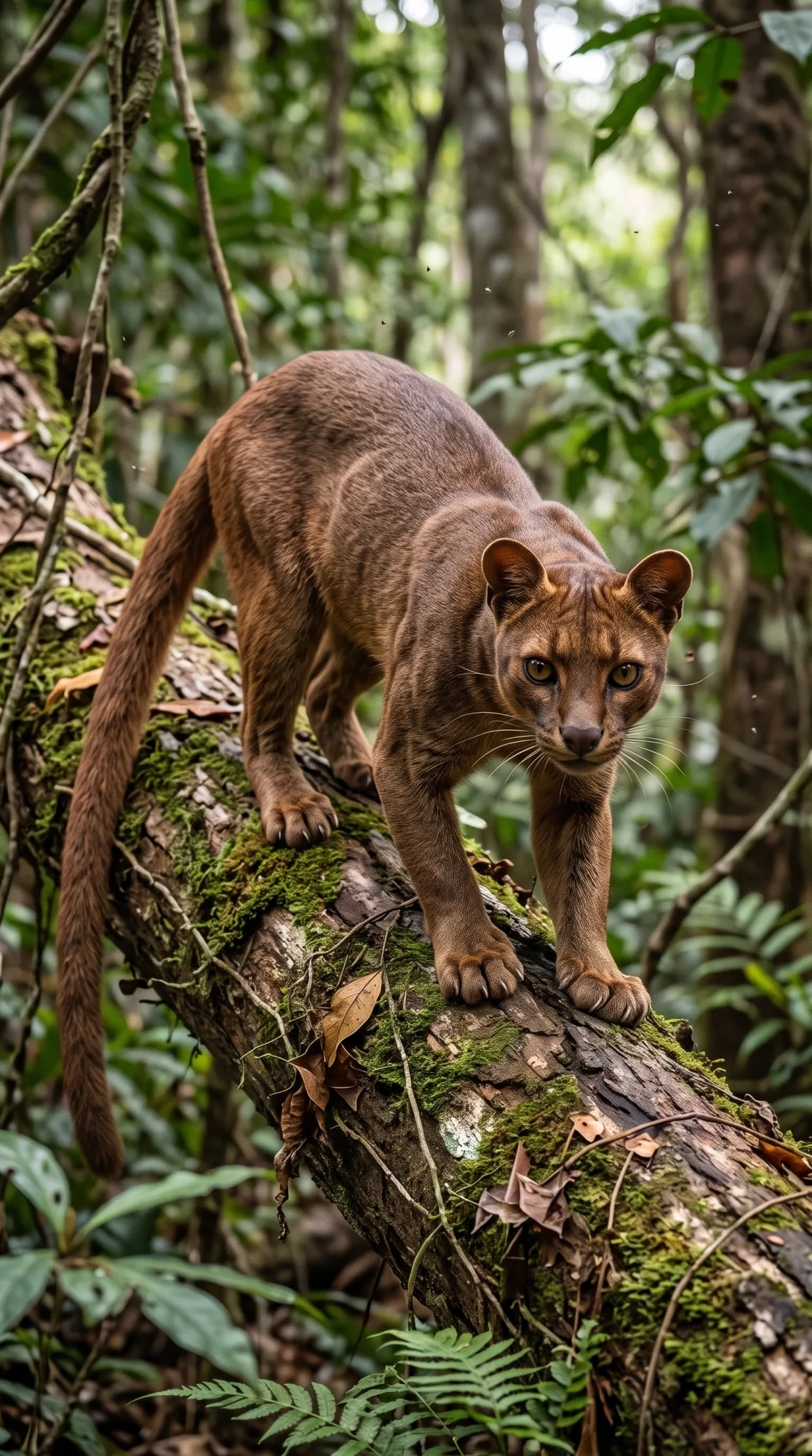
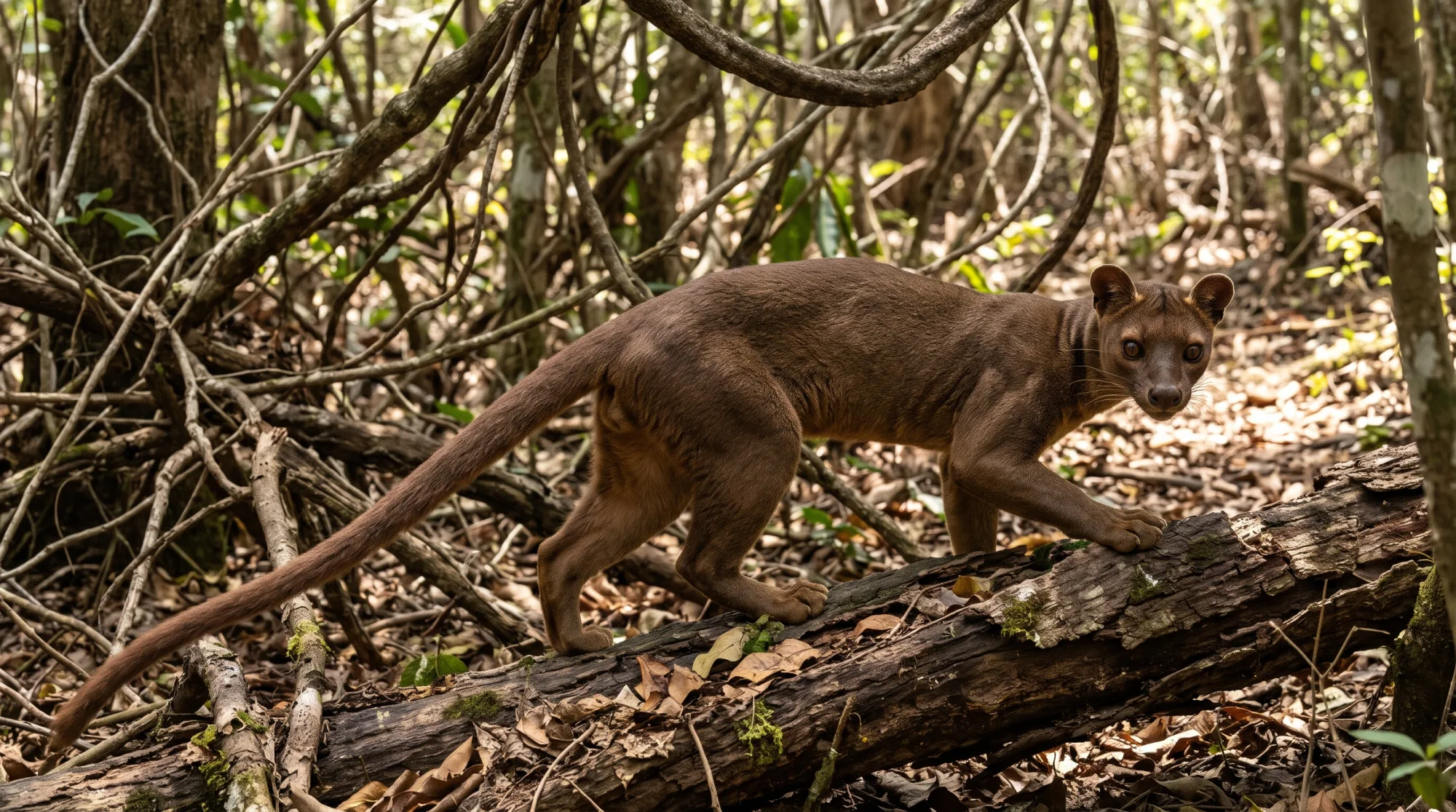
Fossa, a cat-like Madagascar predator with large amber eyes, perched on a mossy branch above a dry baobab-dotted landscape at dusk.

Fossa: Facts, Photos & Why It’s So Strange

Cryptoprocta ferox

Madagascar’s top predator looks like a cat. It isn’t.

It moves like a cat, climbs like a monkey and has the head of a small puma. The fossa is none of those things. It’s a giant relative of the mongoose – and if you’re a lemur, it’s the last face you want to see.

Fossa vs. you

Your height ft in5 ft 7 in

Quick facts

Size
28–31 in
Body 28–31 in (70–80 cm), plus a tail just as long
Weight
12–19 lb
12–19 lb (5.5–8.6 kg)
Lifespan
~20 years
About 20 years in zoos
Left in the wild
2,600
Probably between 2,600 and 8,800 adults

Conservation status

  1. Least Concern
  2. Near Threatened
  3. Vulnerable (this animal)
  4. Endangered
  5. Critically Endangered
  6. Extinct in the Wild
  7. Extinct

Vulnerable

Superpowers

  • Venomous : Is it venomous? No
  • Glows : Does it glow? No
  • Regenerates limbs : Can it regenerate limbs? No

Identity

Scientific name
Cryptoprocta ferox
Class
Mammal (Malagasy carnivore)
First described
1833, by Edward Turner Bennett

Life & family

Diet
Lemurs above all, plus rodents, birds and lizards
Gestation
About 3 months
Offspring
2–4 pups
Predators
None – it’s the top of the food chain

Where to find it

Habitat
Forests of all kinds
Lives in
Madagascar – and nowhere else
In the wild
Possible – Kirindy Forest in western Madagascar is the best place
In zoos
Yes – a number of zoos keep them

Explore similar

Why is this animal unusual?

It’s the largest meat-eating mammal on Madagascar, and lemurs make up more than half of its diet. It hunts them in the trees, where it’s just as fast as they are.

Why does it look like that?

A long, muscular body, a tail as long as the rest of it for balance, and claws it can partly pull in, like a cat.

Strangest biological feature

Reversible ankles. It can turn its feet around and run down a tree trunk head-first at full speed.

Why is it strange?

Fossas mate high up in special trees that are reused year after year. A female sits on a branch and males queue below, and a single mating can last for hours.

Interesting behavioral facts

Usually solitary and active day or night. Sometimes a few males team up to hunt big lemurs together.

Records held

The biggest native predator on Madagascar.
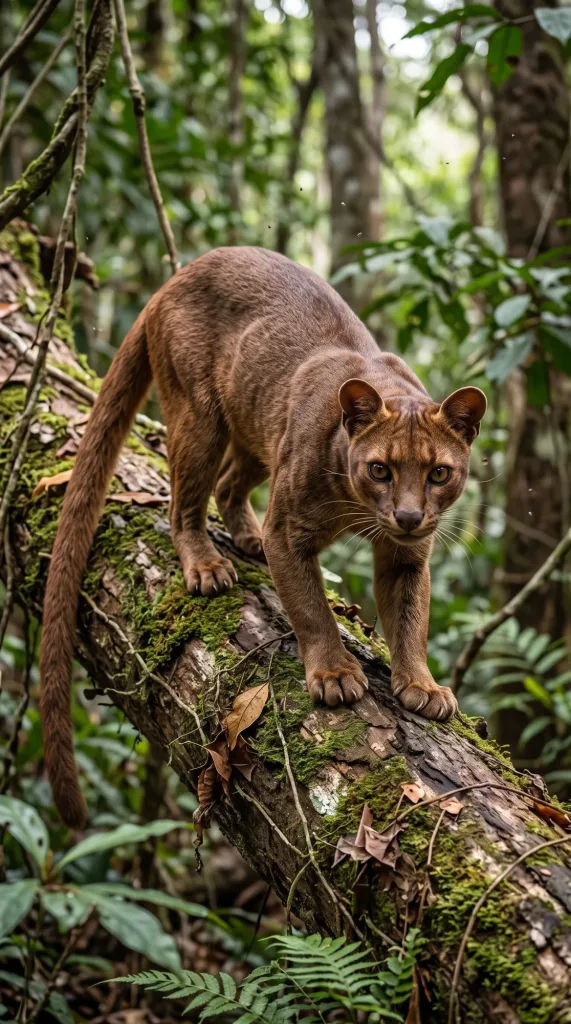
Fossa walking along a moss-covered fallen log in a green forest, looking toward the camera with alert golden eyes.

Fossa: quick answers

Is the fossa a cat?

No. It looks and moves like a cat, but it’s a carnivore from a family found only in Madagascar, related to mongooses.

Is the fossa dangerous to humans?

Not really. Fossas are shy and avoid people. There are local legends about them, but attacks on humans are not a real threat.

What eats a fossa?

Nothing, as an adult. It’s the top predator on Madagascar. Its main threats are habitat loss and people.

How many fossas are left?

Probably between 2,600 and 8,800 adults. It’s listed as Vulnerable because Madagascar’s forests keep shrinking.

Know someone who needs to see this?

Send them the Fossa. They'll thank you. Probably.