Deep dive 3 min read
Do Platypuses Lay Eggs? (And Are They Even Mammals?)
Yes, the platypus lays eggs. Yes, it's still a mammal. Here's how both can be true – and why scientists in 1799 thought the whole animal was a prank.
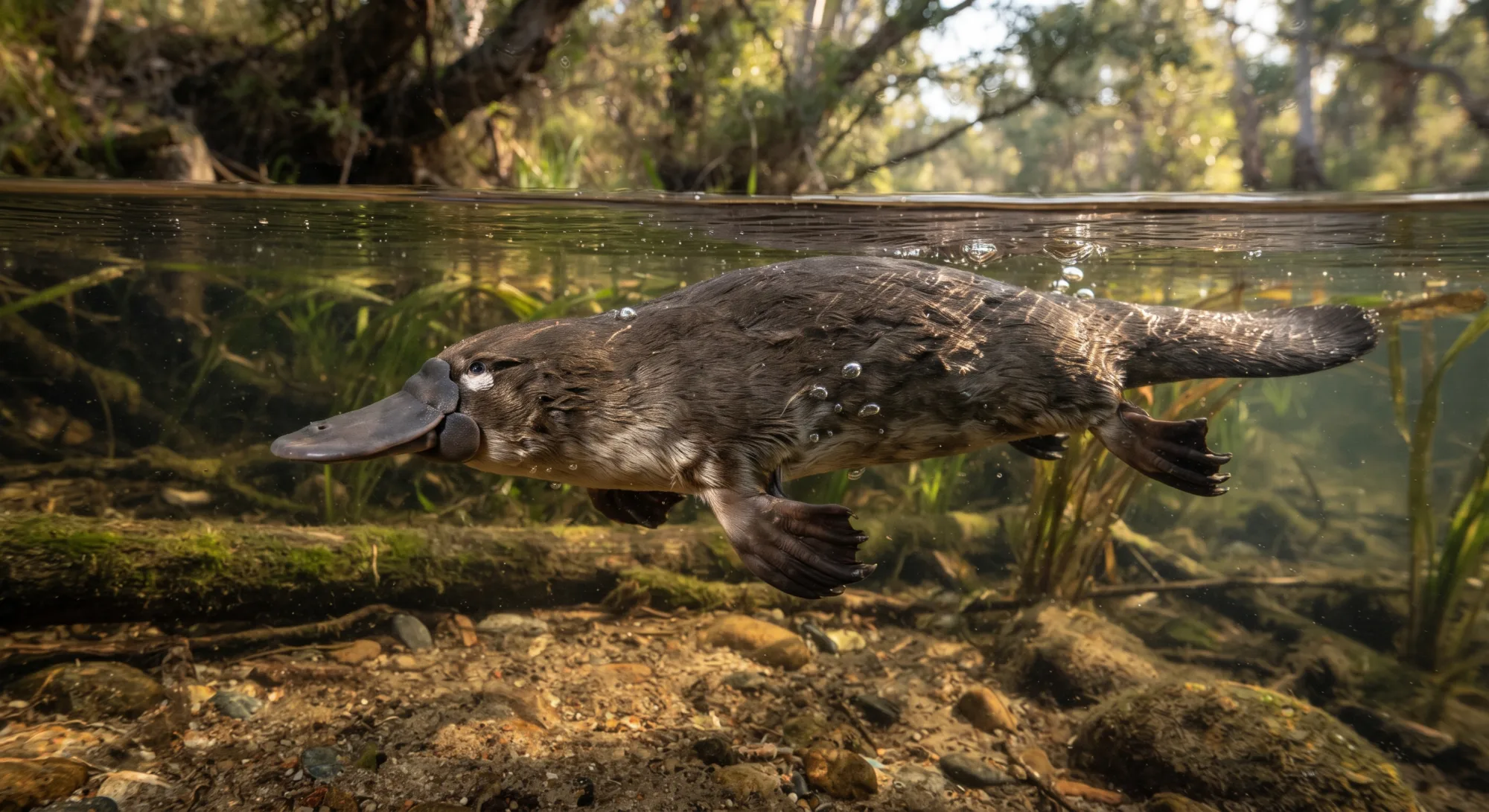
A mammal that lays eggs sounds like a mistake in a biology textbook. But the platypus does exactly that – and it’s still 100% a mammal. Here’s how it works.
Do platypuses lay eggs?
Yes. A female platypus usually lays two small eggs, sometimes one or three, each about 0.7 in (17 mm) long – a bit smaller than a grape. The eggs have soft, leathery shells, more like a reptile’s than a bird’s.
The eggs first develop inside the mother for about four weeks. After she lays them, she curls her body around them in her burrow and keeps them warm for around another 10 days until they hatch.
Is the platypus a mammal?
Yes. Laying eggs doesn’t stop it being a mammal, because the platypus has the features that define the group: it has fur, it’s warm-blooded and – most importantly – it feeds its babies milk.
The platypus belongs to a tiny, ancient group of egg-laying mammals called monotremes. There are only five living species: the platypus and four kinds of echidna. Every other mammal on Earth gives birth to live young.
Lays eggs like a reptile, makes milk like a mammal, has a bill like a duck. Nature just pressed “random”.
How do baby platypuses drink milk without nipples?
Here’s the really strange bit: platypuses don’t have nipples. Instead, the mother’s milk oozes out through pores in the skin on her belly, a bit like sweat. The babies lap it up straight from her fur. They’re fed like this for around four months before they leave the burrow.
Where does a platypus lay its eggs?
In a burrow dug into a riverbank. For breeding, the female digs a special nesting burrow that can be long and winding, lines a chamber at the end with wet leaves and grass, and blocks the tunnel behind her with soil. That keeps the eggs safe, warm and damp.
Strange but trueWhen the first platypus reached Britain in 1799, the naturalist George Shaw was so suspicious that he took a pair of scissors to it, looking for stitches. Many scientists thought someone had sewn a duck’s bill onto a furry body as a hoax.
What is a baby platypus called?
There’s no official name. You’ll often see the word “puggle” online, but that name comes from echidnas, and scientists usually just say “platypus young” or “juvenile”.
More platypus strangeness
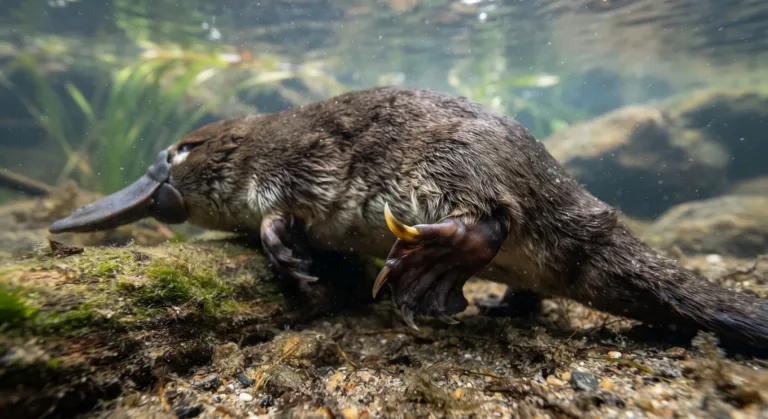
The eggs are just the start. Males have venomous spurs on their back legs – find out how painful they are in Platypus Venom. And if you want to compare the platypus with its spiky cousin, read Platypus vs. Echidna.
Sources
- Platypus – Wikipedia (reproduction, monotremes, history)
- Museums Victoria – The platypus: a unique and vulnerable Australian
Tell a friend