Skip to content
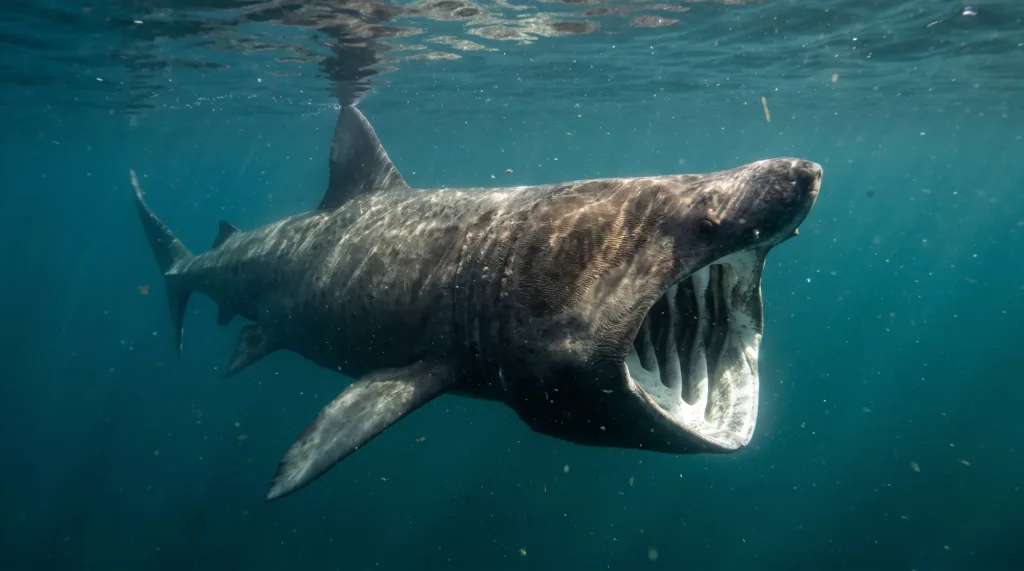
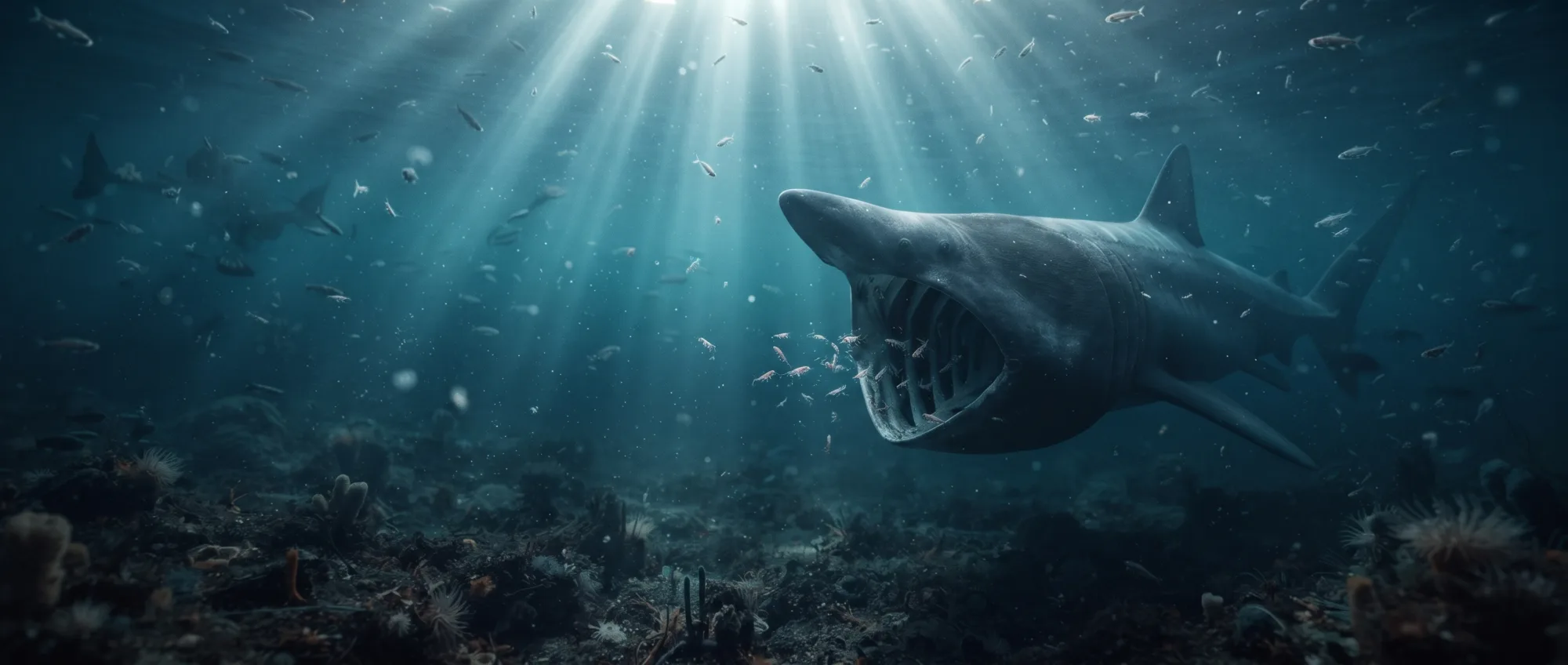
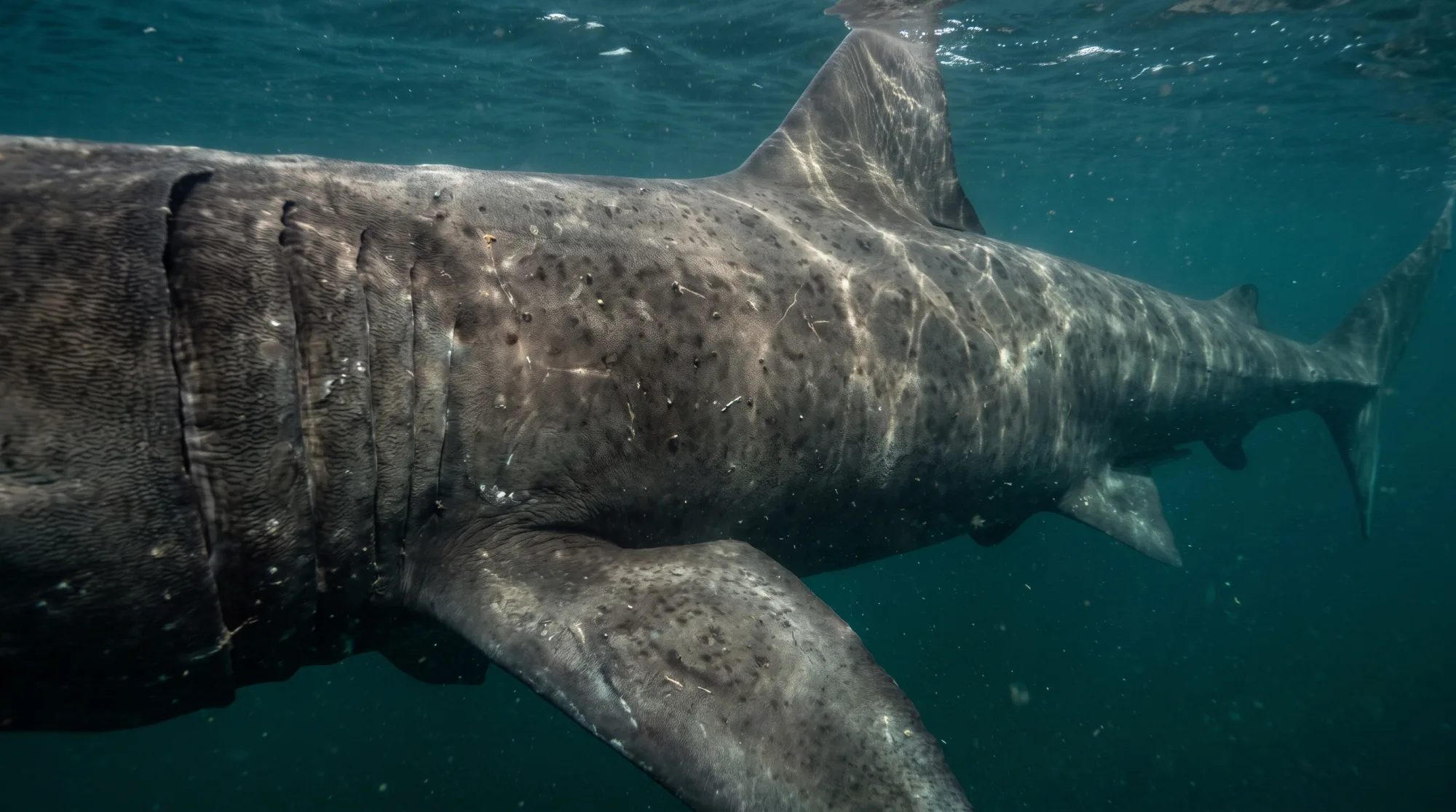
Basking shark swimming open-mouthed through sunlit blue water above a seabed, with small fish scattered around it

Basking Shark: Facts, Photos & Why It’s So Strange

Cetorhinus maximus

A bus-sized shark that eats soup

A shark as long as a bus is swimming straight at you with its mouth open 3 ft (1 m) wide. Relax. The basking shark is the second-biggest fish on Earth and eats nothing larger than plankton. It’s basically a giant, gentle swimming sieve.

Basking Shark vs. you

Your height ft in5 ft 7 in

Quick facts

Size
20–26 ft
Usually 20–26 ft (6–8 m); the record is just over 40 ft (12 m)
Weight
~4.4–5.5
About 4.4–5.5 tons (4–5 tonnes)
Lifespan
~50 years
Probably around 50 years
Left in the wild
Unknown

Conservation status

  1. Least Concern
  2. Near Threatened
  3. Vulnerable
  4. Endangered (this animal)
  5. Critically Endangered
  6. Extinct in the Wild
  7. Extinct

Endangered

Superpowers

  • Venomous : Is it venomous? No
  • Glows : Does it glow? No
  • Regenerates limbs : Can it regenerate limbs? No – but it replaces its teeth for life

Identity

Scientific name
Cetorhinus maximus
Class
Cartilaginous fish (shark)
First described
1765, by Johan Ernst Gunnerus

Life & family

Diet
Plankton
Gestation
Unknown – possibly more than 2 years
Predators
Orcas and great white sharks, rarely

Where to find it

Habitat
Cool coastal and open waters, often near the surface
Lives in
Temperate oceans worldwide
In the wild
Yes – in summer off Scotland, Ireland, the Isle of Man and Cornwall
In zoos
No – it’s far too big

Explore similar

Why is this animal unusual?

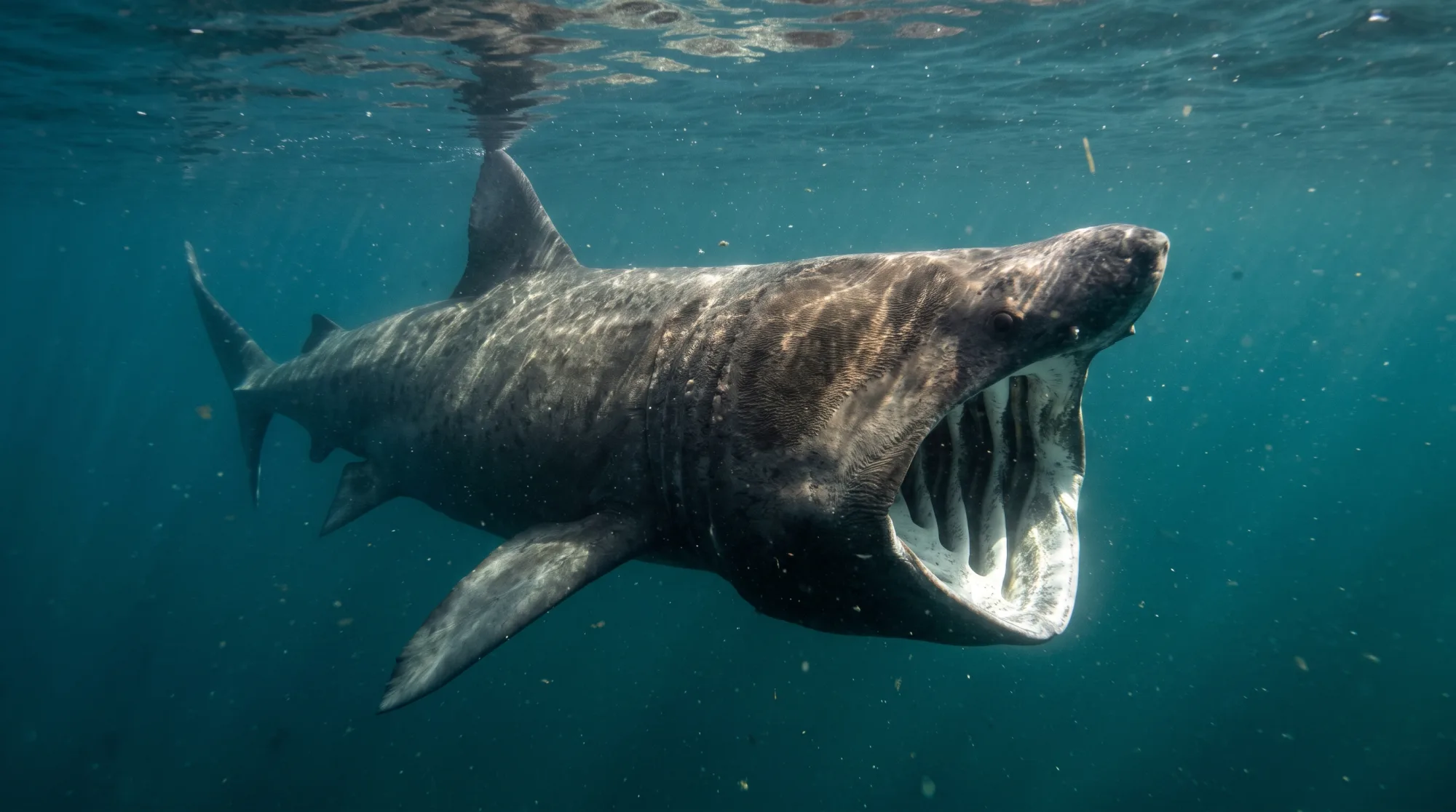
It feeds by simply swimming forward with its mouth open. Water flows in, passes over comb-like filters in the gills and leaves the plankton behind. It’s said to filter about 2,200 tons (2,000 tonnes) of water an hour.

Why does it look like that?

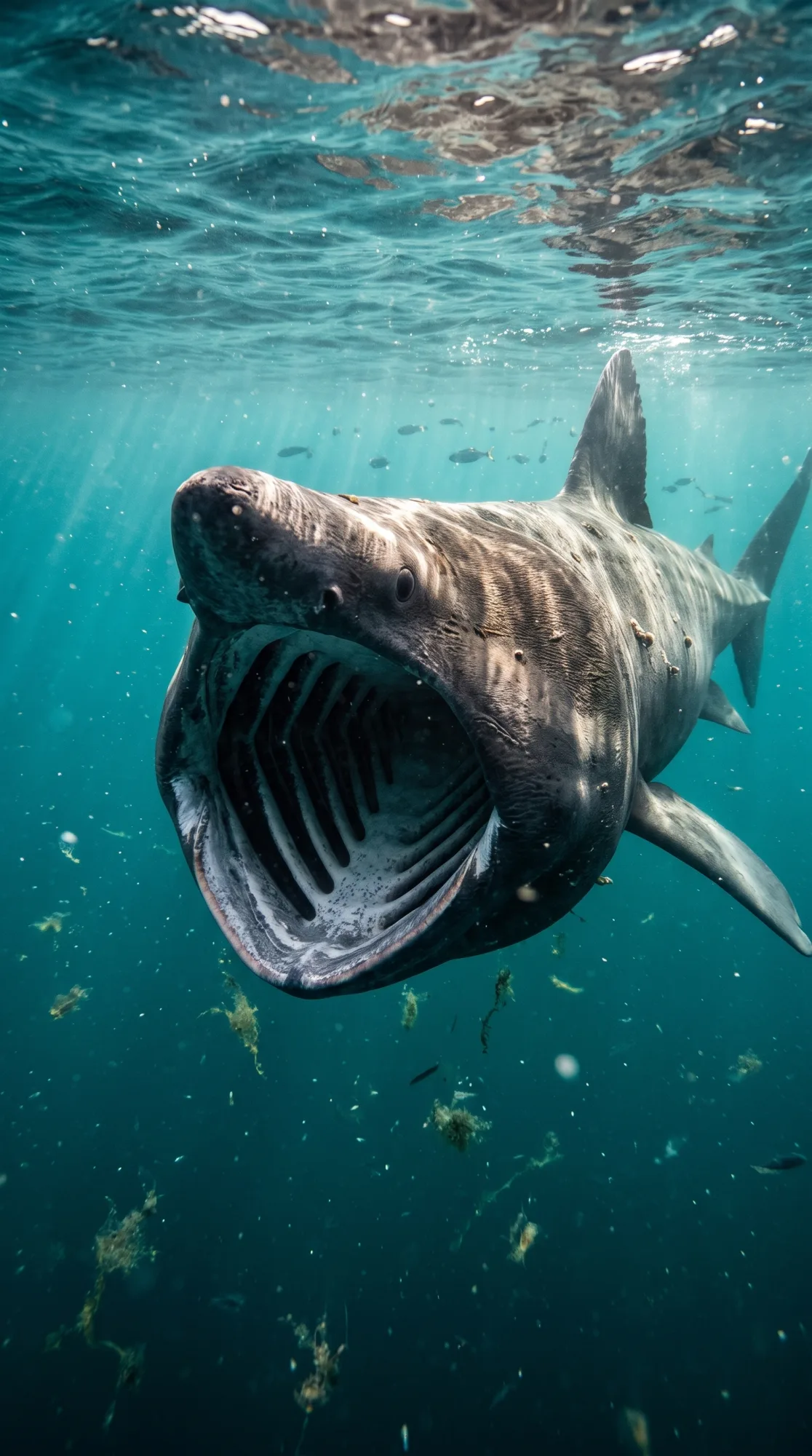
Enormous gill slits that almost circle the head, a pointed snout and a mouth like an open cave. It does have teeth – hundreds of them – but they’re tiny and useless.

Strangest biological feature

Its liver. It’s full of oil, makes up about a quarter of the shark’s weight and keeps it floating without effort.

Why is it strange?

Despite weighing as much as an elephant, it can leap completely out of the water. Nobody is quite sure why.

Interesting behavioral facts

It cruises slowly at the surface as if sunbathing – hence “basking”. Rotting basking sharks washed ashore have been mistaken for sea monsters more than once.

Records held

The second-largest fish in the world, after the whale shark.
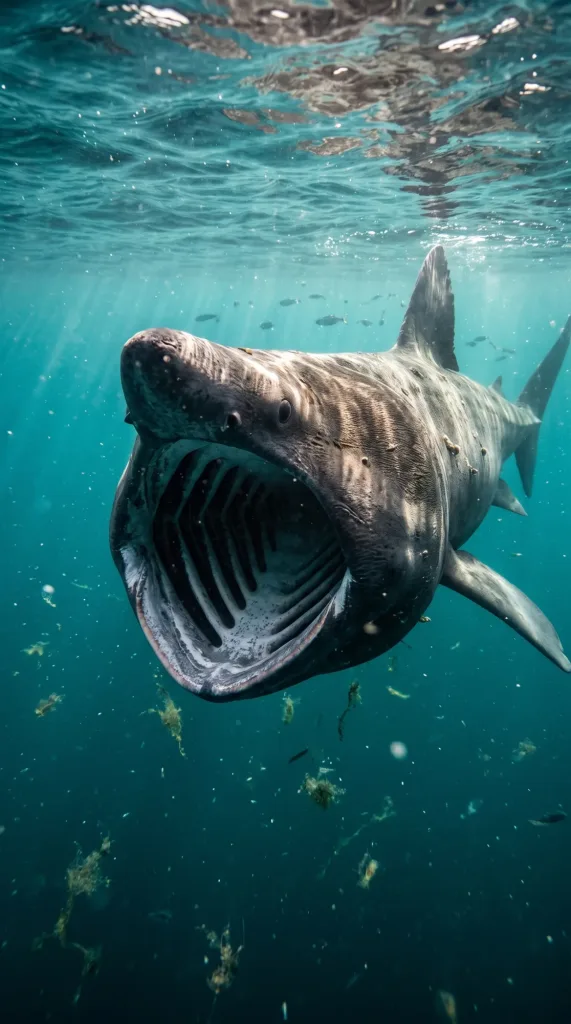
Basking shark swimming toward the camera with its enormous mouth wide open, showing the gill rakers, in clear blue water

Basking Shark: quick answers

Is the basking shark dangerous to humans?

No. It has hundreds of teeth, but they’re tiny and useless, and it only eats plankton. It’s a gentle giant, though its size means boats should keep their distance.

How big does a basking shark get?

Usually 20–26 ft (6–8 m) long. The biggest ever recorded was just over 40 ft (12 m). It can weigh about 4.4–5.5 tons (4–5 tonnes).

Can a basking shark jump?

Yes. Despite weighing as much as an elephant, it can leap completely out of the water. Nobody is quite sure why it does it.

Why is the basking shark endangered?

It was hunted for centuries for its oily liver, fins and meat. It grows slowly and has very few young, so populations recover very slowly.

Know someone who needs to see this?

Send them the Basking Shark. They'll thank you. Probably.