Skip to content
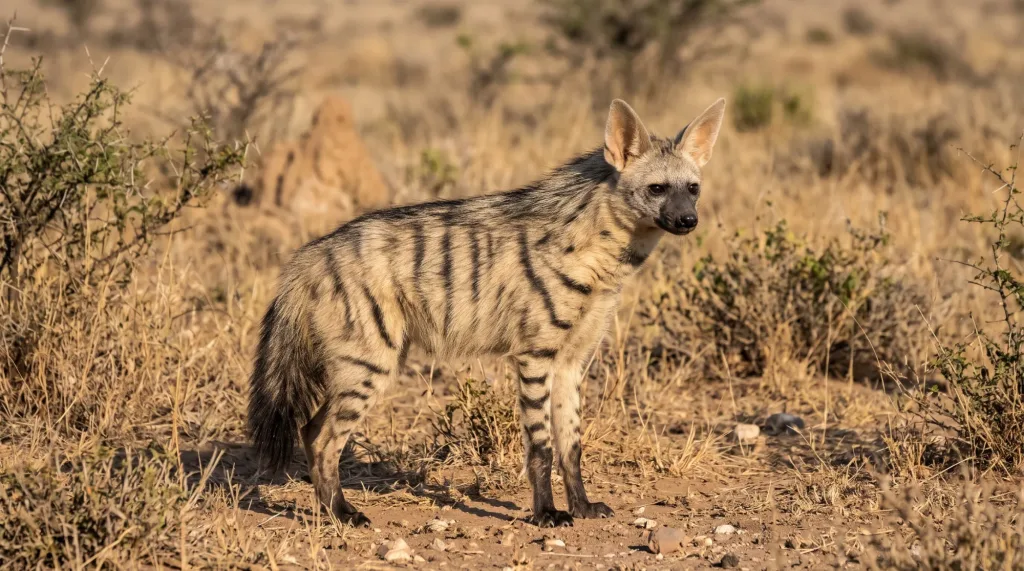
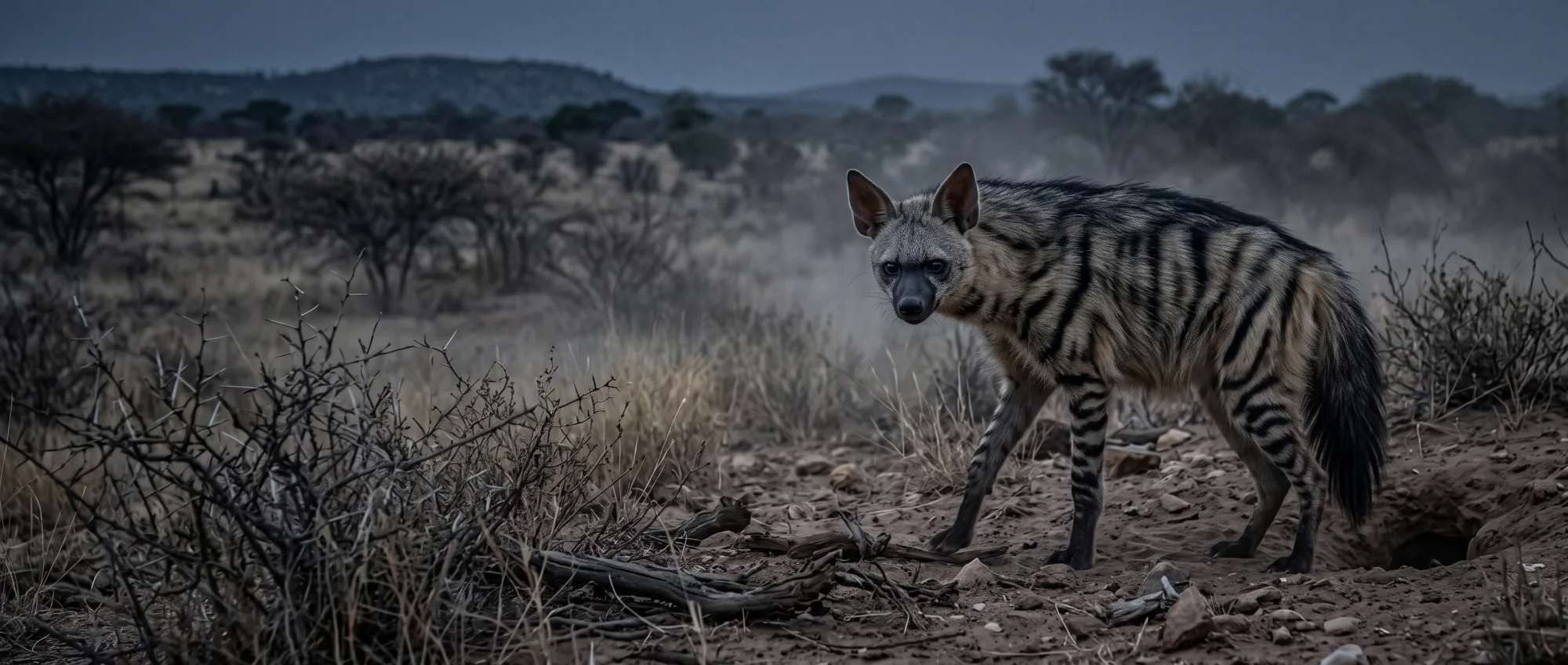
Aardwolf standing on dry ground at dusk, with a bristly mane and dark stripes on its sandy coat

Aardwolf: Facts, Photos & Why It’s So Strange

Proteles cristata

A hyena that lives on termites

It’s a hyena – stripes, sloping back, the lot. But instead of crunching bones, the aardwolf spends its nights politely licking termites off the ground. Up to 250,000 of them before sunrise. It’s the gentlest member of a very rough family.

Aardwolf vs. you

Your height ft in5 ft 7 in

Quick facts

Size
22–31 in
22–31 in (55–80 cm) long, about 16–20 in (40–50 cm) at the shoulder
Weight
15–22 lb
15–22 lb (7–10 kg)
Lifespan
7–10 years
7–10 years in the wild, up to 15 in captivity
Left in the wild
Unknown
Unknown – but stable

Conservation status

  1. Least Concern (this animal)
  2. Near Threatened
  3. Vulnerable
  4. Endangered
  5. Critically Endangered
  6. Extinct in the Wild
  7. Extinct

Least Concern

Superpowers

  • Venomous : Is it venomous? No
  • Glows : Does it glow? No
  • Regenerates limbs : Can it regenerate limbs? No

Identity

Scientific name
Proteles cristata
Class
Mammal (hyena family)
First described
1783, by Anders Sparrman

Life & family

Diet
Termites, almost exclusively
Gestation
About 90 days
Offspring
2–5 cubs
Predators
Jackals take cubs; leopards and lions kill adults

Where to find it

Habitat
Dry open plains and bushland
Lives in
Eastern and southern Africa
In the wild
Possible – on night drives in southern Africa
In zoos
Yes – a few zoos keep them

Explore similar

Why is this animal unusual?

Other hyenas have jaws that crush bone. The aardwolf’s cheek teeth have shrunk to tiny pegs, because it doesn’t chew – it just licks.

Why does it look like that?

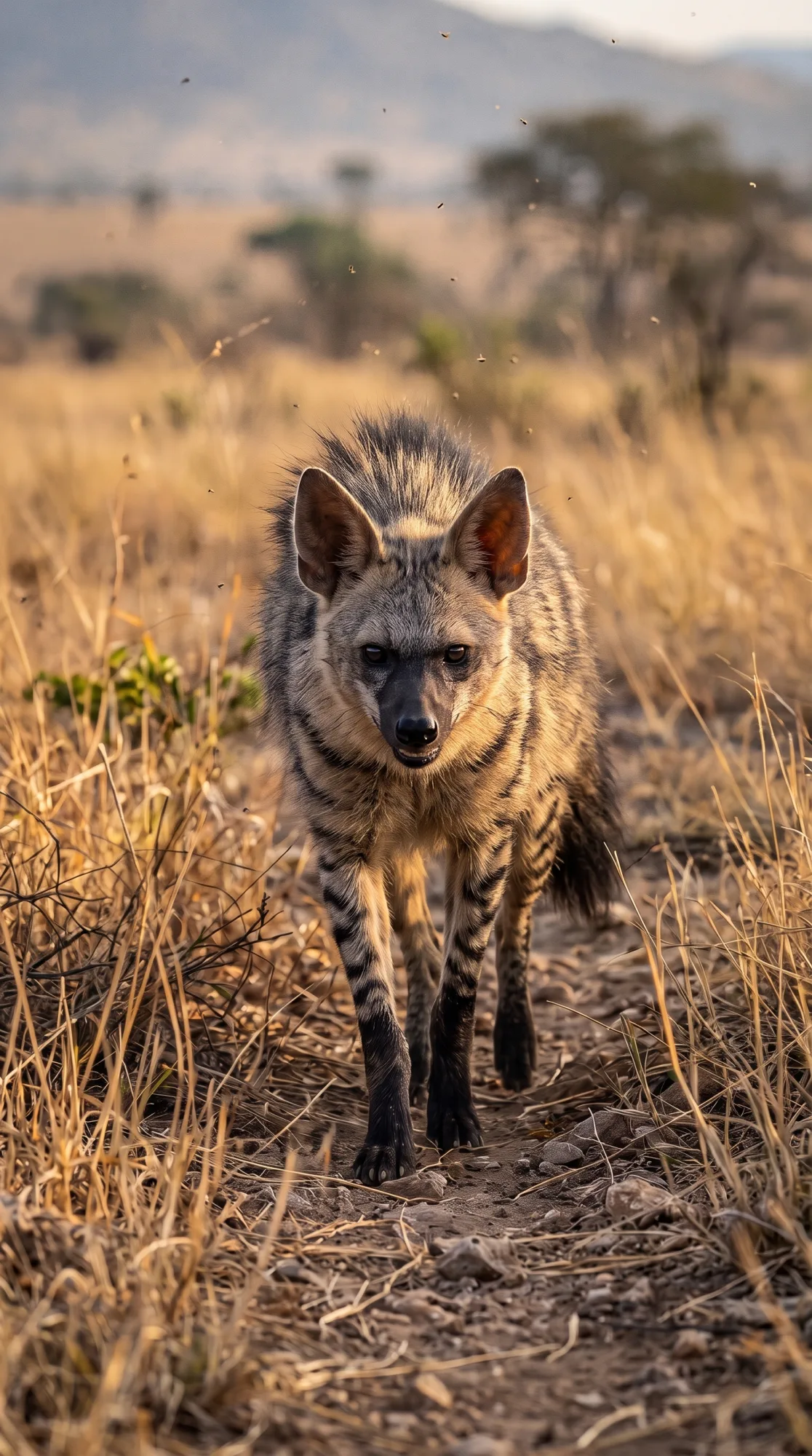
Its long, broad, sticky tongue is built for mopping up termites, and it’s tough enough to ignore the chemical spray they use for defence. The mane along its back stands up when it’s scared, making it look far bigger.

Strangest biological feature

An appetite for one thing. A single aardwolf can eat a quarter of a million termites in a night.

Why is it strange?

It never destroys a termite mound. It eats what’s on the surface and moves on, so the colony recovers – a predator that farms its food.

Interesting behavioral facts

Aardwolves are shy, live in pairs and mark their territory with smelly paste from a gland under the tail. They sleep the day away in old burrows.

Records held

Its name means “earth wolf” in Afrikaans.

Striped aardwolf walking toward the camera through dry golden grass with a blurred savanna and trees behind it

Aardwolf: quick answers

Is an aardwolf a hyena?

Yes. It belongs to the hyena family, but it eats termites instead of hunting or scavenging large animals.

Is the aardwolf dangerous?

No. It’s shy and has tiny teeth. When scared, it raises the mane on its back to look bigger.

Does the aardwolf destroy termite mounds?

No. It eats the termites on the surface and moves on, so the colony recovers and can feed it again later.

Where do aardwolves live?

On dry open plains and bushland in eastern and southern Africa.

Know someone who needs to see this?

Send them the Aardwolf. They'll thank you. Probably.