Versus 2 min read
Dugong vs. Manatee: What’s the Difference?
Dugongs and manatees are both 'sea cows', but they're easy to tell apart once you know where to look: the tail, the snout and the water they live in.
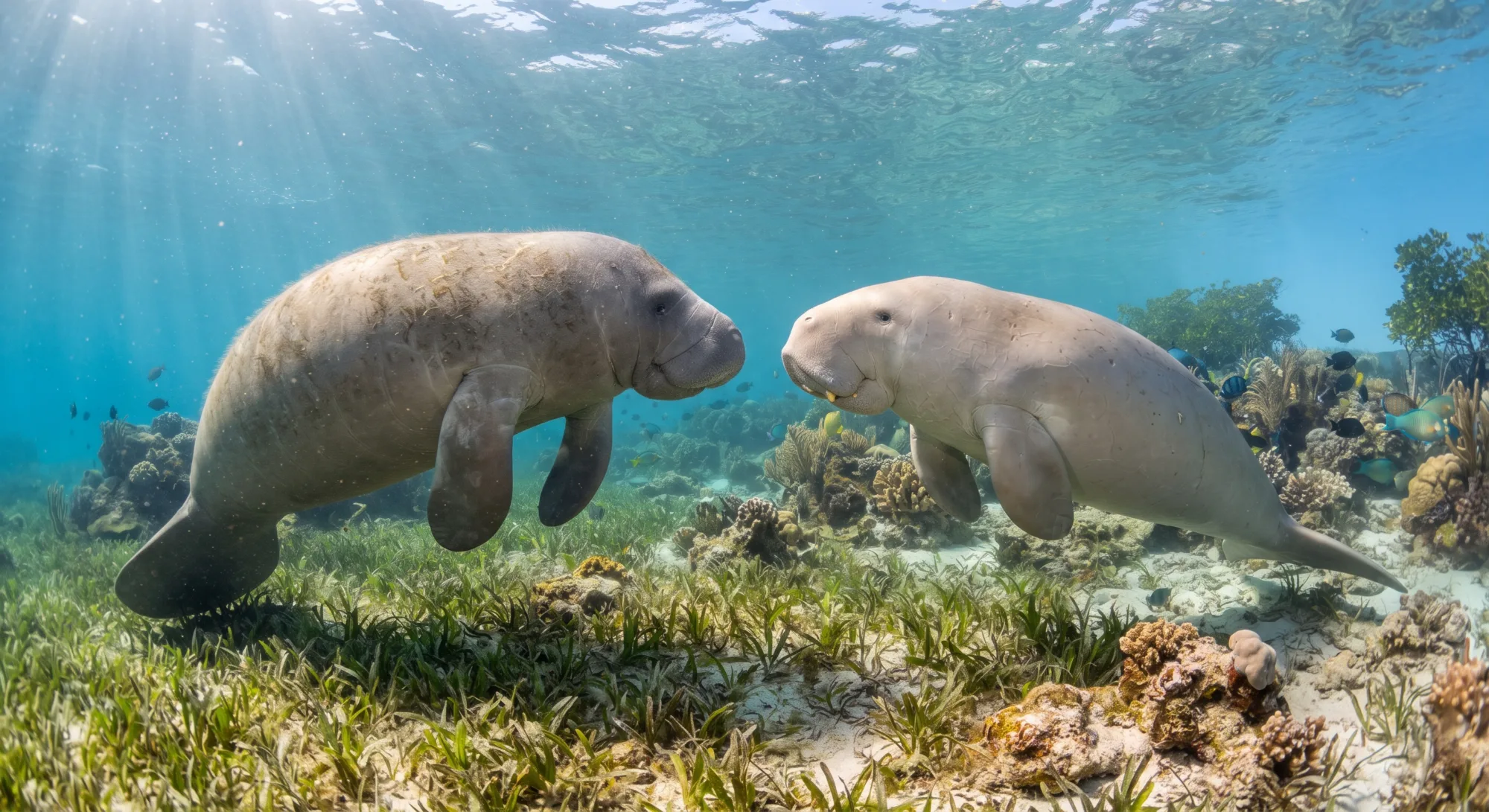
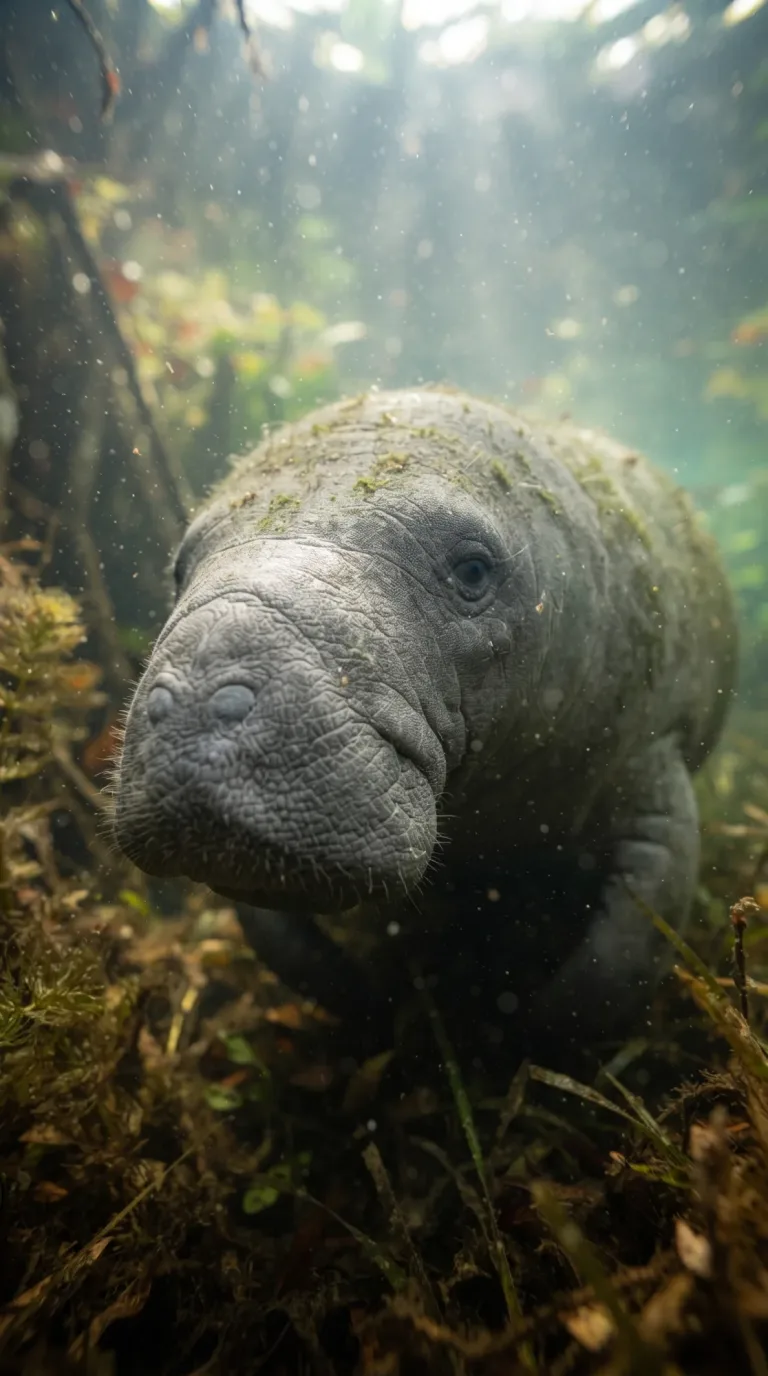
Both are big, slow, whiskered plant-eaters. Both are called “sea cows”. Both are related to elephants. But the manatee and the dugong are different animals, and once you know what to look at, you’ll never mix them up again.
The quick way to tell them apart: the tail
- Manatee: a round, flat, paddle-shaped tail, like a beaver’s.
- Dugong: a split tail with two points, like a dolphin’s or a whale’s.
If you only remember one thing, remember the tail.
Head to head
| Manatee | Dugong | |
|---|---|---|
| Species | 3 (West Indian, West African, Amazonian) | 1 |
| Tail | Round paddle | Fluked, like a dolphin |
| Snout | Short, with a split, very mobile upper lip | Turned sharply down, like a vacuum cleaner |
| Water | Rivers, springs, coasts (fresh and salt) | Only the sea |
| Where | Americas and West Africa | Indian Ocean and western Pacific, from East Africa to Australia |
| Size | Up to about 13 ft (4 m), usually 880–1,300 lb (400–600 kg) | Up to about 10 ft (3 m), usually 500–900 lb (230–400 kg) |
| Status | All three Vulnerable | Vulnerable |
Different snouts, different menus
A dugong’s snout points almost straight down. It’s built for grazing seagrass from the sea floor, and dugongs leave long feeding trails across seagrass meadows. A manatee’s snout is shorter and its upper lip is split in two halves that work like little hands, so it can eat plants at the bottom, mid-water or at the surface.
A dugong is a lawnmower. A manatee is a picky eater with very talented lips.
Teeth and tusks
Manatees have “marching molars”: worn teeth at the back are constantly replaced by new ones moving forward, like a conveyor belt. Dugongs don’t do this, but males (and some old females) grow small tusks that poke out of the upper jaw.
Strange but trueThe closest living relatives of sea cows are elephants. Manatees even have small nails on their flippers that look a bit like elephant toenails.
The giant cousin we lost
There used to be a third type of sea cow: Steller’s sea cow, a giant relative of the dugong that lived in the cold Bering Sea and may have reached 30 ft (9 m). It was discovered by Europeans in 1741 and hunted to extinction by 1768, just 27 years later.
So which is which?
If you’re in Florida, the Caribbean or the Amazon, it’s a manatee. If you’re in Australia, the Red Sea or Southeast Asia, it’s a dugong. And if you’re still unsure, check the tail.
Sources
Tell a friend