Skip to content
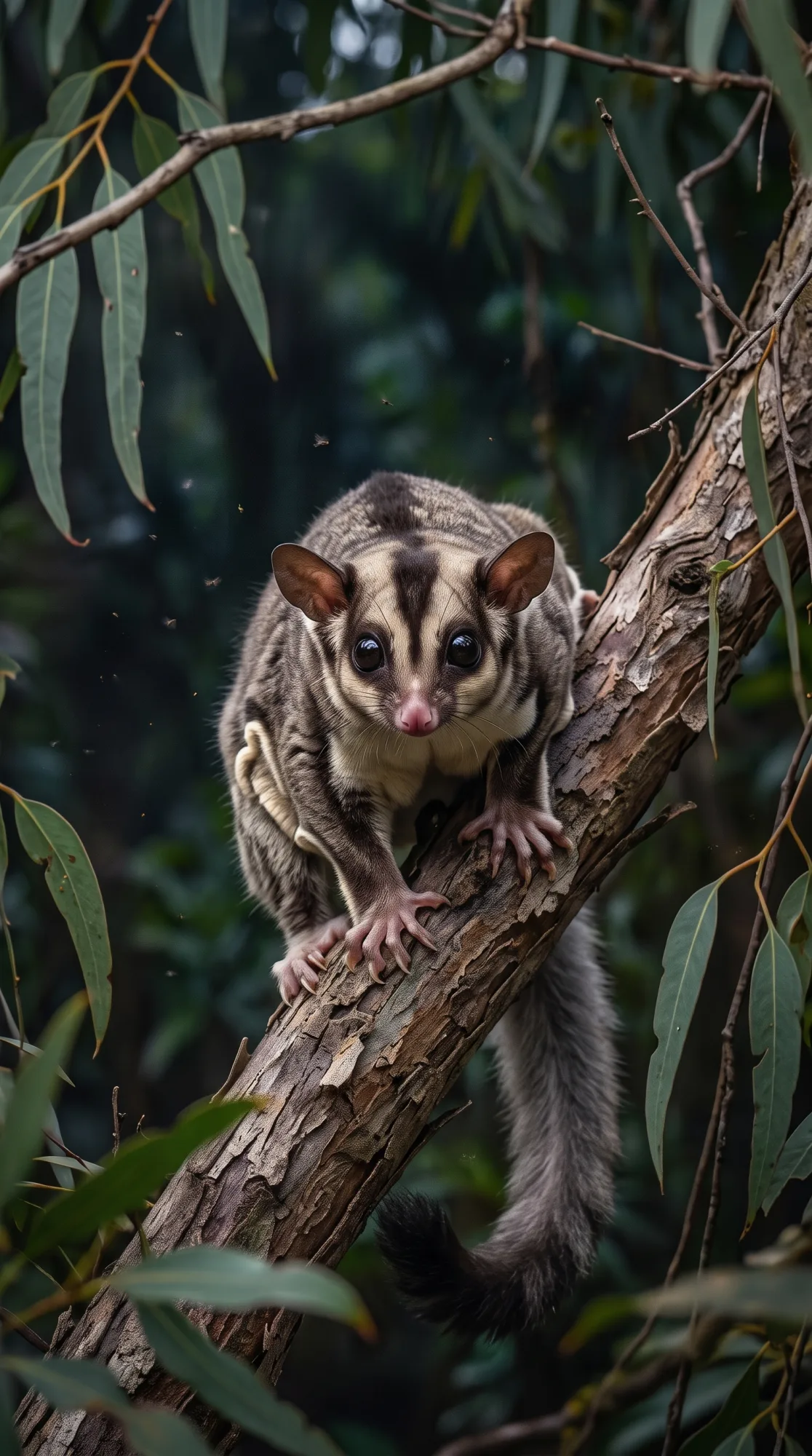
Sugar glider with large dark eyes and big ears perched on a mossy branch in a misty rainforest with light beams

Sugar Glider: Facts, Photos & Why It’s So Strange

Petaurus breviceps

A pocket-sized possum with a wingsuit

It weighs about as much as a chocolate bar, has eyes like black marbles and can glide the length of a swimming pool. The sugar glider is a tiny marsupial with a serious sweet tooth – and a built-in wingsuit stretching from its wrists to its ankles.

Sugar Glider vs. you

Your height ft in5 ft 7 in

Quick facts

Size
6–8 in
Body 6–8 in (16–21 cm), plus a tail just as long
Weight
3–5 oz
3–5 oz (90–150 g)
Lifespan
~5–7 years
About 5–7 years in the wild; up to 15 in captivity
Left in the wild
Unknown
Unknown – common

Conservation status

  1. Least Concern (this animal)
  2. Near Threatened
  3. Vulnerable
  4. Endangered
  5. Critically Endangered
  6. Extinct in the Wild
  7. Extinct

Least Concern

Superpowers

  • Venomous : Is it venomous? No
  • Glows : Does it glow? No – but its fur glows under UV light
  • Regenerates limbs : Can it regenerate limbs? No

Identity

Scientific name
Petaurus breviceps
Class
Mammal (marsupial)
First described
1838, by George Waterhouse

Life & family

Diet
Tree sap, nectar, pollen and insects
Gestation
About 16 days, then about 10 weeks in the pouch
Offspring
1–2 joeys
Predators
Owls, snakes, cats and goannas

Where to find it

Habitat
Forests and woodland with tree hollows
Lives in
Australia and New Guinea
In the wild
Possible – on night walks in eastern Australia
In zoos
Yes – in night houses at many zoos

Explore similar

Why is this animal unusual?

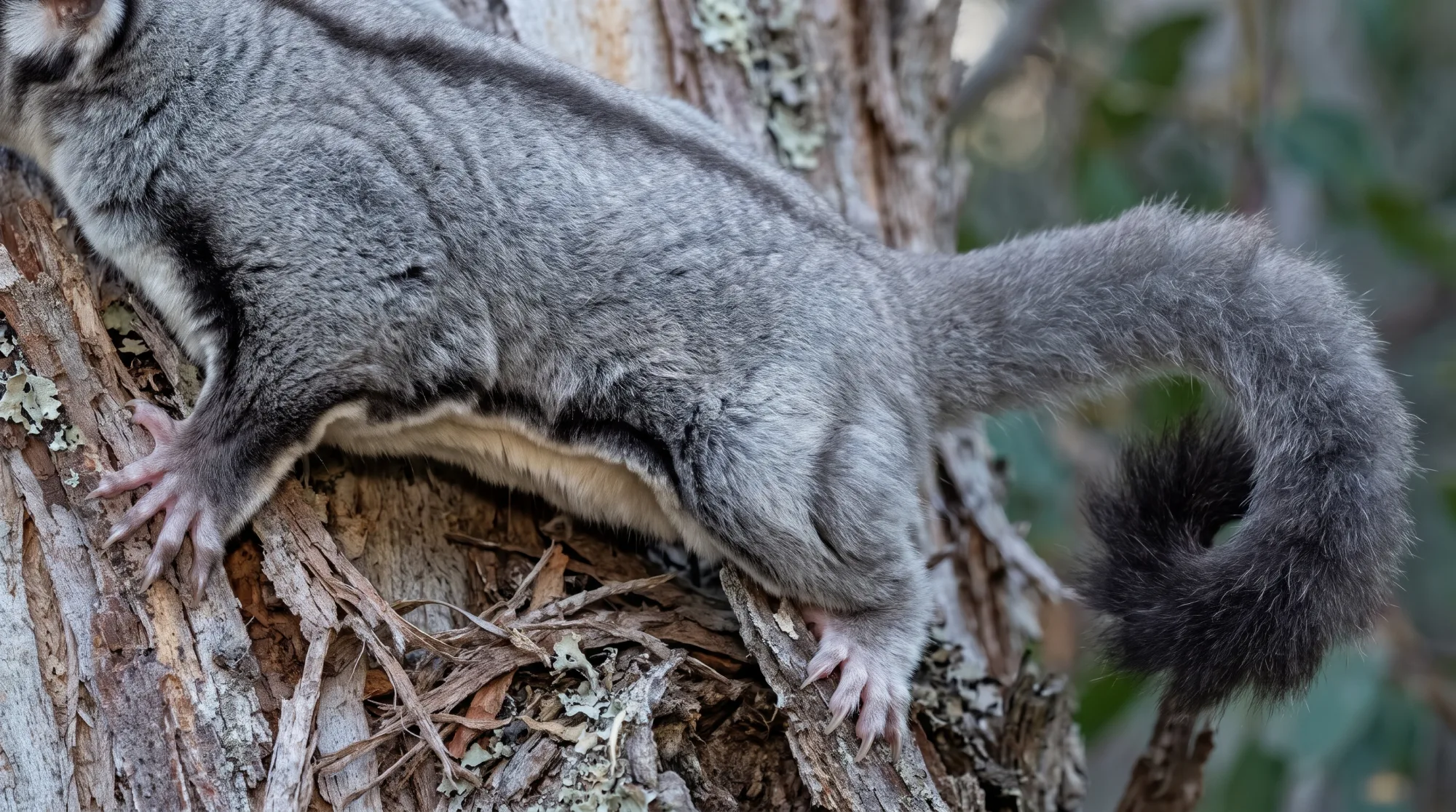
It doesn’t fly, it glides. A thin sheet of furry skin runs from each wrist to each ankle. When it jumps and spreads its legs, it becomes a small furry kite and can travel around 160 ft (50 m).

Why does it look like that?

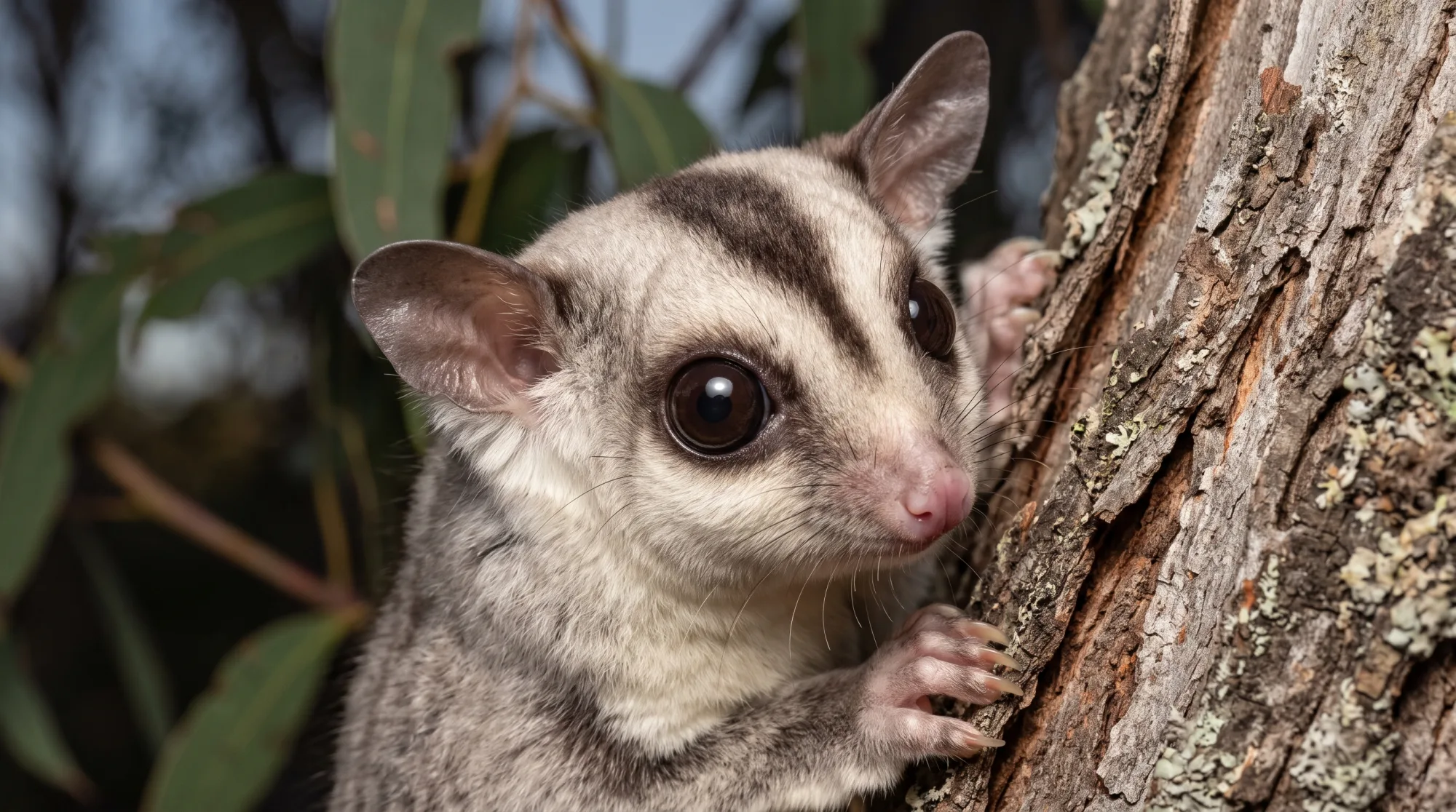
Soft grey fur with a dark stripe down the back, a fluffy tail it uses as a rudder, and huge eyes for seeing at night.

Strangest biological feature

A sweet tooth. It bites into the bark of eucalyptus and acacia trees and licks up the sugary sap that oozes out.

Why is it strange?

The male has a bald patch on top of his head. It’s a scent gland, and he rubs it on his family so that everyone in the group smells the same.

Interesting behavioral facts

Sugar gliders live in small colonies that share a nest in a tree hollow, and they bark – surprisingly loudly – like tiny dogs.

Records held

In 2020 scientists found that the “sugar glider” is actually three different species.
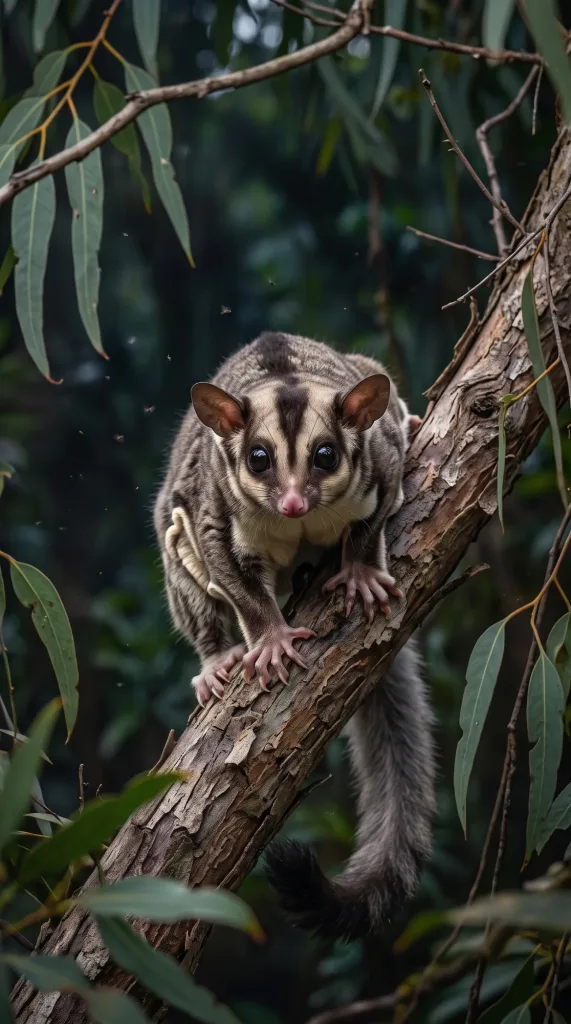
Sugar glider clinging to a eucalyptus branch with large dark eyes, tufted ears and a fluffy tail in a leafy forest

Sugar Glider: quick answers

Can you keep a sugar glider as a pet?

In some places, yes, but they need a lot: company of other gliders, a big cage, a special diet and owners who are awake at night. In some US states and countries they’re not allowed.

Can sugar gliders really fly?

No, they glide. A thin sheet of furry skin between their wrists and ankles lets them glide about 160 ft (50 m).

What do sugar gliders eat?

Tree sap, nectar, pollen and insects. They bite into bark to lick up the sugary sap.

Where do sugar gliders live in the wild?

In forests and woodland in Australia and New Guinea, in tree hollows.

Know someone who needs to see this?

Send them the Sugar Glider. They'll thank you. Probably.