Deep dive 3 min read
Star-Nosed Mole Nose: How the Strangest Nose in Nature Works
Twenty-two pink tentacles, more than 100,000 nerve fibres and the fastest snack time of any mammal. Here's how the star-nosed mole's bizarre nose really works.
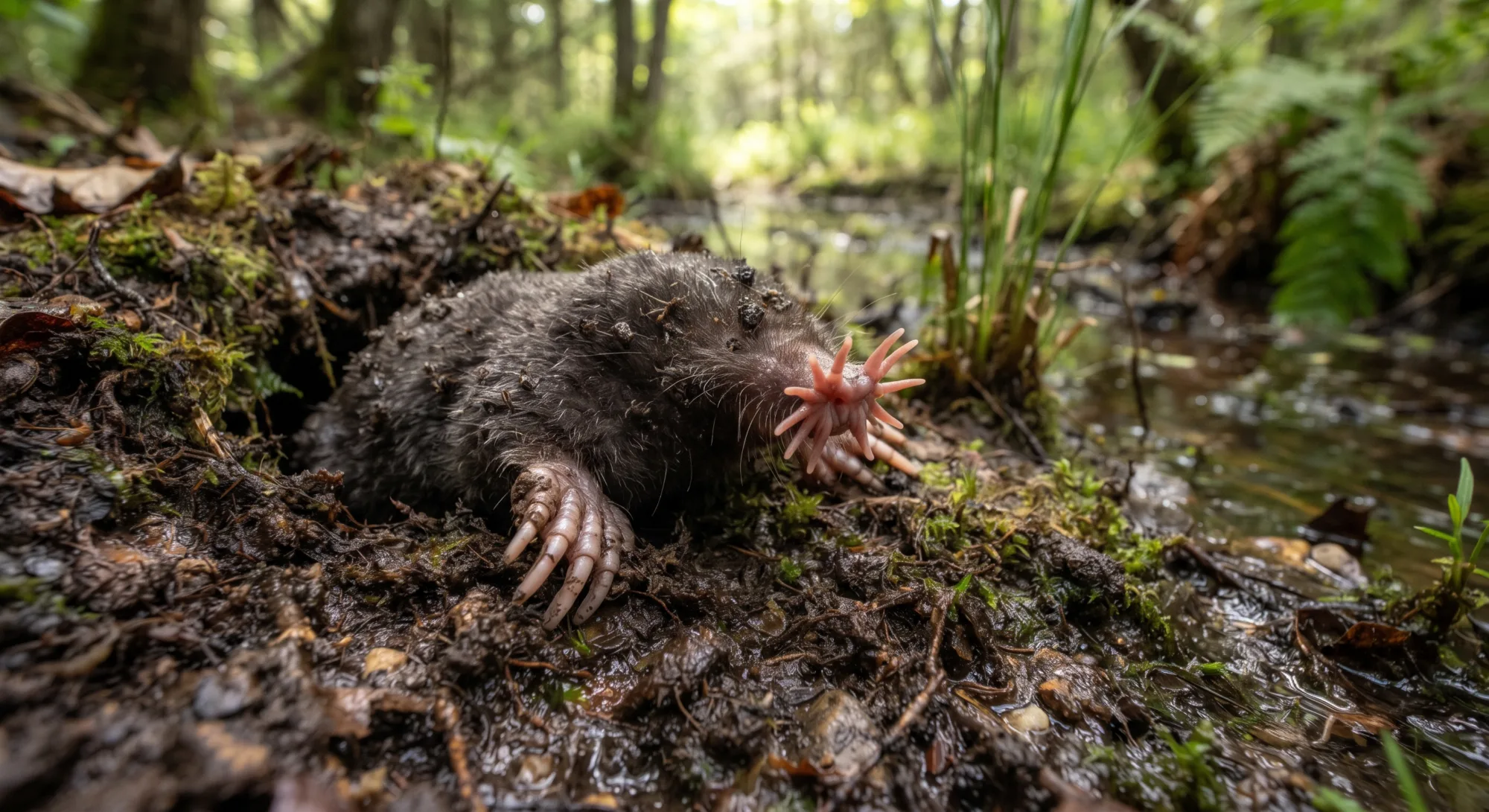
The star-nosed mole has the strangest nose of any mammal: a fleshy pink star of 22 wriggling tentacles, right on the end of its snout. It looks like a sea anemone glued to its face. But it isn’t really a nose for smelling – it’s one of the most sensitive touch organs ever found in nature.
What is the star on a star-nosed mole’s nose?
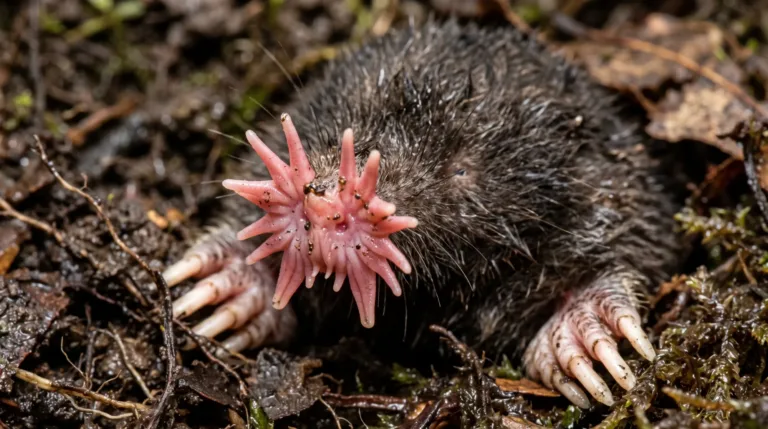
The star is made of 22 fleshy rays, 11 on each side, arranged in a ring around the nostrils. They’re not tentacles that grab things, and they’re not for smelling. They’re for touch. The whole star is smaller than your fingertip – less than a square centimetre of skin.
How sensitive is the star?
Incredibly. The surface of the star is covered with more than 25,000 tiny touch domes called Eimer’s organs, and it’s wired to the brain by more than 100,000 nerve fibres. That’s around five times more touch nerves than in your entire hand – packed into something smaller than a fingertip.
A huge part of the mole’s brain is devoted to processing signals from the star. In a way, the star-nosed mole “sees” the world through its nose.
Your whole hand has fewer touch nerves than this mole’s nose. Let that sink in.
Why does the star-nosed mole need such a nose?
Because it’s practically blind and lives in dark tunnels, wet soil and murky water. Its eyes are tiny, so touch is its main way of finding food. The star taps the ground around a dozen times a second, scanning for worms, insect larvae and tiny crustaceans.
How fast does the star-nosed mole eat?
Faster than any other mammal. When one of the rays touches something, the mole moves its most sensitive central rays onto it to check. It can identify a small prey item and swallow it in about 120 milliseconds – faster than you can blink. That makes it the fastest-eating mammal ever measured.
Can the star-nosed mole smell underwater?
Yes – and that was a big surprise for scientists. The mole blows small air bubbles out of its nostrils onto objects underwater, then sniffs the same bubbles back in. The air picks up scent molecules on the way, so the mole can smell its prey while swimming. It was the first mammal shown to do this.
Strange but trueThe star-nosed mole’s nose is so efficient that scientists have used it to study how brains process touch – it’s like a living model of a super-sensitive fingertip.
Sources
Tell a friend