Skip to content
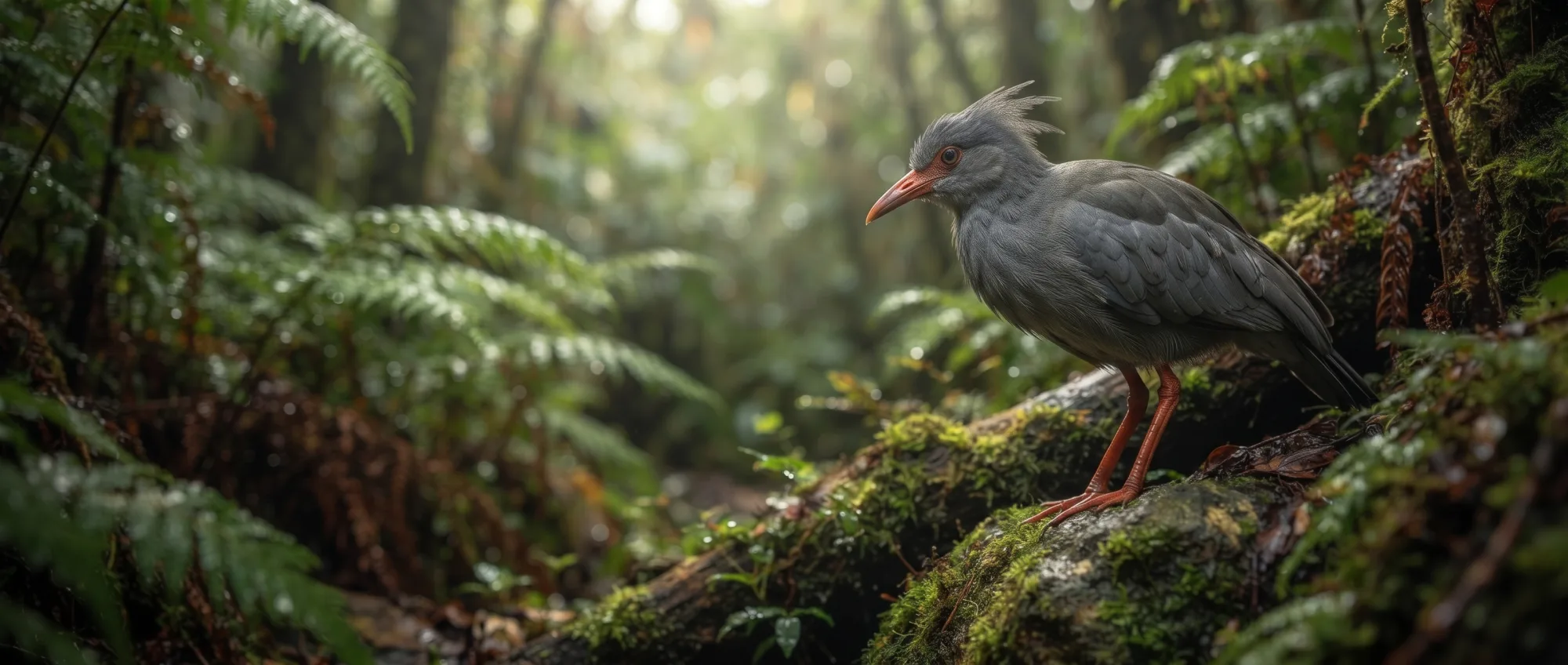
Grey kagu with spiky crest and red bill standing on a moss-covered log in a misty fern forest

Kagu: Facts, Photos & Why It’s So Strange

Rhynochetos jubatus

The ghost bird that barks

A pale grey bird with red legs wanders through the forest on an island in the Pacific – and barks like a small dog. The kagu can barely fly, lives nowhere else on Earth and is so odd that scientists gave it a family all to itself.

Kagu vs. you

Your height ft in5 ft 7 in

Quick facts

Size
~22 in
About 22 in (55 cm) long
Weight
~2.2 lb
About 2.2 lb (1 kg)
Lifespan
20+ years
20 years or more
Left in the wild
2,000
Probably fewer than 2,000

Conservation status

  1. Least Concern
  2. Near Threatened
  3. Vulnerable
  4. Endangered (this animal)
  5. Critically Endangered
  6. Extinct in the Wild
  7. Extinct

Endangered

Superpowers

  • Venomous : Is it venomous? No
  • Glows : Does it glow? No
  • Regenerates limbs : Can it regenerate limbs? No

Identity

Scientific name
Rhynochetos jubatus
Class
Bird
First described
1860, by Jules Verreaux and Marc Des Murs

Life & family

Diet
Worms, snails, insects and lizards
Gestation
None – the egg hatches after about 5 weeks
Offspring
One egg a year
Predators
Dogs, cats, pigs and rats brought by people

Where to find it

Habitat
Mountain rainforest and shrubland
Lives in
New Caledonia – and nowhere else
In the wild
Possible – in the Blue River Park on New Caledonia
In zoos
Rarely

Explore similar

Why is this animal unusual?

It has “nasal corns” – little flaps of skin that cover its nostrils. No other bird has them. They probably keep soil out of its nose while it digs for worms.

Why does it look like that?

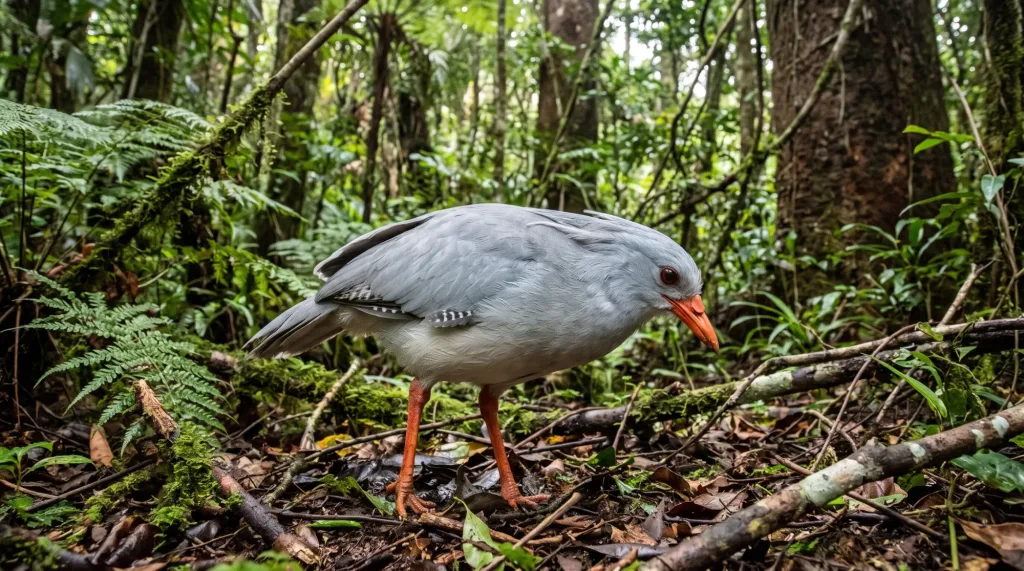
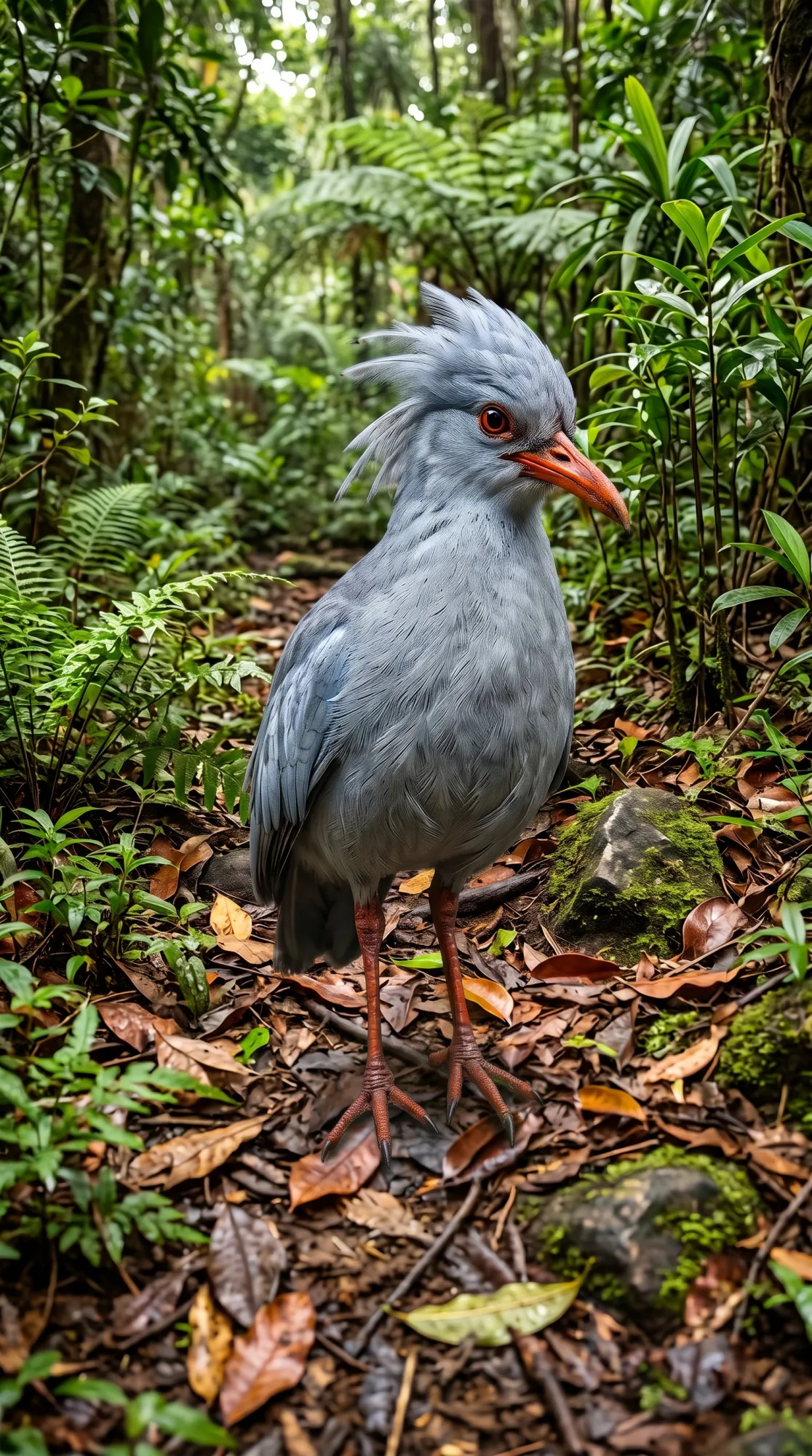
Ash-grey feathers so pale that locals call it the ghost of the forest, bright orange-red legs and beak, and a long crest it can fan out like a headdress.

Strangest biological feature

Strange blood. It has only about a third as many red blood cells as other birds – but each one carries three times as much oxygen-binding pigment.

Why is it strange?

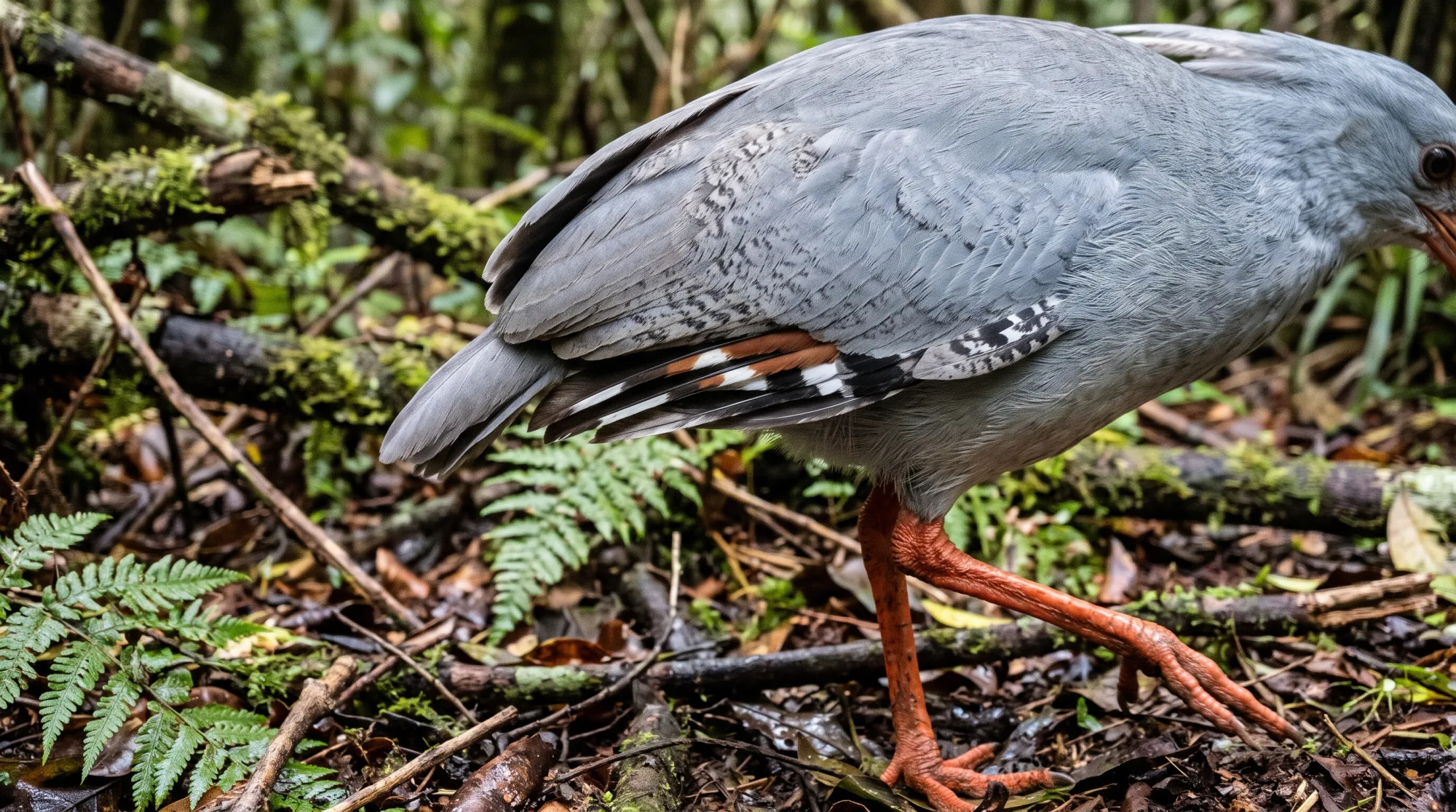
It has full-sized wings and doesn’t fly. Instead it spreads them to show off bold black-and-white stripes, to impress mates and startle enemies.

Interesting behavioral facts

Pairs sing a loud barking duet at dawn that carries for more than half a mile. Older chicks stay around to help raise their younger siblings.

Records held

The only living member of its entire bird family.
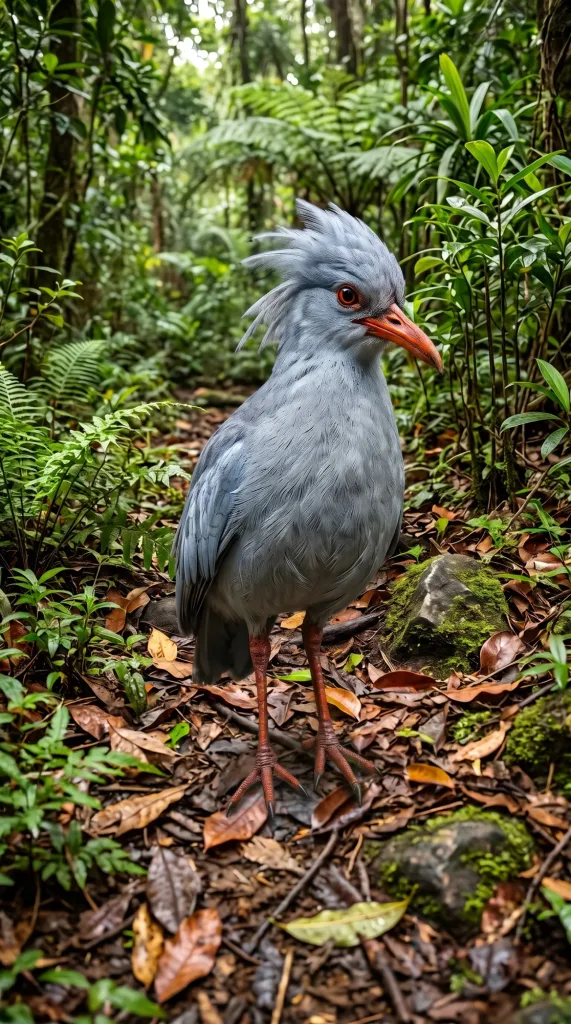
Kagu standing on forest floor with grey plumage, spiky crest, red eyes and orange bill among ferns and mossy rocks

Kagu: quick answers

Can the kagu fly?

Barely. It has full-sized wings but doesn’t really fly – it uses them for display and to glide downhill.

Why is the kagu endangered?

Dogs, cats, pigs and rats brought by people kill kagus and their chicks, and its forest is shrinking. Probably fewer than 2,000 are left.

Where can you see a kagu?

Only in New Caledonia in the Pacific. The best place is Rivière Bleue Provincial Park.

What does the kagu eat?

Worms, snails, insects and lizards, which it finds on the forest floor.

Know someone who needs to see this?

Send them the Kagu. They'll thank you. Probably.