Skip to content
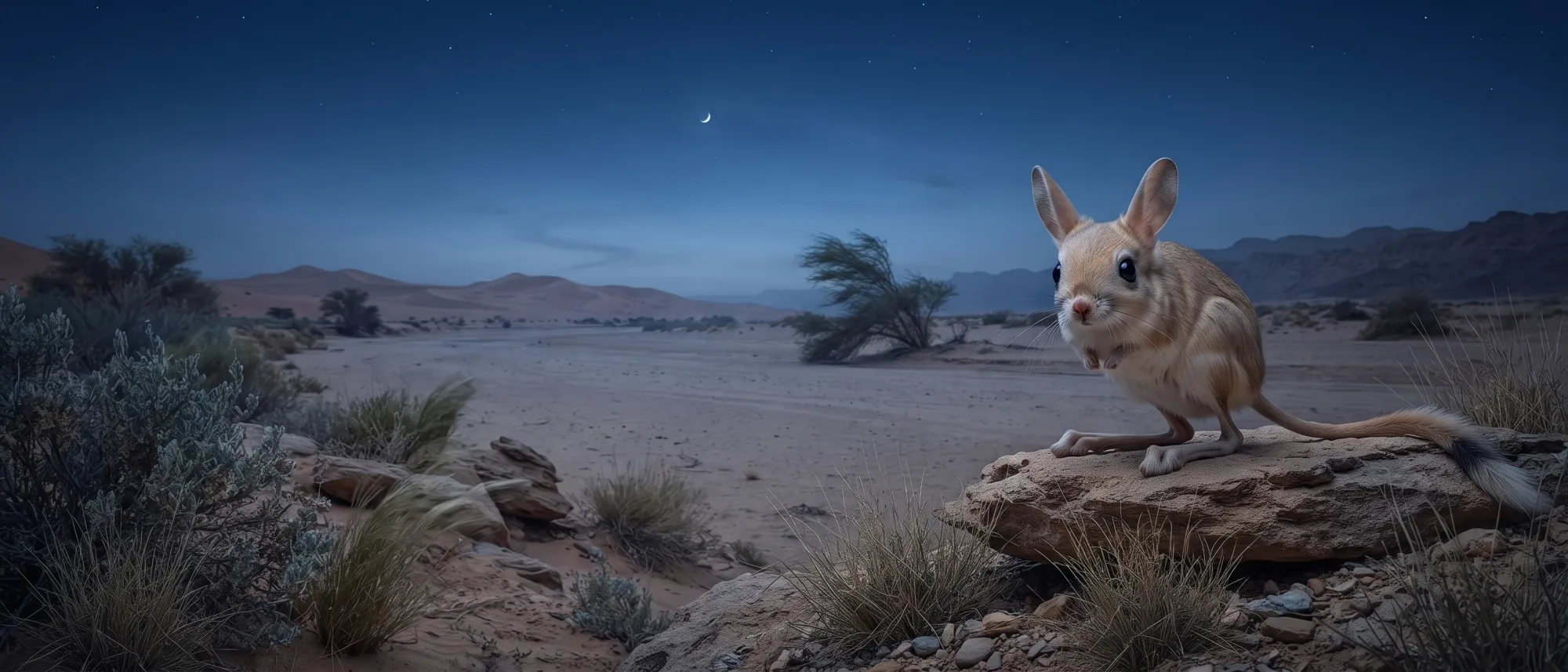
Jerboa with large ears standing on a rock at night in a desert landscape under a crescent moon and starry sky

Jerboa: Facts, Photos & Why It’s So Strange

Dipodidae (about 33 species)

A mouse on kangaroo legs

Take a mouse. Give it the back legs of a kangaroo, the ears of a rabbit and a tail with a pom-pom on the end. Now let it loose in the desert. That’s a jerboa – and it can out-hop almost anything that tries to catch it.

Jerboa vs. you

Your height ft in5 ft 7 in

Quick facts

Size
2–6 in
Body 2–6 in (5–15 cm), with a tail that’s even longer
Left in the wild
Varies
Varies by species

Conservation status

Varies by species – most are not threatened

Superpowers

  • Venomous : Is it venomous? No
  • Glows : Does it glow? No
  • Regenerates limbs : Can it regenerate limbs? No

Identity

Scientific name
Dipodidae (about 33 species)
Class
Mammal (rodent)

Life & family

Diet
Seeds, plants and insects
Gestation
About 4–5 weeks
Offspring
2–6 pups
Predators
Owls, foxes, snakes and cats

Where to find it

Habitat
Hot and cold deserts and dry steppe
Lives in
North Africa, the Middle East and Central Asia
In the wild
Hard – they’re tiny and come out at night
In zoos
Rarely

Explore similar

Why is this animal unusual?

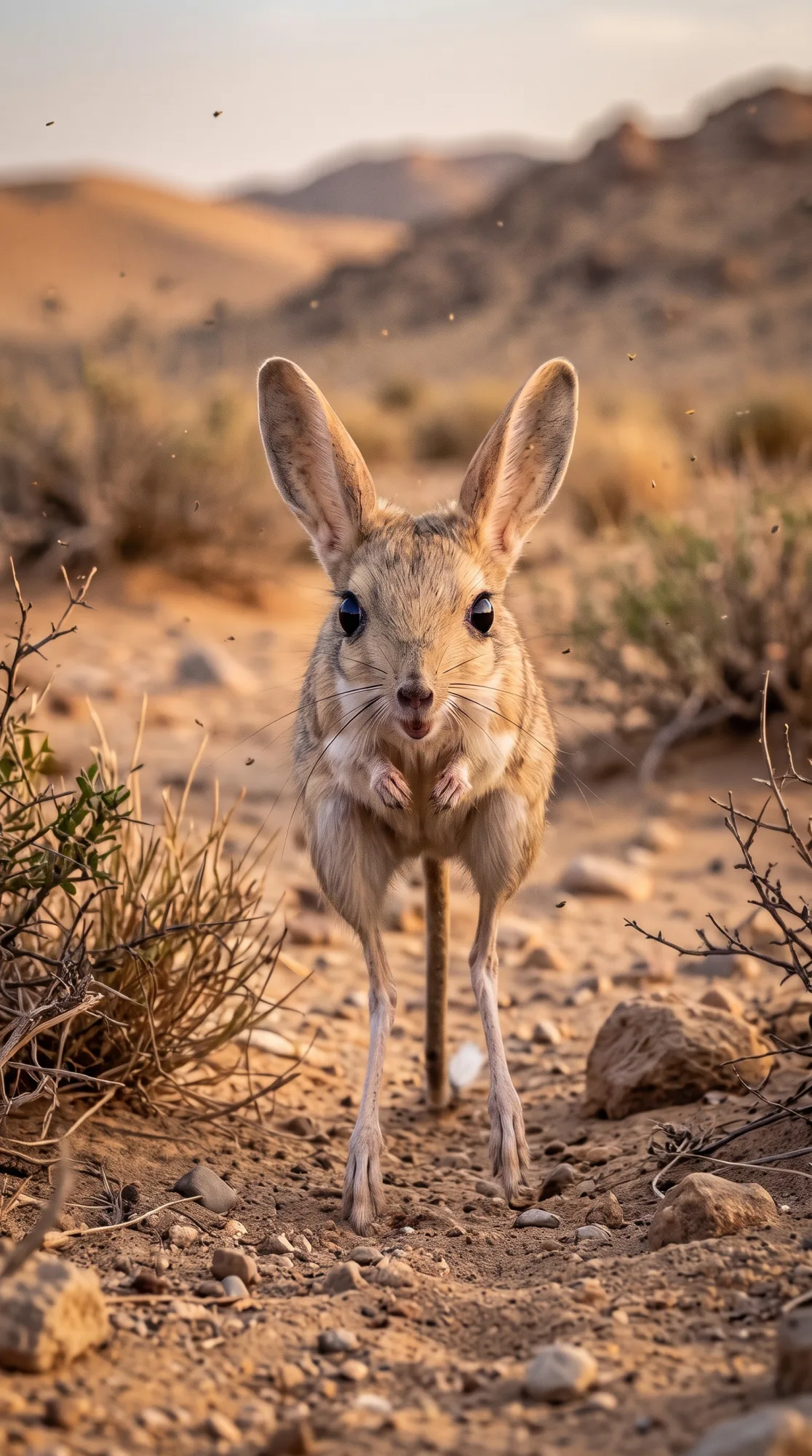
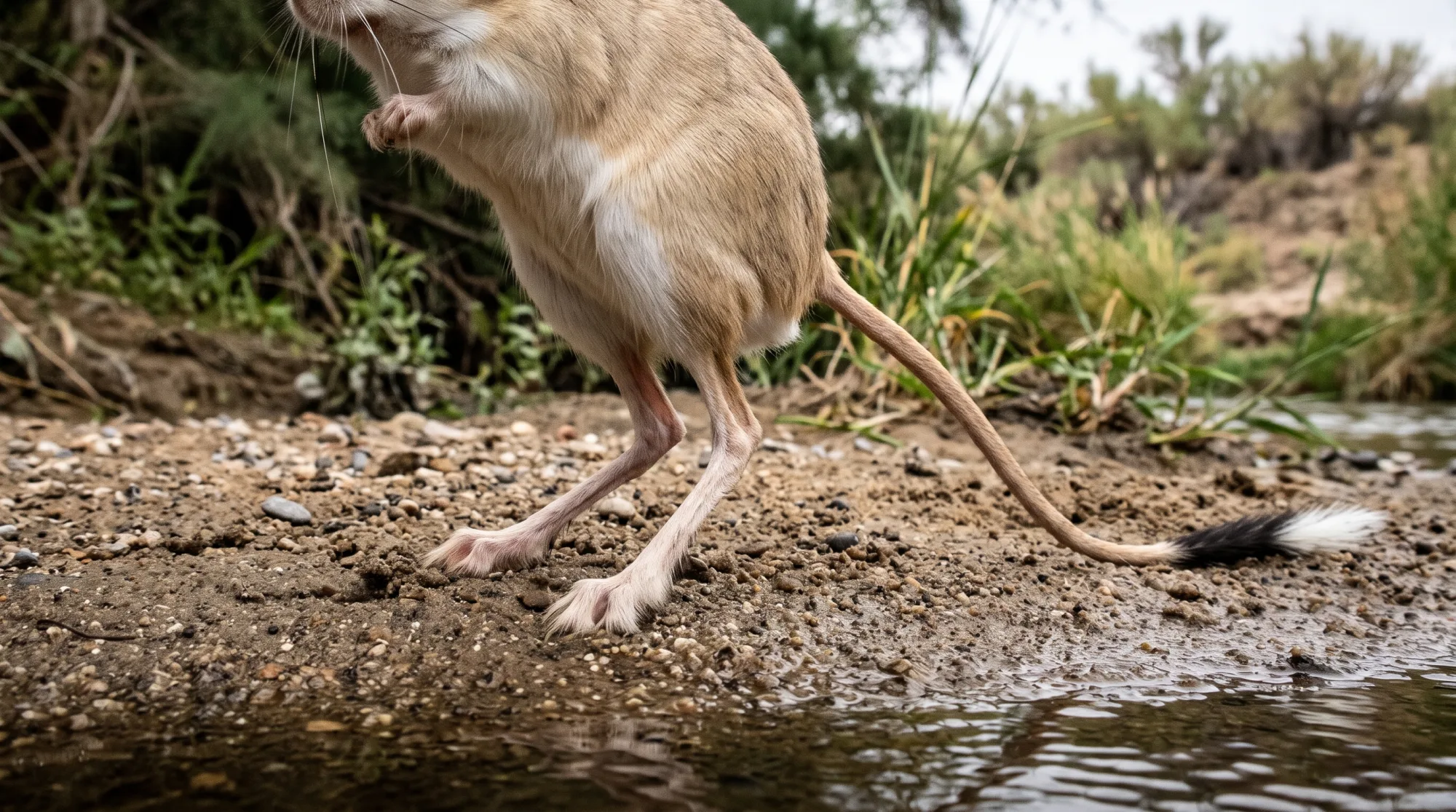
It moves only on its back legs, in huge bounds. Some species can jump around 10 ft (3 m) in a single leap and zigzag wildly to confuse predators.

Why does it look like that?

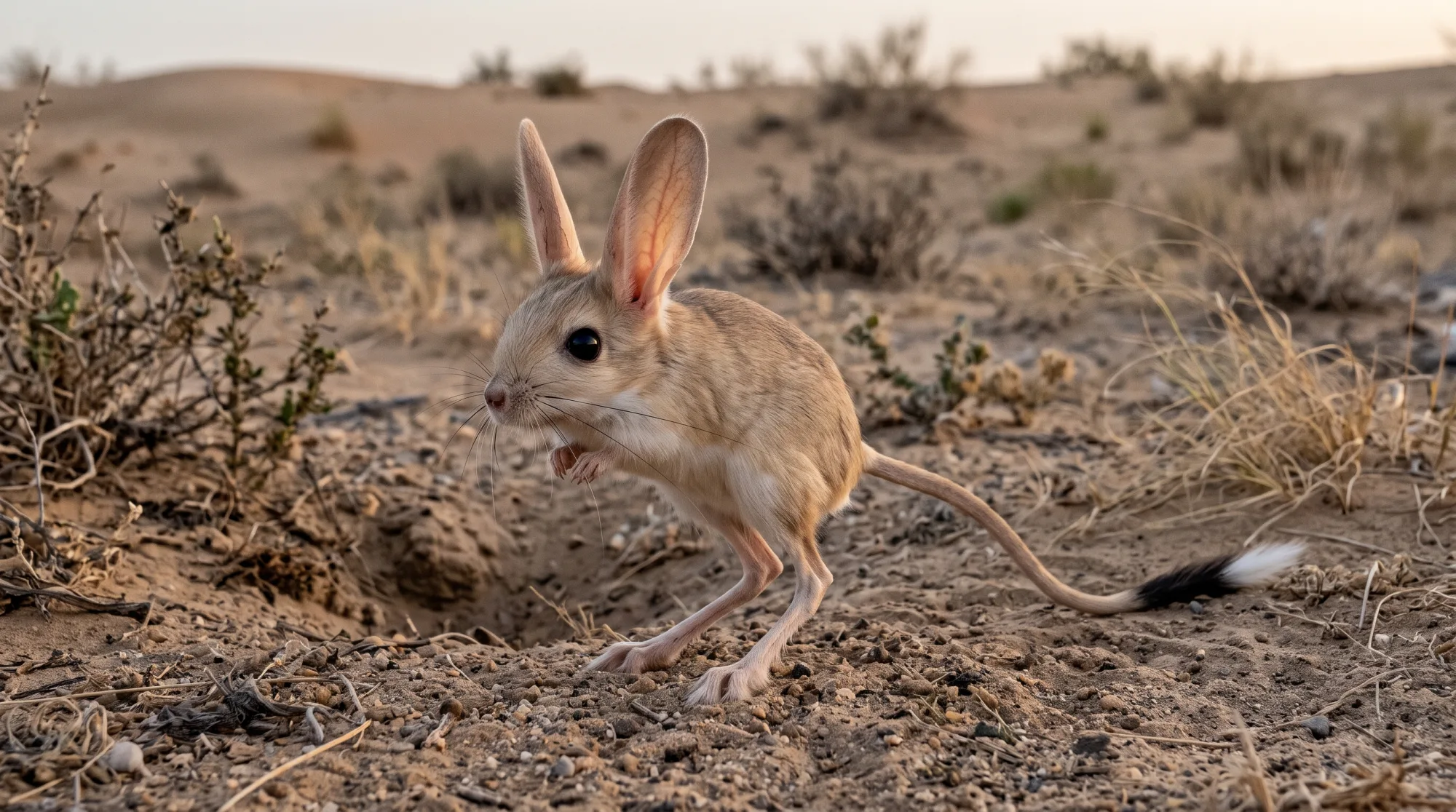
Back legs about four times longer than the front ones, with the foot bones fused into one strong spring. The long tufted tail works as a balance pole.

Strangest biological feature

A body that needs no drinking water. Jerboas get all the moisture they need from their food.

Why is it strange?

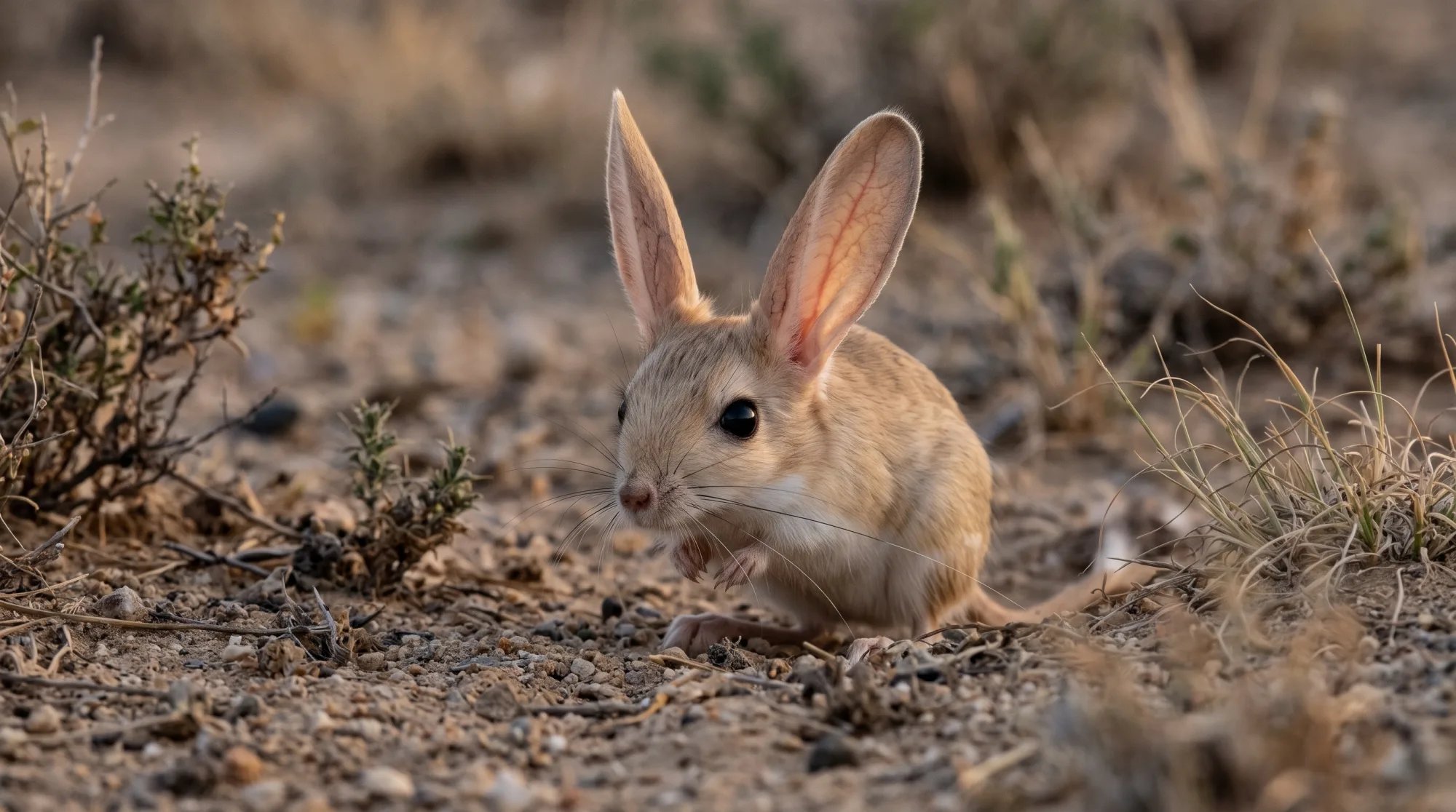
The long-eared jerboa has ears that are about two-thirds as long as its body – among the biggest ears, for its size, of any mammal. It was filmed in the wild for the first time only in 2007.

Interesting behavioral facts

They spend the hot day in burrows, often plugging the entrance with sand to keep the cool, damp air in.

Jerboa with huge ears and long legs standing on sandy desert ground, with dry shrubs and rocky hills behind it

Jerboa: quick answers

Is a jerboa a mouse?

Not exactly. Jerboas are rodents like mice, but they belong to their own family (Dipodidae), with about 33 species.

Can you keep a jerboa as a pet?

It’s not a good idea. Jerboas are wild desert animals that need lots of space to jump, and they’re rarely available legally.

Where do jerboas live?

In hot and cold deserts and dry steppes of North Africa, the Middle East and Central Asia.

What do jerboas eat?

Seeds, plants and insects. They get all their water from their food.

Know someone who needs to see this?

Send them the Jerboa. They'll thank you. Probably.