Skip to content
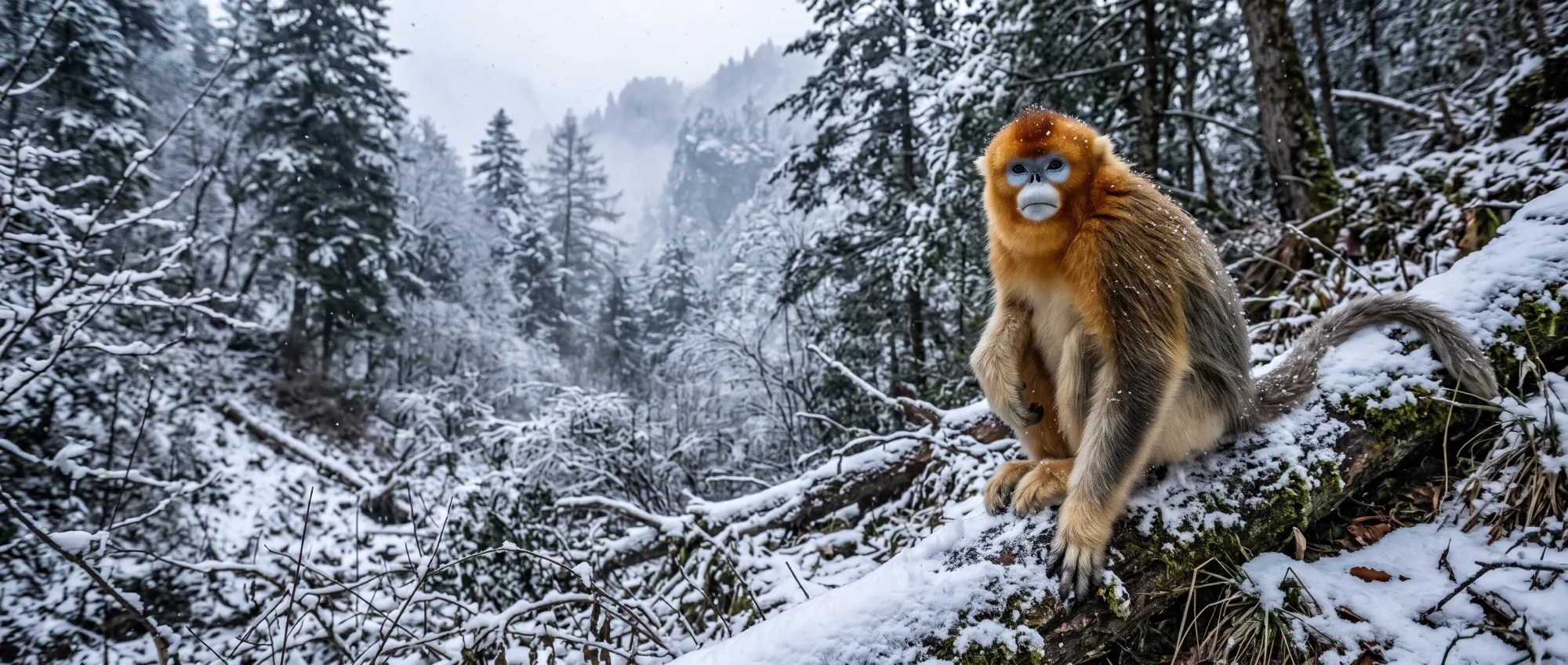
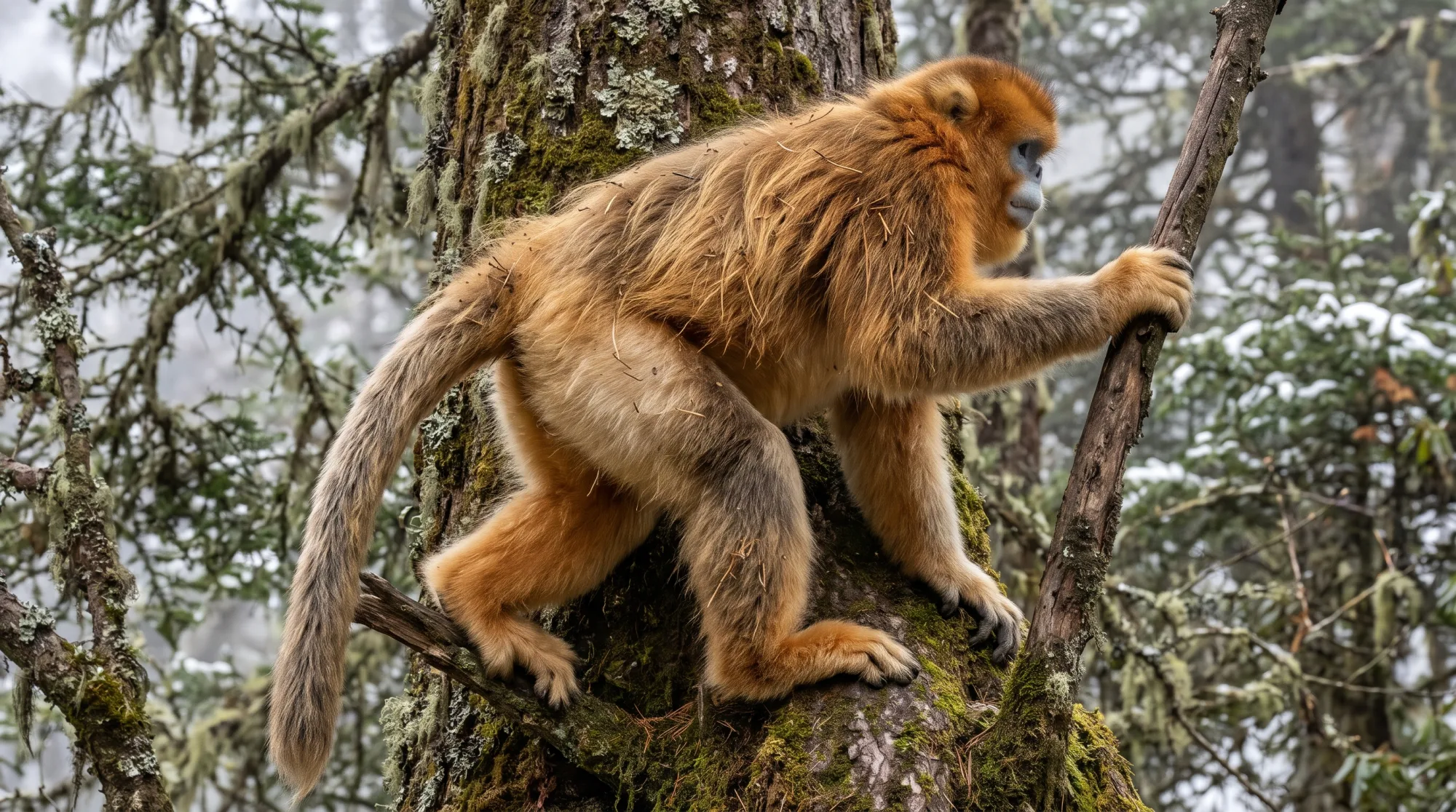
Golden snub-nosed monkey with orange fur and blue face perched on a snowy mossy log in a snowy forest

Golden Snub-Nosed Monkey: Facts, Photos & Why It’s So Strange

Rhinopithecus roxellana

Blue face, golden fur, snow on its head

A monkey with a bright blue face, a coat of golden-orange fur and almost no nose, sitting in a snowstorm. The golden snub-nosed monkey lives in the freezing mountain forests of China and handles colder winters than any other monkey on Earth.

Golden Snub-Nosed Monkey vs. you

Your height ft in5 ft 7 in

Quick facts

Size
22–30 in
Body 22–30 in (57–76 cm), plus a tail just as long
Weight
~35 lb
Males about 35 lb (16 kg), females about 20 lb (9 kg)
Lifespan
~20 years
About 20 years
Left in the wild
~20,000
Roughly 20,000

Conservation status

  1. Least Concern
  2. Near Threatened
  3. Vulnerable
  4. Endangered (this animal)
  5. Critically Endangered
  6. Extinct in the Wild
  7. Extinct

Endangered

Superpowers

  • Venomous : Is it venomous? No
  • Glows : Does it glow? No
  • Regenerates limbs : Can it regenerate limbs? No

Identity

Scientific name
Rhinopithecus roxellana
Class
Mammal (primate)
First described
1870, by Alphonse Milne-Edwards

Life & family

Diet
Lichen in winter; leaves, fruit, seeds and buds the rest of the year
Gestation
About 6–7 months
Offspring
One baby
Predators
Leopards, wolves and eagles

Where to find it

Habitat
Mountain forests at 4,900–11,200 ft (1,500–3,400 m)
Lives in
Central China – Sichuan, Shaanxi, Gansu and Hubei
In the wild
Possible – in reserves in the Qinling Mountains
In zoos
Rarely – almost only in China

Explore similar

Why is this animal unusual?

Winters in its home regularly drop below freezing and stay there. It survives by eating lichen scraped off trees and by huddling together in big furry piles.

Why does it look like that?

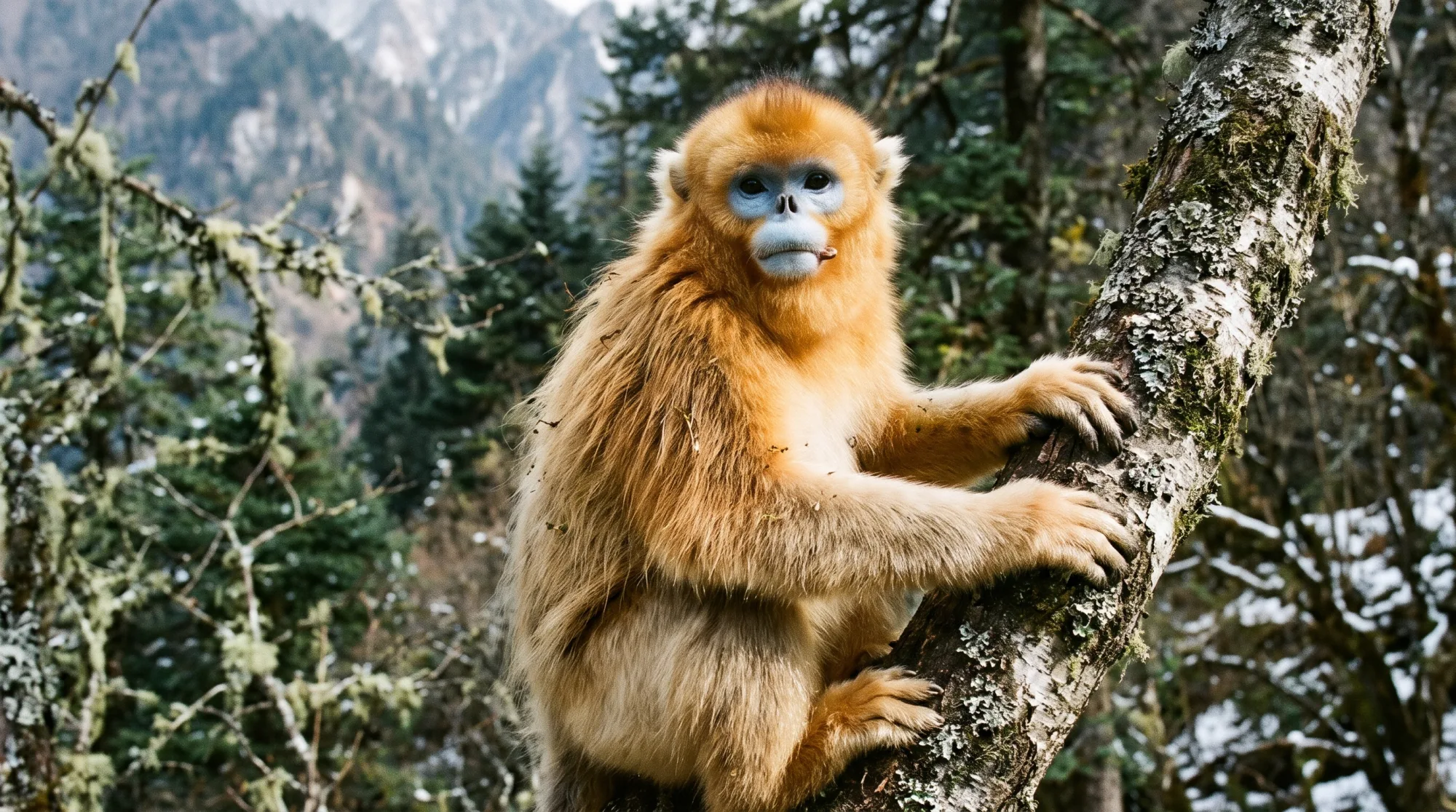
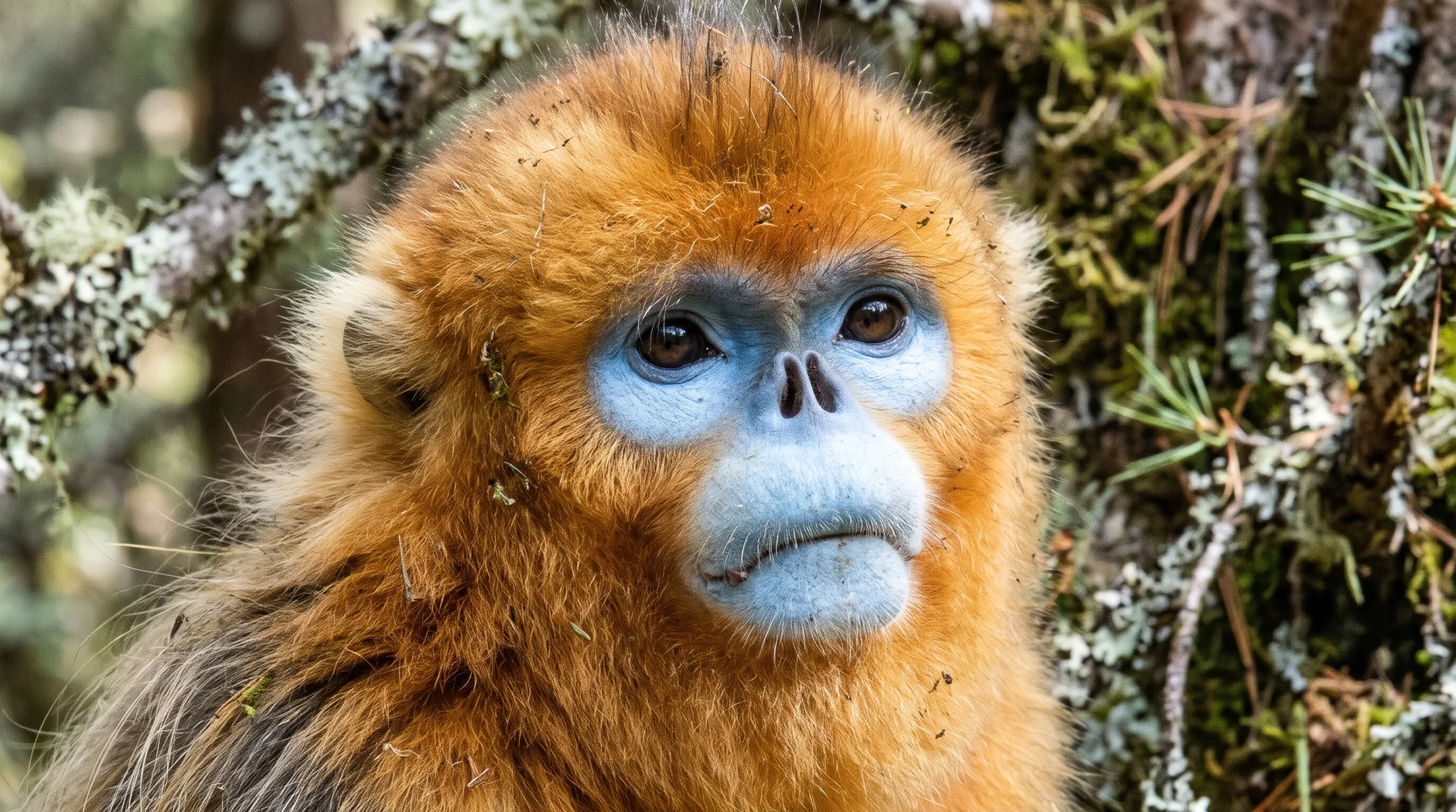
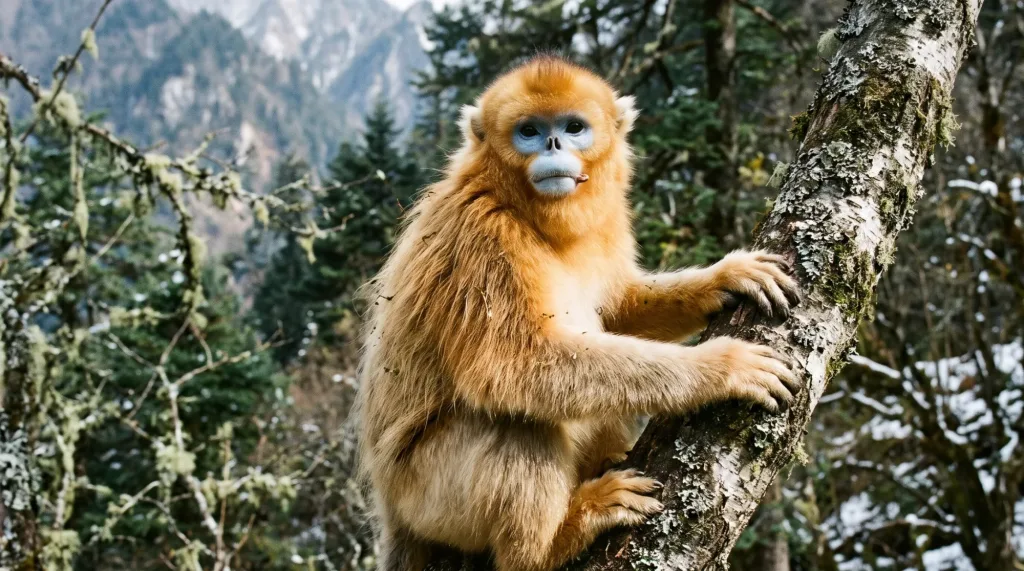
It has almost no nose – just two forward-facing nostrils. One idea is that a flat nose is simply harder to get frostbitten.

Strangest biological feature

A cape. Adult males grow long golden guard hairs down their backs, which can reach 20 in (50 cm).

Why is it strange?

It was named after Roxelana, the wife of an Ottoman sultan, who was said to have had a charmingly turned-up nose.

Interesting behavioral facts

Families join together into bands that can number several hundred. They spend nearly all their time in the trees.

Records held

It tolerates colder average temperatures than any other non-human primate.
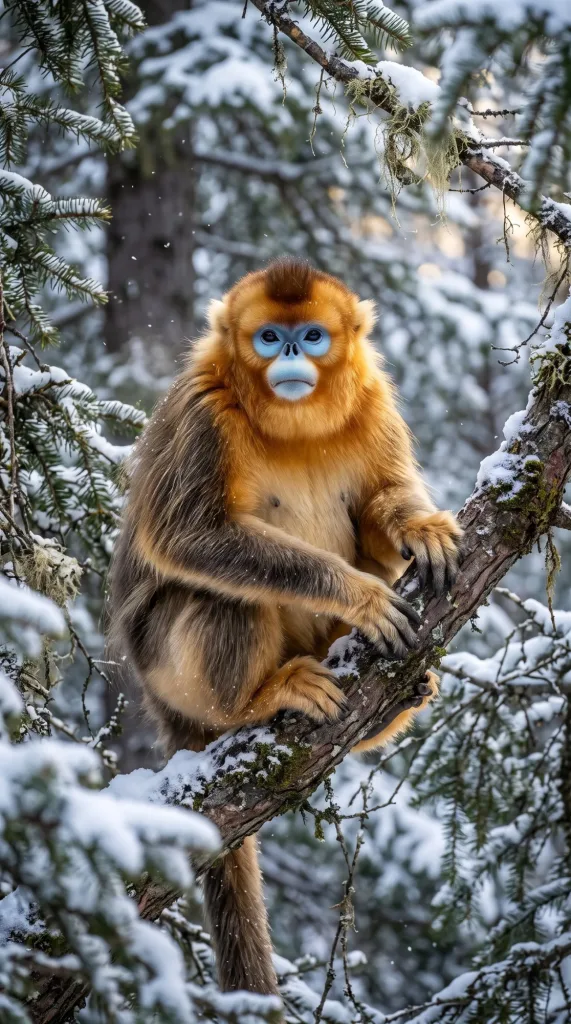
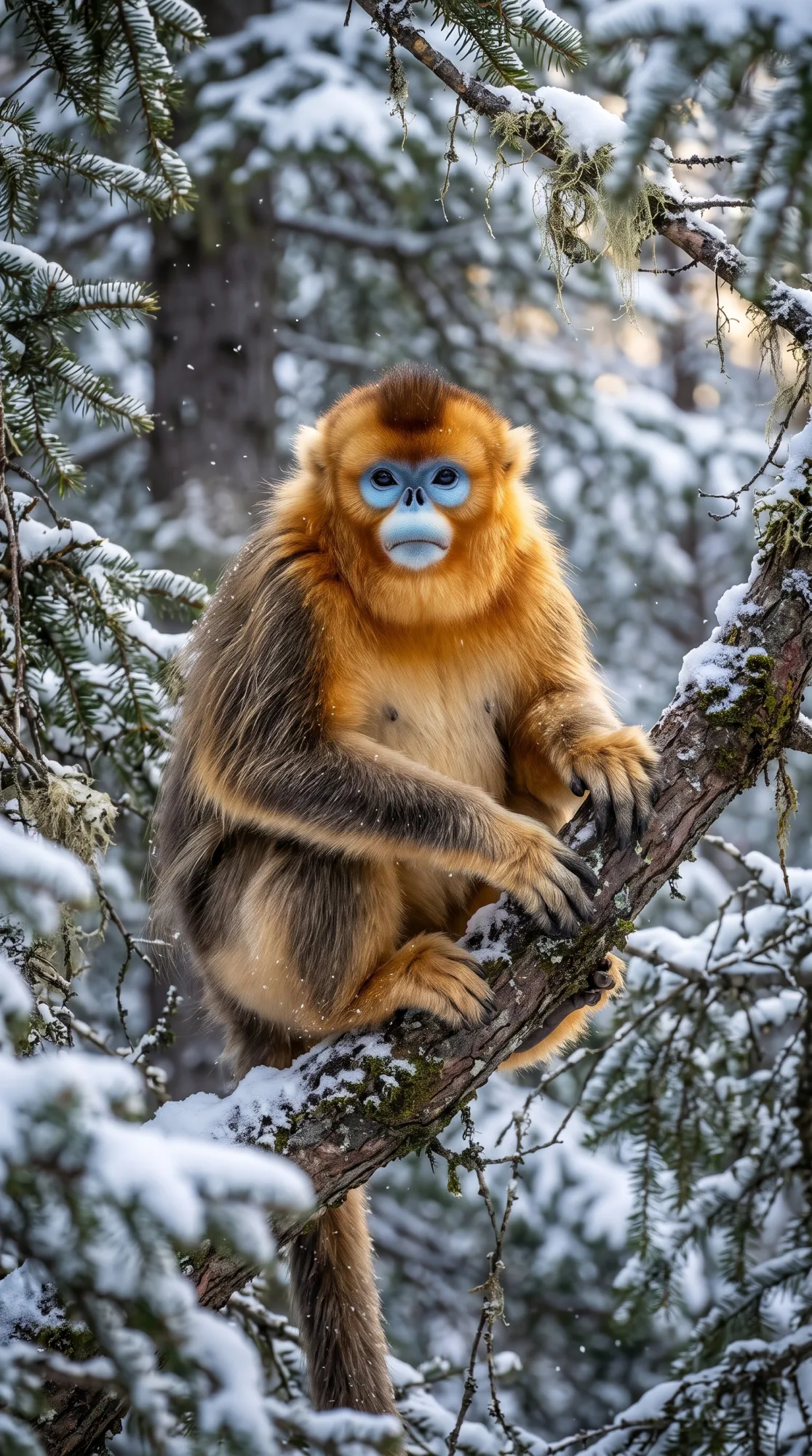
Golden snub-nosed monkey with orange fur and blue face sitting on a snowy pine branch in a winter forest

Golden Snub-Nosed Monkey: quick answers

Why does the golden snub-nosed monkey have almost no nose?

Nobody knows for sure. One idea is that a flat nose is less likely to get frostbitten in its freezing mountain home.

Why does it have a blue face?

The blue colour comes from the structure of its skin. It may help the monkeys recognise each other and show social status.

How many golden snub-nosed monkeys are left?

Roughly 20,000. It’s listed as Endangered.

Do golden snub-nosed monkeys live in snow?

Yes. Their mountain forests in China are covered in snow for months, and they tolerate colder temperatures than any other non-human primate.
Know someone who needs to see this?

Send them the Golden Snub-Nosed Monkey. They'll thank you. Probably.