Skip to content
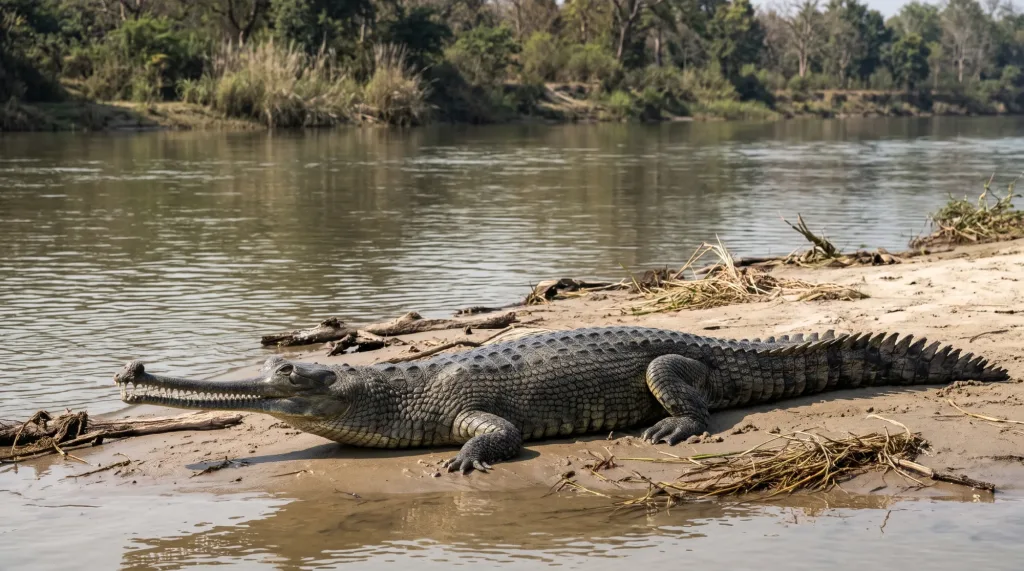
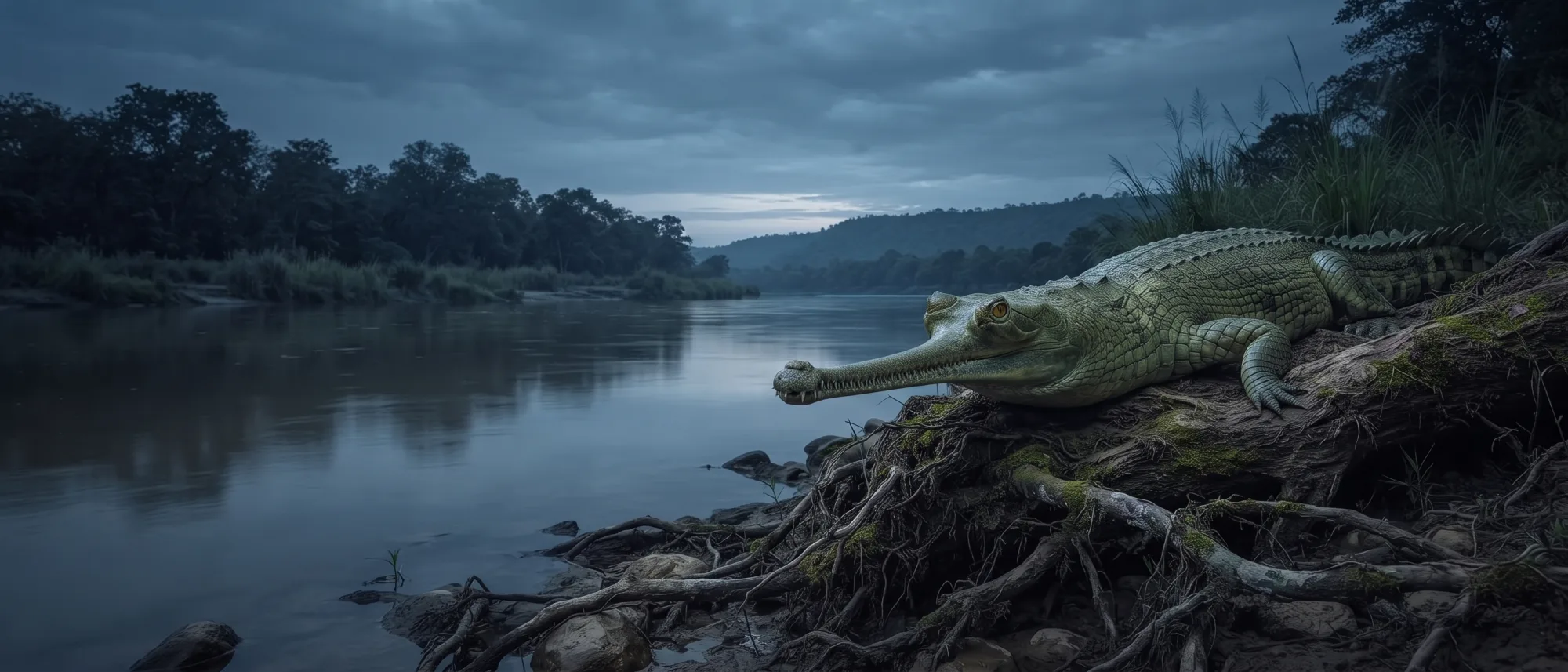
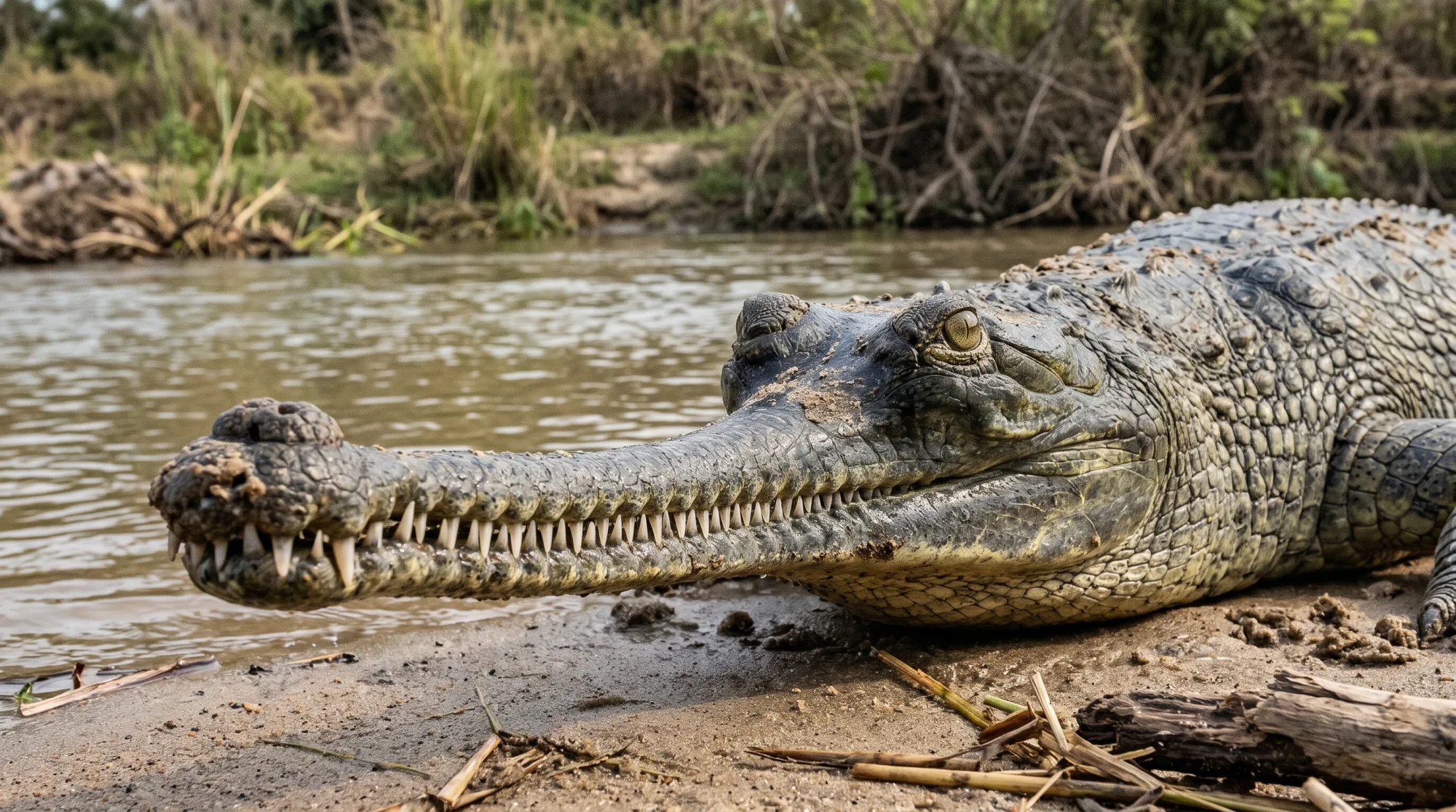
Gharial with long narrow snout resting on a muddy riverbank with exposed roots beside a calm river at dusk

Gharial: Facts, Photos & Why It’s So Strange

Gavialis gangeticus

The crocodile with a snout like a pair of tweezers

A crocodile’s body with a snout so long and thin it looks like it got caught in a door. The gharial of India and Nepal is one of the biggest crocodilians on Earth, eats almost nothing but fish – and there are only a few hundred left.

Gharial vs. you

Your height ft in5 ft 7 in

Quick facts

Size
16–20 ft
Males reach 16–20 ft (5–6 m); females are smaller
Weight
~550 lb
Up to about 550 lb (250 kg)
Lifespan
40–60 years
Left in the wild
~650
About 650 adults

Conservation status

  1. Least Concern
  2. Near Threatened
  3. Vulnerable
  4. Endangered
  5. Critically Endangered (this animal)
  6. Extinct in the Wild
  7. Extinct

Critically Endangered

Superpowers

  • Venomous : Is it venomous? No
  • Glows : Does it glow? No
  • Regenerates limbs : Can it regenerate limbs? No

Identity

Scientific name
Gavialis gangeticus
Class
Reptile (crocodilian)
First described
1789, by Johann Friedrich Gmelin

Life & family

Diet
Fish
Gestation
None – the eggs hatch after about 70 days
Offspring
20–95 eggs
Predators
None as an adult

Where to find it

Habitat
Deep, fast-flowing rivers with sandbanks
Lives in
India and Nepal
In the wild
Yes – the Chambal River in India is the best place
In zoos
Yes – a few zoos and breeding centres

Explore similar

Why is this animal unusual?

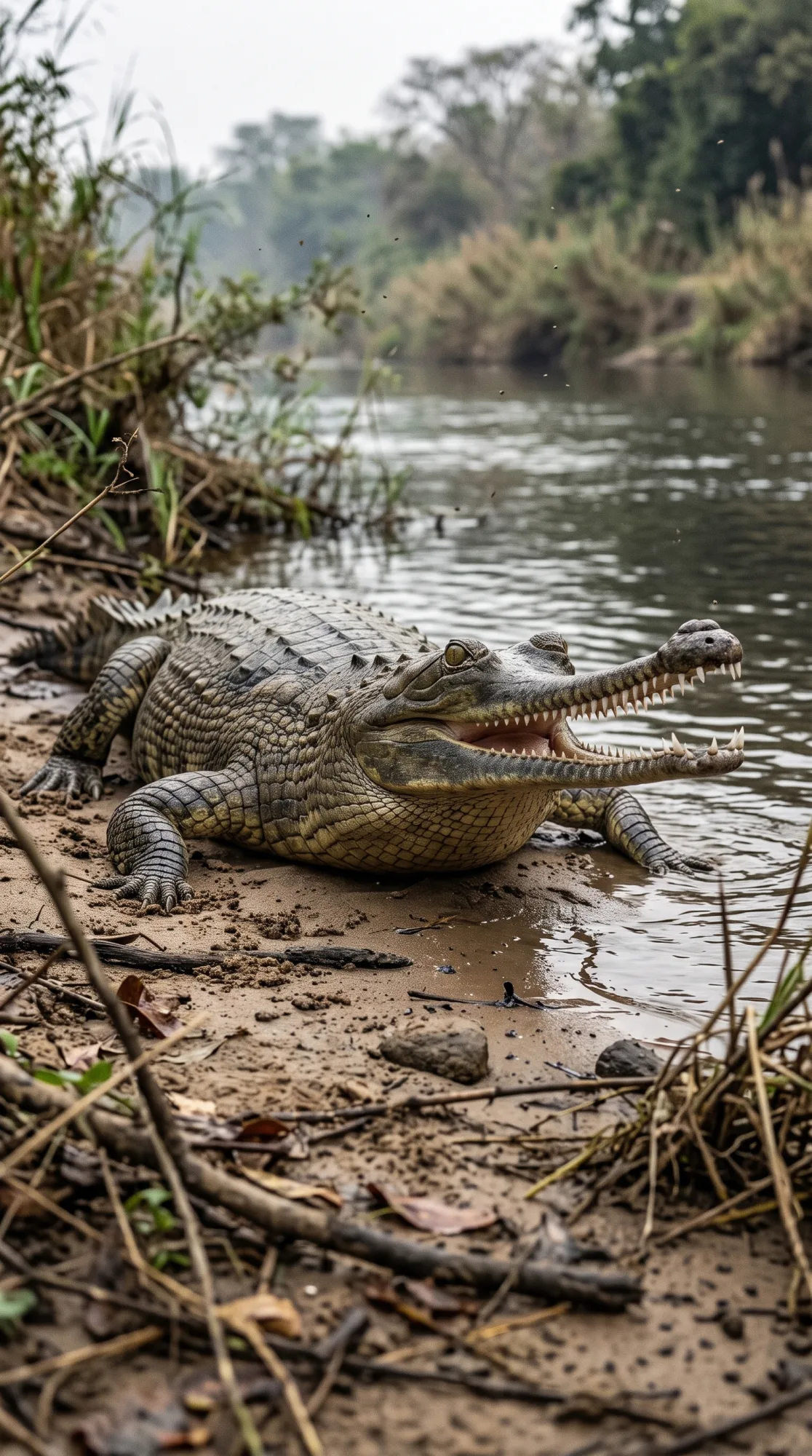
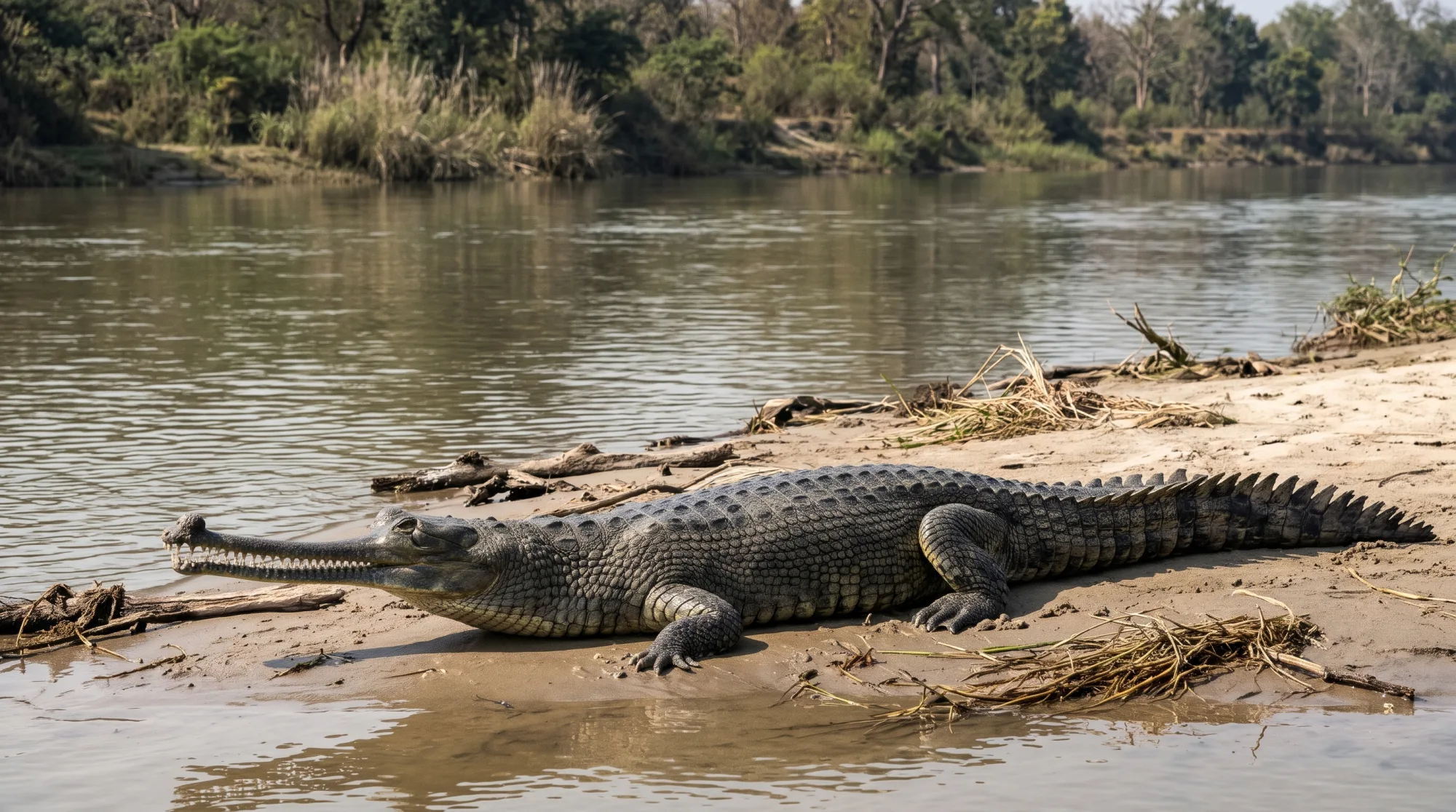
That needle-thin snout is a fish trap. It slices sideways through the water with almost no resistance and snaps shut on a fish with about 110 interlocking teeth.

Why does it look like that?

Adult males grow a round knob on the tip of the snout. It’s called a ghara, after an Indian clay pot, and it gave the animal its name.

Strangest biological feature

The ghara. Males use it to blow bubbles and make a loud buzzing sound that attracts females.

Why is it strange?

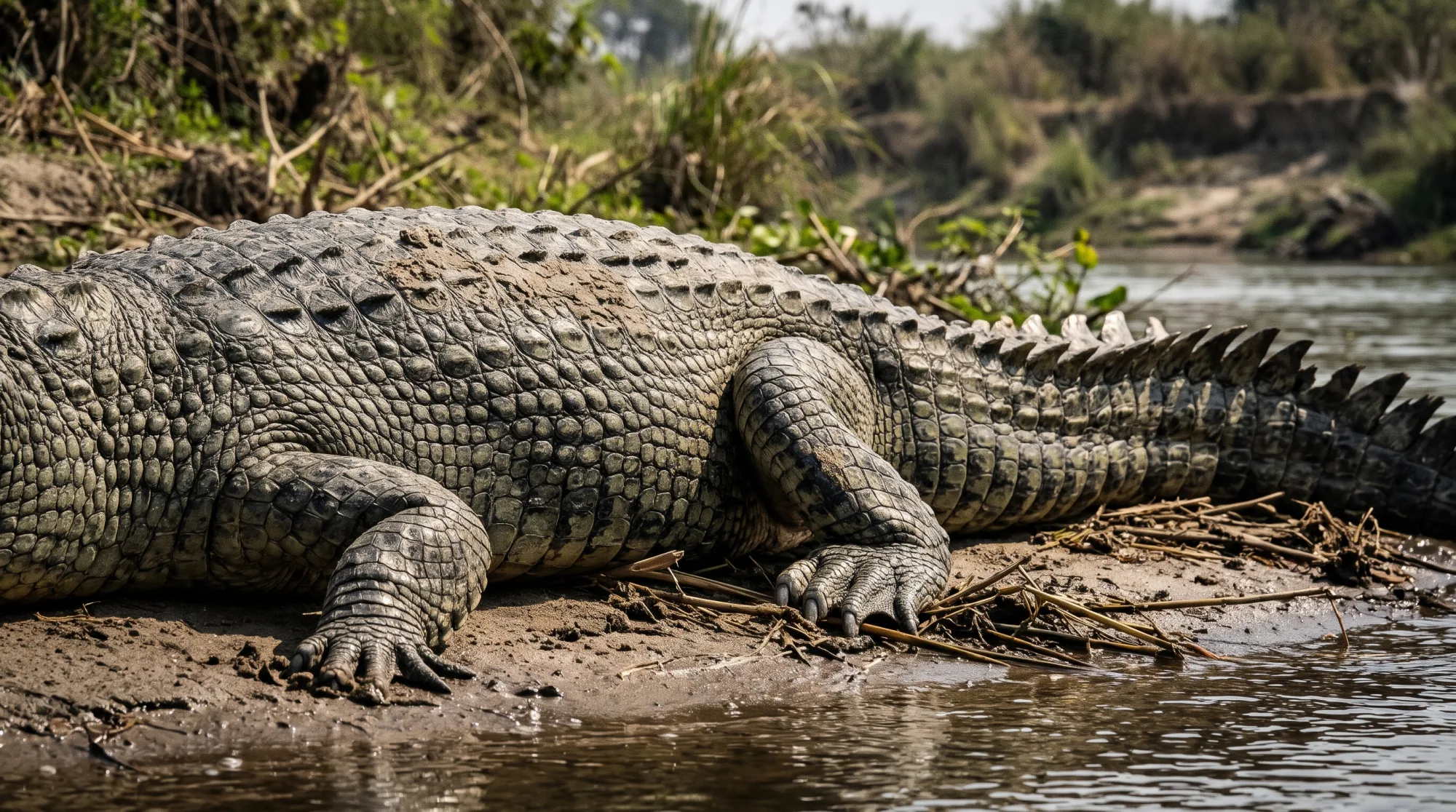
A gharial’s legs are too weak to lift its body on land. It can only push itself along on its belly.

Interesting behavioral facts

After the eggs hatch, the father guards the babies. One male was photographed carrying more than a hundred hatchlings on his back.

Records held

It lays the largest eggs of any crocodilian.
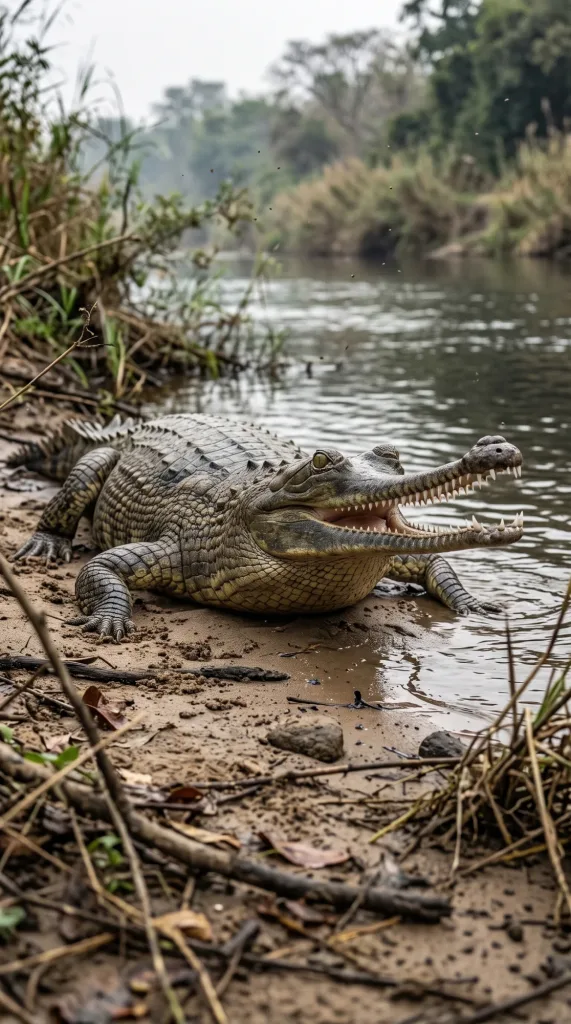
Gharial with long narrow snout and open jaws resting on a muddy riverbank beside calm water

Gharial: quick answers

What is the difference between a gharial and a crocodile?

A gharial has a very long, needle-thin snout made for catching fish, and weak legs. Most crocodiles have broad, strong jaws and hunt larger animals.

Is the gharial dangerous to humans?

No. Its thin snout is made for fish, and there are no reliable records of gharials killing people.

Why is the gharial critically endangered?

Dams, sand mining and fishing nets have destroyed or blocked the deep rivers it needs. Only about 650 adults are left.

Where do gharials live?

Only in a few deep, fast-flowing rivers in India and Nepal, such as the Chambal river.

Know someone who needs to see this?

Send them the Gharial. They'll thank you. Probably.