Skip to content
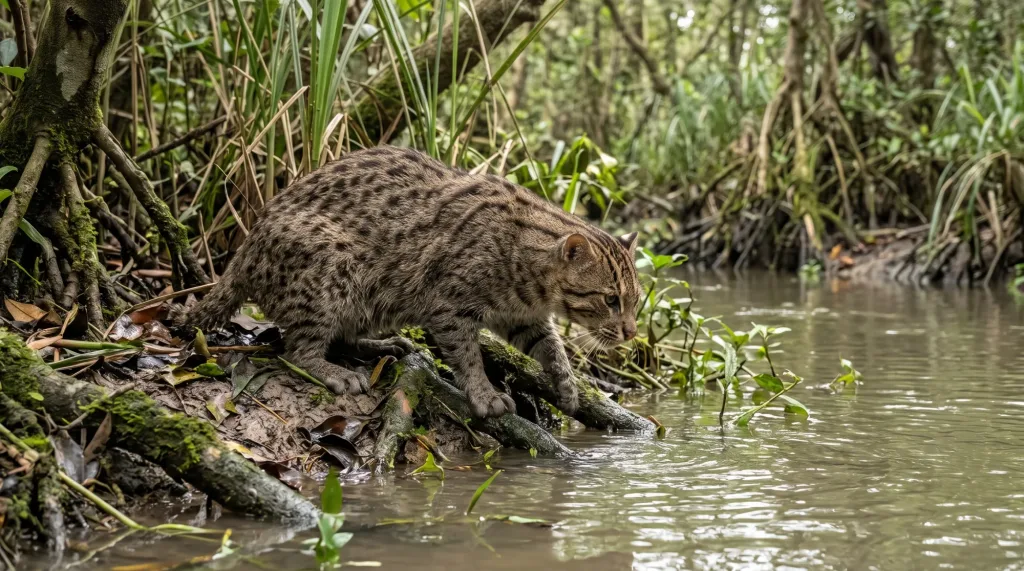
Fishing cat crouching on a mossy branch above a misty mangrove river at dusk, its spotted coat and blue eyes visible

Fishing Cat: Facts, Photos & Why It’s So Strange

Prionailurus viverrinus

The cat that actually likes water

Most cats treat water like an insult. This one dives in head-first. The fishing cat lives in the swamps and mangroves of Asia, has partly webbed paws and catches most of its dinner by swimming after it.

Fishing Cat vs. you

Your height ft in5 ft 7 in

Quick facts

Size
22–31 in
Body 22–31 in (57–78 cm), plus a short thick tail
Weight
11–35 lb
11–35 lb (5–16 kg)
Lifespan
~10–12 years
About 10–12 years
Left in the wild
Unknown
Unknown – and shrinking with its wetlands

Conservation status

  1. Least Concern
  2. Near Threatened
  3. Vulnerable (this animal)
  4. Endangered
  5. Critically Endangered
  6. Extinct in the Wild
  7. Extinct

Vulnerable

Superpowers

  • Venomous : Is it venomous? No
  • Glows : Does it glow? No
  • Regenerates limbs : Can it regenerate limbs? No

Identity

Scientific name
Prionailurus viverrinus
Class
Mammal (cat)
First described
1833, by Edward Turner Bennett

Life & family

Diet
Mostly fish, plus frogs, crabs, snakes and birds
Gestation
About 9–10 weeks
Offspring
2–3 kittens
Predators
Few – people and habitat loss are the main threats

Where to find it

Habitat
Swamps, marshes, mangroves and reed beds
Lives in
South and Southeast Asia – India, Sri Lanka, Bangladesh, Nepal and beyond
In the wild
Hard – it’s shy and active at night
In zoos
Yes – some zoos keep them

Explore similar

Why is this animal unusual?

It’s roughly twice the size of a house cat and completely at home in water. It can swim long distances, even underwater, and has been seen grabbing ducks from below.

Why does it look like that?

A stocky body, short legs and a short tail that works as a rudder. Its front toes are partly webbed and its claws never pull in all the way.

Strangest biological feature

A two-layer coat. A dense, short underlayer keeps the skin dry and warm, while longer hairs on top give the cat its spotted pattern.

Why is it strange?

It has been reported to fish with bait: tapping the water’s surface lightly with a paw to imitate an insect, then scooping up the fish that comes to look.

Interesting behavioral facts

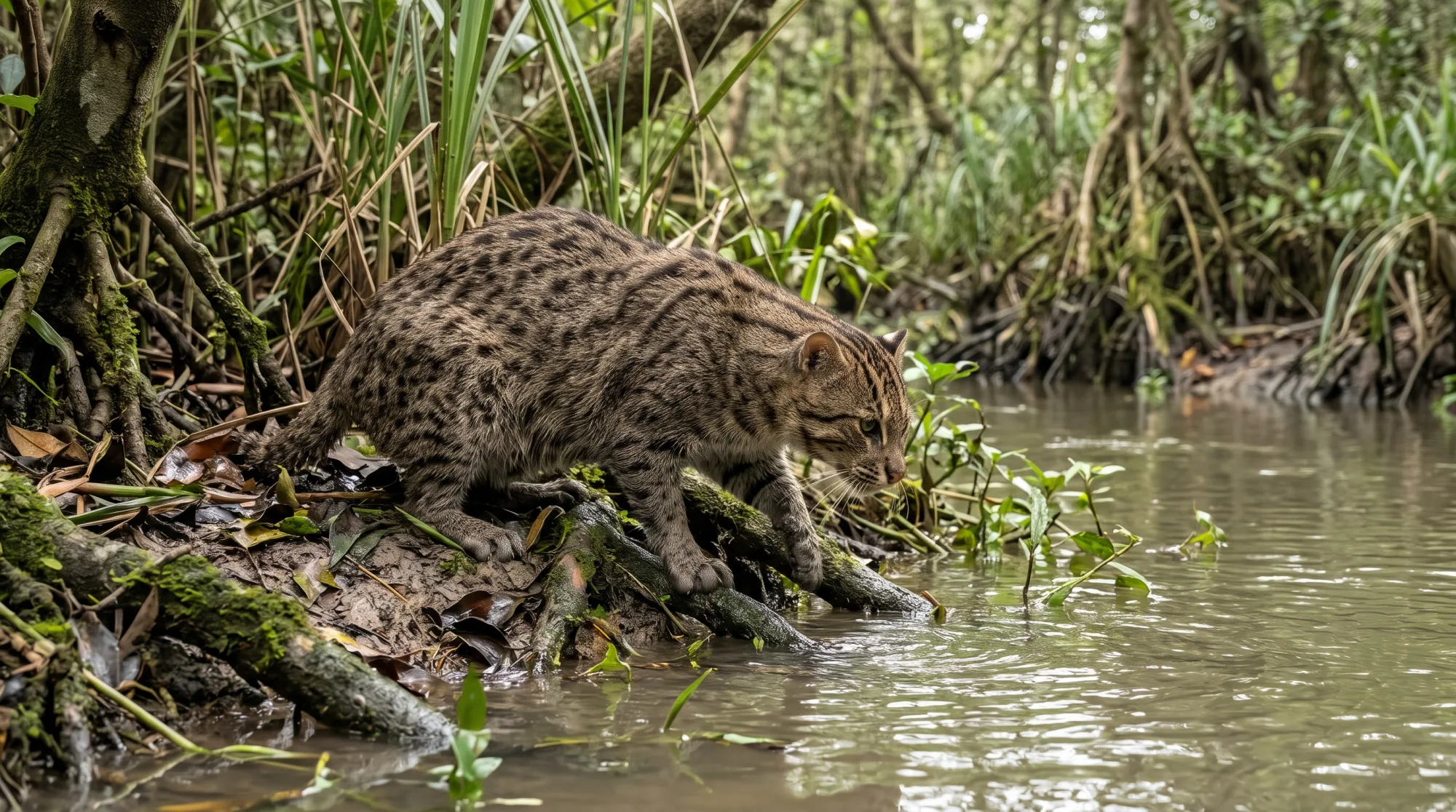
It hunts mostly at night along the water’s edge, crouching on the bank before plunging in.

Records held

It’s the state animal of West Bengal in India.

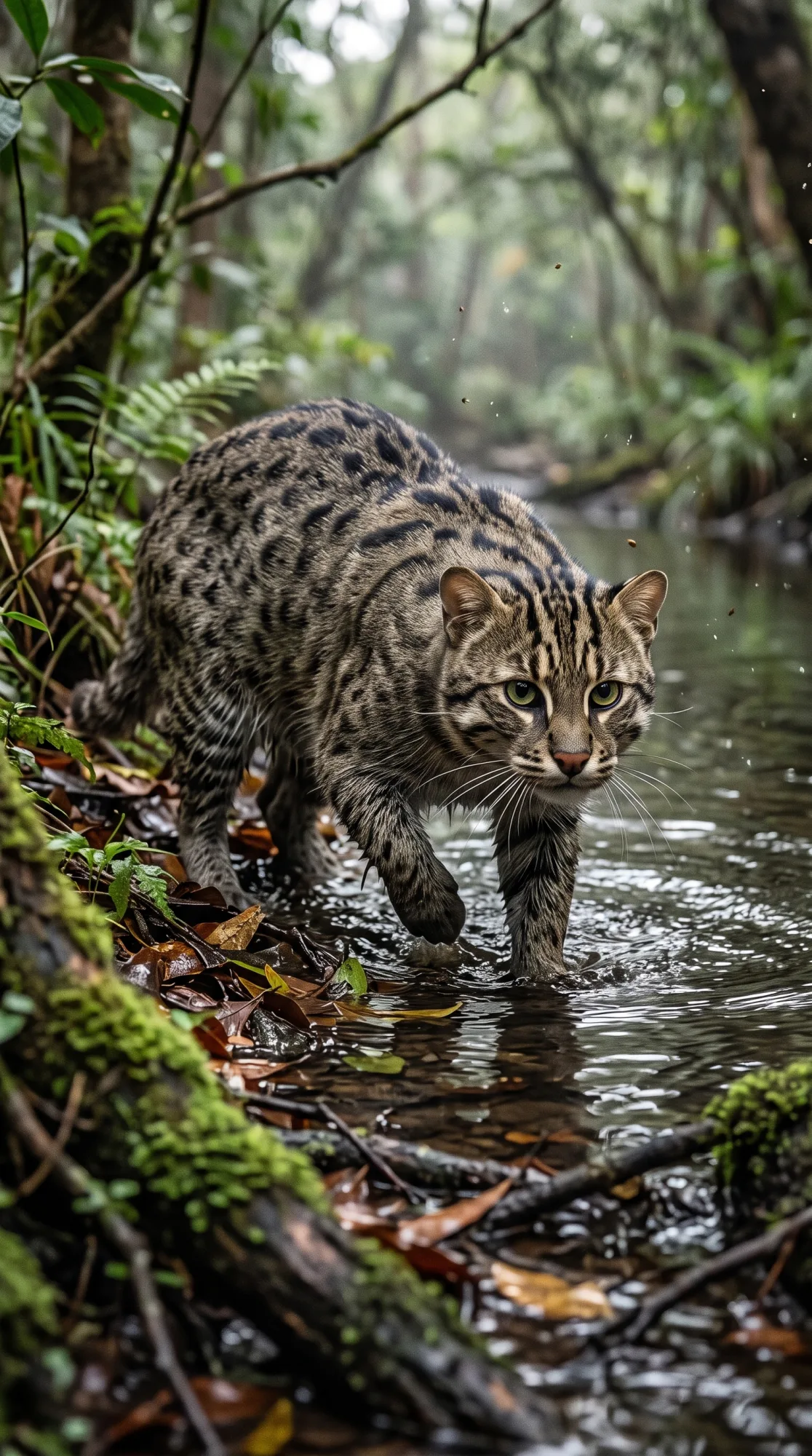
Fishing cat wading through a forest stream with spotted coat and green eyes, surrounded by mossy logs and fallen leaves

Fishing Cat: quick answers

Do fishing cats really like water?

Yes. Unlike most cats, they swim willingly, even underwater, and catch most of their food in rivers, swamps and mangroves.

How big is a fishing cat?

About twice the size of a house cat: body 22–31 in (57–78 cm) plus a short tail, weighing 11–35 lb (5–16 kg).

Why is the fishing cat vulnerable?

Mainly because its wetlands are being drained, polluted and turned into farms and fish ponds.

Where do fishing cats live?

In South and Southeast Asia, including India, Sri Lanka, Bangladesh and Nepal, in swamps, marshes, mangroves and reed beds.

Know someone who needs to see this?

Send them the Fishing Cat. They'll thank you. Probably.