Skip to content
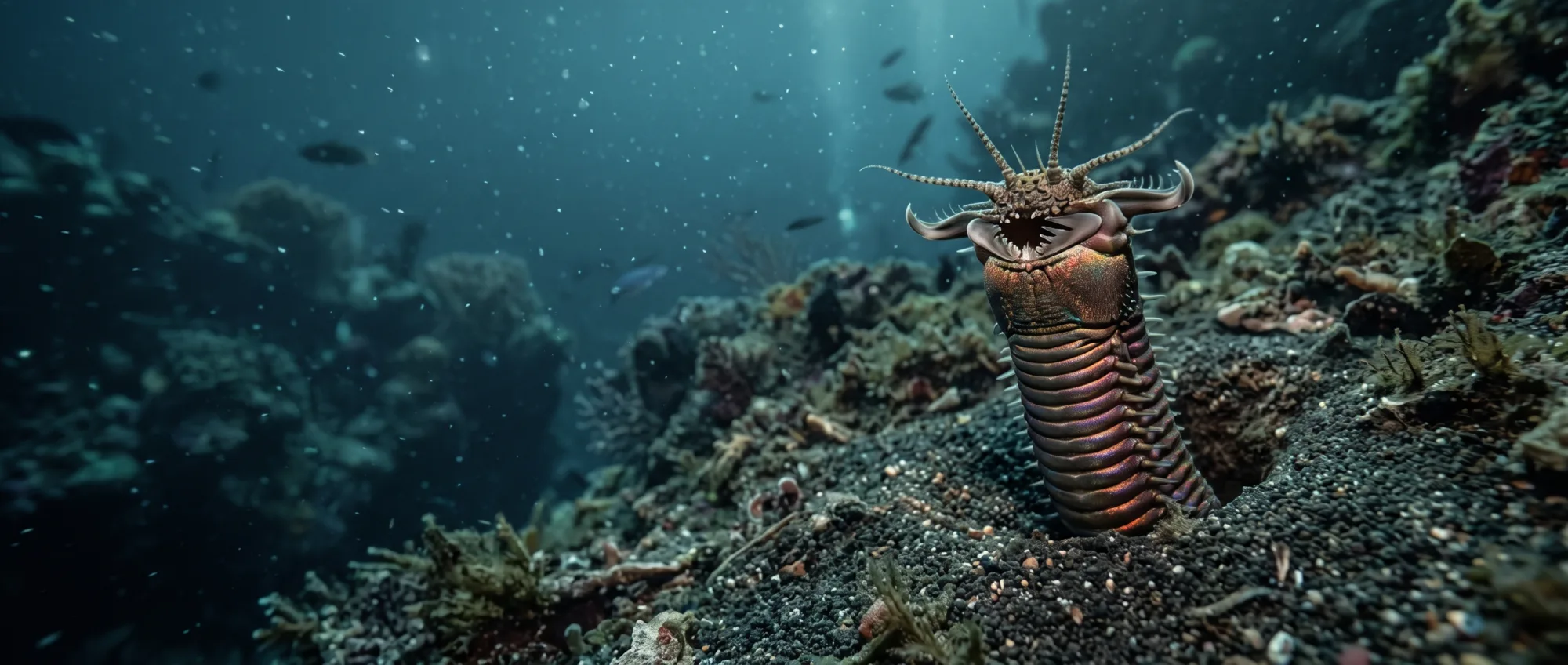
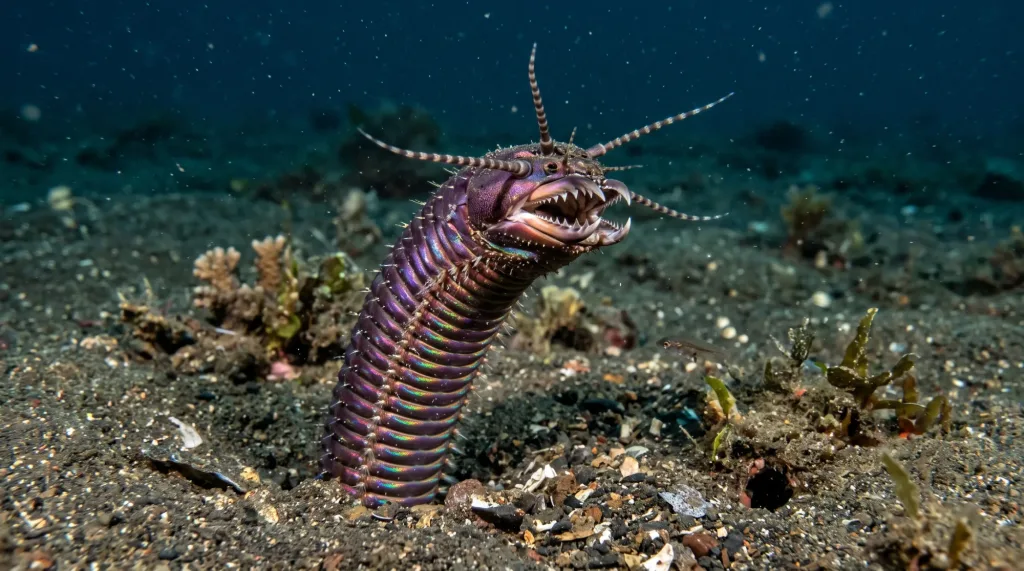
Bobbit worm emerging from seafloor sediment with open jaws and feathery antennae, surrounded by coral rubble and small fish

Bobbit Worm: Facts, Photos & Why It’s So Strange

Eunice aphroditois

The ambush predator hiding in the sand

Only five thin antennae poke out of the seabed. Underneath waits up to 10 ft (3 m) of rainbow-coloured worm with jaws like garden shears. When a fish swims over, the bobbit worm strikes so fast that it can slice its prey in two.

Bobbit Worm vs. you

Your height ft in5 ft 7 in

Quick facts

Size
~3.3 ft
Usually around 3.3 ft (1 m); the biggest reach about 10 ft (3 m)
Left in the wild
Unknown

Conservation status

Not evaluated

Superpowers

  • Venomous : Is it venomous? Possibly – it seems to inject a toxin that stuns its prey
  • Glows : Does it glow? No
  • Regenerates limbs : Can it regenerate limbs? Yes – it can regrow lost body segments

Identity

Scientific name
Eunice aphroditois
Class
Bristle worm
First described
1788, by Peter Simon Pallas

Life & family

Diet
Fish, worms and anything else that wanders past
Gestation
None – eggs and sperm are released into the water
Predators
Few – fish gang up to harass it instead

Where to find it

Habitat
Sandy and muddy seabeds and coral rubble in warm seas
Lives in
Indo-Pacific and warm parts of the Atlantic
In the wild
Yes – night divers in Indonesia and the Philippines look for them
In zoos
Sometimes – occasionally by accident

Explore similar

Why is this animal unusual?

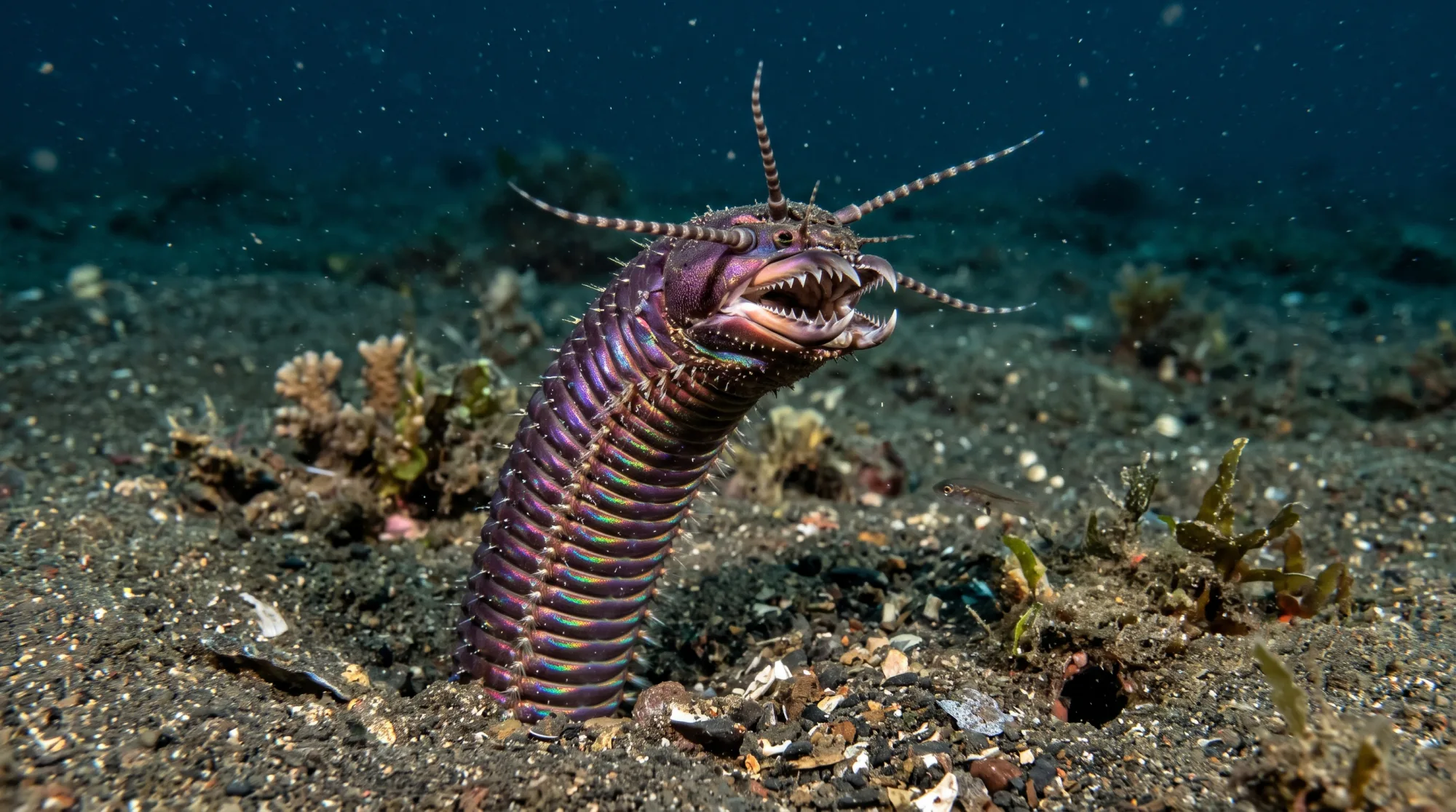
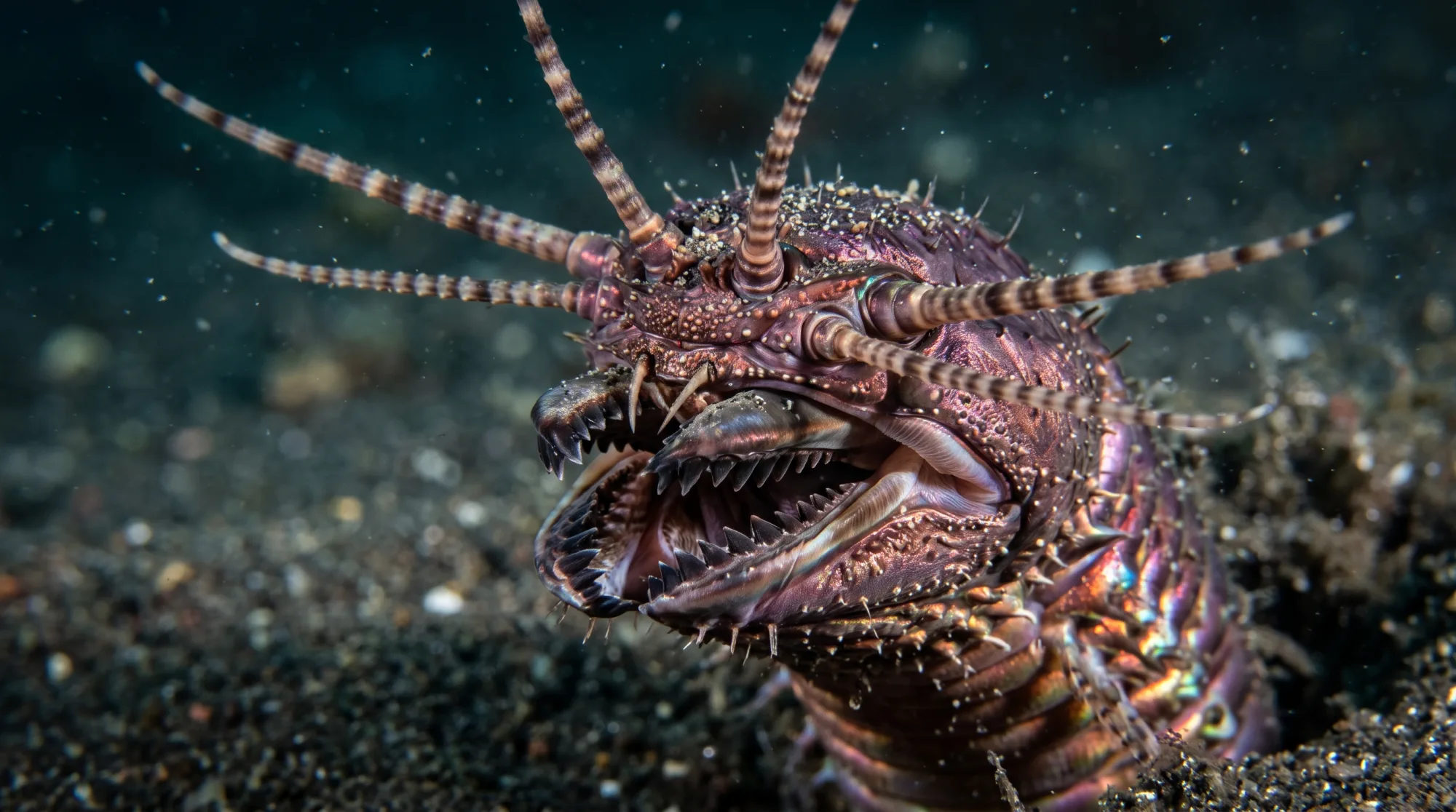
It hunts by touch. The five antennae feel for movement, and when something brushes them, the jaws snap shut and the worm drags its catch down into the burrow.

Why does it look like that?

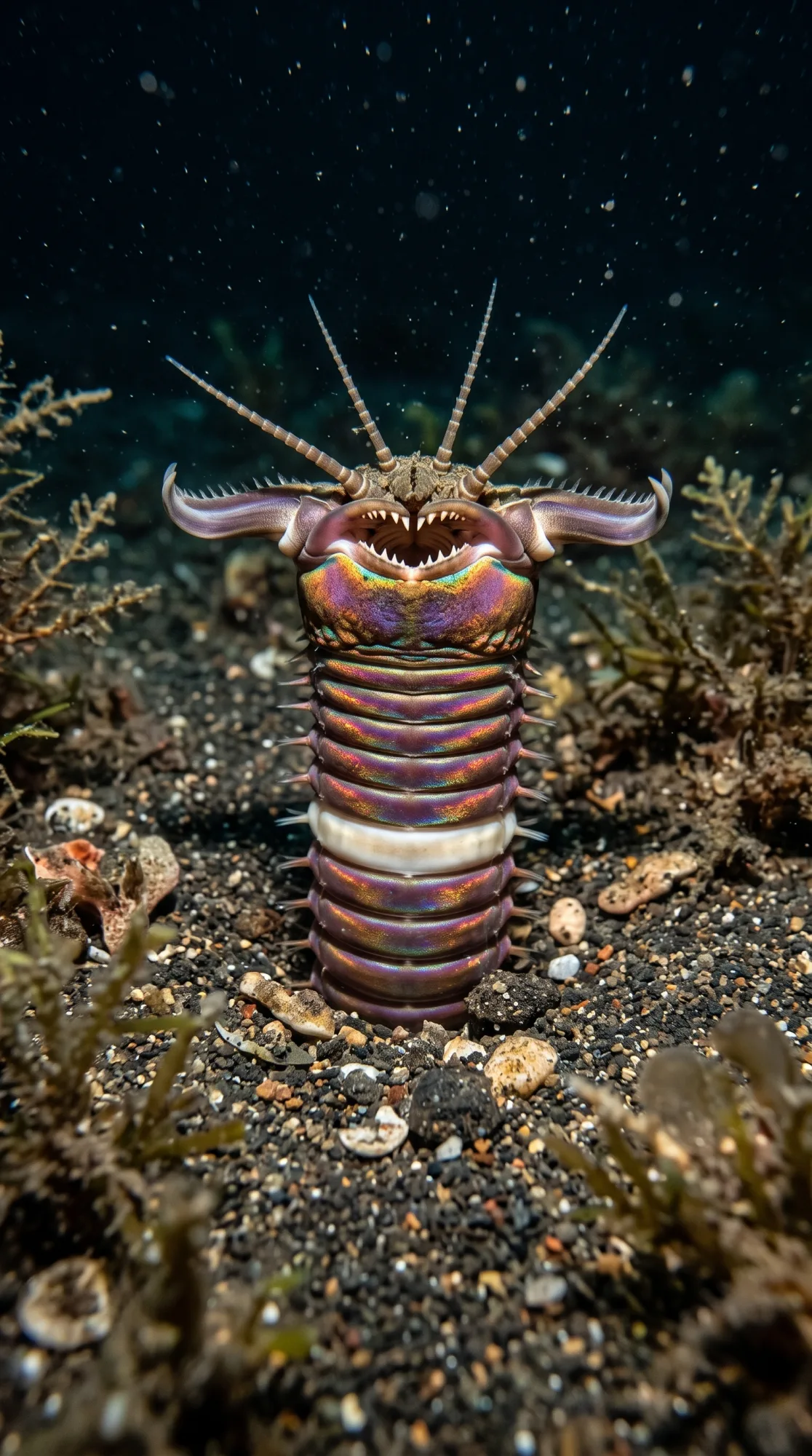
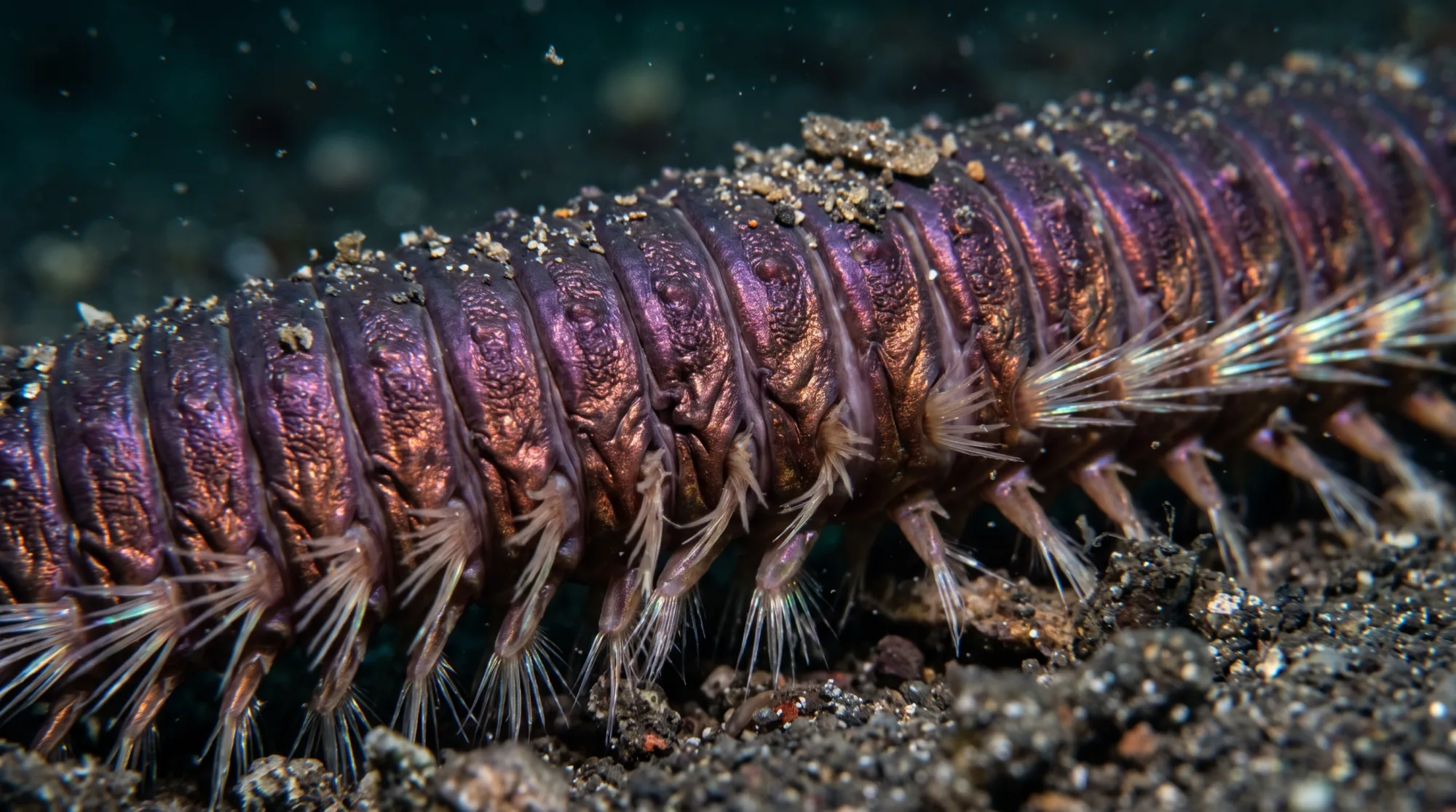
A body as thick as a finger, with hundreds of segments that shimmer purple and gold. Only an inch or two ever shows above the sand.

Strangest biological feature

The jaws. They’re wider than the worm’s body and spring-loaded like a trap.

Why is it strange?

Some reef fish have learned to fight back. When they find a bobbit worm, they hover over it and squirt jets of water at it until it retreats, warning every other fish nearby.

Interesting behavioral facts

It can go a long time between meals and may stay in the same burrow for years. Fossil burrows show its relatives were ambushing fish this way 20 million years ago.

Records held

In 2009 staff at a British aquarium discovered why their corals kept being destroyed: a 4-foot (1.2 m) bobbit worm had been living unnoticed in the tank. They named it Barry.

Bobbit worm with iridescent segmented body, open jaws showing sharp teeth, and antennae rising from its head on the sandy seafloor

Bobbit Worm: quick answers

Is the bobbit worm dangerous to humans?

Not really. It hides in the seabed and attacks fish. Divers are unlikely to meet one, but its jaws could give a nasty bite.

Why is it called a bobbit worm?

The name was given in the 1990s, after a widely reported case involving a woman named Lorena Bobbitt and a knife. It refers to the worm’s scissor-like jaws.

How big is a bobbit worm?

Usually around 3.3 ft (1 m) long, but the biggest reach about 10 ft (3 m).

Where do bobbit worms live?

In warm seas of the Indo-Pacific and the Atlantic, buried in sand, mud and coral rubble.

Know someone who needs to see this?

Send them the Bobbit Worm. They'll thank you. Probably.