Skip to content
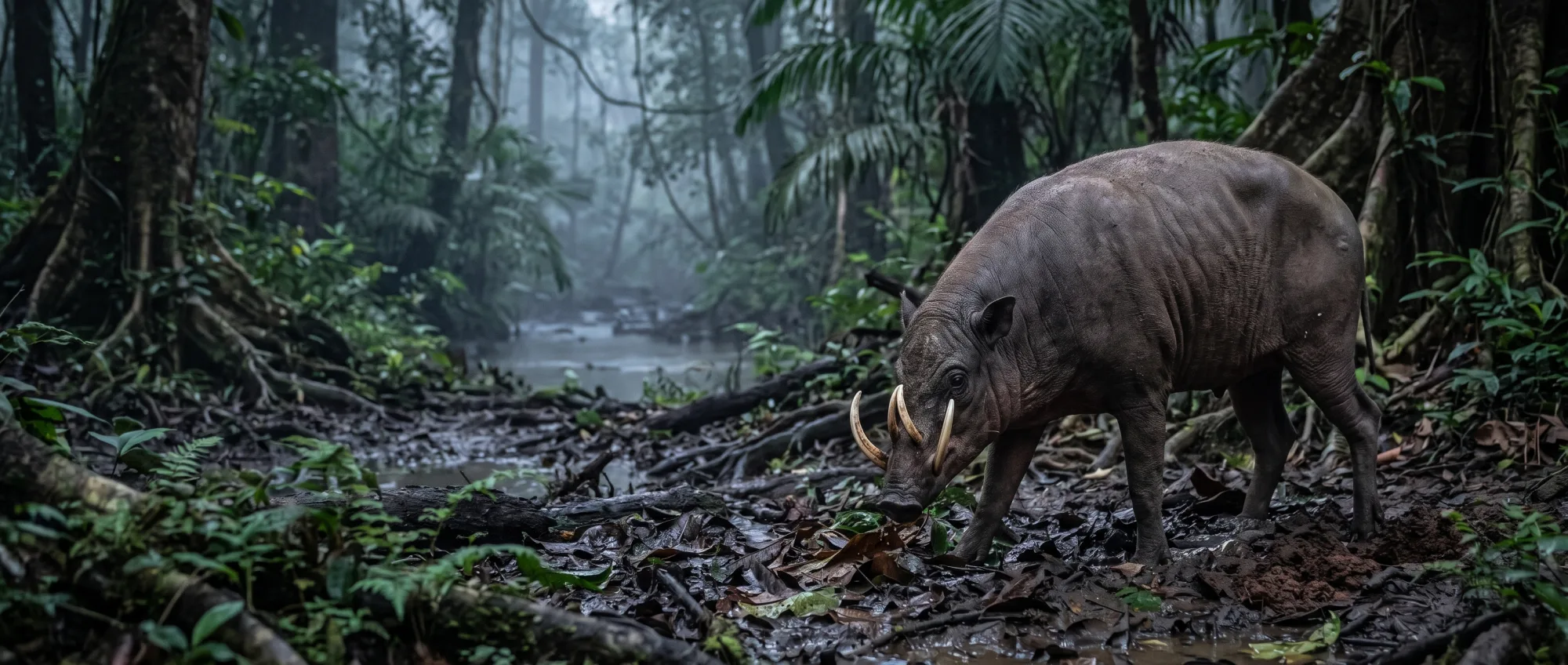
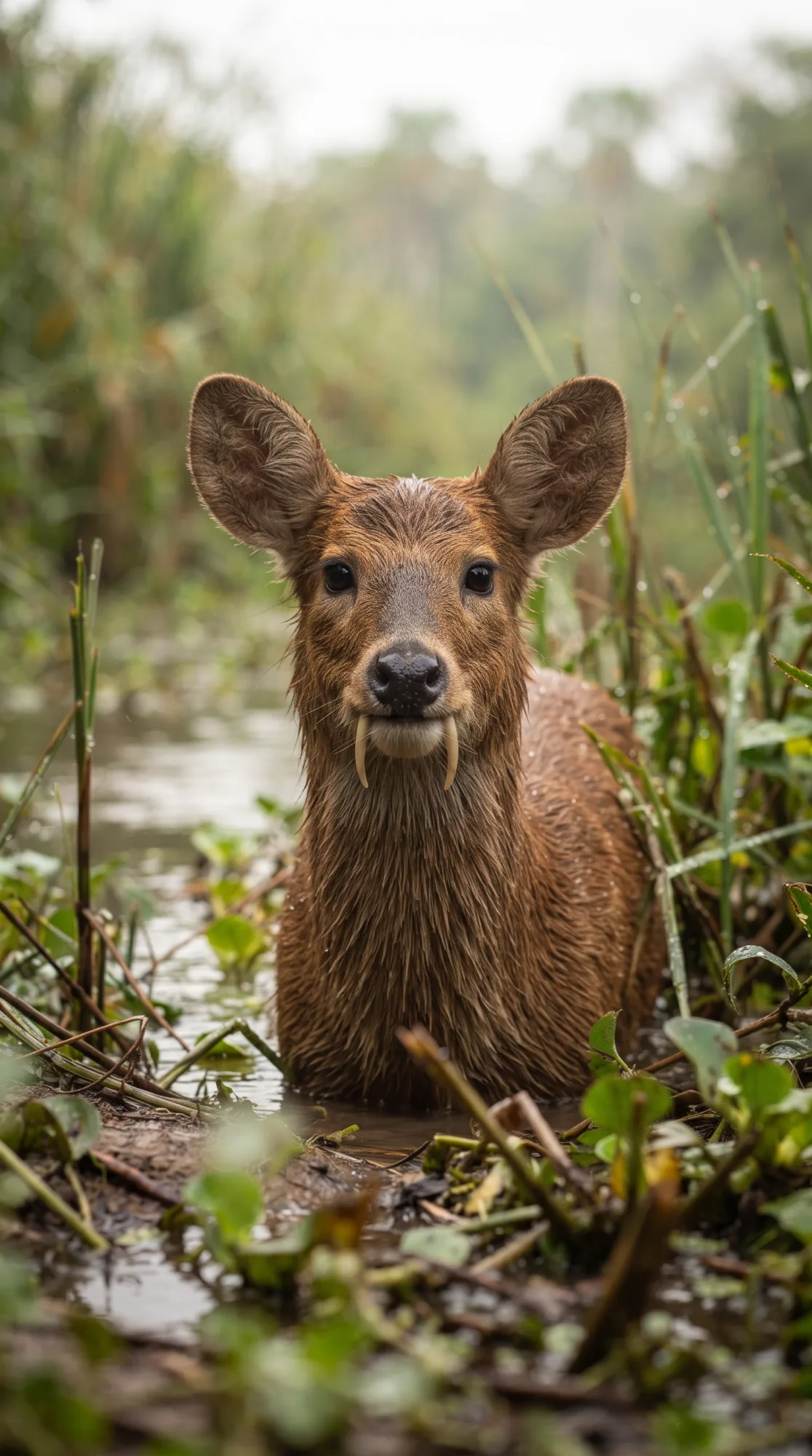
Babirusa with long curved tusks walking through a misty, muddy rainforest floor beside a stream

Babirusa: Facts, Photos & Why It’s So Strange

Babyrousa (several species)

The pig whose tusks grow through its face

Every pig has tusks. Only this one has tusks that grow straight up through the top of its snout and curl back towards its eyes. The babirusa of Indonesia looks like a drawing from a medieval book of monsters – and people have been drawing it for at least 35,000 years.

Babirusa vs. you

Your height ft in5 ft 7 in

Quick facts

Size
~31–43 in
About 31–43 in (80–110 cm) long and up to 31 in (80 cm) at the shoulder
Weight
~220 lb
Up to about 220 lb (100 kg)
Lifespan
~10 years
About 10 years in the wild, over 20 in zoos
Left in the wild
Unknown
Unknown – probably fewer than 10,000

Conservation status

  1. Least Concern
  2. Near Threatened
  3. Vulnerable (this animal)
  4. Endangered
  5. Critically Endangered
  6. Extinct in the Wild
  7. Extinct

Vulnerable

Superpowers

  • Venomous : Is it venomous? No
  • Glows : Does it glow? No
  • Regenerates limbs : Can it regenerate limbs? No

Identity

Scientific name
Babyrousa (several species)
Class
Mammal (pig family)
First described
1758, by Carl Linnaeus

Life & family

Diet
Fruit, leaves, nuts, roots and small animals
Gestation
About 5 months
Offspring
Usually 1–2 piglets – very few for a pig
Predators
People, mainly

Where to find it

Habitat
Tropical rainforest near rivers and swamps
Lives in
Indonesia – Sulawesi and a few nearby islands
In the wild
Hard – only in remote forests of Sulawesi
In zoos
Yes – a number of zoos keep them

Explore similar

Why is this animal unusual?

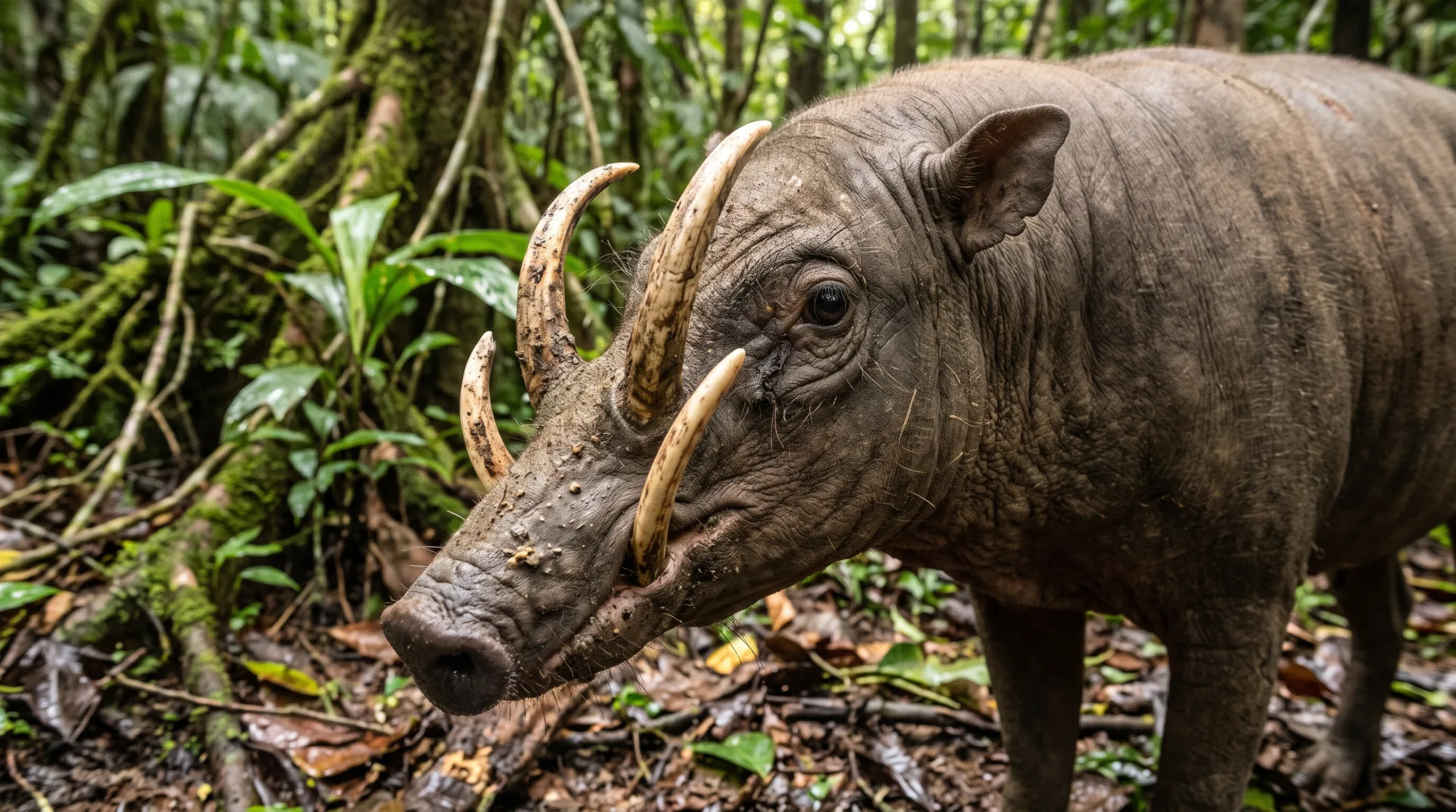
The male’s upper tusks don’t grow out of the mouth. They push up through the skin of the snout and keep curving backwards for life. In rare cases an old male’s tusk has grown right into its own skull.

Why does it look like that?

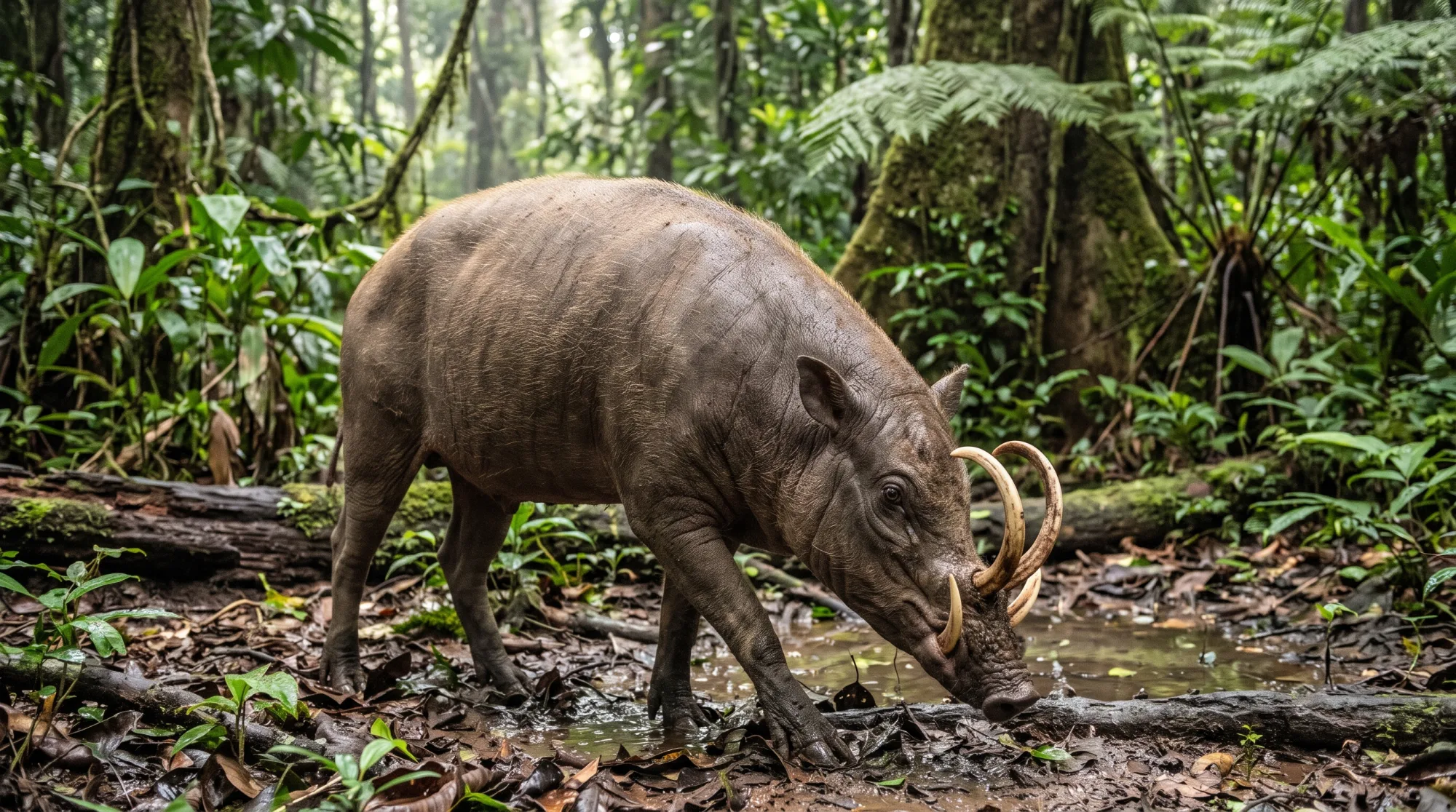
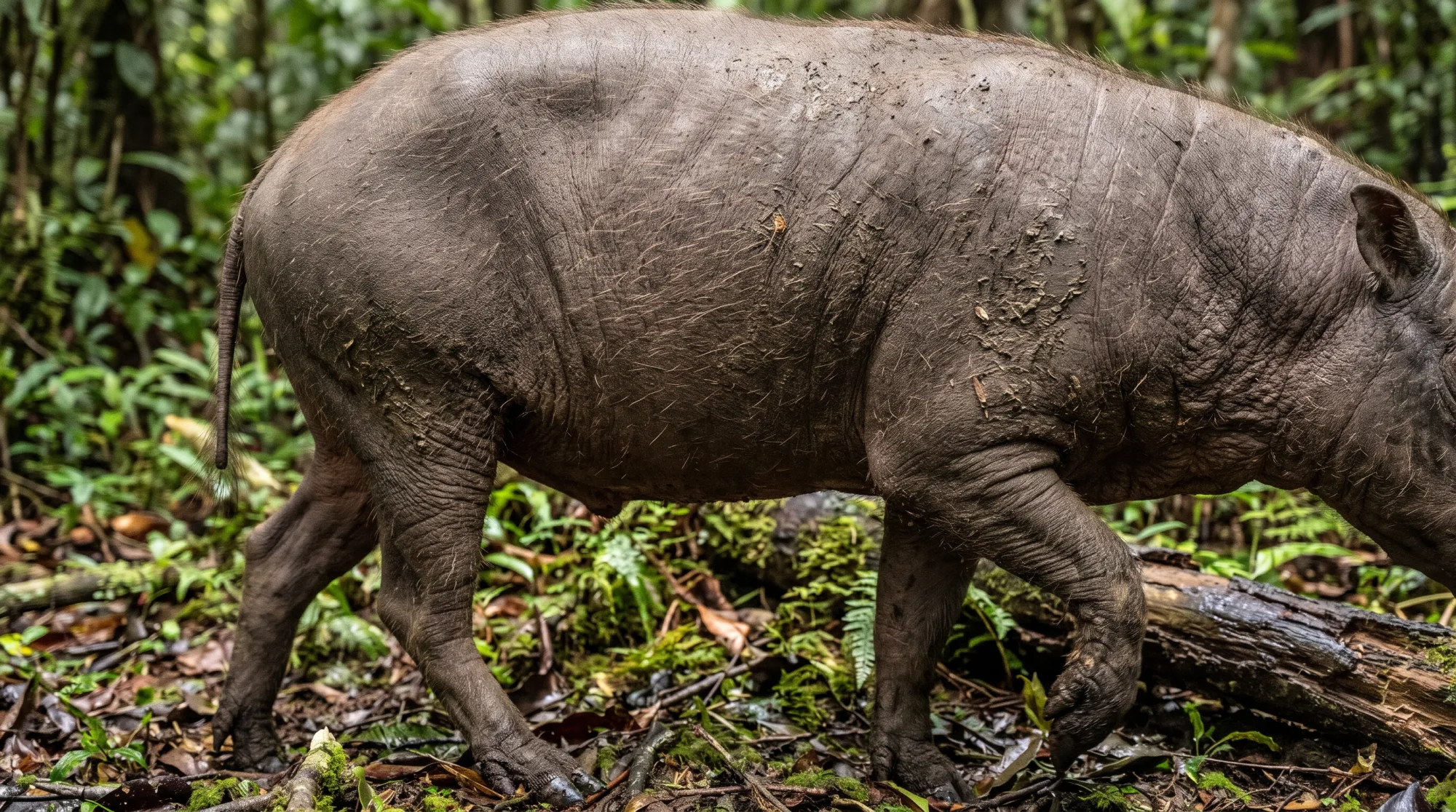
Nearly hairless grey skin, long legs for a pig and four curved tusks. Nobody is sure what the upper ones are for – they’re too brittle for fighting, so they may simply show females how fit a male is.

Strangest biological feature

Those self-piercing tusks.

Why is it strange?

When males fight, they don’t charge. They stand up on their back legs and “box” each other with their front feet.

Interesting behavioral facts

Unlike most pigs, a babirusa can’t dig with its snout in hard ground – it lacks the special bone for it. So it sticks to soft mud, and ploughs through it on its knees.

Records held

A painting of a babirusa in a cave on Sulawesi is at least 35,400 years old, making it one of the oldest pictures of an animal ever found. The name means “pig-deer”.
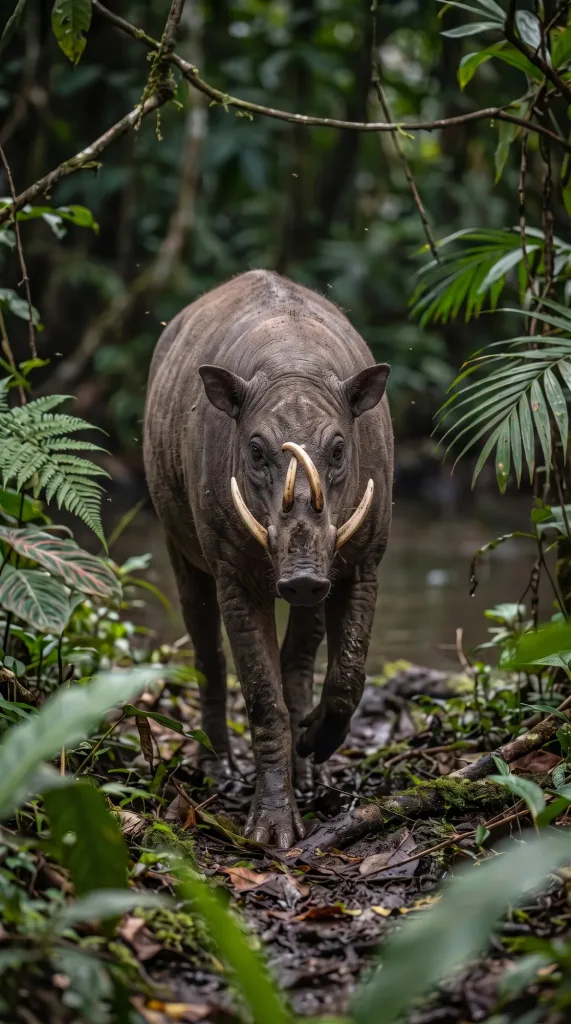
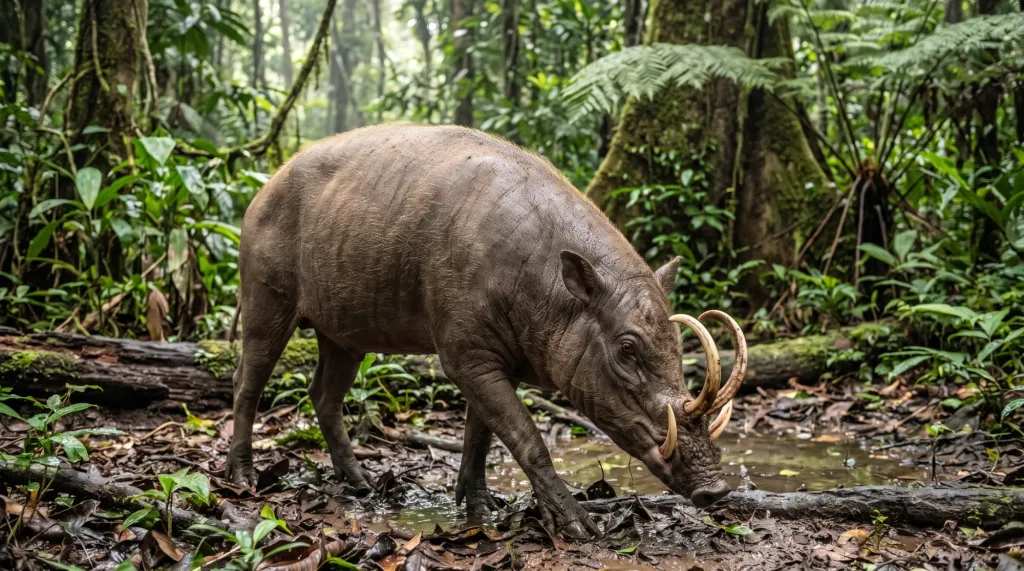
Babirusa walking toward the camera through lush green forest, showing its curved tusks and grey wrinkled skin

Babirusa: quick answers

Why do babirusa tusks grow through the face?

The male’s upper tusks grow upwards instead of out of the mouth, so they push through the skin of the snout. Their purpose is unclear – they may show females how fit a male is.

Can a babirusa’s tusk grow into its skull?

In rare cases, yes. The tusks keep curving backwards for life, and an old male’s tusk can grow into its own head.

Is the babirusa a pig?

Yes, it’s a member of the pig family, but an unusual one: long legs, almost no hair and only 1–2 piglets at a time.

Why is the babirusa vulnerable?

Because of hunting and the loss of its rainforest. Probably fewer than 10,000 are left.

Know someone who needs to see this?

Send them the Babirusa. They'll thank you. Probably.