Deep dive 4 min read
Axolotl as a Pet: What You Need to Know Before You Get One
Axolotls are one of the most popular exotic pets on the planet – and one of the most misunderstood. Here's what they need, how long they live, what they eat and where they're actually illegal.
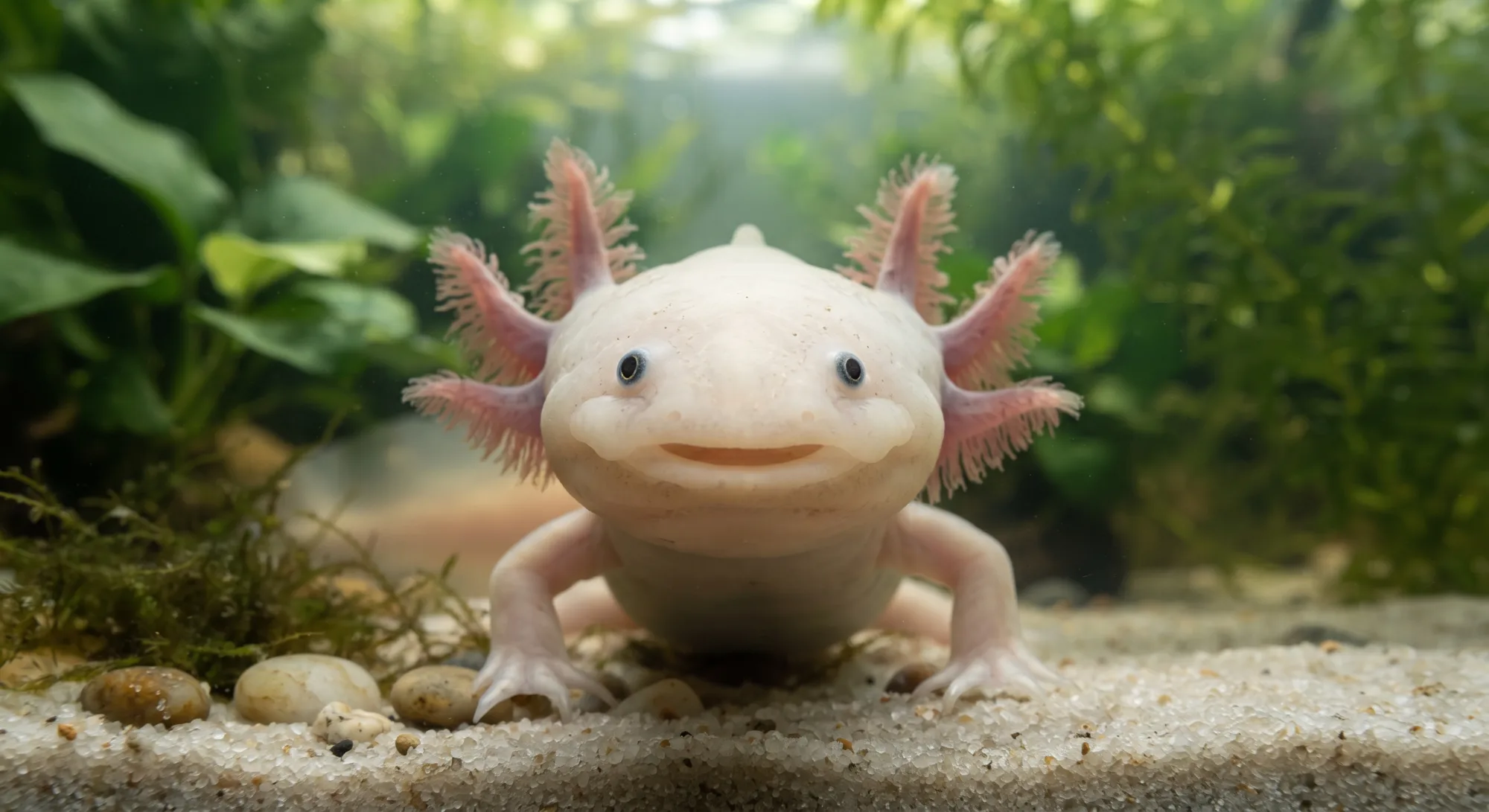
That smile. Those feathery gills. That “I’m just happy to be here” face. It’s no wonder the axolotl has become one of the most popular exotic pets in the world. But before you bring one home, there are a few things you should know – starting with the fact that it’s not legal everywhere.
Can you keep an axolotl as a pet?
In most places, yes. Axolotls are bred in captivity in huge numbers and are sold in many pet shops and by specialist breeders. But some countries and states restrict them:
- United States: keeping an axolotl is illegal in California, Maine, New Jersey and Washington, D.C., and some other states require a permit.
- United Kingdom: axolotls can’t currently be imported into Great Britain, so any axolotl sold there has to be bred in the country.
- International trade: axolotls are protected under CITES, the treaty on trade in endangered species, so moving them between countries needs permits.
Laws change, so always check with your local wildlife or environment authority before buying one.
How long do axolotls live?
In a good home, an axolotl usually lives 10 to 15 years, and some have passed 20. That’s a long commitment – longer than many dogs. In the wild, where they face pollution and predators, their lives are much shorter.
What do axolotls need?
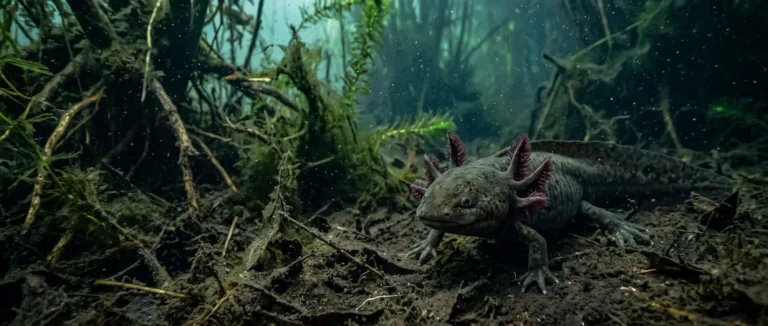
Axolotls are surprisingly fussy about one thing in particular: temperature. They come from cold, high-altitude canals in Mexico City, and warm water stresses them.
- Cold water: ideally around 16–18 °C (60–64 °F). Above about 20 °C (68 °F), axolotls get stressed and sick. In a warm room, you may need a fan or an aquarium chiller.
- A big enough tank: at least around 75 litres (20 US gallons) for one adult – more is better, because bigger tanks stay stable.
- Clean water: axolotls are very sensitive to ammonia and nitrite, which should be at zero. That means a fully “cycled” aquarium with a filter – but a gentle one, because they hate strong currents.
- A safe floor: a bare bottom or fine sand. Avoid gravel: axolotls suck up food with everything around it, and swallowed stones can block their gut.
- Peace and quiet: they have no eyelids and prefer dim light, so give them hiding places.
Think of it as a pet that wants a cold, clean, quiet flat – and absolutely no flatmates who nibble.
What do axolotls eat?
Axolotls are carnivores. In the wild they hoover up worms, insect larvae, small crustaceans and little fish. In captivity, the usual menu is earthworms, bloodworms and sinking pellets made for axolotls. Adults usually eat every two or three days. They hunt by suction – they open their mouth suddenly and vacuum food in, together with whatever is lying next to it.
Can axolotls live with fish?
It’s usually a bad idea. Small fish nibble on the axolotl’s feathery gills, big fish can hurt it, and small fish can end up as dinner. Most tropical fish also need warmer water than axolotls can stand. Axolotls are happiest alone or with other axolotls of a similar size.
Can you hold an axolotl?
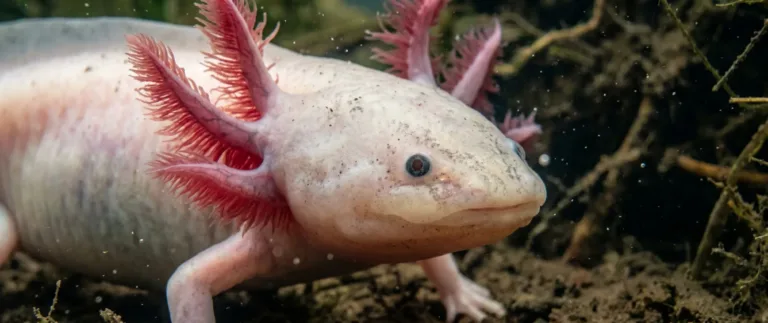
Better not. Axolotls have soft, delicate skin covered in a protective slime layer, and handling them can damage it. If you need to move one, use a soft net or a container. They’re pets to watch, not to cuddle.
Strange but trueThere are millions of axolotls in homes and labs around the world – but only around 50 to 1,000 adults left in the wild, in a few canals in Mexico City. Never release a pet axolotl outside: it won’t survive, and it could spread disease.
Is an axolotl a good pet for you?
If you want a calm, fascinating animal that will live for over a decade and don’t mind keeping water cold and clean, an axolotl can be a great pet. If you want something to handle, or you live somewhere hot without a way to cool the tank, it’s probably not the right choice.
Curious about the famous colours? Read Axolotl Colors Explained. Or find out how they regrow their limbs.
Sources
Tell a friend