Skip to content
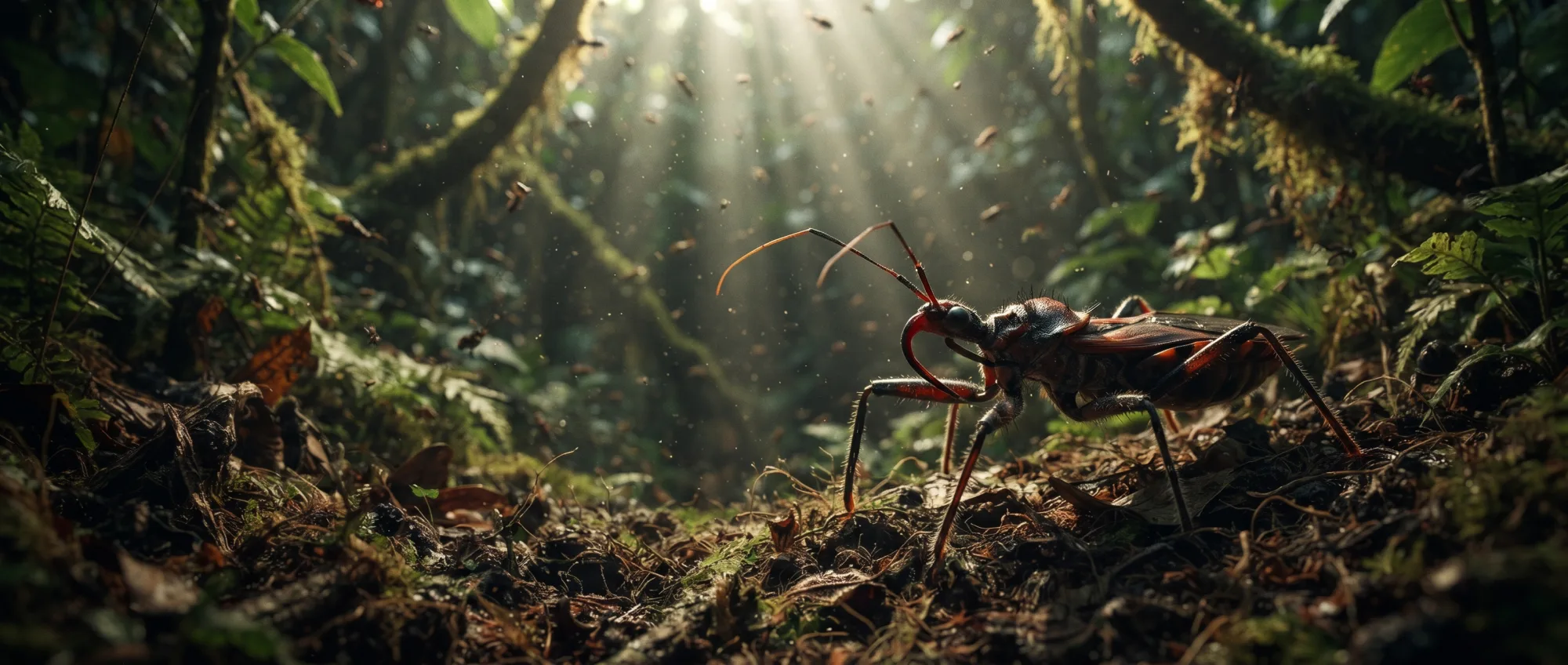
Assassin bug with long curved red antennae and spiny legs standing on forest floor litter in dappled light

Assassin Bug: Facts, Photos & Why It’s So Strange

Reduviidae (about 7,000 species)

Stabs first. Drinks later.

It walks up to another insect, stabs it with a needle-sharp beak and injects spit that turns the victim’s insides into soup. Then it drinks. The assassin bug is one of nature’s most efficient killers – and some of them wear the dead bodies afterwards.

Assassin Bug vs. you

Your height ft in5 ft 7 in

Quick facts

Size
0.16–1.6 in
From 0.16 in (4 mm) to about 1.6 in (4 cm)
Left in the wild
Countless

Conservation status

Not evaluated

Superpowers

  • Venomous : Is it venomous? Yes – its saliva paralyses prey and dissolves it from the inside
  • Glows : Does it glow? No
  • Regenerates limbs : Can it regenerate limbs? No

Identity

Scientific name
Reduviidae (about 7,000 species)
Class
Insect (true bug)

Life & family

Diet
Other insects and spiders; a few species drink blood
Gestation
None – it lays eggs
Predators
Birds, spiders, lizards and other assassin bugs

Where to find it

Habitat
Almost everywhere – forests, grassland, gardens, houses
Lives in
Worldwide, mostly in warm regions
In the wild
Yes – they live on every continent except Antarctica
In zoos
Sometimes – in insect houses

Explore similar

Why is this animal unusual?

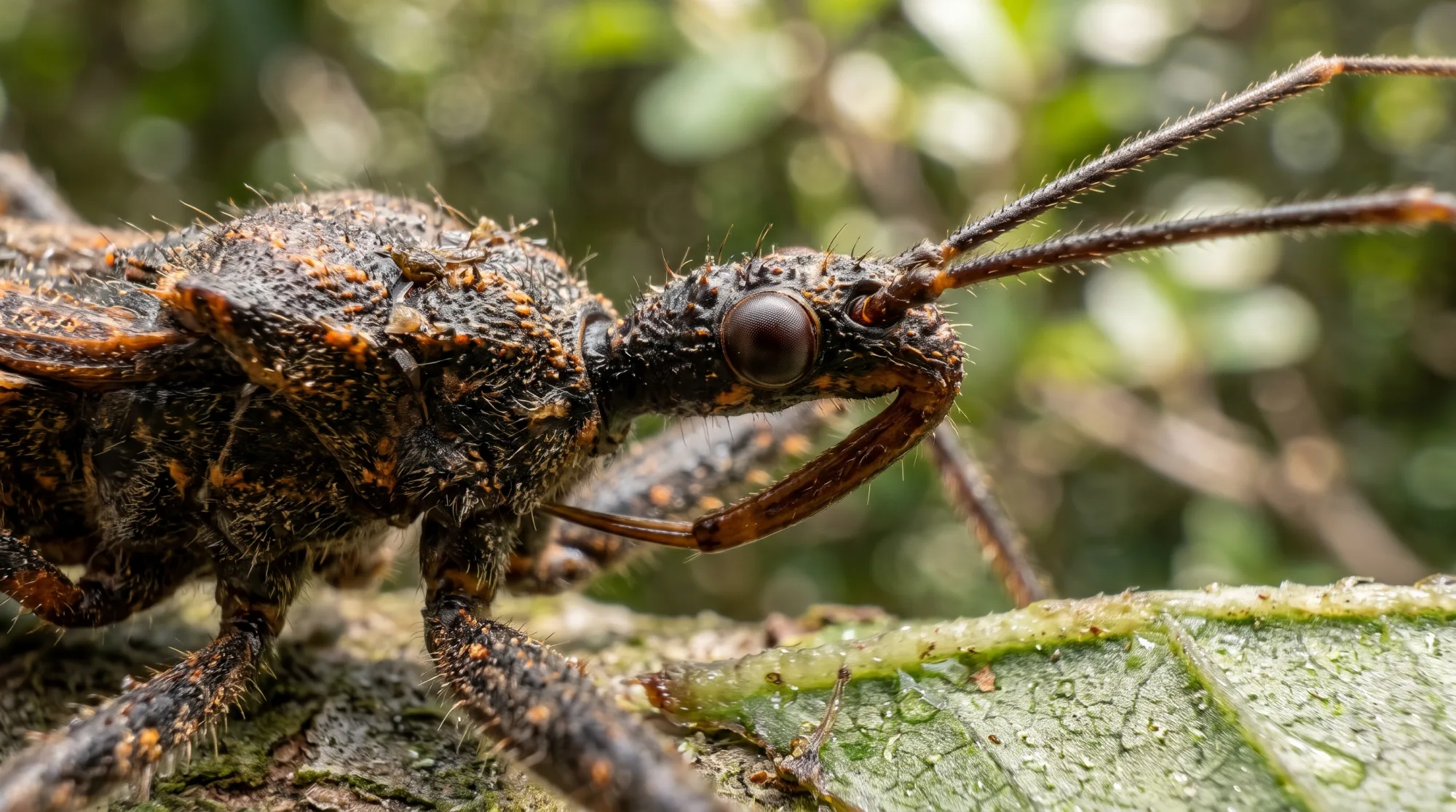
The beak is a folding dagger. It stays tucked under the head until it’s needed, then swings forward and punches through the armour of prey much bigger than the bug itself.

Why does it look like that?

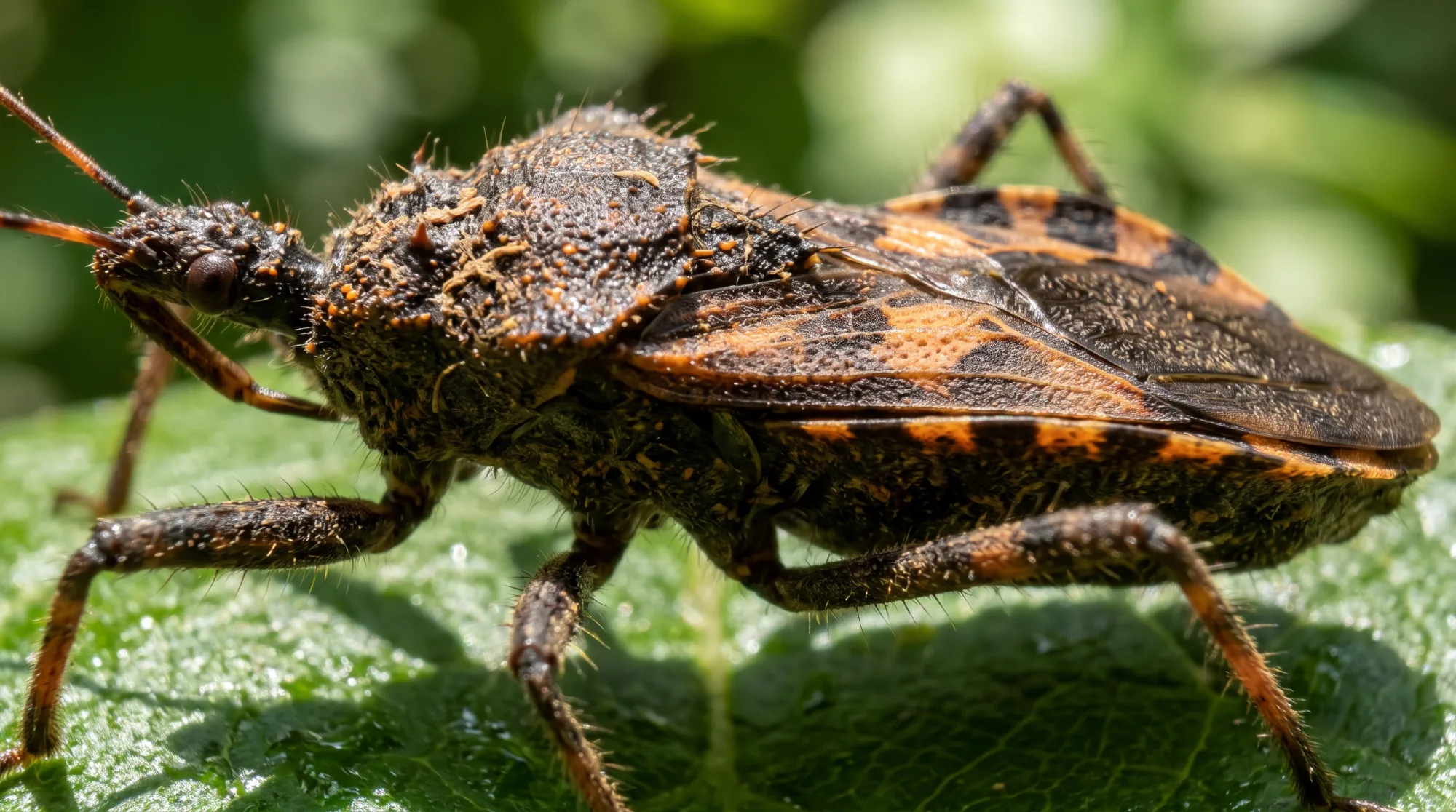
A narrow head, a short “neck” and long front legs for grabbing. Many are brightly coloured as a warning: their bite is seriously painful for humans too.

Strangest biological feature

Two-in-one spit. It contains one mix of toxins for killing and another for defence, and the bug chooses which to use.

Why is it strange?

Some species glue the empty bodies of their victims onto their backs and walk around under a pile of corpses. It works as camouflage and confuses predators.

Interesting behavioral facts

Certain assassin bugs pluck the threads of a spider’s web to imitate trapped prey – and then kill the spider when it comes to check. Others coat their legs in sticky plant resin to catch insects more easily.

Records held

Blood-drinking “kissing bugs” belong to this family. They spread Chagas disease, which affects millions of people in the Americas.

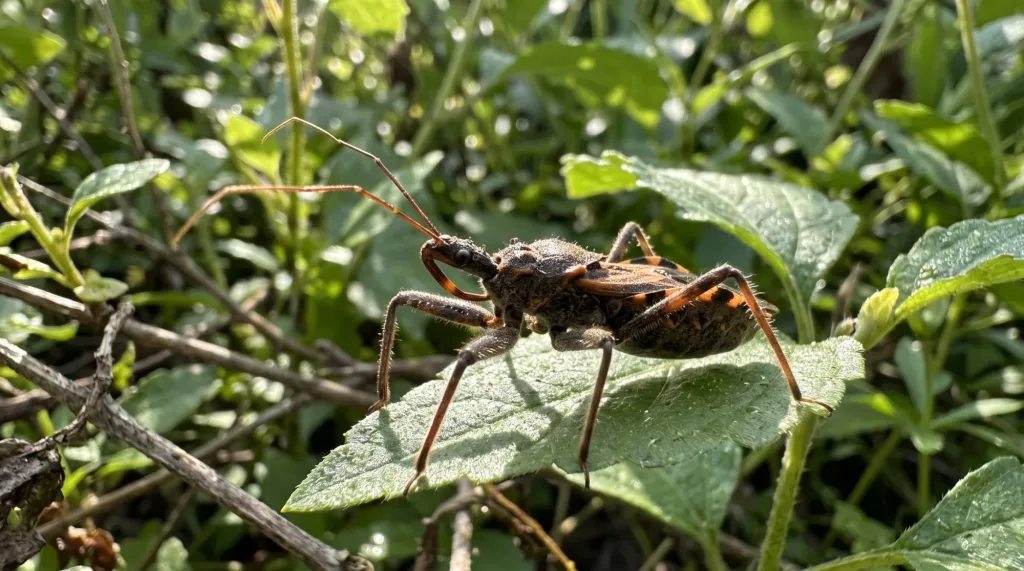
Orange and black assassin bug with long antennae and a curved beak climbing a moss-covered rock surface

Assassin Bug: quick answers

Is an assassin bug bite dangerous to humans?

Most species never bite people unless they’re handled, but the bite is seriously painful, often compared to a bee sting or worse. Blood-drinking kissing bugs are a different story: they can spread Chagas disease.

Are assassin bugs good to have in the garden?

Mostly yes. They eat caterpillars, aphids, beetles and other pests. Just don’t pick them up with bare hands.

What is a kissing bug?

A blood-drinking member of the assassin bug family. It often bites sleeping people near the lips or eyes, which is how it got its name.

Where do assassin bugs live?

Almost everywhere on Earth, but mostly in warm regions: forests, grassland, gardens and sometimes houses.

Know someone who needs to see this?

Send them the Assassin Bug. They'll thank you. Probably.