Skip to content
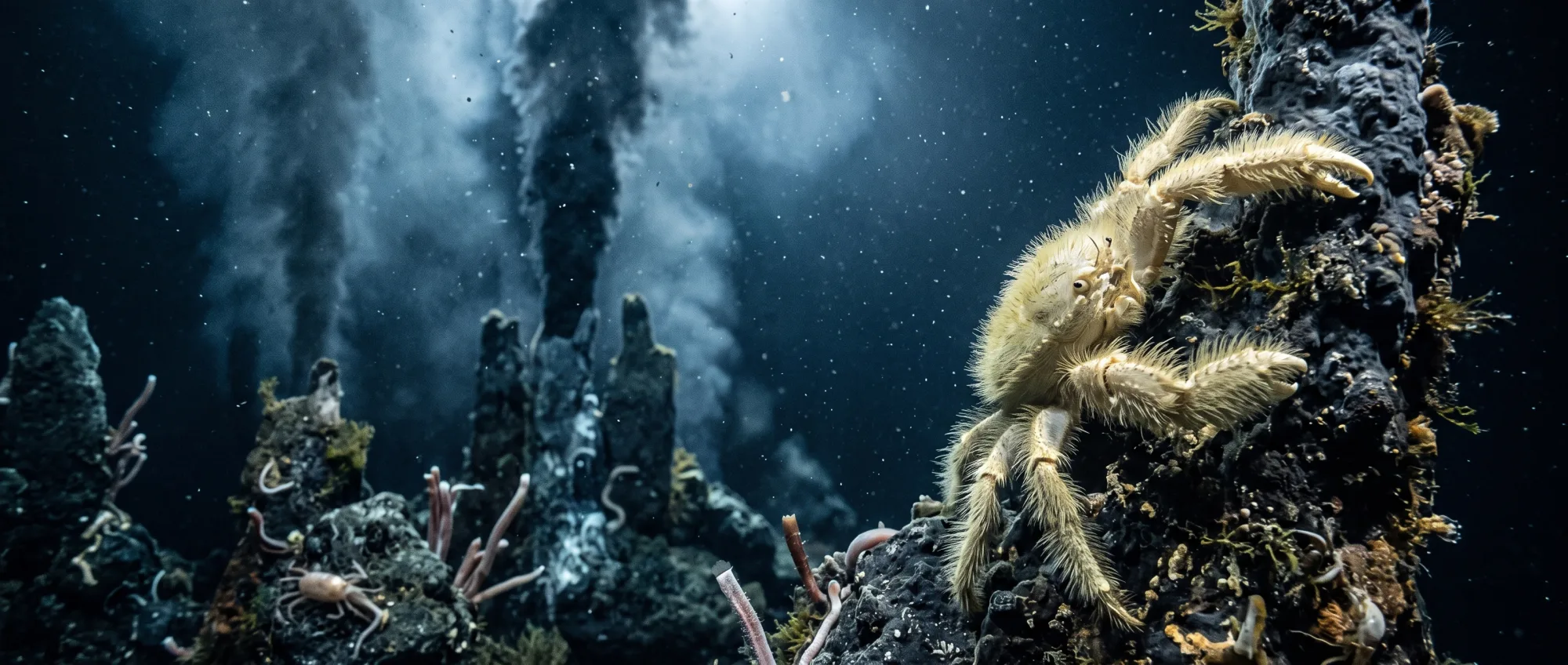
Pale, hairy yeti crab clinging to a smoking hydrothermal vent in the deep sea

Yeti Crab: Facts, Photos & Why It’s So Strange

Kiwa hirsuta

A crab with furry arms that farms its own food

It’s white, it’s blind and its arms are covered in silky blond fur. When scientists found it next to a volcanic vent on the Pacific sea floor in 2005, it was so different from anything known that it needed a brand-new family. They named it Kiwa hirsuta – and nicknamed it after the abominable snowman.

Yeti Crab vs. you

Your height ft in5 ft 7 in

Quick facts

Size
~6 in
About 6 in (15 cm)
Left in the wild
Unknown

Conservation status

Not evaluated

Superpowers

  • Venomous : Is it venomous? No
  • Glows : Does it glow? No
  • Regenerates limbs : Can it regenerate limbs? Probably – like other crabs, it can likely regrow lost limbs

Identity

Scientific name
Kiwa hirsuta
Class
Crustacean
First described
2005, by Enrique Macpherson, William Jones and Michel Segonzac

Life & family

Diet
Bacteria it grows on its own arms
Gestation
None – the female carries eggs
Predators
Unknown

Where to find it

Habitat
Hot volcanic vents on the deep sea floor, about 7,200 ft (2,200 m) down
Lives in
The South Pacific, south of Easter Island
In the wild
No
In zoos
No

Explore similar

Why is this animal unusual?

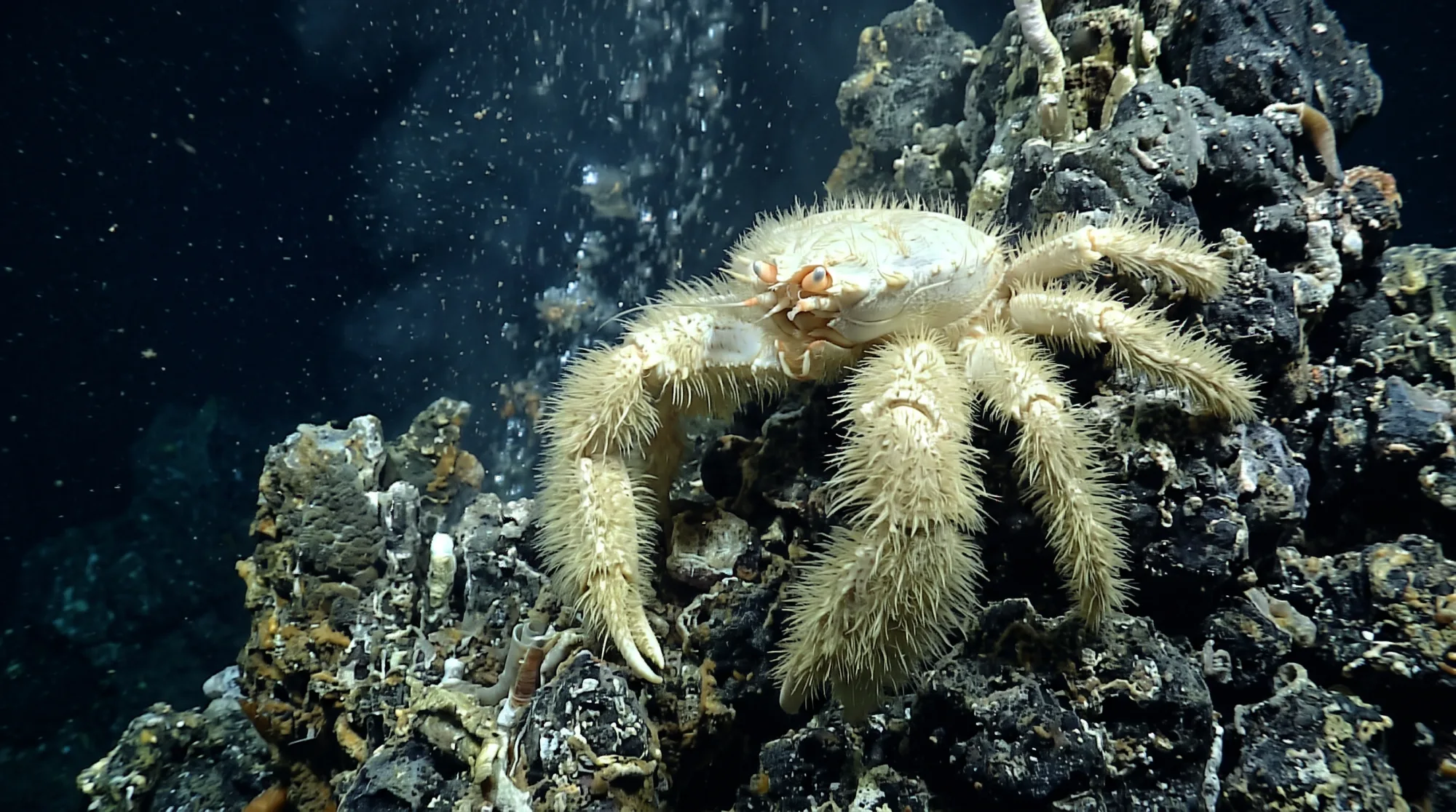
The “fur” is made of fine bristles, and they’re crawling with bacteria. The crab is a farmer: it grows these bacteria on its arms and then combs them off and eats them.

Why does it look like that?

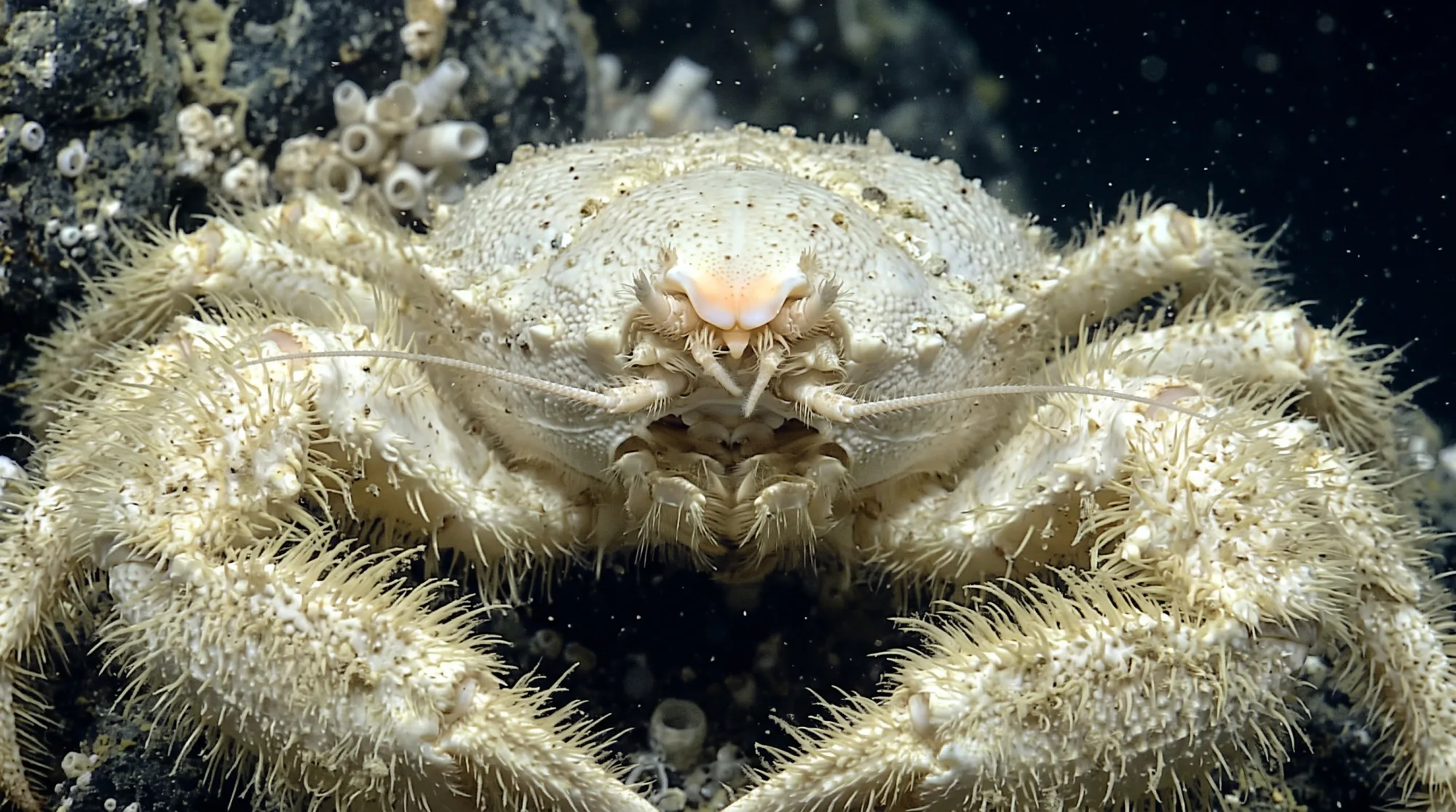
A pale, ghostly body, long hairy claws and tiny leftover eyes that probably can’t see anything.

Strangest biological feature

The arm garden.

Why is it strange?

One of its cousins “dances” – it waves its claws slowly back and forth over cracks in the sea floor, to wash its bacteria in the chemical-rich water they feed on.

Interesting behavioral facts

It lives in a very narrow comfort zone: close enough to the scalding vent to get chemicals, far enough away not to be cooked.

Records held

Its genus is named after Kiwa, a guardian of the sea in Polynesian mythology. An Antarctic relative is nicknamed the “Hoff crab”, after David Hasselhoff’s hairy chest.

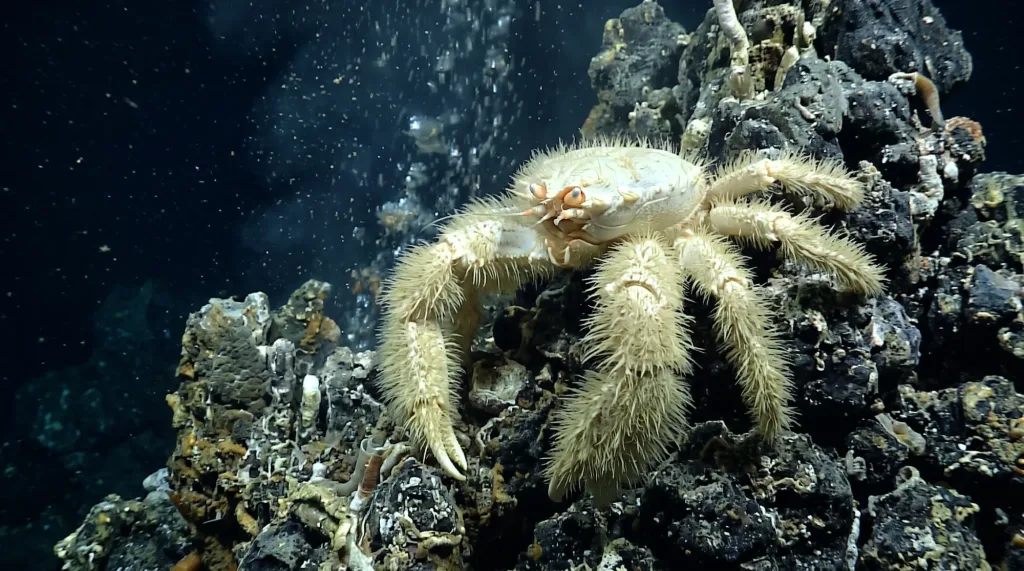
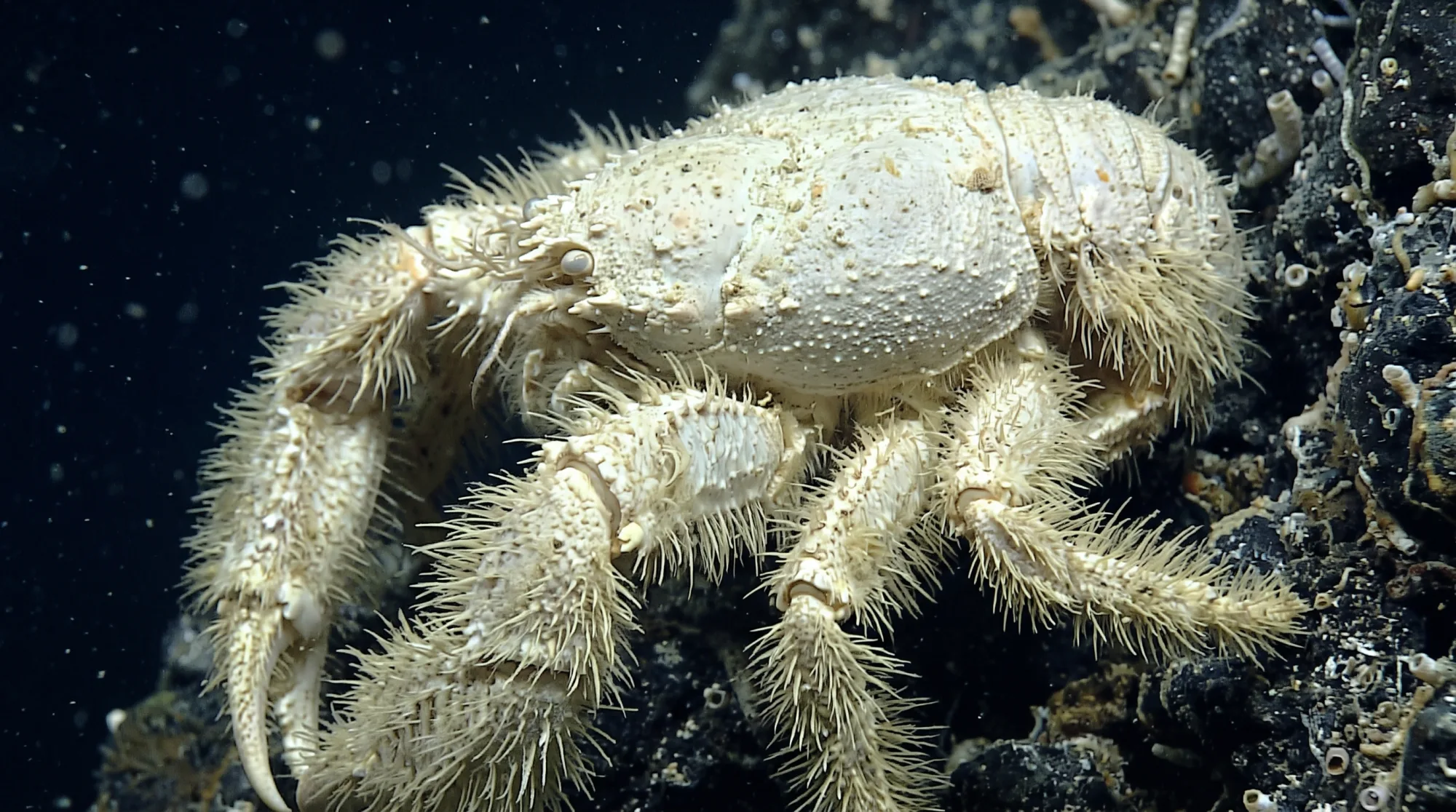
Hairy, pale yeti crab on black volcanic rock near a deep-sea vent

Yeti Crab: quick answers

Is the yeti crab dangerous?

No. It’s about 5.9 in (15 cm) long and lives more than 1.2 mi (2 km) down beside hydrothermal vents, farming and eating bacteria.

Can a yeti crab see?

Probably not. Its eyes are tiny leftovers that likely can’t see anything – not surprising where sunlight never reaches.

Is the yeti crab a real crab?

Not a true crab. Yeti crabs are more closely related to squat lobsters and have their own family, Kiwaidae.

Can you eat a yeti crab?

Nobody does. It lives at hydrothermal vents more than 1.2 mi (2 km) deep, so it’s never caught.

Know someone who needs to see this?

Send them the Yeti Crab. They'll thank you. Probably.