Skip to content
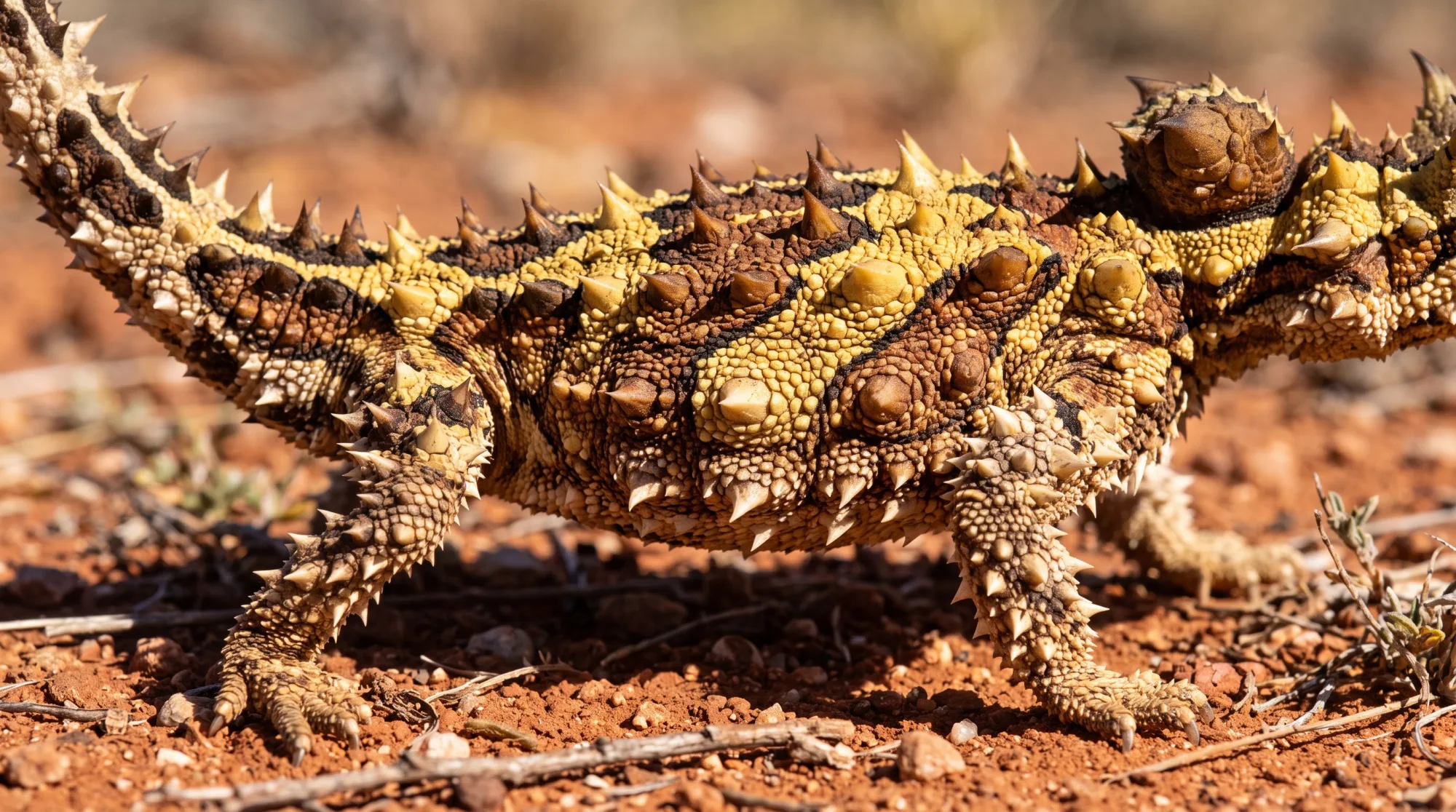
Spiky thorny devil lizard walking on red desert sand

Thorny Devil: Facts, Photos & Why It’s So Strange

Moloch horridus

A walking cactus that drinks through its skin

Every centimetre of its body is covered in thorns. It has a fake head on the back of its neck. And when it wants a drink, it simply stands in something damp and lets the water travel up its skin to its mouth. The thorny devil, also called the thorny dragon or moloch, is Australia’s most extraordinary lizard.

Thorny Devil vs. you

Your height ft in5 ft 7 in

Quick facts

Size
~8 in
Up to about 8 in (21 cm)
Weight
~1.1–3.2 oz
About 1.1–3.2 oz (30–90 g)
Lifespan
15–20 years
Left in the wild
Unknown
Unknown – widespread

Conservation status

  1. Least Concern (this animal)
  2. Near Threatened
  3. Vulnerable
  4. Endangered
  5. Critically Endangered
  6. Extinct in the Wild
  7. Extinct

Least Concern

Superpowers

  • Venomous : Is it venomous? No
  • Glows : Does it glow? No
  • Regenerates limbs : Can it regenerate limbs? No

Identity

Scientific name
Moloch horridus
Class
Reptile (lizard)
First described
1841, by John Edward Gray

Life & family

Diet
Ants – and only ants
Gestation
None – the eggs take 3–4 months to hatch
Offspring
3–10 eggs
Predators
Bustards, goannas and birds of prey

Where to find it

Habitat
Sandy desert and dry scrub
Lives in
Central and western Australia
In the wild
Possible – in the Australian outback, often crossing roads
In zoos
Sometimes – in Australian wildlife parks

Explore similar

Why is this animal unusual?

Its skin is covered in microscopic grooves. Water from dew, rain or even damp sand is pulled along them by capillary action, all the way to the corners of its mouth. It never has to bend down to drink.

Why does it look like that?

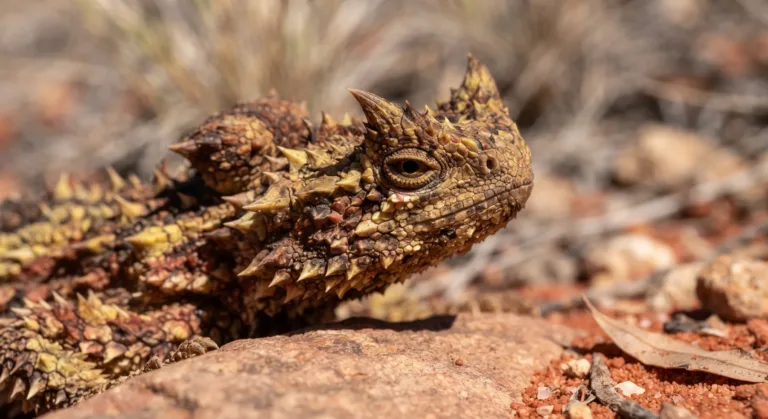
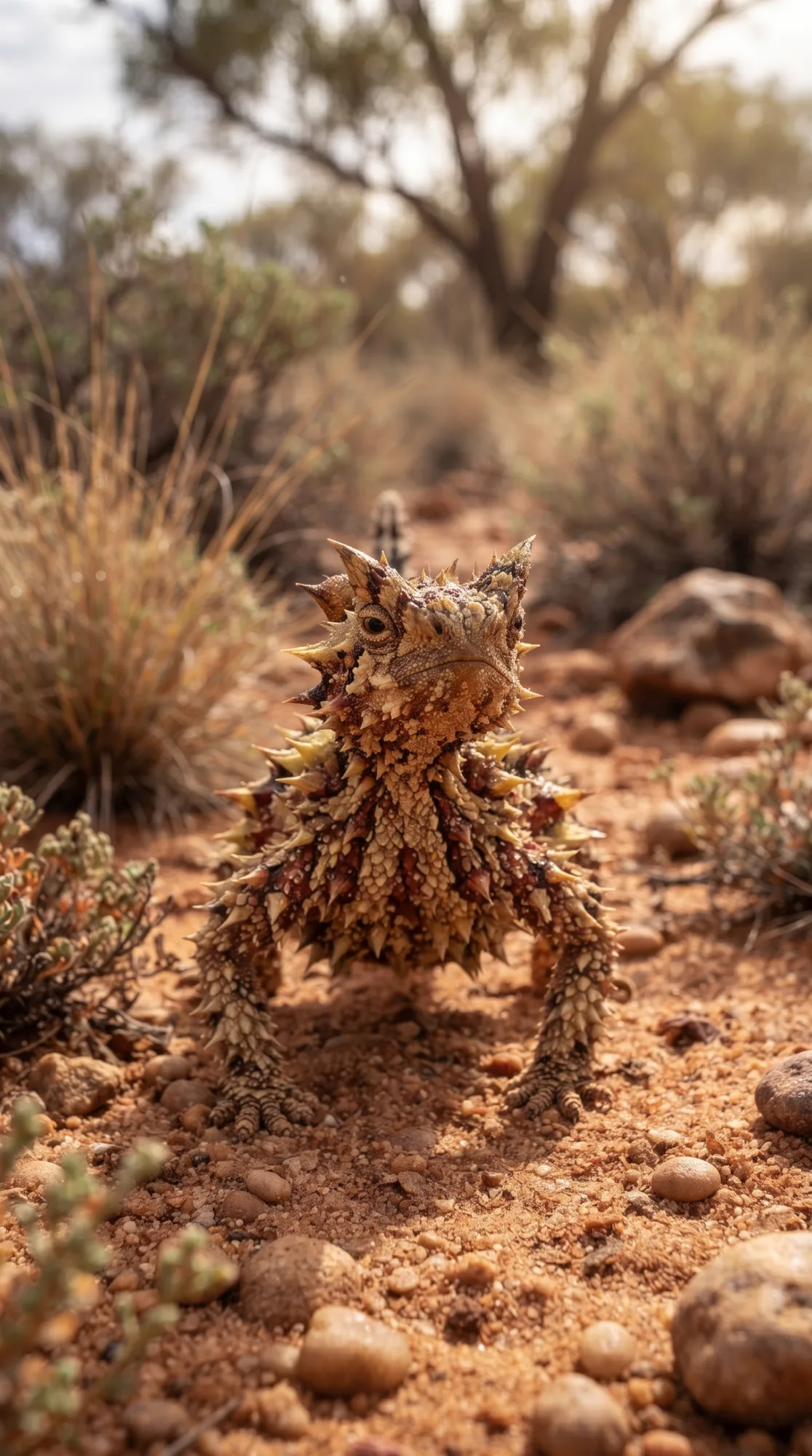
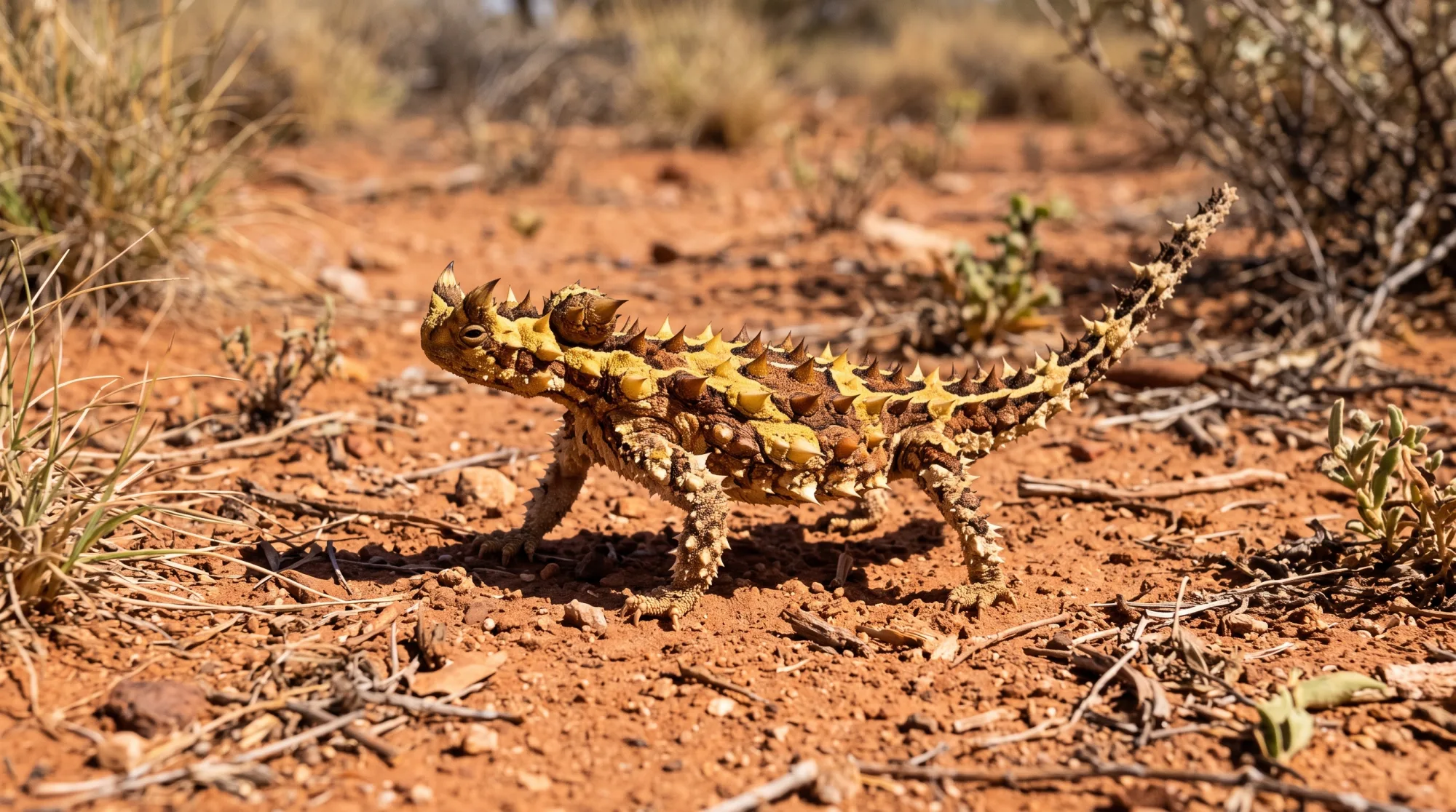
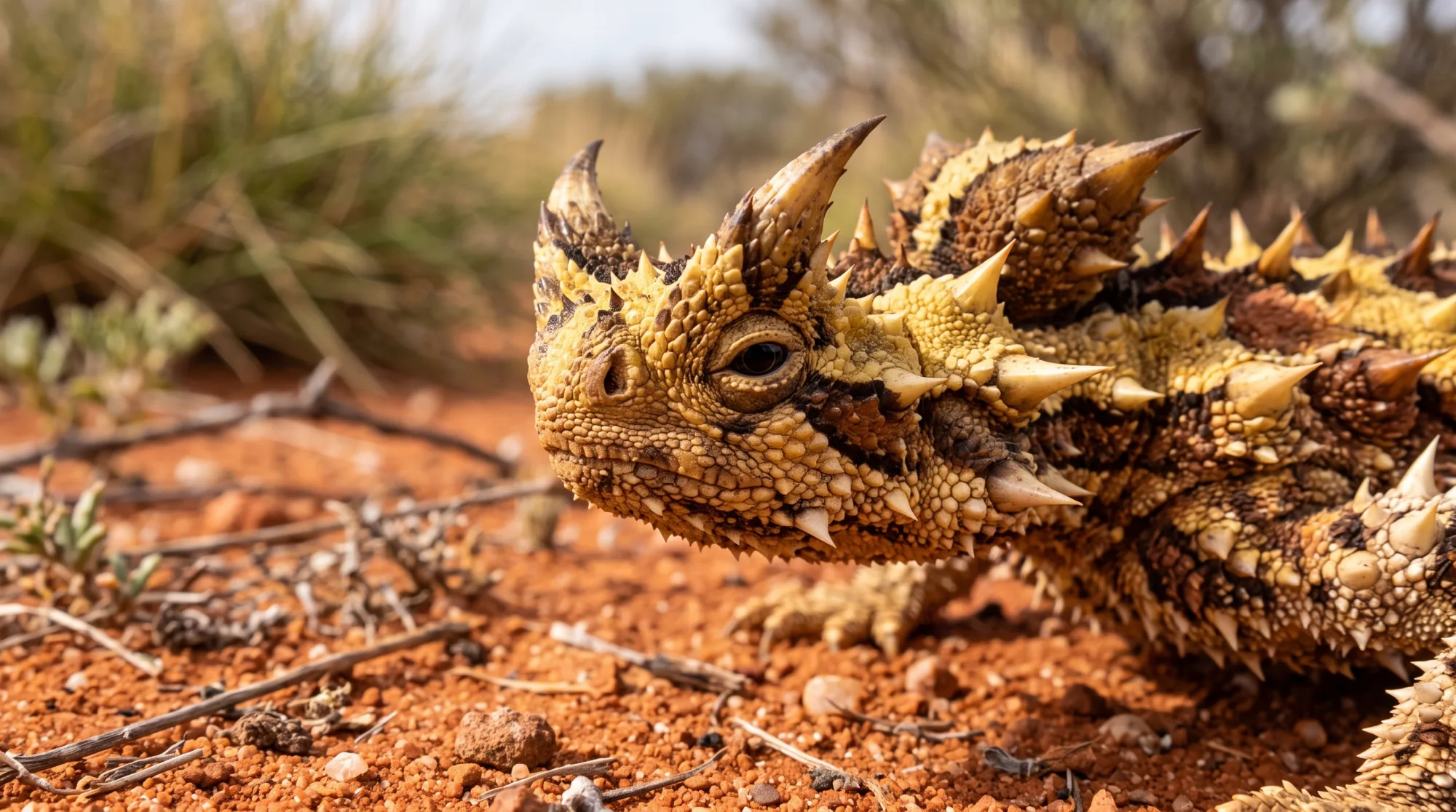
Cone-shaped spikes from nose to tail, in desert colours of yellow, red and brown that change with the temperature.

Strangest biological feature

The false head. It’s a spiny lump on the back of its neck. When threatened, the lizard tucks its real head between its legs and offers the fake one instead.

Why is it strange?

It can eat thousands of ants in a single sitting, picking them up one at a time with its sticky tongue.

Interesting behavioral facts

It walks with a strange, slow, rocking motion – freezing mid-step with one leg in the air – possibly to look like a leaf blowing in the wind.

Records held

Its scientific name comes from Moloch, a monstrous god in Milton’s “Paradise Lost”. It’s completely harmless.
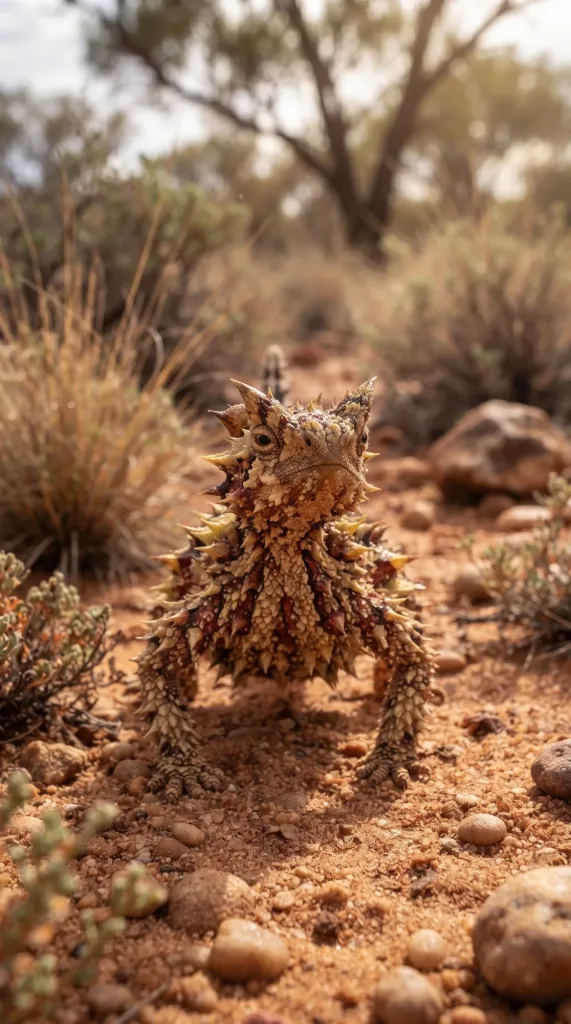
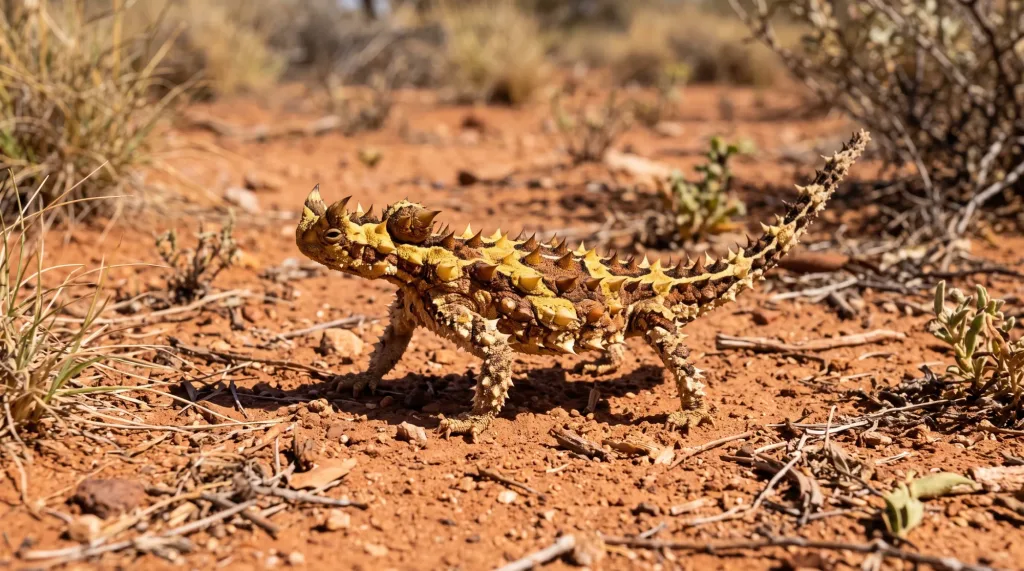
Thorny devil lizard covered in sandy-colored spikes on red desert soil

Thorny Devil: quick answers

Is the thorny devil dangerous?

No. Despite the name and the spikes, it’s completely harmless. The spikes are only for defence.

Can you keep a thorny devil as a pet?

No. It’s protected in Australia, and it eats only certain kinds of ants, which makes it extremely hard to keep in captivity.

Where can you see a thorny devil?

In the deserts and dry scrub of central and western Australia. They’re often seen crossing roads on warm days.

Does a thorny devil change colour?

Yes. It turns paler when it’s warm and darker when it’s cold, shifting through desert yellows, reds and browns.

Know someone who needs to see this?

Send them the Thorny Devil. They'll thank you. Probably.