Skip to content
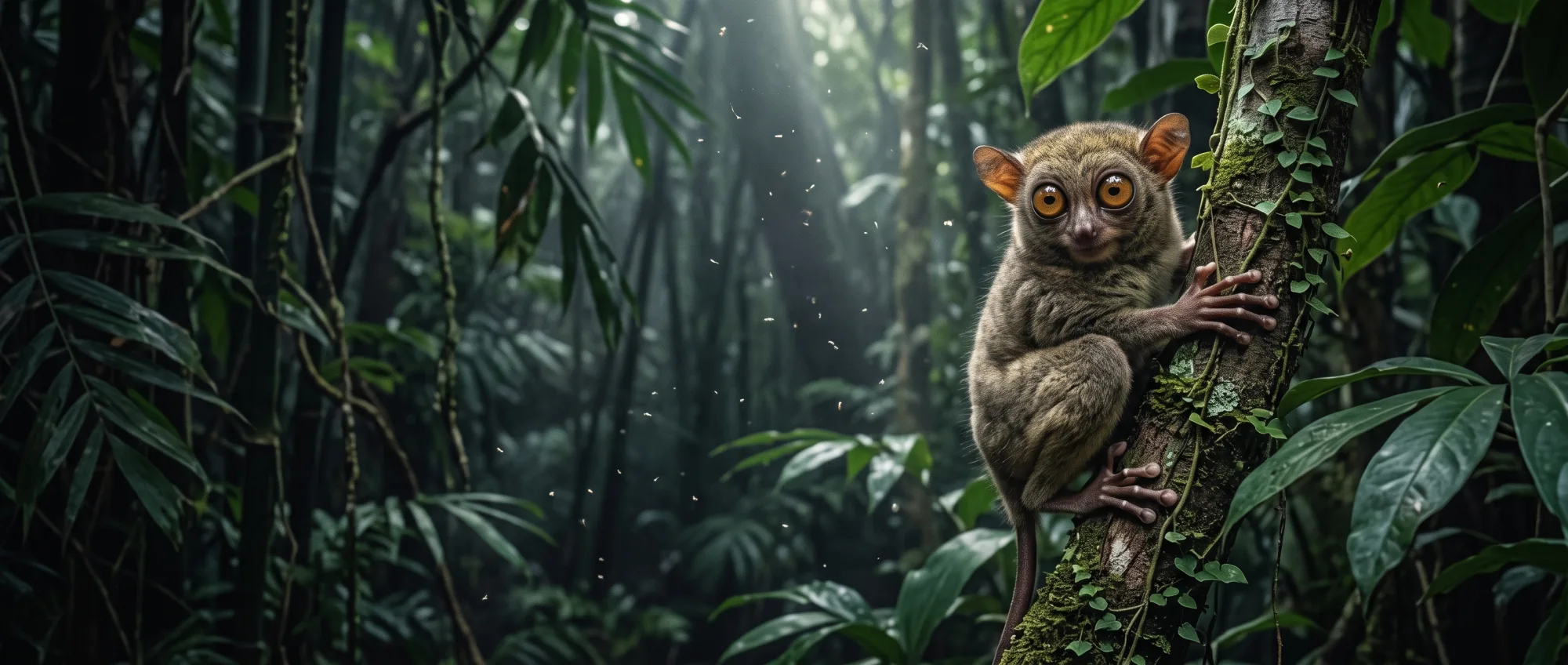
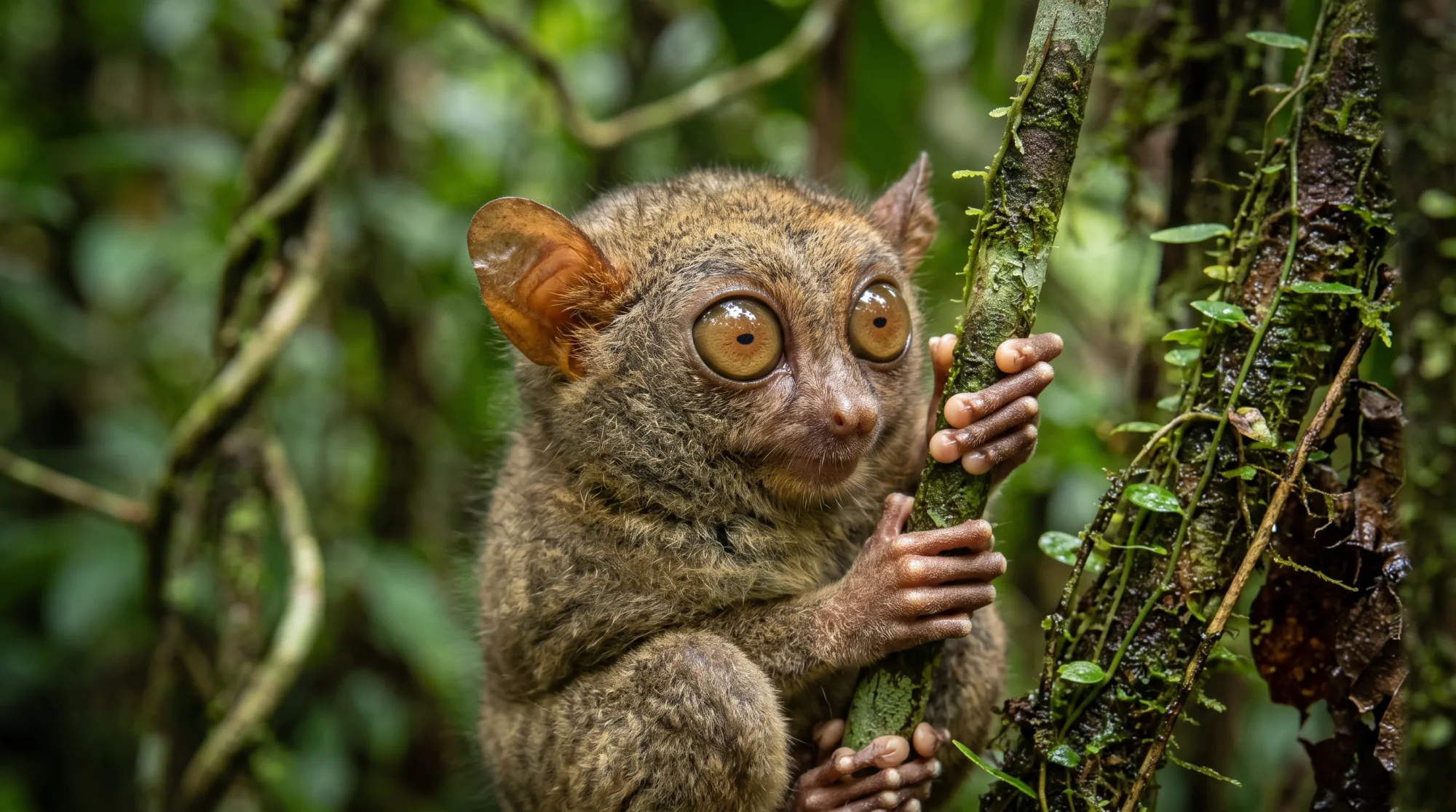
Tarsier with huge eyes clinging to a branch in the rainforest

Tarsier: The Primate With Eyes Bigger Than Its Brain

Tarsiidae (about 14 species)

All eyes. No chill.

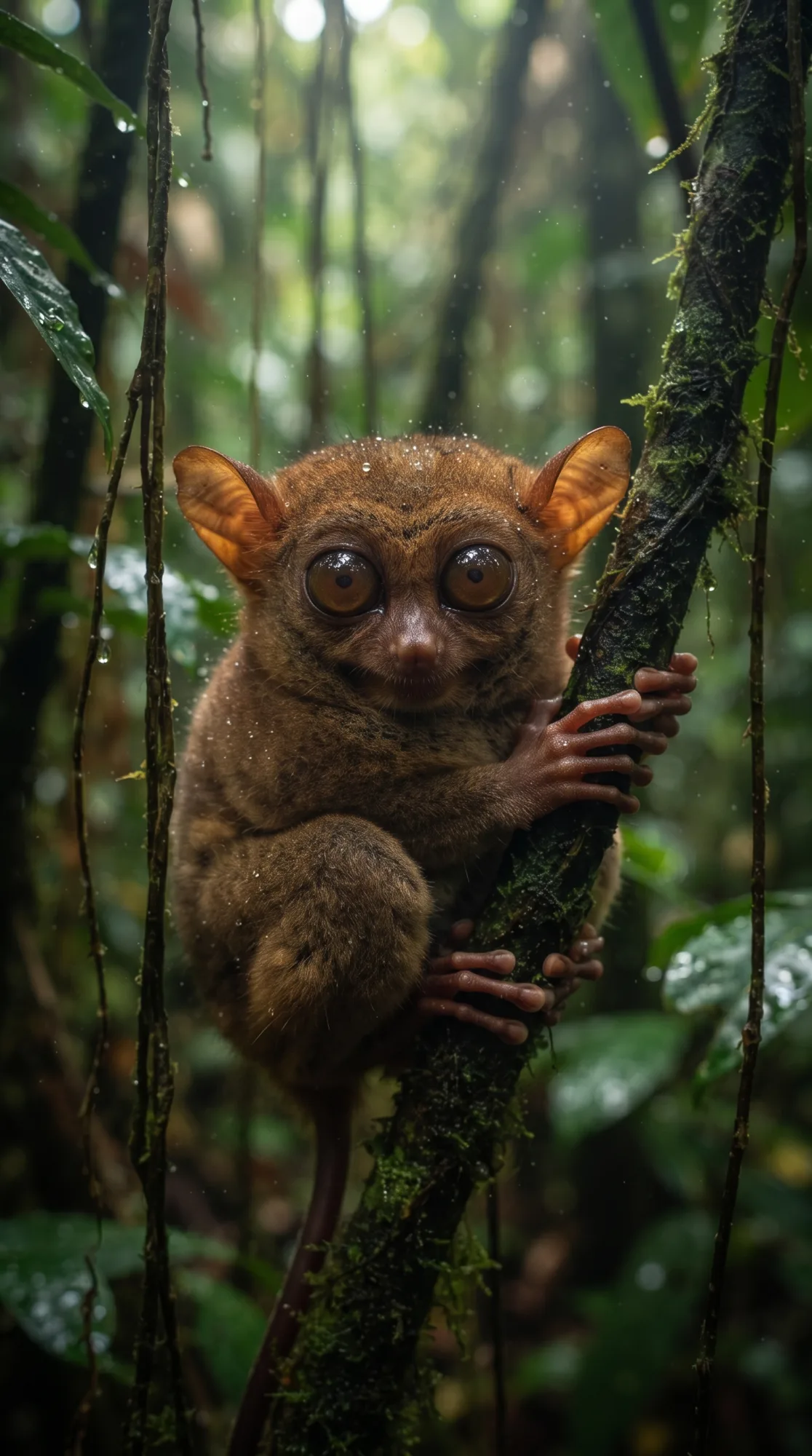
It fits in your hand, each of its eyes is as big as its brain and it can turn its head almost all the way round. The tarsier looks like a toy designed by someone who had only heard owls described. It’s also a tiny, ruthless hunter that never eats a single leaf.

Tarsier vs. you

Your height ft in5 ft 7 in

Quick facts

Size
3.5–6 in
Body 3.5–6 in (9–16 cm), plus a tail about twice as long
Weight
2.8–5.6 oz
2.8–5.6 oz (80–160 g)
Left in the wild
Varies
Varies by species

Conservation status

Varies – several species are threatened

Superpowers

  • Venomous : Is it venomous? No
  • Glows : Does it glow? No
  • Regenerates limbs : Can it regenerate limbs? No

Identity

Scientific name
Tarsiidae (about 14 species)
Class
Mammal (primate)

Life & family

Diet
Insects, lizards, frogs and small birds – no plants at all
Gestation
About 6 months
Offspring
One baby – weighing up to a third as much as its mother
Predators
Owls, snakes, cats and monitor lizards

Where to find it

Habitat
Forest undergrowth and bamboo thickets
Lives in
Islands of Southeast Asia – the Philippines, Borneo, Sumatra and Sulawesi
In the wild
Yes – in sanctuaries on Bohol (Philippines) and in northern Sulawesi
In zoos
Rarely – stress in captivity is often fatal for them

Explore similar

Why is this animal unusual?

It’s the only primate that is 100% carnivore. Every other monkey, ape and lemur eats at least some plants. The tarsier eats only things that move.

Why does it look like that?

The eyes are so huge that they can’t turn in their sockets. To make up for it, the tarsier can rotate its head nearly 180 degrees in each direction, like an owl.

Strangest biological feature

Those eyes. Each one is about 0.6 in (16 mm) across – roughly the same size as the animal’s entire brain.

Why is it strange?

Some tarsiers talk in pure ultrasound. Their calls are so high-pitched that humans, and most of their predators, can’t hear them at all.

Interesting behavioral facts

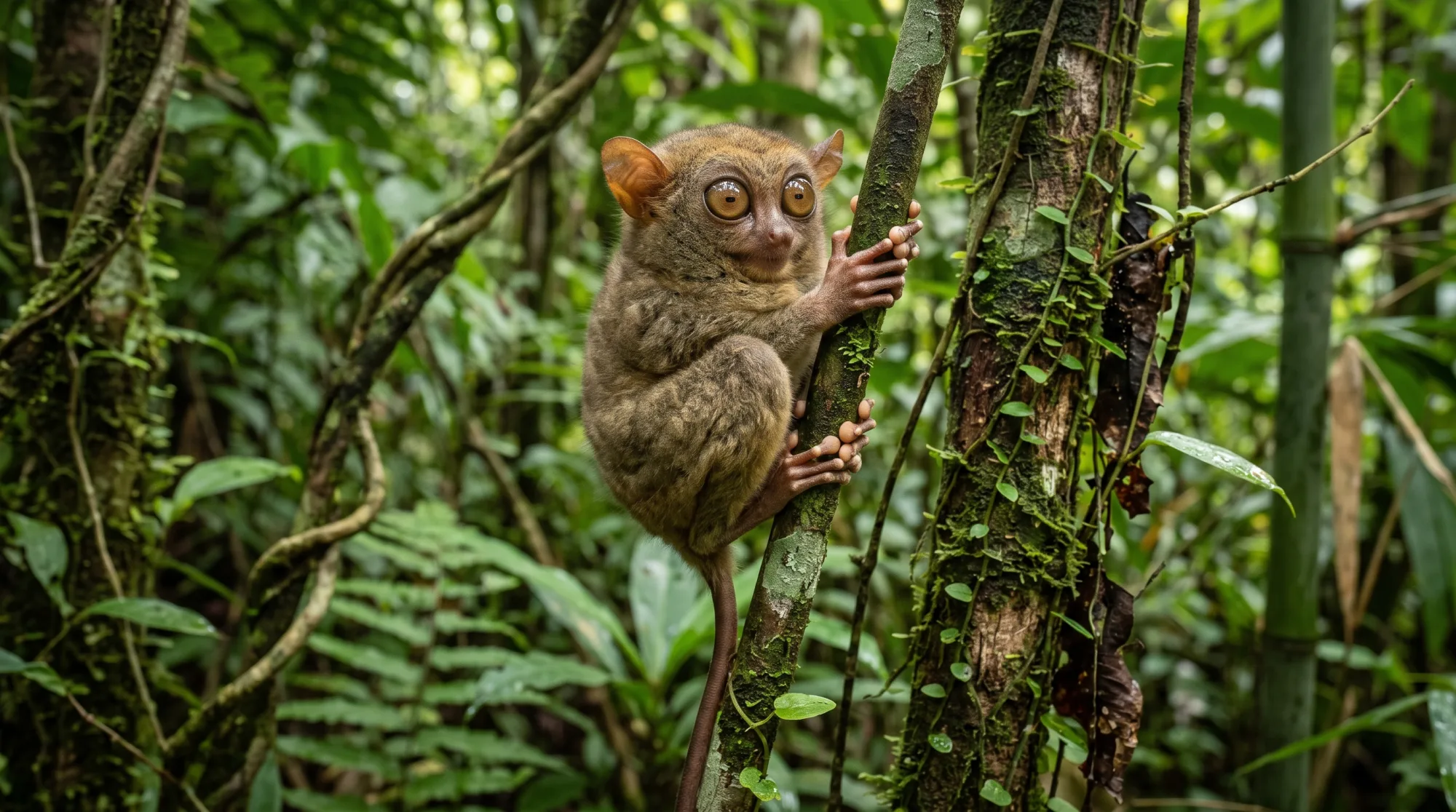
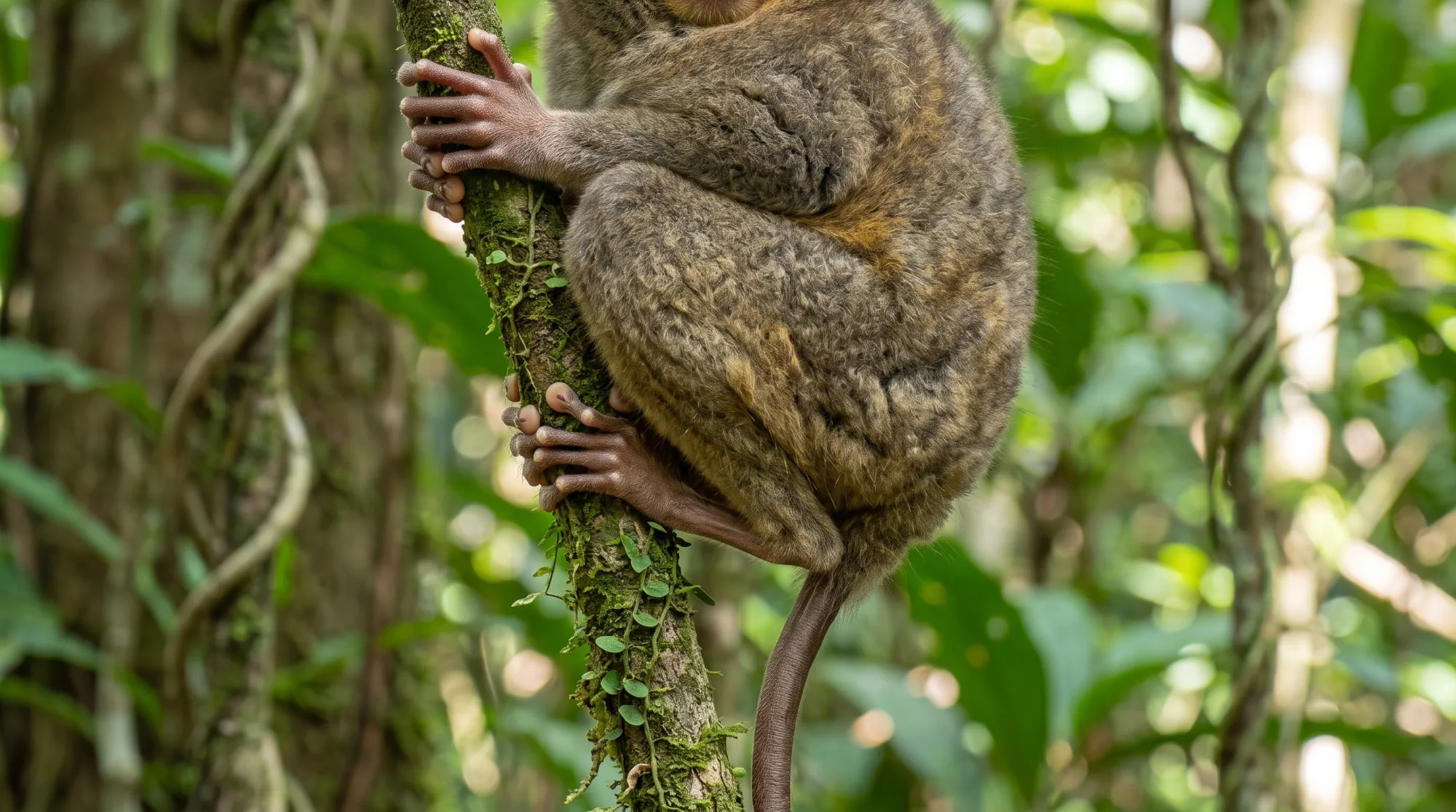
Tarsiers cling upright to thin trunks and leap between them like frogs, covering up to 16 ft (5 metres) in one jump – about 40 times their body length. Their name comes from the extra-long tarsus bones in their feet that power those jumps.

Records held

One of the smallest primates in the world, from a family line that goes back at least 45 million years.
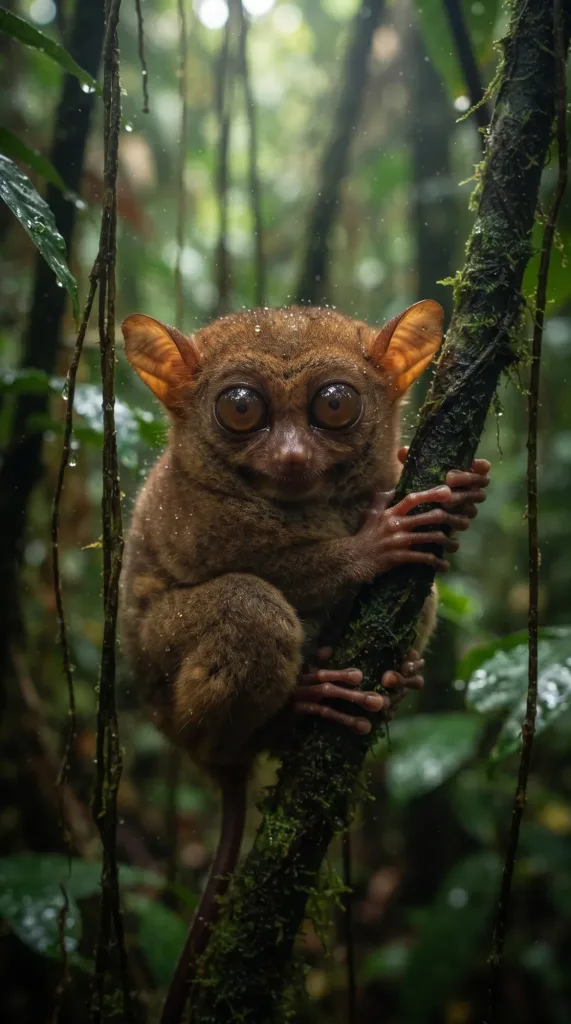
Tarsier with enormous round eyes clinging to a thin tree trunk

Tarsier: quick answers

Can you keep a tarsier as a pet?

No. Tarsiers are protected and do very badly in captivity – stress can kill them. In the Philippines, catching or selling them is illegal.

Can you hold a tarsier?

You shouldn’t. Tarsiers are extremely sensitive to stress, noise and camera flashes. Good sanctuaries keep visitors quiet and at a distance.

Are tarsiers monkeys?

Not exactly. They’re primates with their own family, Tarsiidae. They are more closely related to monkeys and apes than to lemurs.

Where can you see tarsiers in the wild?

In sanctuaries on Bohol in the Philippines and in Tangkoko Nature Reserve in northern Sulawesi, Indonesia.

Do tarsiers really commit suicide?

No – that’s an internet myth. What is true is that tarsiers are extremely sensitive to stress, noise and handling, and many die early in captivity. That’s why they should never be kept as pets or held for photos.

Know someone who needs to see this?

Send them the Tarsier. They'll thank you. Probably.