Skip to content
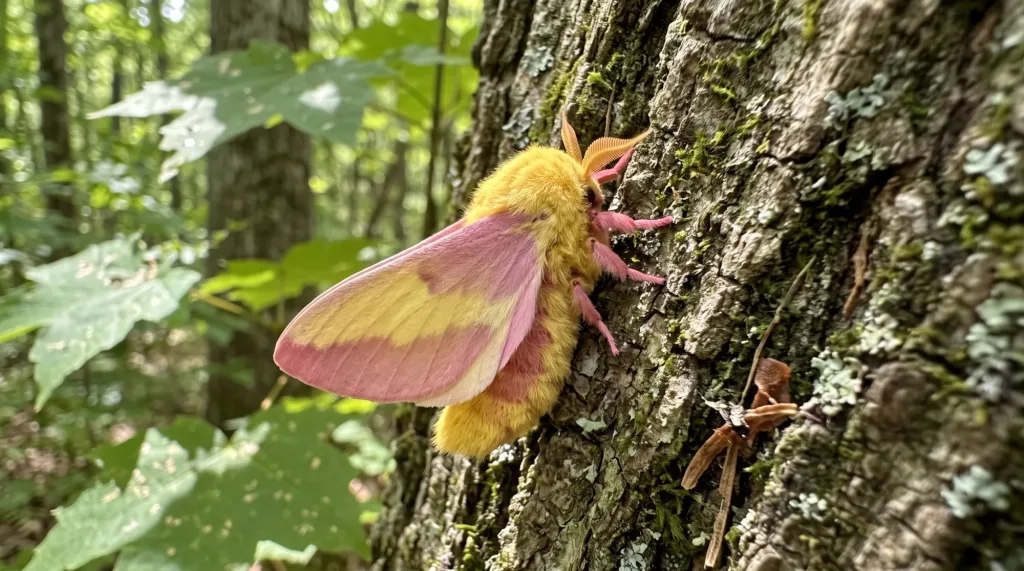
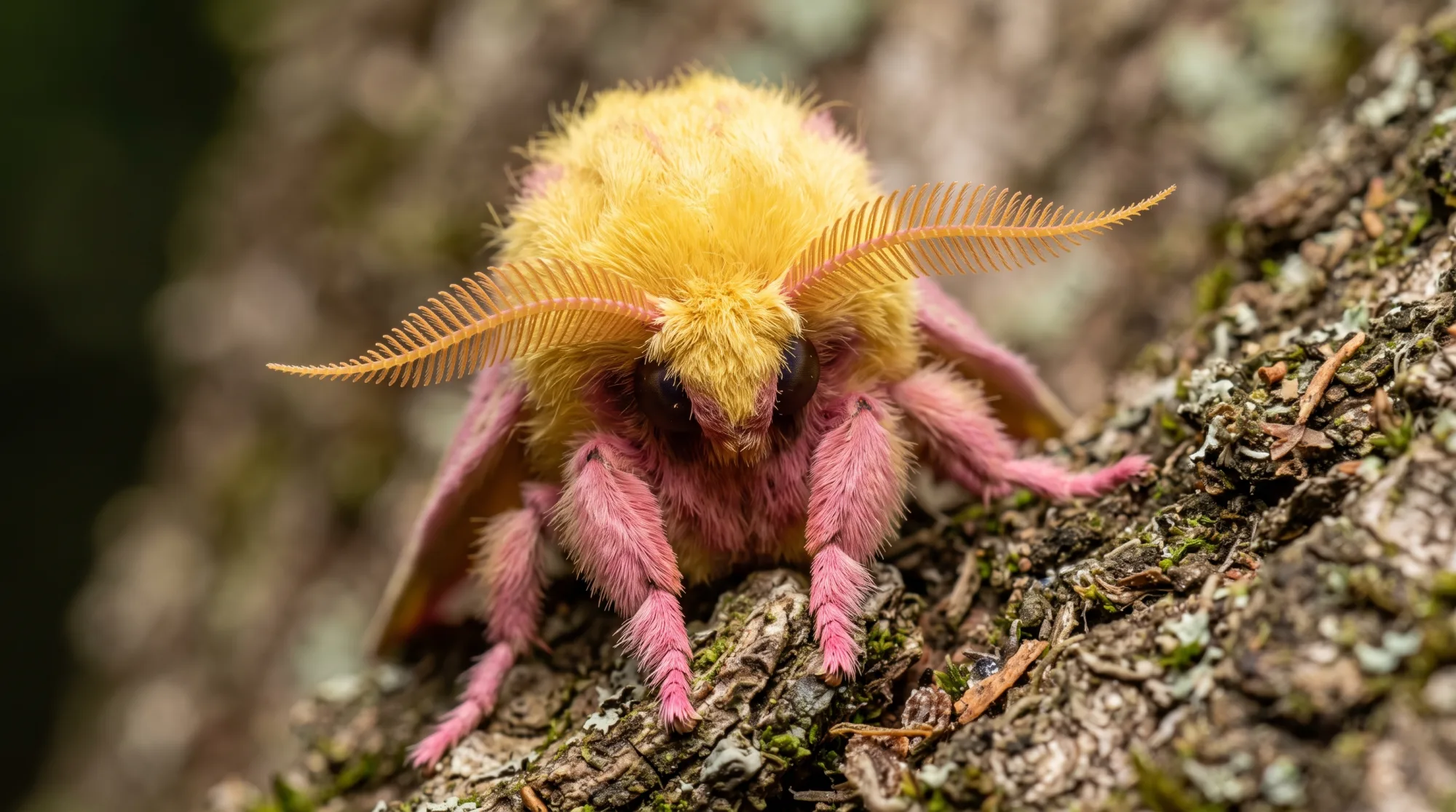
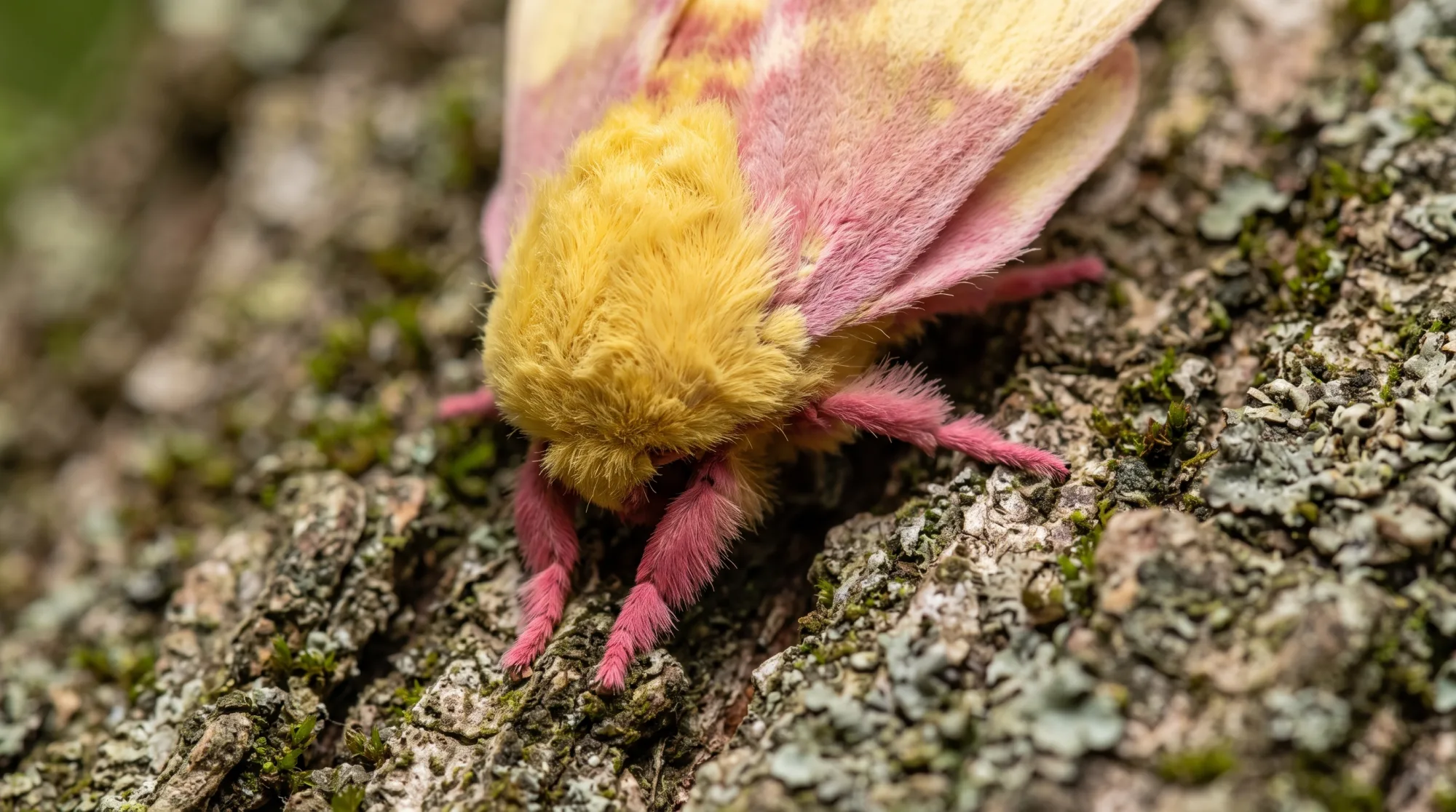
Pink and yellow rosy maple moth on a mossy branch in the forest

Rosy Maple Moth: Facts, Photos & Why It’s So Strange

Dryocampa rubicunda

A moth that looks like a strawberry-banana sweet

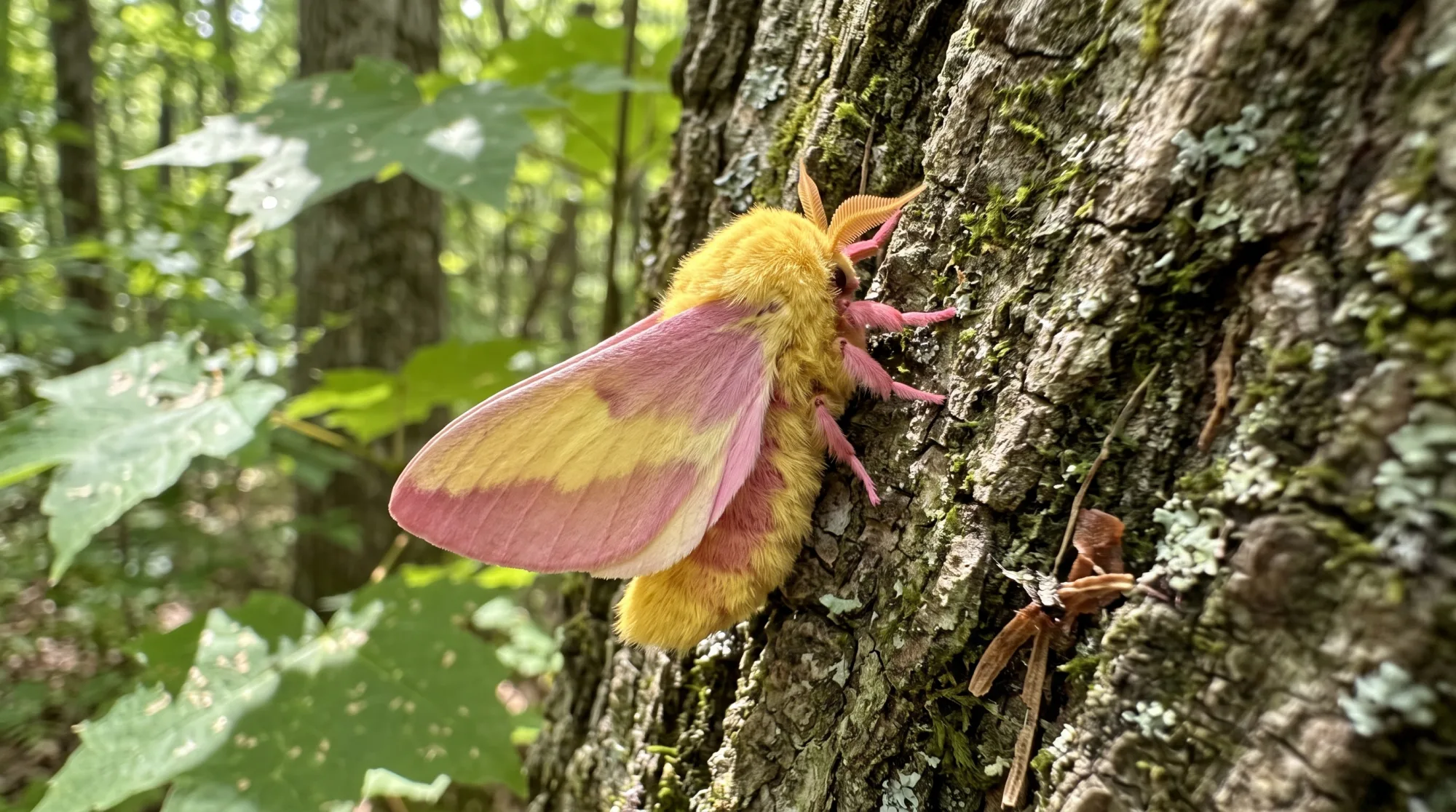
Fluffy, bright pink and lemon yellow, with a face like a tiny teddy bear. The rosy maple moth looks more like a toy than an insect. It’s the smallest of North America’s giant silk moths – and as an adult, it never eats a single thing.

Rosy Maple Moth vs. you

Your height ft in5 ft 7 in

Quick facts

Size
1.2–2 in
Wingspan 1.2–2 in (3–5 cm)
Lifespan
About a week as an adult
Left in the wild
Unknown
Unknown – common

Conservation status

Not evaluated

Superpowers

  • Venomous : Is it venomous? No
  • Glows : Does it glow? No
  • Regenerates limbs : Can it regenerate limbs? No

Identity

Scientific name
Dryocampa rubicunda
Class
Insect (moth)
First described
1793, by Johan Christian Fabricius

Life & family

Diet
The caterpillar eats maple and oak leaves; the adult eats nothing
Gestation
None – the eggs hatch in about 2 weeks
Offspring
150–200 eggs
Predators
Birds

Where to find it

Habitat
Deciduous forest, parks and gardens with maple trees
Lives in
Eastern North America
In the wild
Yes – it comes to porch lights on summer nights
In zoos
No

Explore similar

Why is this animal unusual?

The adult moth has no working mouth. It lives off the energy it stored as a caterpillar, and its only job is to find a mate and lay eggs.

Why does it look like that?

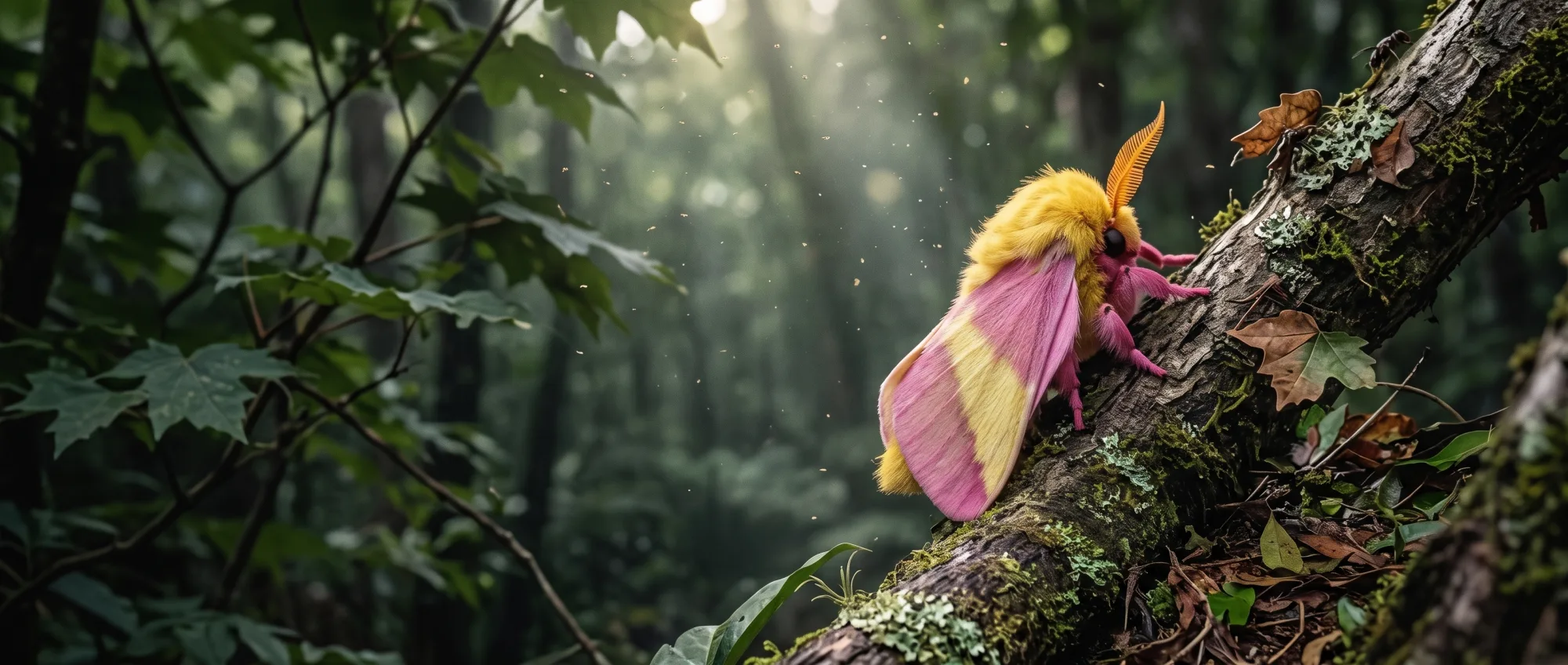
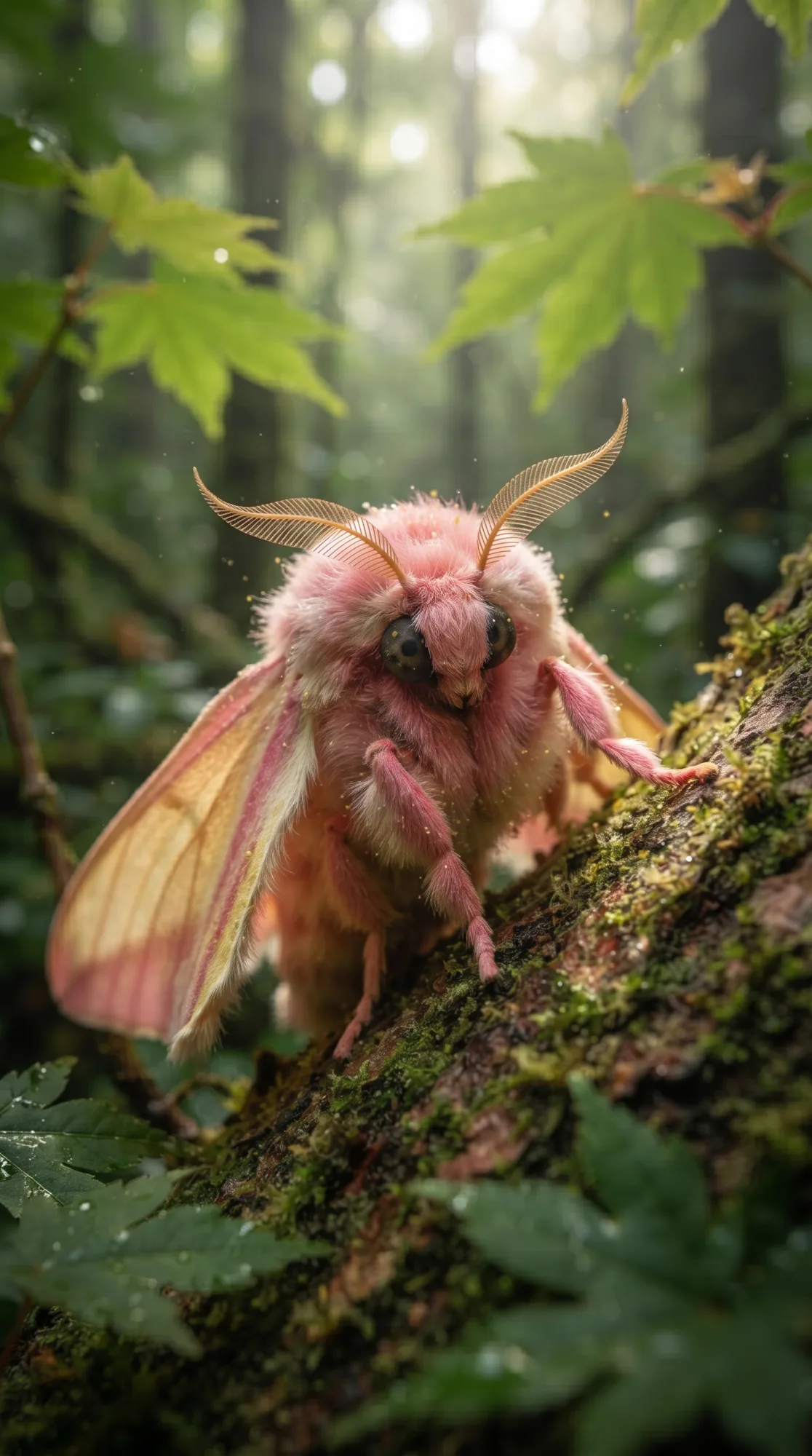
A woolly yellow body, pink legs, pink feathery antennae and wings in pink and cream. No two are coloured exactly alike.

Strangest biological feature

That colour scheme. Bright colours in nature often warn predators that an animal tastes bad – though with this moth, scientists aren’t sure whether it’s a warning or a bluff.

Why is it strange?

When disturbed, it doesn’t fly off. It tucks in its legs, drops to the ground and plays dead.

Interesting behavioral facts

Its caterpillar, the green-striped mapleworm, feeds in groups when young and can strip the leaves off a small maple.

Records held

The smallest of the great silk moths.
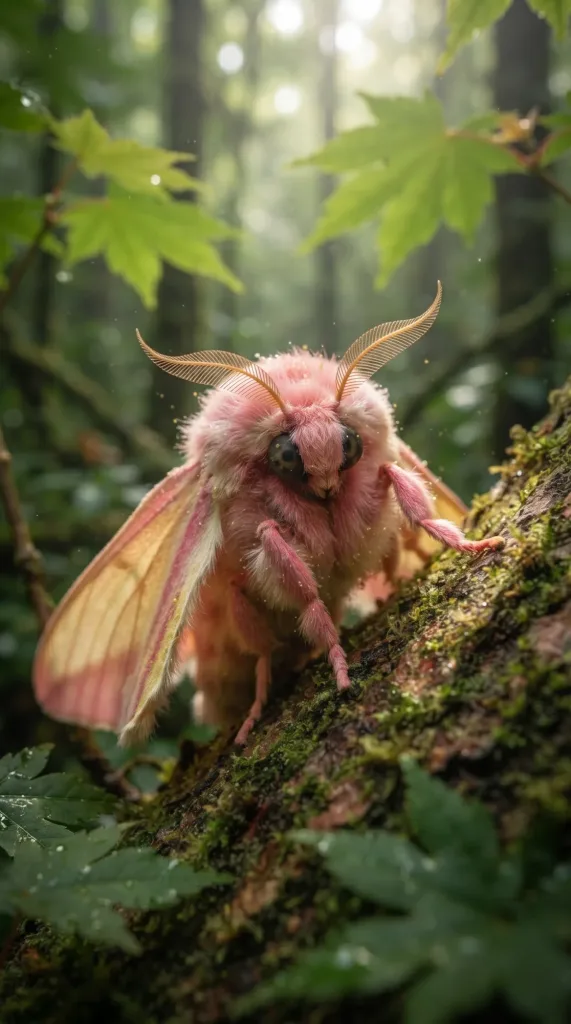
Fuzzy pink and yellow rosy maple moth resting on a mossy branch

Rosy Maple Moth: quick answers

Is the rosy maple moth dangerous?

No. It doesn’t bite or sting, and the adult can’t even eat. It’s completely harmless.

Where can you see a rosy maple moth?

In eastern North America in late spring and summer. It’s often drawn to porch lights at night near maple trees.

Do rosy maple moths damage trees?

Usually not much. The caterpillars eat maple leaves and can occasionally strip small trees, but healthy trees recover.

How long does a rosy maple moth live?

As an adult only about a week – just long enough to mate and lay eggs.

Know someone who needs to see this?

Send them the Rosy Maple Moth. They'll thank you. Probably.