Skip to content
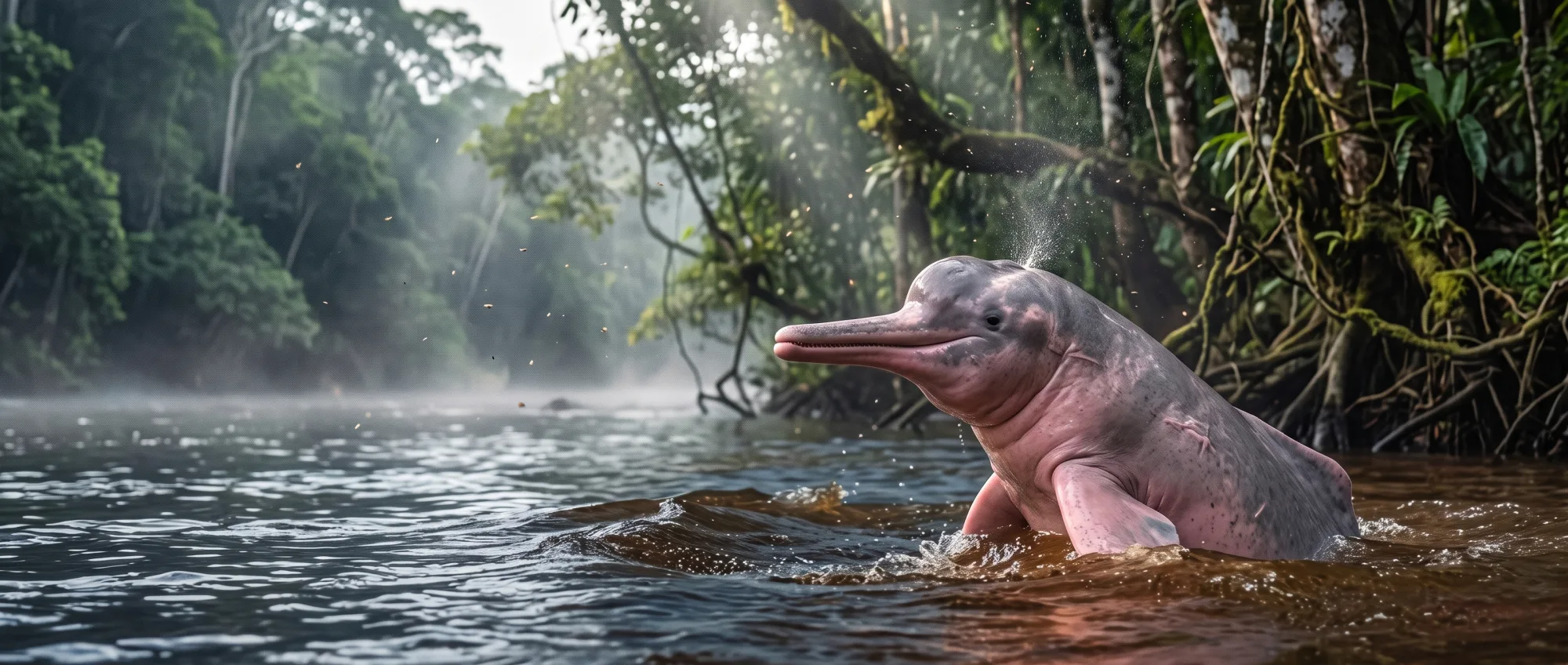
Pink river dolphin raising its long snout out of a misty jungle river

Pink Dolphin: Facts, Photos & Why It’s So Strange

Inia geoffrensis

Yes, it’s pink. Yes, it’s a dolphin.

A bubblegum-pink dolphin swimming between the trees of a flooded rainforest. It sounds like something from a children’s book, but the Amazon river dolphin, or boto, is very real. Local legend says it turns into a handsome man at night. Biology says it’s the biggest, smartest and strangest river dolphin on Earth.

Pink Dolphin vs. you

Your height ft in5 ft 7 in

Quick facts

Size
~8 ft
Up to about 8 ft (2.5 m)
Weight
~410 lb
Up to about 410 lb (185 kg)
Lifespan
~30 years
About 30 years
Left in the wild
Unknown
Unknown – declining

Conservation status

  1. Least Concern
  2. Near Threatened
  3. Vulnerable
  4. Endangered (this animal)
  5. Critically Endangered
  6. Extinct in the Wild
  7. Extinct

Endangered

Superpowers

  • Venomous : Is it venomous? No
  • Glows : Does it glow? No
  • Regenerates limbs : Can it regenerate limbs? No

Identity

Scientific name
Inia geoffrensis
Class
Mammal (river dolphin)
First described
1817, by Henri de Blainville

Life & family

Diet
More than 50 kinds of fish, plus crabs and small turtles
Gestation
About 11 months
Offspring
One calf
Predators
Very few – caimans and jaguars, rarely

Where to find it

Habitat
Rivers, lakes and seasonally flooded forest
Lives in
The Amazon and Orinoco basins of South America
In the wild
Yes – on river trips in Brazil, Peru, Colombia or Bolivia
In zoos
Almost never

Explore similar

Why is this animal unusual?

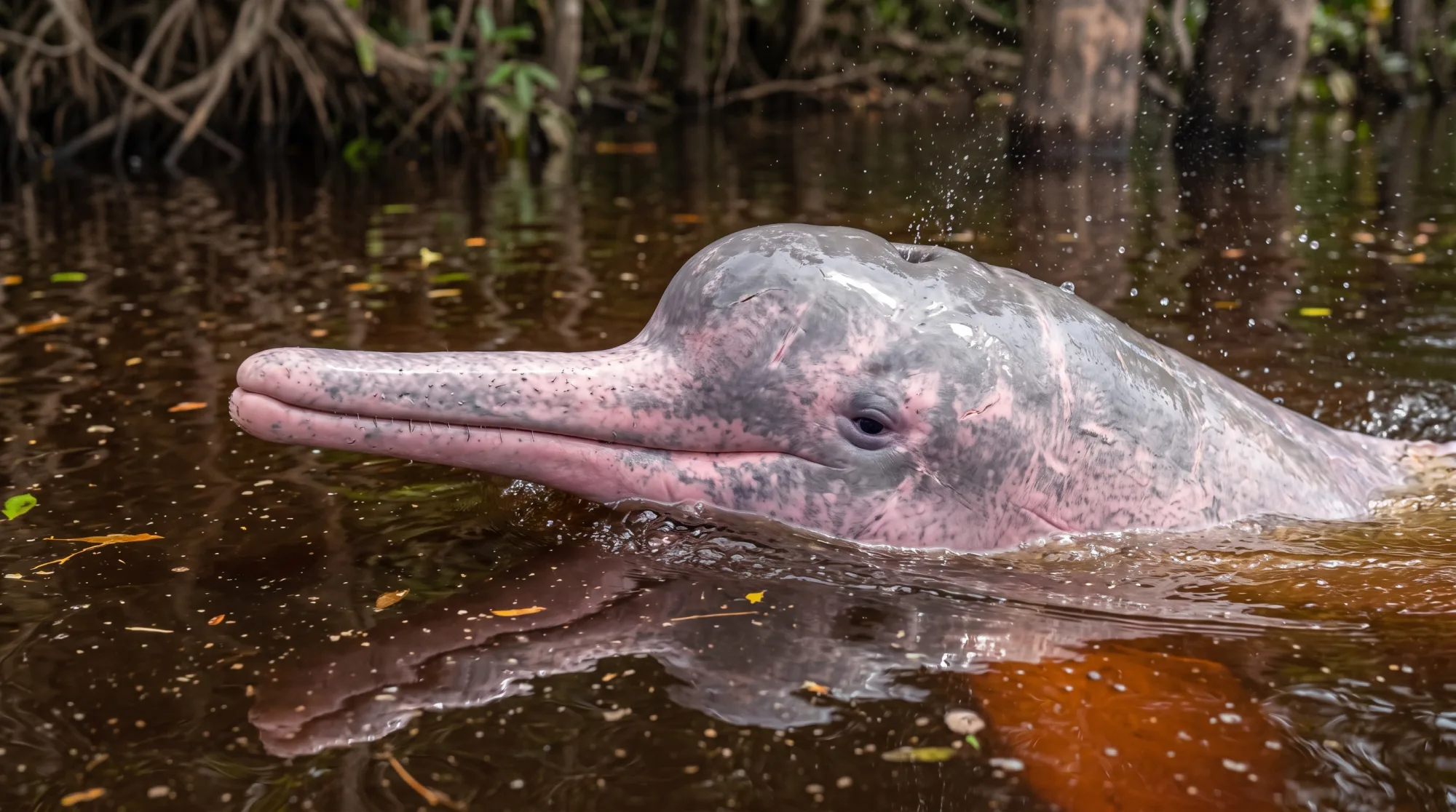
It’s born grey and turns pink with age. Males are the pinkest, because much of the colour is scar tissue from a lifetime of fighting each other.

Why does it look like that?

A long thin beak, a bulging forehead, small eyes and a low ridge instead of a tall fin on its back.

Strangest biological feature

A bendy neck. Unlike sea dolphins, its neck bones aren’t fused, so it can turn its head 90 degrees – perfect for weaving between tree trunks in the flooded forest.

Why is it strange?

It blushes. When excited or active, blood rushes to the skin and the dolphin turns an even brighter pink.

Interesting behavioral facts

Males have been seen carrying sticks, weeds and lumps of clay in their mouths and waving them about – apparently to impress females.

Records held

The largest river dolphin in the world. In Amazon folklore it’s the “encantado”, a shape-shifter who comes ashore as a charming stranger in a hat.
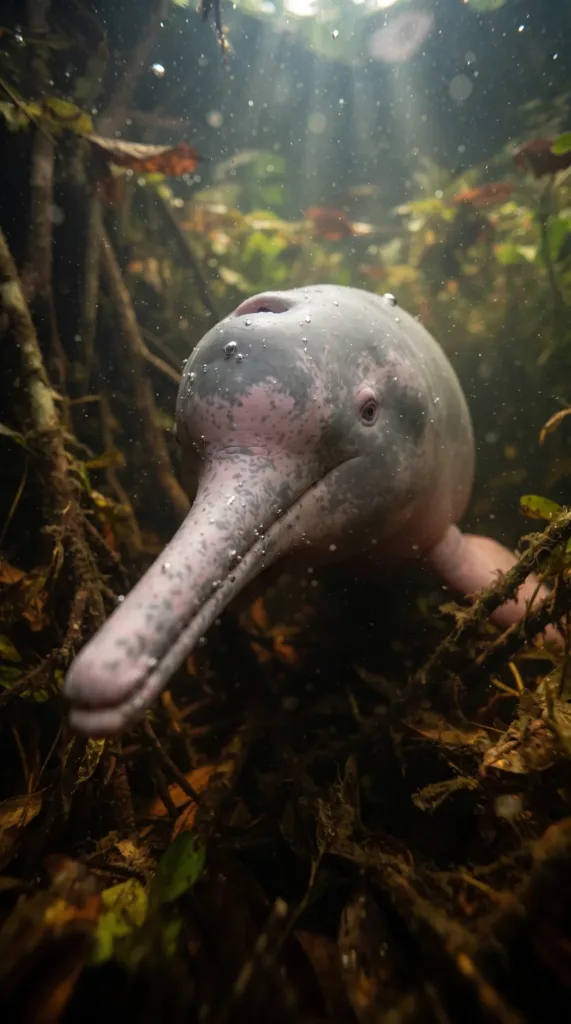
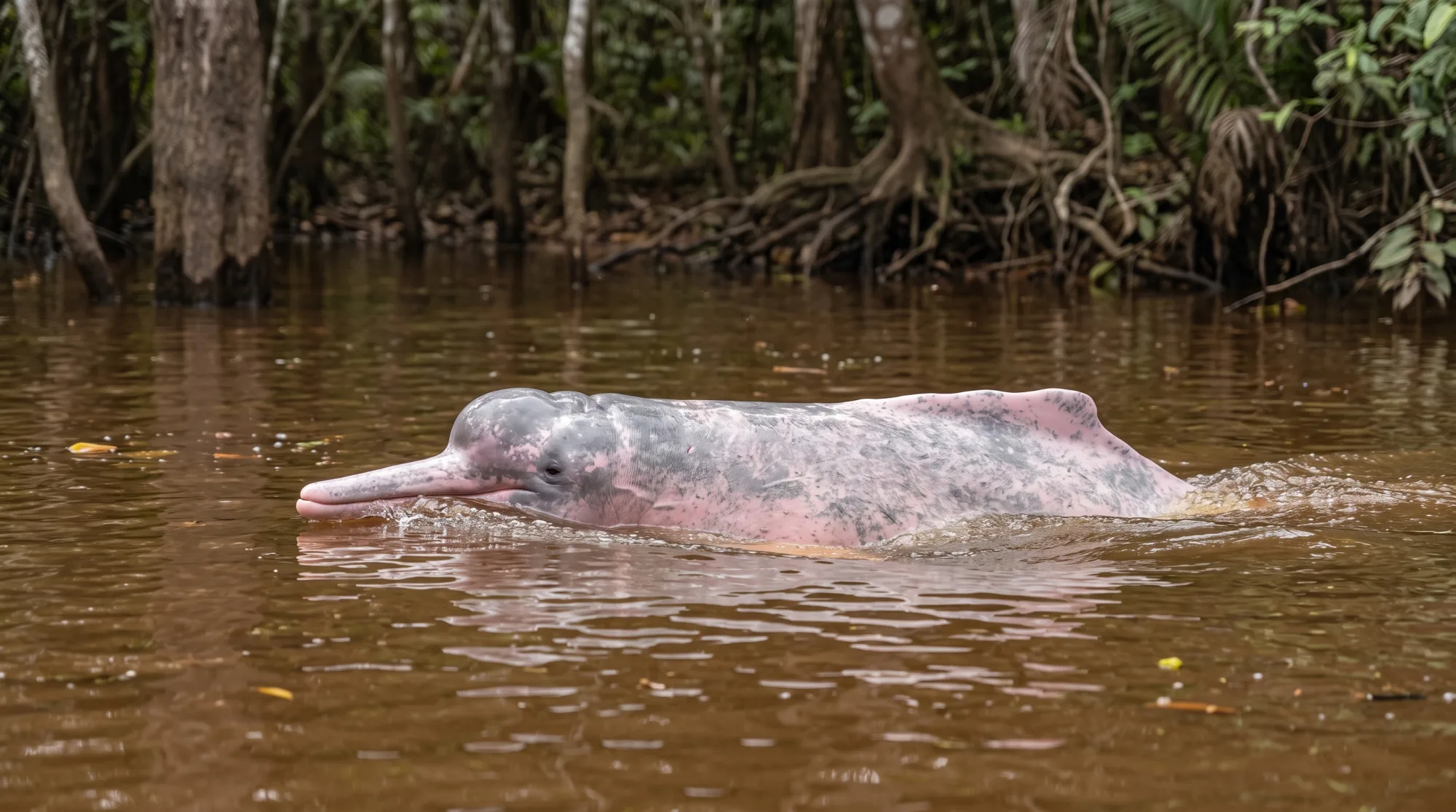
Pink river dolphin with a long thin snout swimming among flooded forest roots

Pink Dolphin: quick answers

Are pink dolphins real?

Yes. The Amazon river dolphin, or boto, really is pink – especially adult males. The colour comes mostly from scar tissue and blood flow near the skin, not from its food.

Are pink dolphins dangerous?

No. They’re curious and generally gentle. In some places they approach tourist boats, but feeding or touching them is discouraged.

Why are pink dolphins endangered?

They’re killed for use as fishing bait, drown in nets and suffer from dams, mercury pollution and droughts. Their numbers have dropped sharply in recent decades.

Where can you see pink dolphins?

On river trips in the Amazon and Orinoco basins – in Brazil, Peru, Colombia, Ecuador, Bolivia and Venezuela.

What do pink dolphins eat?

Mostly fish – more than 40 kinds, including catfish and piranhas – plus crabs and small river turtles. A flexible neck lets them hunt among the roots of the flooded forest.

Know someone who needs to see this?

Send them the Pink Dolphin. They'll thank you. Probably.