Skip to content
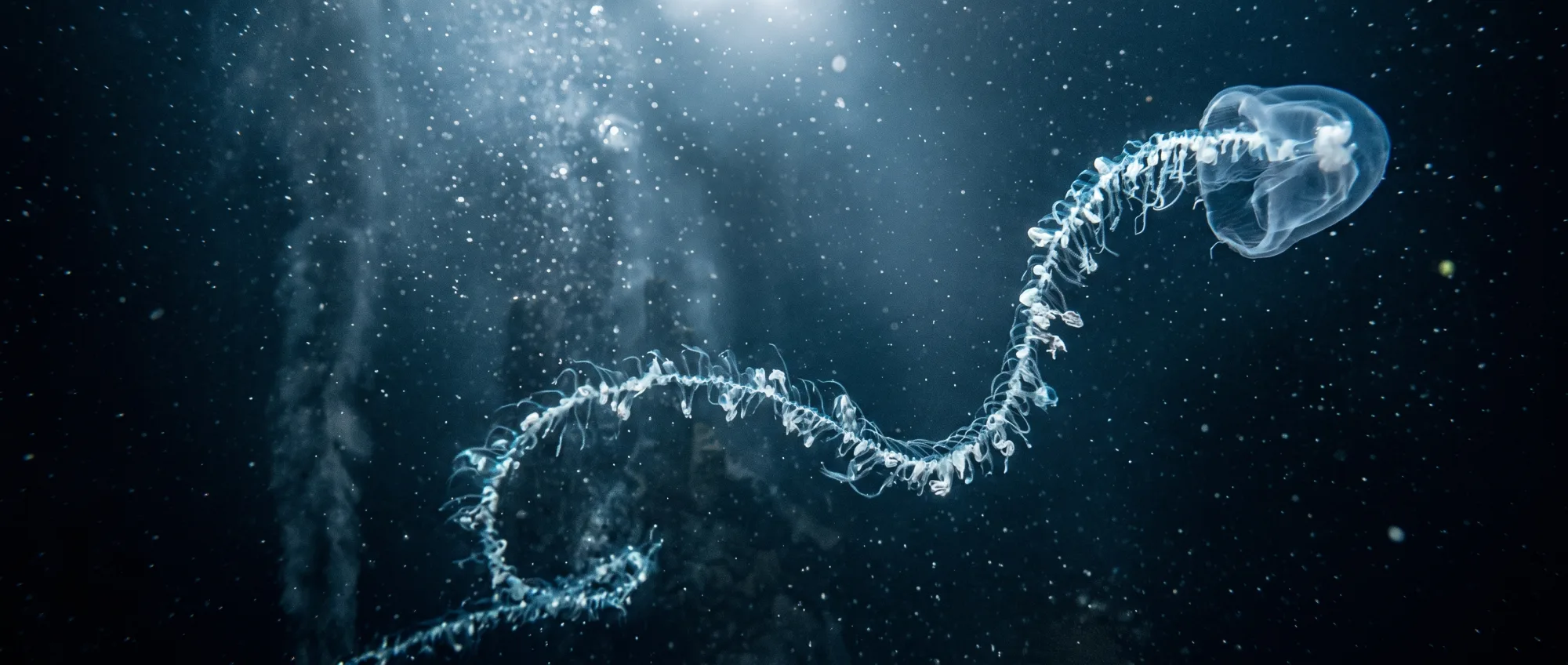
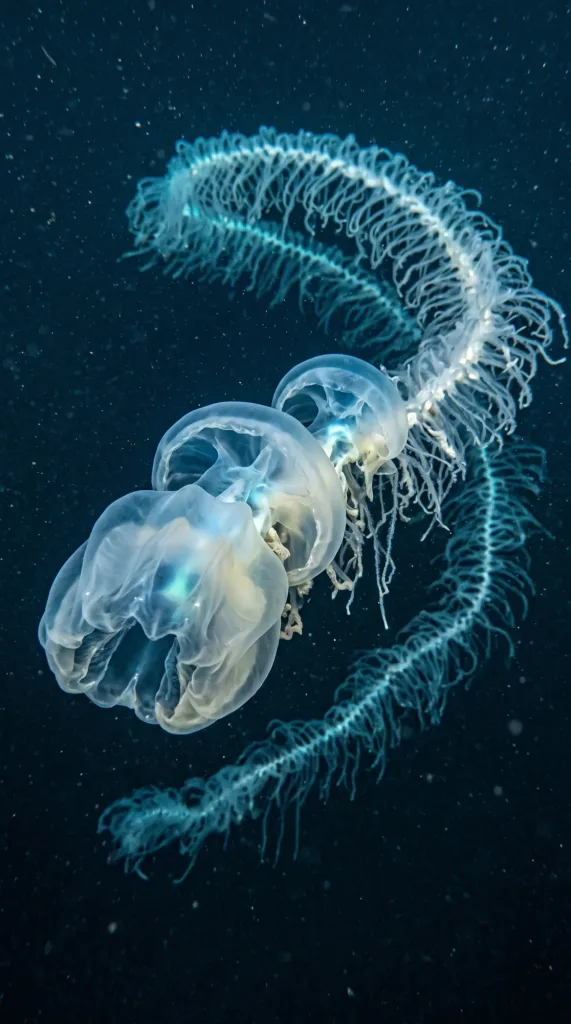
Glowing giant siphonophore stretching like a long chain in dark water

Giant Siphonophore: Facts, Photos & Why It’s So Strange

Praya dubia

Longer than a blue whale – and it’s not one animal

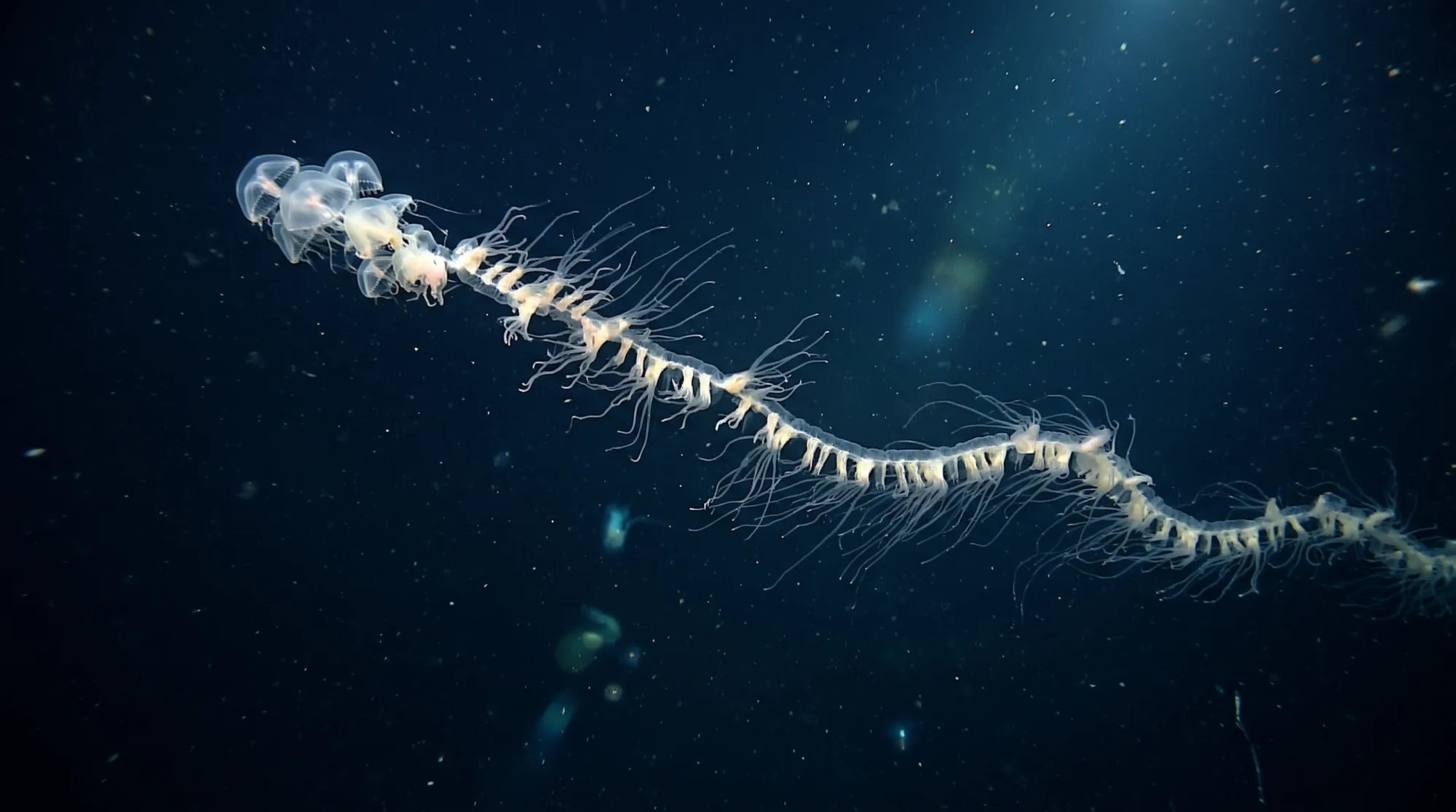
A glowing thread drifting through the dark, longer than the biggest whale. But the giant siphonophore isn’t a single creature. It’s a colony of thousands of tiny clones, each with one job, all working together as one enormous body.

Giant Siphonophore vs. you

Your height ft in5 ft 7 in

Quick facts

Size
~130 ft
Up to about 130 ft (40 m) long, but only as thick as a broomstick
Left in the wild
Unknown

Conservation status

Not evaluated

Superpowers

  • Venomous : Is it venomous? Yes – its tentacles carry a powerful sting
  • Glows : Does it glow? Yes – it glows blue
  • Regenerates limbs : Can it regenerate limbs? No

Identity

Scientific name
Praya dubia
Class
Cnidarian (colonial)
First described
1833, by Jean René Quoy and Joseph Paul Gaimard

Life & family

Diet
Small fish, shrimp and plankton
Gestation
None – parts of the colony release eggs and sperm
Predators
Few known

Where to find it

Habitat
Deep open ocean, about 2,300–3,300 ft (700–1,000 m) down
Lives in
Oceans worldwide
In the wild
No
In zoos
No – it falls apart at the surface

Explore similar

Why is this animal unusual?

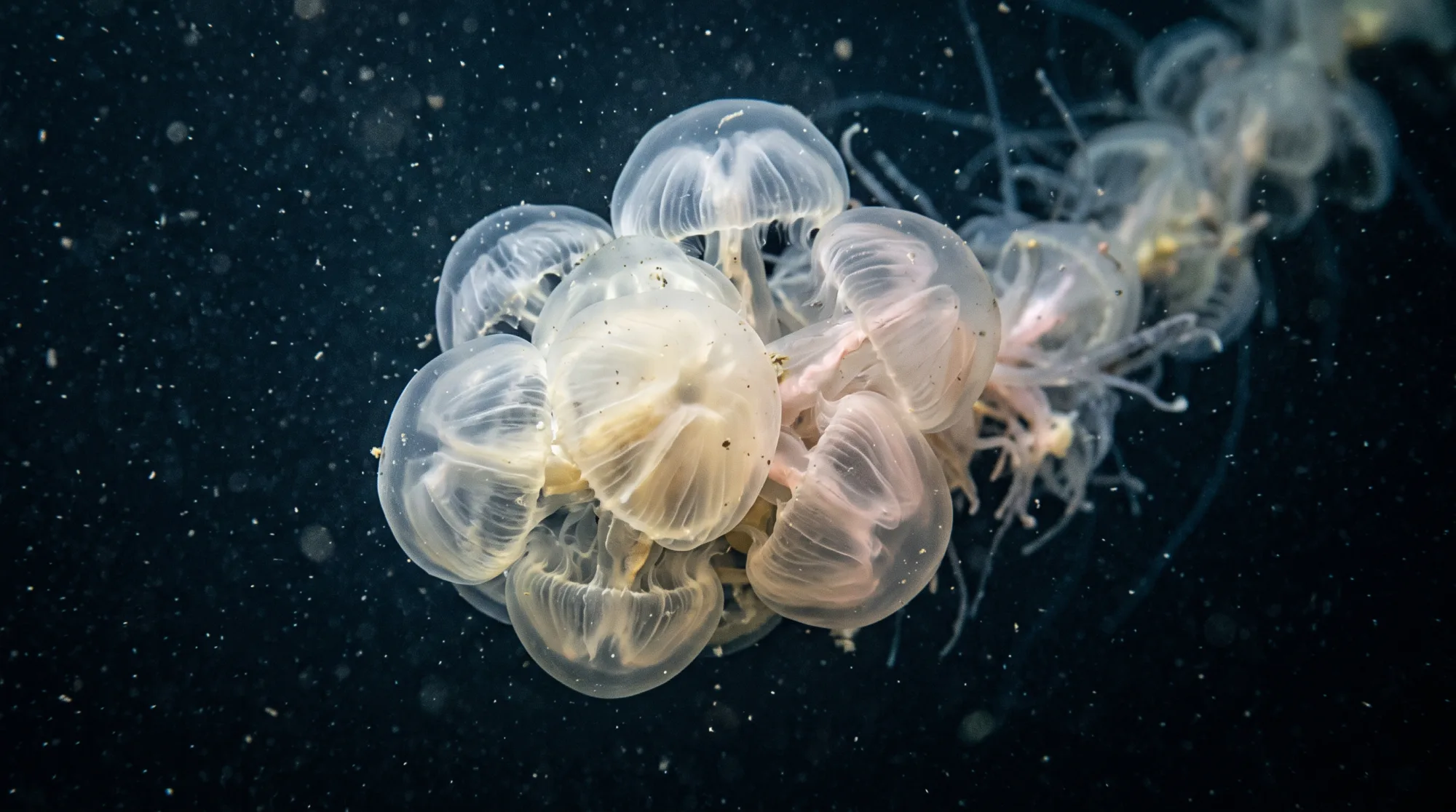
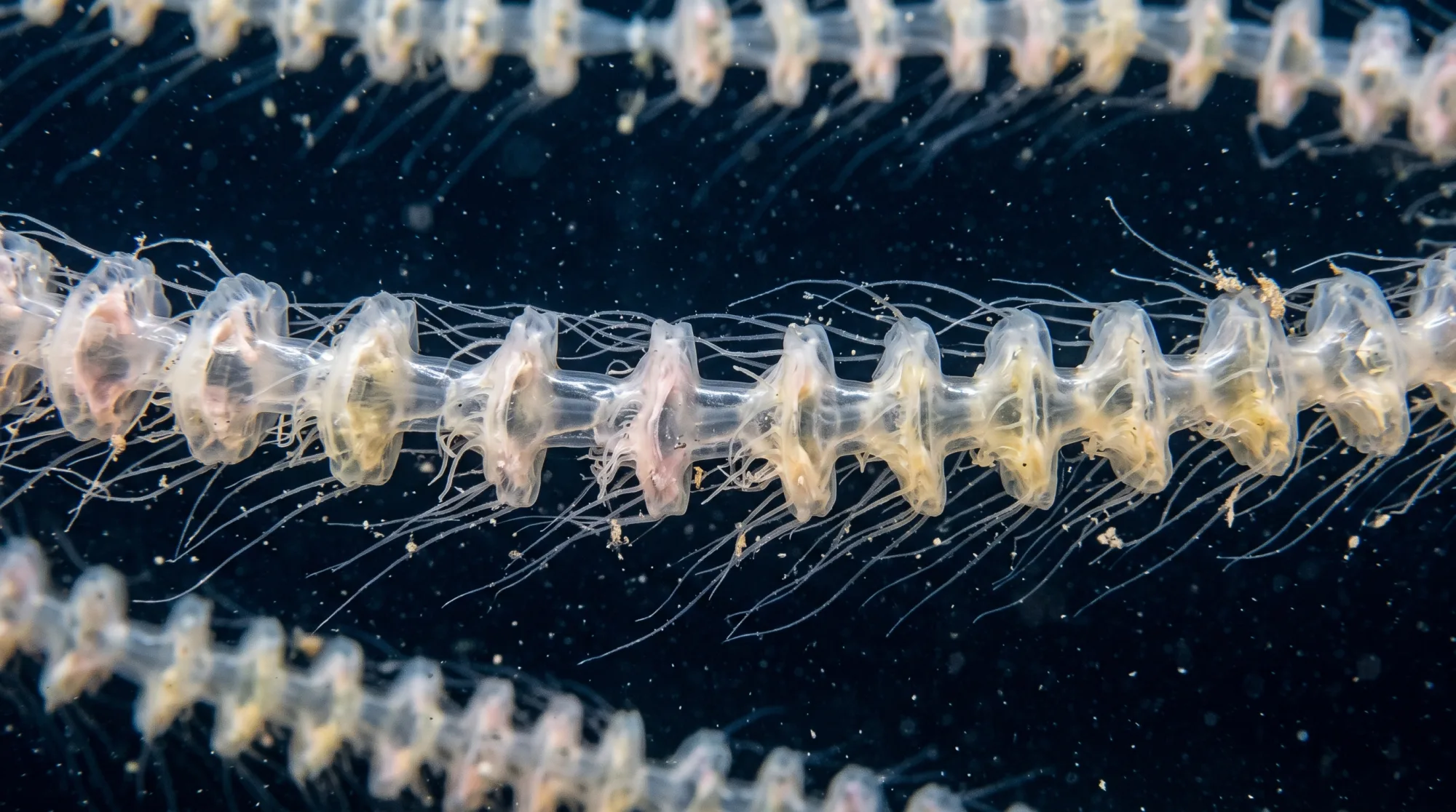
It starts as a single fertilised egg. That one individual then clones itself over and over. Some clones swim, some sting, some digest, some reproduce – and none could survive without the others.

Why does it look like that?

A long transparent stem with a pair of swimming bells at the front and a curtain of stinging tentacles trailing behind.

Strangest biological feature

Teamwork taken to the extreme. Biologists still argue about whether it’s one animal or thousands.

Why is it strange?

Its body is held together by the pressure of the deep sea. Bring it to the surface and it simply bursts.

Interesting behavioral facts

It hangs in the water like a fishing net and uses its blue light to lure prey into the tentacles.

Records held

One of the longest animals on Earth. In 2020 a related siphonophore was filmed off Australia in a spiral estimated at 150 ft (45 metres) or more.
Glowing blue giant siphonophore with a long string of translucent bells

Giant Siphonophore: quick answers

Is a siphonophore a jellyfish?

Not exactly. It belongs to the same big group, the cnidarians, but instead of being one animal it’s a colony of specialised clones working as one.

Is the giant siphonophore dangerous to humans?

Its sting is powerful, but it lives 2,300–3,300 ft (700–1,000 m) down, so people never come across it. Its shallow-water relative, the Portuguese man o’ war, is the one swimmers should watch out for.

Is it really longer than a blue whale?

Yes. A blue whale reaches about 98 ft (30 m), while a giant siphonophore can stretch to around 130 ft (40 m) – though it’s only as thick as a broomstick.

Can you see a siphonophore in an aquarium?

No. It falls apart when brought to the surface. Everything we know about live ones comes from deep-sea robots and submersibles.

Know someone who needs to see this?

Send them the Giant Siphonophore. They'll thank you. Probably.