Skip to content
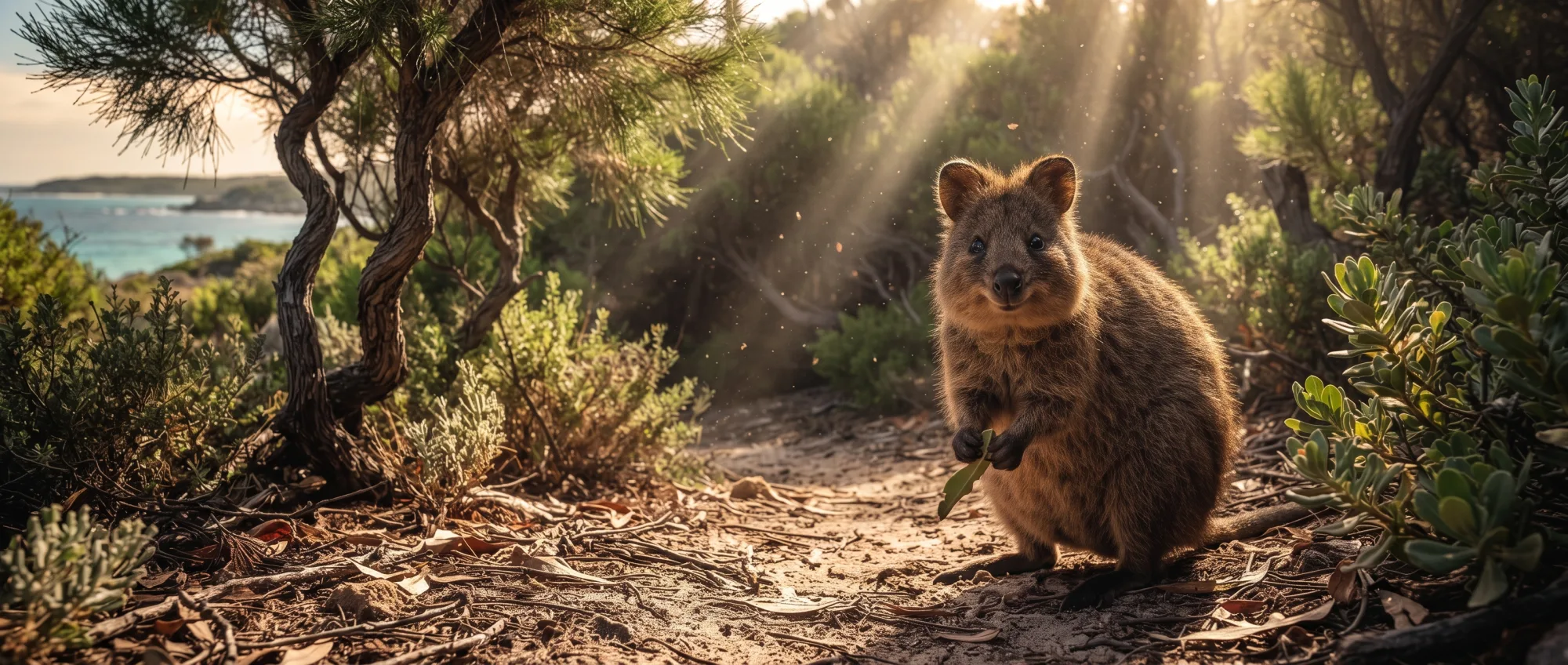
Quokka standing on a sandy path between bushes in golden sunlight

Quokka: Facts, Photos & Why It’s So Strange

Setonix brachyurus

The happiest animal on Earth (allegedly)

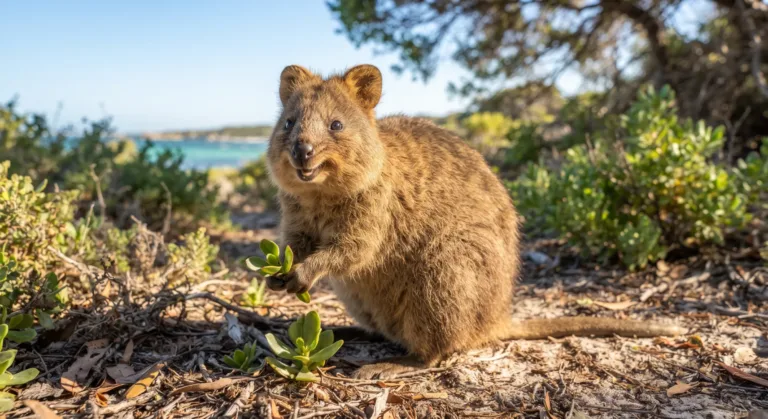
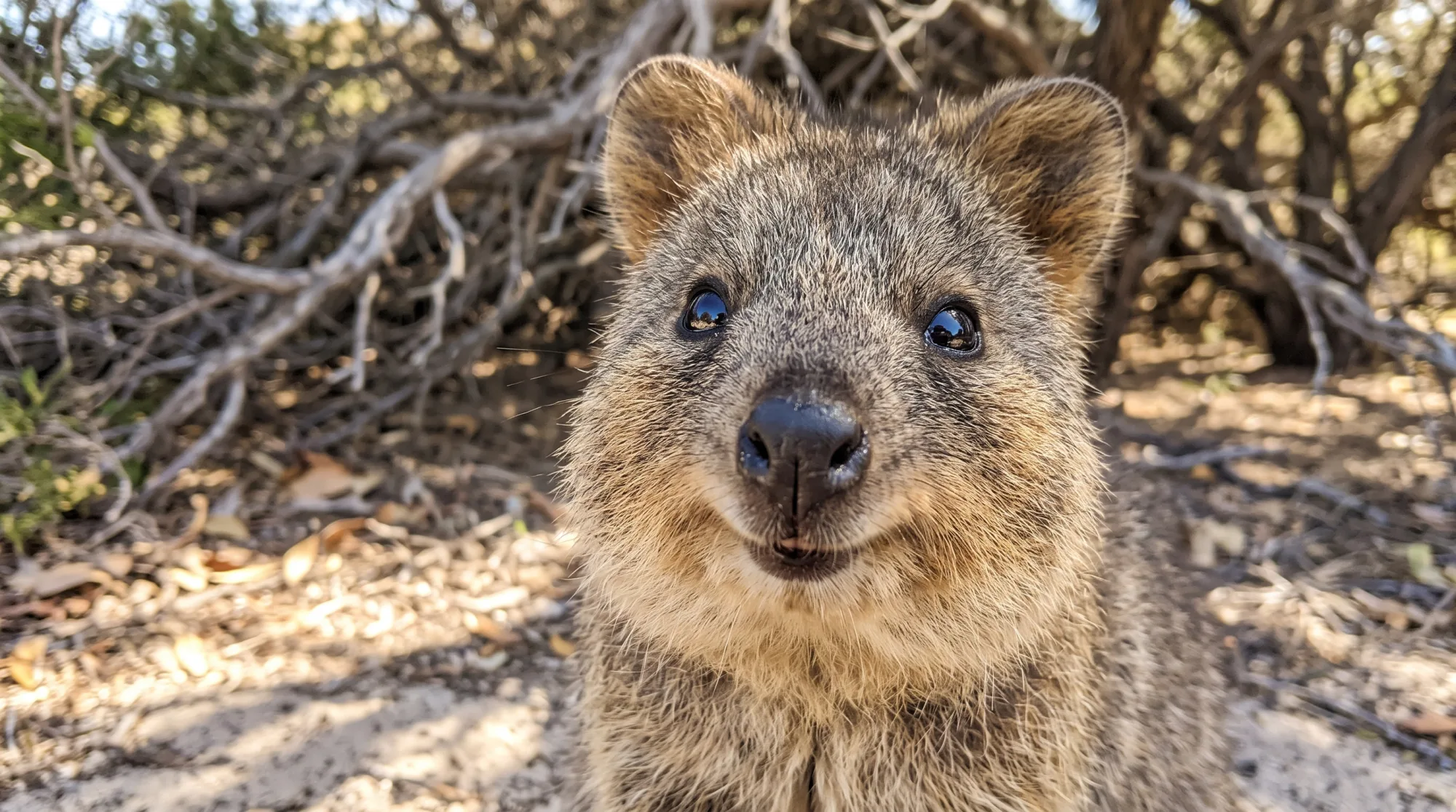
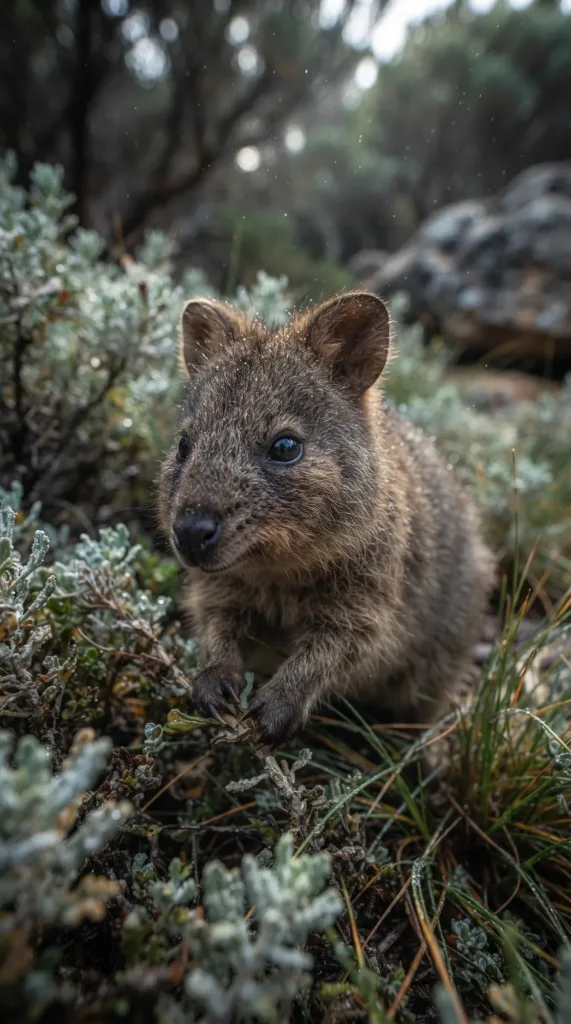
A round, fuzzy little wallaby that appears to be smiling at you. The quokka became world-famous for the “quokka selfie” – and tourists now fly to one Australian island just to pose with it. The grin is really just the shape of its mouth. Don’t tell the internet.

Quokka vs. you

Your height ft in5 ft 7 in

Quick facts

Size
16–21 in
16–21 in (40–54 cm), plus a 9.8–12 in (25–30 cm) tail
Weight
5.5–11 lb
5.5–11 lb (2.5–5 kg)
Lifespan
~10 years
About 10 years
Left in the wild
~7,500–15,000
About 7,500–15,000 adults

Conservation status

  1. Least Concern
  2. Near Threatened
  3. Vulnerable (this animal)
  4. Endangered
  5. Critically Endangered
  6. Extinct in the Wild
  7. Extinct

Vulnerable

Superpowers

  • Venomous : Is it venomous? No
  • Glows : Does it glow? No
  • Regenerates limbs : Can it regenerate limbs? No

Identity

Scientific name
Setonix brachyurus
Class
Mammal (marsupial)
First described
1830, by Jean René Quoy and Joseph Paul Gaimard

Life & family

Diet
Grass, leaves, stems and bark
Gestation
About a month, then about 6 months in the pouch
Offspring
One joey
Predators
Foxes, cats and dogs on the mainland

Where to find it

Habitat
Scrub, swamps and coastal heath
Lives in
Southwestern Australia – mostly Rottnest Island
In the wild
Yes – easily, on Rottnest Island near Perth
In zoos
Yes – in several Australian zoos

Explore similar

Why is this animal unusual?

It has almost no fear of people. On its island home there are no predators, so it will hop right up to you – which is exactly how the selfies happen.

Why does it look like that?

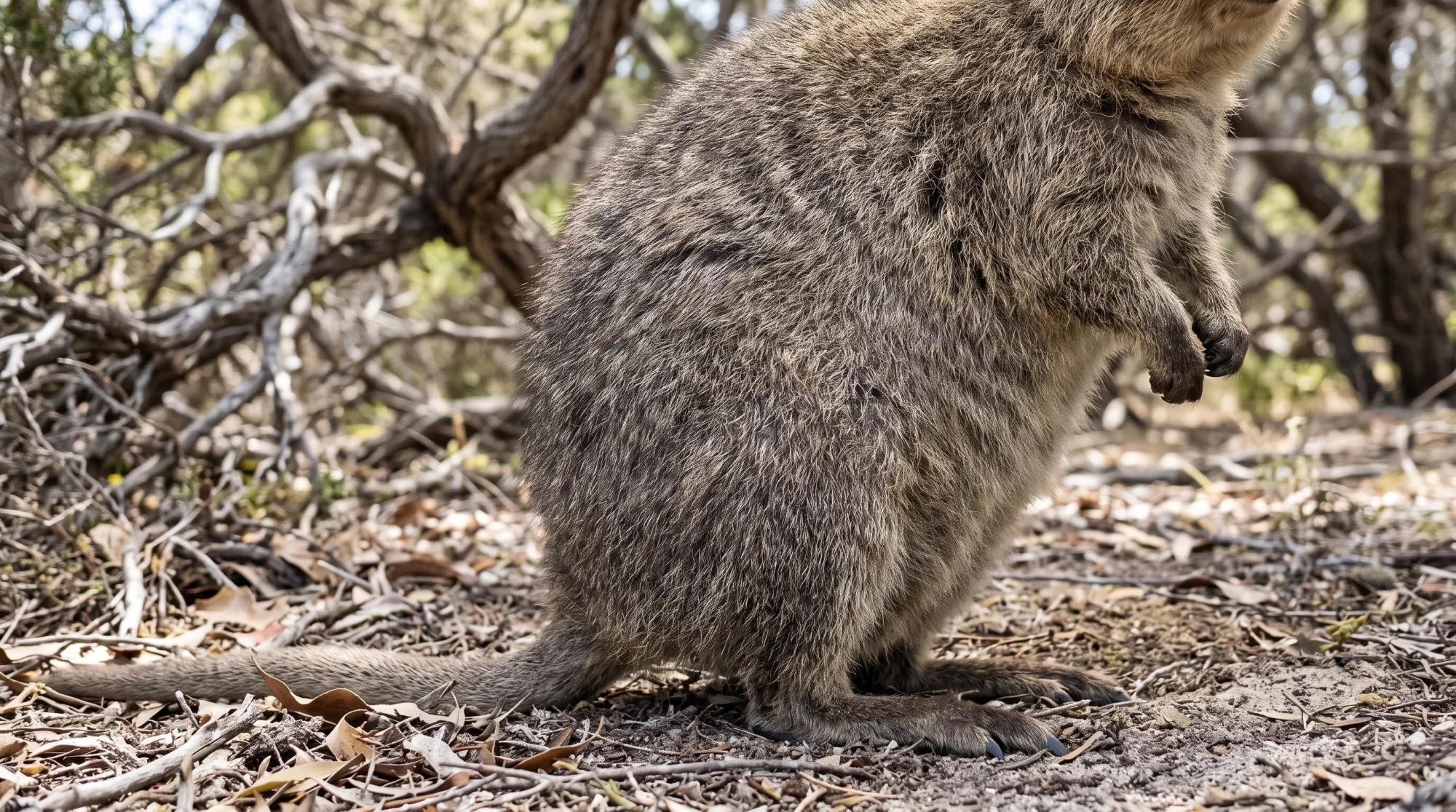
A stocky body the size of a cat, short round ears, a rat-like tail and a mouth that curves upward at the corners.

Strangest biological feature

A fat tank in its tail. It stores fat there for hard times and can go a long while without drinking.

Why is it strange?

The cute story may have a darker side. Mothers chased by a predator have been reported to drop their joey from the pouch, which could distract the hunter while she escapes – though how often this really happens is debated.

Interesting behavioral facts

Quokkas are mostly active at night, sleep in the shade by day – and can climb small trees to reach leaves.

Records held

A Dutch explorer who landed on its island in 1696 thought the quokkas were giant rats, and named the place “Rats’ Nest”. It’s still called Rottnest today.
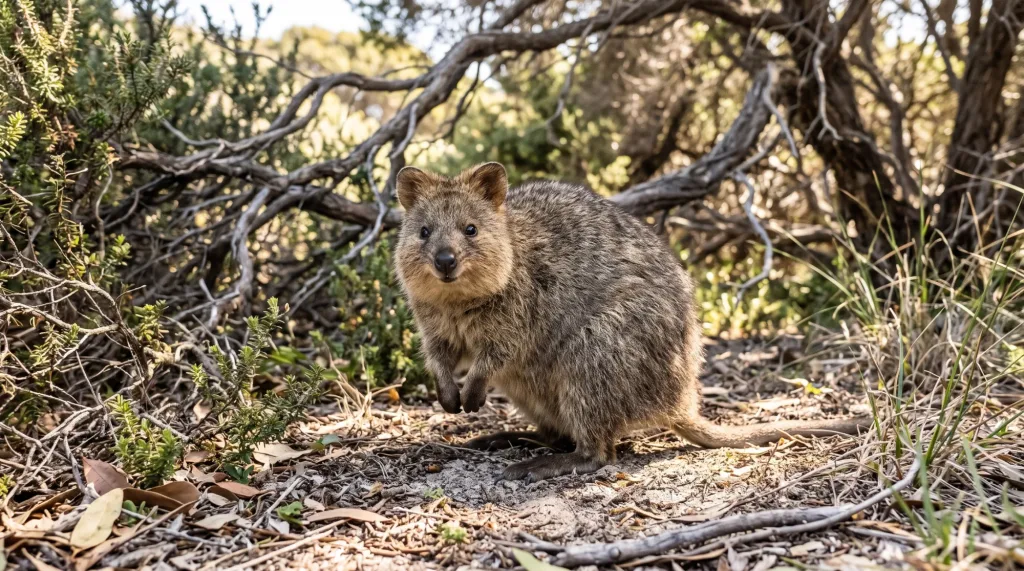
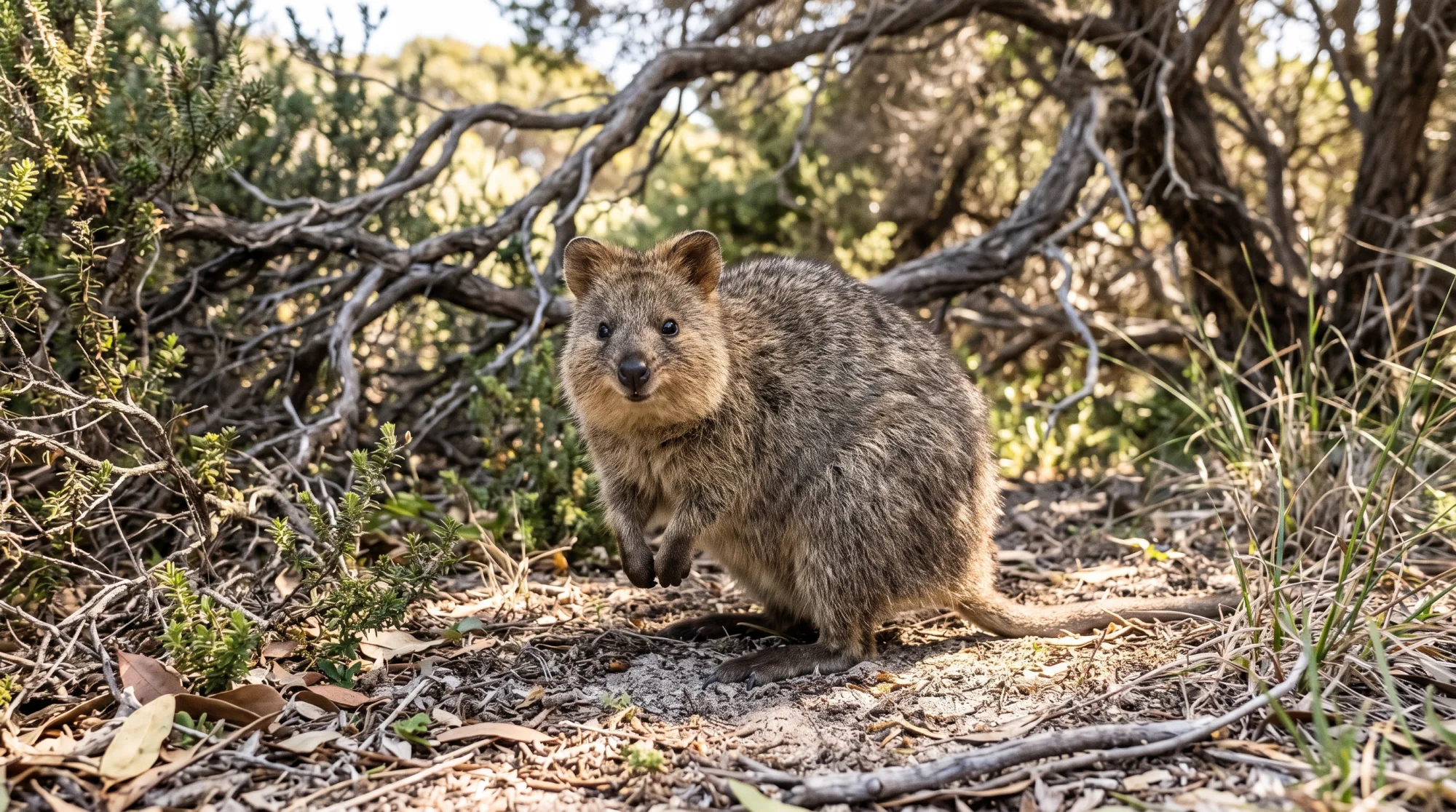
Smiling brown quokka sitting among low bushes

Quokka: quick answers

Can you touch or feed a quokka?

No. On Rottnest Island it’s illegal to touch or feed quokkas, and you can be fined. Selfies are fine, as long as you keep your hands to yourself.

Do quokkas bite?

They can. Quokkas are wild animals, and people who try to feed or grab them sometimes get bitten.

Is the quokka a kangaroo?

It’s a small wallaby – part of the same family as kangaroos. Like them, it hops and carries its baby in a pouch.

Can you keep a quokka as a pet?

No. Quokkas are a protected, vulnerable species, and keeping one as a pet isn’t allowed.

Where do quokkas live?

Only in south-western Australia – mostly on Rottnest Island and Bald Island, with small, scattered groups on the mainland.

What does a quokka eat?

Leaves, grasses, stems and seeds. It can go a long time without drinking, getting much of its water from plants.

Know someone who needs to see this?

Send them the Quokka. They'll thank you. Probably.